Minos Moka Pot: Brewing Authentic Italian Espresso with a Modern Twist
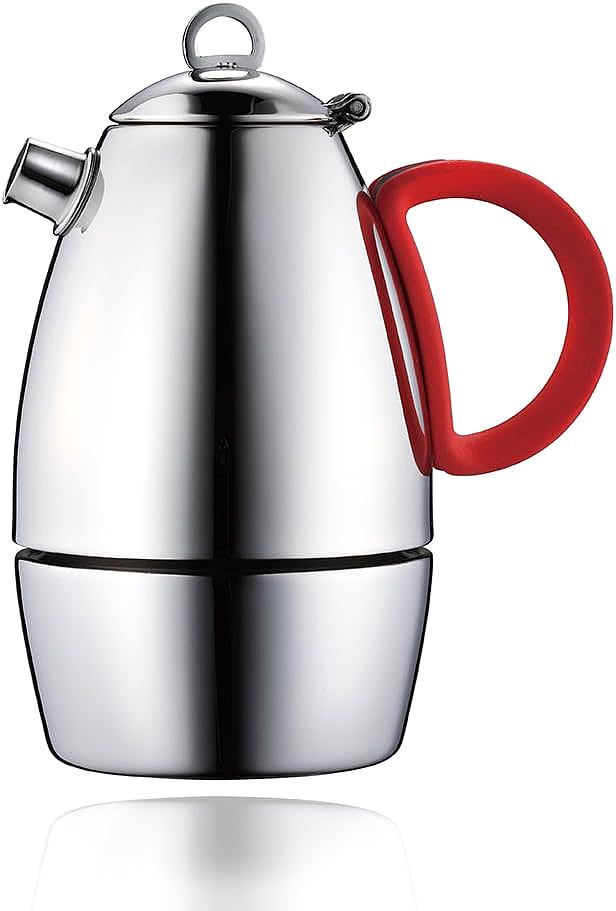
Minos Moka Pot
It begins not with a bang, but with a hiss. A gentle, expectant sound from the stovetop that slowly builds into a determined gurgle. Soon, the kitchen is filled with an aroma so robust, so deeply comforting, it feels like the very soul of the morning awakening. For millions, this is the daily overture performed by a humble yet iconic device: the Moka pot. It’s a ritual, a piece of design history, and a deceptively simple-looking contraption. But beneath its metallic shell, a powerful drama of physics and chemistry unfolds. This isn’t magic; it’s a beautiful, controlled alchemy that transforms water, heat, and ground beans into liquid gold.
Today, we’ll journey inside this stovetop marvel. Using the sleek, modern Minos Moka Pot as our guide—a contemporary descendant forged from stainless steel—we will explore the scientific heart of this beloved brewer. We will decode its secrets, not to dispel its romance, but to deepen our appreciation for the genius simmering within.

The Pressured Soul of Coffee
Before we talk about taste, we must talk about pressure. The Moka pot is often called a “stovetop espresso maker,” but that’s a loving misnomer. It lives in a fascinating middle ground, a world defined by a force much greater than gravity, yet far gentler than its café-counter cousin.
Imagine the Moka pot’s bottom chamber, filled with water, as a sealed pressure vessel. As the stove’s heat energizes the water molecules, they begin to vibrate, collide, and eventually, leap into a gaseous state: steam. According to fundamental principles of thermodynamics, this rapidly expanding steam has nowhere to go, causing the pressure inside the chamber to climb. It builds from standard atmospheric pressure (about 1 bar at sea level) to roughly 1.5 to 2 bars.
While that may not sound like much, it's double the force of the air around us. This pressure becomes a powerful piston, pushing down on the hot water and forcing it up a narrow funnel. This is where the extraction begins. The hot, pressurized water saturates the tightly packed coffee grounds, powerfully stripping them of their soluble solids, oils, and aromatic compounds far more effectively than a simple drip brewer could.
A Volcano in Miniature
Think of it as a controlled volcanic eruption. The pressure builds quietly underground until it’s strong enough to force magma to the surface. In the Moka pot, this "eruption" is the final surge of dark, rich coffee into the upper chamber.
Now, let’s put that 1.5 bars of pressure into perspective. A true espresso machine, by definition, uses a powerful pump to blast water through coffee at a staggering 9 bars or more. That immense force is what creates the signature velvety crema and the intensely concentrated shot. The Moka pot’s gentler push results in a brew that is incredibly rich, robust, and full-bodied, but without the same level of emulsified oils and concentrated intensity as espresso. It carves out its own unique identity: a potent, aromatic, and deeply satisfying cup that stands proudly on its own.

A Vessel of Steel and Spirit
The original Moka pot, a 1933 Art Deco masterpiece by Alfonso Bialetti, was born of aluminum. It was lightweight, an excellent heat conductor, and affordable for the post-war Italian household. But as our understanding of materials has evolved, so has the Moka pot. The Minos pot is forged from heavy stainless steel, a choice that is less about aesthetics and more about a deep respect for the purity of the coffee.
The Science of Purity
Food-grade stainless steel, typically Type 304 (also known as 18/8 for its 18% chromium and 8% nickel content), is a marvel of material science. Its secret lies in the element chromium. When exposed to oxygen, the chromium forms an incredibly thin, invisible, and chemically inert layer of chromium oxide on the surface. This "passive layer" is like a microscopic suit of armor, protecting the iron in the steel from oxidizing—or rusting.
For your coffee, this means one thing: purity. Stainless steel is non-reactive. It will not leach any metallic taste into your brew, no matter how many hundreds of times you use it. It acts as a silent, steadfast guardian, ensuring that the only flavors you experience are the ones locked within your chosen beans. This is a stark contrast to aluminum, which can slowly oxidize and potentially interact with the acidic coffee over time, a phenomenon some users dislike while others feel it "seasons" the pot.
An Honest Conversation: The Reality of Your Stovetop
This robust steel construction, however, brings us to the most critical, practical consideration of owning a modern Moka pot, a topic illuminated by real-world user feedback. While the Minos pot is advertised for gas, electric, and ceramic stovetops, its relationship with induction cooktops is complicated.
The issue stems from the physics of induction itself. An induction cooktop works by creating a magnetic field that induces an electric current (a vortex, or "eddy current") directly in the base of the pot, generating heat. For this to work, the pot's base must be magnetic (which stainless steel is) and, crucially, it must be large enough and flat enough for the cooktop's sensors to recognize its presence.
Several users of the 3-cup Minos pot, which has a base diameter reported to be around 3 inches, found it was simply too small for their induction stovetops to detect. This is a common headache for users of smaller Moka pots on induction surfaces.
- Pro-Tip: The Induction Puzzle & The Heat Diffuser Solution. If you have an induction stove and love Moka pots, the most reliable solution is an "induction heat diffuser." This is a flat, ferrous plate that you place on the cooktop. The cooktop heats the plate, and the plate, in turn, heats your Moka pot via simple conduction, neatly bypassing the detection issue.
A similar issue was noted for some gas stoves with wide grates, where the small base felt unstable. This transforms the choice of a Moka pot from a simple preference to a practical matter of engineering compatibility. Before you buy any Moka pot, measure your burner grate or the smallest ring on your induction hob. It's a simple step that can save you a world of frustration.

The Taming of the Flame: A Brewer's Guide
Understanding the science is one thing; translating it into a sublime cup of coffee is another. The Moka pot, for all its simplicity, is sensitive to technique. Mastering it is a rewarding art, and it revolves around three key variables.
The Golden Trinity
-
The Grind: The Secret is in the Sand. The single biggest mistake brewers make is using a grind that is too fine. An espresso-fine grind will compact too tightly, creating too much resistance. The pressure can build to dangerous levels (this is what the safety valve is for!), and the water will struggle to pass through, resulting in a burnt, bitter brew. The ideal grind is slightly coarser than espresso, resembling table salt or fine sand. It should be uniform, allowing water to pass through it evenly.
-
The Water: Temperature and Level. A pro-move to avoid a metallic, cooked taste is to start with pre-heated, near-boiling water in the bottom chamber. This dramatically reduces the amount of time the entire pot—and the dry coffee grounds sitting in the funnel—spends on the hot stove, preventing them from scorching. And never, ever fill water above the level of the small, circular safety valve. This valve is your pot's only emergency exit; blocking it is a serious safety risk.
-
The Heat: The Gentle Dance of the Flame. Start with medium to medium-low heat. You are not trying to launch a rocket. The goal is a steady, gentle rise in pressure that leads to a smooth, consistent stream of coffee. If the coffee erupts violently, your heat is too high. You're looking for a flow that resembles thick, dark honey.
Decoding the Gurgle
You'll know the brew is finishing when the steady stream gives way to a sputtering, gurgling hiss. This is the sound of steam and air being pushed through the funnel, and it is your cue to act immediately. Remove the pot from the heat. Some even place the base under cool running water for a moment to halt the extraction instantly. Letting it sputter on the stove is the fastest way to cook your coffee and introduce a harsh, bitter finish.

Epilogue: The Ritual in a Cup
In an age of one-touch super-automatic machines and instant gratification, the Moka pot asks for something more. It asks for your attention. It requires a small ritual: the measuring of the grounds, the filling of the chamber, the patient listening for that tell-tale gurgle.

This is its enduring magic. The Minos Moka Pot, with its durable steel, easy-to-clean design, and comfortable silicone handle, is a testament to how modern engineering can serve this timeless ritual. It doesn’t seek to automate the process, but to perfect the vessel in which it takes place.
To brew with a Moka pot is to engage in a hands-on act of creation. It's a daily, five-minute lesson in applied physics that rewards you with a cup of coffee that is potent, aromatic, and unapologetically bold. It is a connection to a nearly century-old tradition, a small act of mindfulness, and a delicious reminder that sometimes, the most wonderful things in life are born of a little pressure.
Minos Moka Pot
Related Essays

LUXHAUS Moka Pot: Your Gateway to Authentic Italian Espresso at Home
GROSCHE Milano Steel: Authentic Italian Espresso on Any Stovetop

WILL 450ml Portable Espresso Coffee Maker: Your Stovetop Solution for Rich Brews
GOWENIC 1 Cup Moka Pot: Brewing Authentic Espresso at Home

The Stovetop Icon: A Scientific and Cultural Anatomy of the Moka Pot and the RAINBEAN ST201-B6
Stovetop Espresso Physics: Why Steel and Twin Spouts Changed the Moka Pot
Stovetop Espresso Physics: Why Steel and Twin Spouts Changed the Moka Pot
Stovetop Espresso Physics: Why Steel and Twin Spouts Changed the Moka Pot
Stovetop Espresso Physics: Why Steel and Twin Spouts Changed the Moka Pot