The Engineering Logic Inside Every Dual Brew Coffee Maker Single Serve Appliance
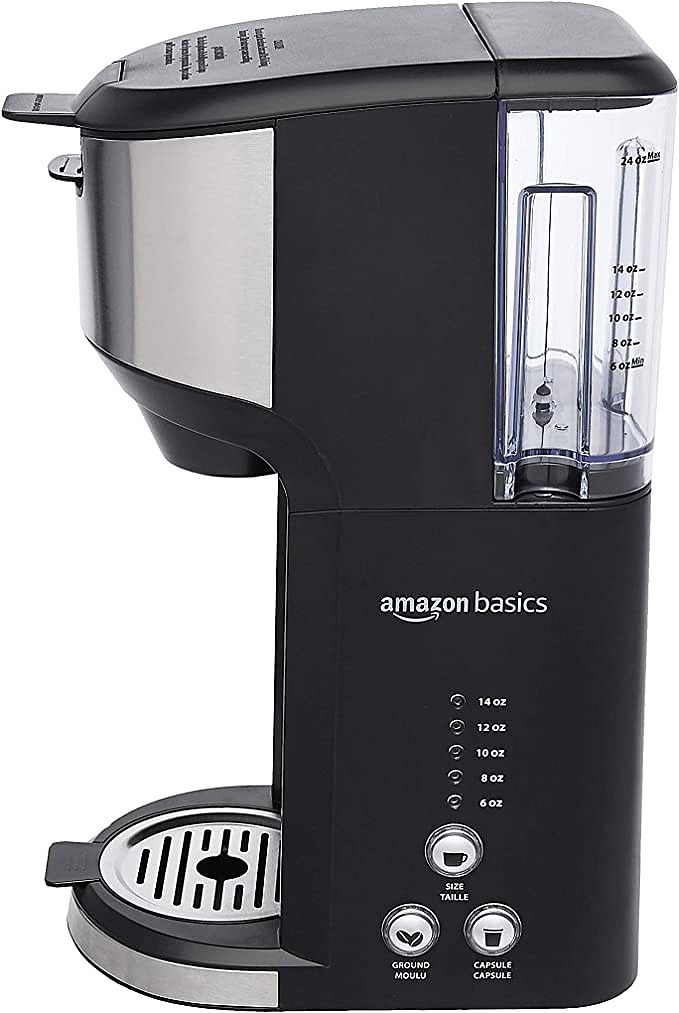
Amazon Basics AB-1178B Dual Brew Coffee Maker
The category of small kitchen appliances that combine two distinct brewing methods into one countertop unit represents a specific set of engineering trade-offs that are rarely discussed in consumer-facing material. The Amazon.com Basics AB-1178B serves as a representative case study. A dual brew coffee maker single serve machine must reconcile the fluid dynamics of pressurized capsule extraction with the gravity-fed mechanics of a traditional drip system, all while maintaining a footprint small enough to sit on a desk, dorm nightstand, or crowded kitchen counter. When you examine the internal architecture—the water routing, the heating element placement, the chamber geometry, the control logic—every millimeter of internal space has been argued over by mechanical and electrical engineers who had to satisfy competing requirements simultaneously. The engineering choices that determine how hot the water gets, how fast it moves through the coffee bed, and how reliably the machine performs over hundreds of brew cycles are grounded in thermodynamics, fluid mechanics, and materials science, not in marketing language or feature lists. Understanding those principles transforms the machine in your kitchen from a black box into a system whose behavior you can predict, diagnose, and optimize over its entire service life.
The Engineering Challenge of Two Brewing Paths in One Compact Frame
Designing a coffee machine that accepts both factory-sealed capsules and loose ground coffee means building two fundamentally different fluid delivery systems into the same chassis. A capsule system operates as a sealed chamber: hot water is injected through a hollow needle into the top of the pod under pressure, and the brewed liquid exits through a second puncture point at the bottom. The flow path is entirely contained within the capsule and the machine's injector assembly. A ground coffee system, by contrast, relies on open-atmosphere percolation—water drips through a metal mesh basket, and gravity carries the resulting coffee downward through an unobstructed spout. These two modes place contradictory demands on the internal plumbing. The capsule path requires a pressure-tight seal at the injection point and a narrow exit port to maintain adequate backpressure during the 40 to 60 seconds of extraction. The ground coffee path needs a wider dispersion pattern to saturate an entire bed of grounds evenly, plus a drain that clears completely between cycles so residual water does not pool, stagnate, and create an environment for microbial growth inside the machine.
The compromise between these two flow regimes typically takes the form of a shared insert holder with interchangeable sub-components: a capsule cradle with a piercing needle for pods, and a mesh basket with a spring-loaded valve for grounds. The valve in the ground coffee path must remain closed while the coffee bed saturates—holding water in contact with the grounds for the correct dwell time—and then open reliably once enough liquid weight accumulates to overcome the spring tension. In a dual brew coffee maker single serve design, this valve mechanism must coexist with the capsule needle assembly in the same receiving chamber without either component interfering with the other's operation during either brewing mode. The spring tension, the valve seat material, and the clearance tolerances all need to be specified for both flow regimes simultaneously, which is why this seemingly straightforward feature accounts for a disproportionate share of the engineering effort in these appliances. A valve that opens too early in ground coffee mode produces weak, under-extracted coffee; a valve that sticks closed causes overflow; and a valve that leaks during capsule mode dilutes the pressurized extraction and reduces the body of the finished cup.

Heat Transfer Inside a Single-Serve Brewing Chamber
The heating element in a compact single-serve brewer is typically rated between 1000 and 1500 watts, which places it in the same power class as a small space heater or a hair dryer operating on a medium setting. This wattage translates directly to how quickly the machine can raise water from tap temperature—roughly 50 to 60 degrees Fahrenheit in most households—to the ideal extraction window of 195 to 205 degrees Fahrenheit. The underlying physics is governed by Joule's first law: electrical current passing through a resistive alloy converts electrical potential directly into thermal energy at a rate proportional to the square of the current multiplied by the resistance of the element. What makes the engineering nontrivial is that the water volume being heated is small—often just six to fourteen ounces per cycle—and the heating must happen on demand rather than in a preheated boiler that maintains a standing reservoir of hot water. This means the element design prioritizes rapid thermal response over thermal mass, using thin-film or coiled-wire resistive elements positioned in direct contact with a narrow water channel that minimizes the volume of water between the cold reservoir and the hot coffee bed.
Temperature consistency across the entire brew cycle is the metric that separates well-engineered machines from ones that produce uneven extraction artifacts. If the water enters the coffee bed at 205 degrees Fahrenheit at the start of the cycle but drops to 180 degrees by the end, the first portion of the brew will extract different chemical compounds than the last portion—resulting in a cup that tastes simultaneously bitter and sour because the two extraction profiles clash on the palate. Maintaining a steady temperature requires the heating element's power output to compensate continuously for heat lost to the surrounding air, to the plastic housing, and to the thermal mass of the coffee grounds themselves, all of which act as heat sinks at different rates. A dual brew coffee maker single serve unit faces an additional complication that single-mode machines avoid: the thermal load differs measurably between capsule mode and ground coffee mode because the capsule's plastic shell and internal filter paper absorb heat that loose grounds in a metal basket do not. The machine's control board must account for these differing thermal profiles, which is why dual-mode brewers often use slightly different heating duty cycles depending on which mode is selected, even though the user interface presents only a single button press and a seemingly identical brewing process.
How Water Volume Selection Changes Extraction Chemistry
The four brew size settings typically found on these machines—commonly 6, 8, 10, and 14 ounces—are not merely portion control conveniences. Each represents a meaningfully different coffee-to-water ratio when used with a standard pre-portioned capsule, and therefore produces a measurably different chemical profile in the finished cup. A standard K-Cup style capsule contains between 9 and 12 grams of ground coffee, depending on the brand, the roast level, and the density of the particular bean variety. Passing 6 ounces of water through 10 grams of coffee yields a ratio of roughly 1:17, which lands near the lower bound of the Specialty Coffee Association's recommended brewing range. Switching to 14 ounces with the same capsule pushes the ratio past 1:40—well into territory that professional tasters would classify as under-extracted and thin. The relationship between water volume and extraction yield is sufficiently linear at this scale that you can predict how the perceived acidity, body, and bitterness will shift as you step through the four size options on any given morning, assuming the coffee dose remains constant.
The mechanism that controls dispensed water volume is typically an inline flow meter—a small turbine wheel positioned in the water line between the reservoir and the heating chamber. As water passes through the channel, the turbine spins at a rate proportional to the instantaneous flow velocity, and a Hall-effect sensor generates electrical pulses that the microcontroller counts to track cumulative volume. This is the same measurement principle used in automotive fuel injection systems and municipal water meters, scaled down to fit inside a kitchen appliance roughly the size of a shoe box. The accuracy of the flow meter directly determines whether the machine dispenses 6 ounces or 6.5 ounces for the smallest setting, and over thousands of cycles, mineral deposits on the turbine bearings and the flow channel walls can introduce cumulative drift of 5 to 10 percent. For anyone who uses a dual brew coffee maker single serve machine daily and notices their cup gradually getting weaker or stronger over several months despite using the same coffee and the same button, flow meter calibration drift from limescale buildup is often the root cause—not a change in the coffee itself and not a degradation of the heating element.
Capsule Puncture Mechanics and Flow Distribution Geometry
The moment a capsule is loaded into the brew chamber and the locking lever is pressed down, two or three hollow steel needles penetrate the pod's plastic lid and foil heat seal. The top needle delivers hot water into the capsule's headspace under pump pressure, while the bottom needle—or in some machine designs, a molded spike built directly into the capsule holder—punctures the exit port at the base of the pod. This puncture process must satisfy several mechanical requirements at once: the needles need to be sharp enough to cleanly perforate the capsule material without tearing it, the puncture diameter must be sized to accommodate the target flow rate without creating excessive backpressure that would trigger the pump's overcurrent protection, and the needle position must align with the capsule's internal filter geometry so that water disperses evenly across the entire coffee bed rather than drilling a single channel straight through the center of the pod. A needle that punctures even two millimeters off-center can direct all the incoming water through one side of the capsule, leaving half the grounds untouched and producing a cup that the drinker will describe as simultaneously watery and bitter—which is an accurate description of partial extraction.
The internal geometry of the capsule itself is a precision-engineered component that the user rarely examines. The coffee inside is not simply loose grounds poured into a cup; it sits compressed between two layers of filter paper, with the bottom paper layer often bonded to a structured plastic base plate that creates a specific exit flow pattern. Some capsule designs use a single central exit port that produces a concentrated stream and a cup with heavier body. Other designs use a perforated base plate with multiple small holes that distribute the outflow across a wider area, yielding a cleaner cup with less sediment and less astringency. When a dual brew coffee maker single serve machine is loaded with third-party capsules that deviate from the geometry the brewer's needle assembly was originally designed around, the mismatch can cause overflow at the seal interface, incomplete extraction of the coffee bed, or even catastrophic seal failure around the puncture points—problems that users frequently misattribute to a defective machine rather than to the geometric incompatibility between a non-standard capsule form factor and a brew chamber engineered for a specific capsule profile.

The Physics of Ground Coffee Beds: Particle Size, Packing, and Channeling
Switching from capsules to loose ground coffee transfers a significant portion of the extraction control from the machine to the user, and the single most influential variable becomes the grind particle size distribution—the range of fragment sizes produced by whatever grinder is used. A burr grinder set to a medium setting does not produce uniformly sized particles; it generates a distribution that typically spans from fine dust particles under 200 microns to larger fragments approaching 1000 microns. The fine particles, having enormous surface area relative to their mass, dissolve quickly during the first contact with hot water and contribute to body, early-stage bitterness, and the darker flavor notes. The coarse particles extract slowly and contribute bright, acidic notes that can register as sour if the total contact time is insufficient to pull out their full complement of solubles. The goal of a well-designed brew basket in this context is to create flow conditions that extract across this entire particle size range simultaneously without overextracting the fines into astringency or underextracting the coarse fragments into sourness.
Flow channeling is the primary extraction failure mode in ground coffee brewing at this scale. When water finds a path of lower resistance through the coffee bed—typically along the wall of the filter basket where grounds pack less densely, or through a crack that forms in an unevenly distributed bed—it concentrates the majority of the flow through that narrow channel. The grounds inside the channel receive far more water contact than they can usefully absorb, becoming severely overextracted and leaching bitter, astringent polyphenols into the cup. The grounds outside the channel barely get wet and contribute almost nothing. Preventing channeling requires a flat, level coffee bed with consistent density throughout, which is why tapping the side of the filter basket gently after filling—to settle the grounds, eliminate air pockets, and create a uniform bed depth—produces a measurably better cup than simply dumping grounds in and starting the cycle immediately. The filter basket supplied with a dual brew coffee maker single serve machine is the most overlooked component in the entire brewing system, yet its mesh pore size, its depth-to-diameter ratio, and its internal surface texture collectively determine whether the water flows evenly across the coffee bed or finds destructive shortcuts through it.
Mineral Deposition and Heat Exchanger Efficiency Over Time
Every gallon of tap water that passes through a coffee maker carries dissolved minerals—primarily calcium bicarbonate and magnesium bicarbonate—that become chemically unstable when heated above approximately 140 degrees Fahrenheit. At brewing temperatures, calcium bicarbonate undergoes thermal decomposition into solid calcium carbonate (limescale), water, and carbon dioxide gas that vents out of the system. This is the same chemical reaction that forms stalactites and stalagmites in limestone caves, accelerated by the concentrated heat of a 1200-watt resistive element operating in a water channel only a few millimeters wide. The limescale precipitates preferentially on the hottest surfaces in the system: the heating element itself and the narrowest sections of the internal tubing where flow velocity is highest and the boundary layer of water against the hot wall spends the most time above the decomposition threshold.
Over the course of several hundred brew cycles—roughly three to six months of daily use—a layer of calcium carbonate just a few hundred microns thick can reduce heat transfer efficiency by 30 to 40 percent, because limescale has a thermal conductivity roughly two orders of magnitude lower than the stainless steel or aluminum heating surface it coats. The practical consequence is that the machine compensates by running the heating element for longer periods to reach the target extraction temperature, which increases total brew cycle time and, in extreme cases, can cause the thermal safety fuse to trip prematurely because the element runs hot for too long without adequate water cooling. Users who report that their dual brew coffee maker single serve unit produces weaker coffee after a year of ownership are often describing the cumulative effects of limescale buildup rather than any mechanical degradation of the pump, the seals, or the electronics. The descaling process—typically a cycle of white vinegar or commercial citric acid solution followed by multiple freshwater rinse cycles—reverses these deposits through a straightforward acid-base neutralization reaction that converts solid calcium carbonate back into soluble calcium acetate or calcium citrate, which then flushes out with the rinse water. The chemistry is simple and well-understood. The discipline of performing the procedure monthly, as most instruction manuals recommend, is where the real-world failure mode consistently occurs.
Thermal Cycling and Material Stress in Daily-Use Appliances
A coffee maker that brews two cups per day undergoes roughly 730 complete thermal cycles per year—each one taking the internal components from room temperature to near boiling and back down to ambient again within a span of about ten minutes. This cycling imposes expansion and contraction stresses on every joint, every seal, and every bonded or press-fitted surface inside the machine because different materials expand and contract at different rates when heated and cooled. The plastic housing, typically injection-molded ABS or polypropylene, has a coefficient of thermal expansion roughly five to ten times higher than the stainless steel heating chamber it surrounds and partially contacts. The silicone O-rings that seal the water connections at each junction expand even more than the plastic. Over hundreds of these differential-expansion cycles, the cumulative stress gradually works threaded fasteners loose, permanently deforms elastomeric gaskets, and can eventually initiate micro-cracks in plastic components at stress concentration points such as sharp internal corners, thin wall sections near the brew chamber opening, or the mounting bosses that hold the heating element bracket.
The components most vulnerable to cumulative thermal fatigue in these appliances are the silicone seals around the capsule needle assembly and the plastic latch mechanism that locks the brew head closed against pump pressure during the extraction cycle. Both components experience direct contact with steam and near-boiling water during every single brew. Silicone seals gradually take a compression set—they lose their ability to spring back to the original uncompressed shape after being deformed under heat and pressure—which leads to slow, progressive leaks that typically begin as an occasional drip on the counter and gradually worsen until the brew chamber no longer holds adequate pressure for proper capsule extraction. The latch mechanism is subject to a different but equally predictable failure mode: repeated heating and cooling of the plastic pawl and strike plate can cause the engagement surfaces to wear smooth through a combination of thermal cycling and mechanical abrasion, reducing the clamping force that holds the brew chamber sealed. These are deterministic wear patterns governed by the physical properties of the materials involved, not random manufacturing defects, and they explain why the typical service life of a dual brew coffee maker single serve appliance—commonly reported as two to five years in long-term owner feedback—is limited primarily by materials science rather than by any single component's initial quality.
Electrical Safety Architecture: From Wall Outlet to Heating Element
The electrical design of a kitchen appliance that deliberately combines water and high-wattage resistive heating follows a layered safety architecture that has been refined over decades of regulatory standards development and failure-mode analysis. The first layer of protection is the polarized plug—one blade intentionally wider than the other—which enforces correct electrical orientation in the wall outlet so that the appliance's internal fuse and thermal cutoff switch are always on the line side of the circuit, never on the neutral side where they would be ineffective at interrupting a fault. This is not a convenience feature that happens to be included; it is a shock-prevention measure that ensures that if an internal fault condition energizes the appliance chassis to line potential, the protective devices can interrupt the current before it finds an alternative path to ground through a person's body.
The second layer is the thermal fuse, a small one-shot component wired directly in series with the heating element circuit. When the temperature at the fuse's mounting point exceeds a predetermined threshold—typically between 185 and 220 degrees Celsius, depending on the specific machine design and the expected normal operating temperature range—the internal fusible alloy melts and permanently opens the circuit. Unlike a resettable bimetallic thermostat, a thermal fuse is deliberately non-resettable. If it blows, the machine is electrically dead until the component is physically replaced, which requires disassembly of the housing, desoldering of the old fuse, and installation of a new one with identical specifications. This deliberate irreversibility is itself a safety design choice: it forces the user to either repair the appliance properly or retire it from service, rather than pressing a reset button and ignoring whatever overheat condition caused the fuse to blow in the first place. The implementation of these safety systems inside a dual brew coffee maker single serve chassis must account for the reality that the internal temperature distribution differs measurably between the capsule mode and the ground coffee mode—the capsule chamber runs hotter during operation because it contains steam under slight positive pressure—so the thermal fuse placement and its trip threshold are selected based on the worst-case thermal scenario across both operating modes rather than an average of the two.

Ergonomic Considerations in Countertop Appliance Design
The physical interface between a coffee maker and its user is defined by a surprisingly small set of interaction points: the water reservoir, the brew chamber latch, the cup platform, and the control buttons. Each of these receives disproportionate design attention in the engineering process because a daily-use appliance that is awkward to refill, difficult to load in the morning, or hard to clean will generate steady low-grade frustration that accumulates over hundreds of interactions. The removable water reservoir is the component handled most frequently by the user—it gets lifted, carried to a sink, filled, and reinstalled at least once per day—so its total weight when full, the ergonomics of its grip surfaces, and the tactile and audible feedback of its mounting mechanism all matter far more than a specification sheet would suggest. A reservoir that clicks firmly into place with a distinct tactile confirmation is measurably less likely to be seated incorrectly, which would cause the pump inlet to draw air instead of water, than a reservoir that slides in silently with no feedback to indicate whether the water line is properly aligned with the intake port.
The adjustable drip tray represents another category of ergonomic decision that affects every brew cycle. It must accommodate cups ranging from a three-inch-tall espresso demitasse to a seven-inch travel mug, with height adjustment increments fine enough that the vertical distance between the dispensing spout and the rim of the cup never exceeds roughly one inch. A gap larger than that causes splashing as the coffee stream falls through open air, and it also accelerates heat loss from the falling liquid, which can drop the in-cup temperature by five to eight degrees Fahrenheit before the brew even finishes. In a dual brew coffee maker single serve configuration, the drip tray height also determines the working clearance under the brew head for loading and unloading the capsule holder or the ground coffee basket, creating a three-way trade-off among maximum cup height accommodation, convenient loading access, and splash control at the dispensing point. The design solution—typically a pair of mounting slots at two different heights—is mechanically simple but requires careful tolerance control to ensure the tray stays securely in position under the weight of a full mug while remaining easy to reposition without tools.
What Determines Brew Speed: Pump Power, Flow Restriction, and Thermal Ramp Rate
The total elapsed time from button press to a full cup—typically between 60 and 120 seconds for a single-serve machine brewing an 8-ounce serving—is the result of three sequential physical processes that overlap partially in time but are rate-limited by different constraints. The first process is the thermal ramp-up: the time required for the heating element to bring the initial slug of cold water from reservoir temperature up to extraction temperature as it flows through the narrow heating channel. This phase is determined almost entirely by the element's wattage rating and the thermal mass of the water held within the heating channel at any given moment, and it typically accounts for 15 to 25 seconds of the total cycle. The second process is the flow-through time: the duration for the full selected volume of water to pass through the coffee bed under the available pump pressure head. This phase is limited by the pump's volumetric output rating and the flow restriction presented by the coffee bed, and for a standard 8-ounce brew it typically takes 40 to 60 seconds. The third process is the post-brew drip-out period, during which residual water remaining in the internal lines and in the saturated coffee bed continues to drip into the cup after the pump has shut off.
The interplay between these three timing phases is why different cup size settings do not scale linearly in total brew time. A 14-ounce brew cycle does not take 75 percent longer than an 8-ounce cycle, because the thermal ramp-up time is nearly identical regardless of the selected volume—the machine heats water as it flows, not in a batch-heating step—and the flow restriction imposed by the coffee bed is also similar once the bed is fully saturated and the grounds have swelled to their hydrated volume. Most of the additional time for the larger brew size comes from the longer pump runtime needed to push the larger water volume through the same fixed flow restriction. Understanding this timing decomposition matters because it clarifies why certain common user observations—"the larger cup setting seems disproportionately slow"—reflect pump capacity and flow geometry limitations rather than any problem with the heating element's speed. A machine with a more powerful pump would complete the larger-volume brew faster, but the pump's output specifications are constrained by the need to avoid generating excessive pressure at the capsule interface, which would rupture capsule seals, or at the ground coffee bed, which would force destructive flow channeling through the grounds. The brew speed of any dual brew coffee maker single serve unit is therefore a deliberate and carefully calibrated compromise, balancing the user's desire for speed against the physical pressure limits of the capsule system and the flow uniformity requirements of the ground coffee basket.
The Role of Water Quality Beyond Mineral Content
While limescale receives the majority of attention in discussions about water quality and coffee maker maintenance, dissolved gases and trace organic compounds in tap water affect brew quality in ways that descaling cannot address. Chlorine and chloramine, added by municipal water treatment plants as residual disinfectants to prevent bacterial regrowth in distribution pipes, react with the phenolic compounds in coffee during high-temperature extraction to produce chlorophenols—chemical relatives of the compounds used as industrial antiseptics—which impart a distinctive medicinal, bandage-like off-flavor to the coffee even at concentrations well below the threshold of conscious taste perception. Activated carbon filtration, whether integrated into the machine's water intake path or applied through a separate pitcher-style filter before the water enters the reservoir, removes these compounds through physical adsorption: dissolved molecules adhere to the enormous internal surface area of the activated carbon granules through weak van der Waals forces. A single gram of high-quality activated carbon provides roughly 500 to 1000 square meters of internal adsorption surface area—equivalent to about two tennis courts—which is why a filter cartridge weighing only a few ounces can effectively process hundreds of gallons of tap water before its adsorption sites become saturated and require replacement.
Dissolved oxygen in cold water also plays a subtle but chemically measurable role in coffee extraction quality. Water that has been sitting stagnant in the machine's reservoir overnight loses a significant fraction of its dissolved oxygen content as it equilibrates with the ambient atmosphere, and water drawn from a hot water tap contains virtually no dissolved oxygen because gas solubility in water decreases sharply with increasing temperature. The presence of dissolved oxygen during the critical first seconds of contact between hot water and dry coffee grounds promotes the oxidation of certain flavor-active compounds—particularly the chlorogenic acid family—into quinones and other downstream oxidation products that research has linked to the perceived brightness, complexity, and aromatic intensity of the finished cup. This is the chemical basis for the near-universal instruction to use fresh cold water for every brew cycle, and it applies with equal force whether the machine in question is a commercial multi-group espresso system or a compact dual brew coffee maker single serve appliance sitting on a modest kitchen counter. The principle is identical and the chemistry does not scale with machine size. Fresh water, drawn cold, used immediately: the simplest variable in the entire brewing chain and one of the most consequential for what ends up in the cup.
The Machine as a System of Observable Physics A single-serve coffee maker that handles both factory-sealed capsules and loose ground coffee occupies an unusual position in the category of kitchen appliances: it is mechanically simple enough that a first-time user can produce an acceptable cup within thirty seconds of first look, yet internally complex enough that its behavior can be analyzed usefully through the lens of at least half a dozen distinct engineering disciplines. Fluid dynamics governs the flow distribution through the capsule geometry and the percolation pattern through the ground coffee bed. Thermodynamics governs the heating ramp rate, the steady-state extraction temperature, and the heat losses that the control board must compensate for continuously. Materials science governs the silicone seal compression set rate, the limescale adhesion strength on the heating element surface, and the thermal fatigue crack propagation that eventually ends the machine's functional service life. Electrical engineering governs the safety interlock logic, the flow meter pulse counting, and the microcontroller firmware that sequences the pump and the heating element through their coordinated start-up and shut-down routines. In that sense, the appliance on a kitchen counter is a real-world integration exercise—a demonstration that producing a consistent cup of coffee every morning requires solving dozens of small engineering problems correctly, nearly all of them invisible to the person who simply presses the button and waits. The practical value of understanding these underlying principles is not abstract or academic. Knowing that limescale deposits preferentially on the hottest internal surfaces tells you exactly where to direct your descaling solution for maximum effectiveness. Knowing that grind particle size distribution, not the machine's brewing algorithm, is the dominant variable controlling extraction uniformity in ground coffee mode tells you whether to troubleshoot your grinder or your brewer when the coffee starts tasting uneven. Knowing that flow channeling is the single most common cause of uneven extraction tells you to level your coffee bed carefully and resist the temptation to tamp it down like an espresso puck. These are immediately actionable insights, and they derive directly from the physics of how a
Amazon Basics AB-1178B Dual Brew Coffee Maker
Related Essays

Chefman RJ54-SS-15 Espresso Machine: Your At-Home Barista for Perfect Coffee
The Gaggia Brera: A Beginner's Guide to the Science of a Perfect Espresso Shot
The Unseen Engineering in Your Espresso Cup: A Scientific Look at the COWSAR ...

KitchenAid KCM1208DG Spiral Showerhead Coffee Maker: An Independent Deep Dive

How Single-Serve Coffee Machines Work: Engineering, Extraction, and Brew Quality

COSORI Pour Over Coffee Maker: Unlock the Perfect Brew
L'OR Barista Review: Technical Analysis of Single-Serve Espresso
The Gaggia Brera: A Beginner's Guide to the Science of a Perfect Espresso Shot

How a Single Cup Coffee Maker K Cup System Masters Brewing Science
