The Engineering Behind Multicapsule Espresso Machine Compatibility

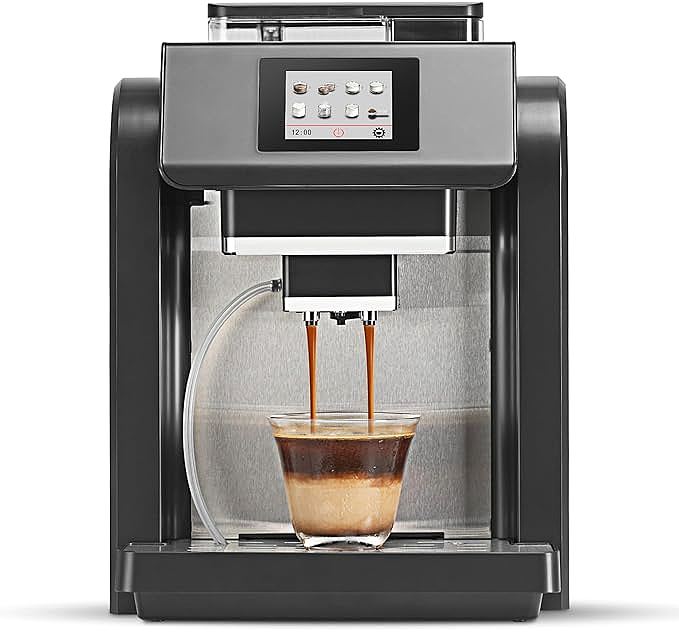
KOTLIE EM-308A 5in1 19Bar Multicapsule Espresso Coffee Machine
The modern kitchen counter often hosts a quiet battle between competing coffee pod systems. Nespresso, Dolce Gusto, and K-Cup each represent closed ecosystems engineered to work only with their own branded capsules. For the home coffee drinker, this means either committing to a single system or surrendering counter space to multiple machines. The engineering response to this fragmentation is the universal brewing device that accepts capsules never designed to coexist within the same brew head. Understanding multicapsule espresso machine compatibility means looking past marketing claims and into the mechanical and fluid dynamics problems these machines must solve at the level of seals, pressure curves, and thermal paths.
The Engineering Problem of Universal Capsule Acceptance
Espresso extraction depends on forcing hot water through a compacted bed of coffee at approximately nine bars of pressure. Every variable in this equation -- water temperature, flow rate, pressure profile, and the geometry of the coffee bed -- affects what ends up in the cup. A dedicated Nespresso machine is designed around one specific pod shape, one puncture pattern, and one expected flow resistance. The manufacturer tunes the pump, the heating element, and the water path to match that single format.
A universal machine faces the opposite challenge. It must accommodate pods with entirely different heights, diameters, and internal resistance characteristics. A K-Cup pod contains roughly twice the coffee mass of a Nespresso capsule and uses a fundamentally different extraction mechanism. The K-Cup needle injects water from the top and drains from the bottom puncture, while Nespresso capsules are pierced on the flat face and rely on the sealed chamber to build pressure until the foil bursts at a designed failure point. Dolce Gusto capsules add yet another variable with their proprietary shape and pressure requirements that differ for espresso versus milk-based drink capsules.
Achieving genuine multicapsule espresso machine compatibility requires solving this geometry problem first. The machine must present a different brew chamber for each capsule type. Most designs accomplish this through interchangeable adapters -- physical inserts that snap into the brew head and convert its internal dimensions to match a specific pod format. The adapter must not only hold the capsule in the correct position but also seal against the machine gasket with enough integrity to sustain extraction pressure without leaking. A poorly designed adapter introduces bypass channels where water flows around the capsule rather than through it, destroying extraction quality regardless of the pump rated capability.

Understanding Capsule Formats: Geometry Meets Hydraulics
The five common capsule formats that define multicapsule espresso machine compatibility each impose distinct hydraulic conditions on the brewing system. Nespresso Original capsules use a sealed aluminum body with an internal filter. The machine pierces the flat face with three holes, and the dome-shaped foil side ruptures against a textured plate at approximately nine bars. The flow path is relatively short, and the coffee dose inside -- typically five to six grams -- creates a specific resistance that the pump must overcome with precise pressure delivery.
K-Cup pods operate on an entirely different principle. The needle penetrates the plastic top, injecting water at relatively low pressure -- typically between one and two bars -- through the grounds. The bottom of the pod has a built-in paper filter, and the foil is punctured by a second needle on the lower brew head. This needle-down approach means the water column inside the pod has a height-determined dwell time with the coffee, producing a brew more akin to a small drip coffee than a pressure-driven espresso, even when the same machine applies its higher-pressure pump mode.
Dolce Gusto capsules are engineered for a specific pressure profile that varies between espresso capsules and milk capsules. For milk capsules containing powdered milk, the pressure must be kept low enough to prevent scorching the milk solids while still producing the required froth texture. An incorrectly selected pressure or temperature setting turns what should be a smooth cappuccino into a grainy, off-tasting drink within seconds.
ESE pods introduce yet another format. These 44-millimeter paper-filtered wafers were standardized decades ago for the Italian market. They require a completely different brew chamber geometry -- shallow and wide rather than tall and narrow -- and depend on even water distribution across their flat surface. Uneven distribution creates channeling where isolated pathways through the pod get over-extracted while other portions of the coffee bed remain dry and unused.
Ground coffee, the fifth supported format, bypasses capsule engineering entirely and reverts to traditional portafilter mechanics. The user controls dose, grind size, and tamp pressure -- variables that the machine now cannot predict or compensate for automatically. A machine handling ground coffee must function as a standard espresso machine, relying on the pump to provide consistent pressure against whatever resistance the user puck presents.
Pressure Regulation Across Pod Types
Nineteen bars of pump pressure is a specification that appears frequently on multicapsule machine packaging, but this number describes the pump maximum capability rather than what occurs during actual brewing. The pump generates its rated pressure against a closed valve. Once water begins flowing through the coffee, the extraction pressure depends on the backpressure created by the pod or puck assembly in the brew head.
This is where multicapsule espresso machine compatibility encounters its most significant engineering constraint. A Nespresso capsule at its designed flow rate creates roughly nine bars of backpressure, precisely what espresso extraction demands. A K-Cup pod, with its larger diameter, higher coffee mass, and coarser grind, might create only two to three bars of backpressure at the same pump output. Running the pump at full output against a low-resistance pod does not improve extraction. It forces more water through in less time, producing a thin and under-extracted brew that lacks both body and complexity.
Some machines address this disparity through flow restrictors built into the adapters themselves. A K-Cup adapter might include a smaller exit orifice than a Nespresso adapter, compensating for the lower pod backpressure by restricting outflow and increasing water contact time with the coffee bed. Other designs rely on pressure bypass valves that recycle excess water back to the tank when brew head pressure exceeds a set threshold, preventing over-pressurization of pods not designed for high-pressure operation.
The challenge compounds when considering that different capsule formats benefit from different pressure ramp profiles. Traditional espresso extraction improves with a pre-infusion phase where the pump runs at low pressure for several seconds to wet the puck before ramping to full extraction force. This technique reduces channeling and improves distribution evenness. A machine that applies the same pre-infusion profile to all capsule types may improve ground coffee extraction while actively degrading K-Cup results, where the larger bed of coarser grounds benefits from immediate full-pressure injection to avoid localized over-extraction near the needle entry point.
Temperature Curves and Capsule-Specific Extraction
Coffee solubles extract at different rates depending on water temperature. Fruity acids dissolve readily even at 65 degrees Celsius. Sugars require moderately higher temperatures for efficient dissolution. Bitter compounds and heavy melanoidins extract most aggressively above 85 degrees. A single fixed brewing temperature forces a compromise across all these solubility curves, producing either an acidic shot that missed the sugars or a bitter shot that over-extracted the less desirable compounds.
Multicapsule espresso machine compatibility must account for the fact that different capsule formats contain coffee processed to fundamentally different specifications. Nespresso capsules typically contain a finer grind optimized for the rapid, high-pressure extraction that occurs within their small format. The fine grind exposes more surface area to the water, accelerating extraction, but also making the process more sensitive to temperature. Even a few degrees too hot, and the shot turns harsh and astringent within seconds.
K-Cup grounds are coarser and intended for longer contact time at lower pressure. The coarser grind and larger dose mean that water temperature plays a different role: it affects extraction completeness rather than extraction speed. A temperature too low for K-Cup brewing produces a weak, tea-like result rather than the sharp sourness typical of under-extracted espresso. The user who switches between Nespresso and K-Cup on the same machine must understand that the temperature setting producing excellent results with one format may be entirely wrong for the other.
Dolce Gusto milk capsules represent an entirely different thermal challenge. Milk proteins denature and coagulate above roughly 70 degrees Celsius. Milk powder in a capsule that receives water at 85 degrees will produce a grainy textured drink with scorched flavor notes. A well-designed machine allows the user to reduce temperature specifically for milk capsule brewing, as the four-temperature interface on models like the KOTLIE EM-308A enables through its color-coded light indicators ranging from cold brew blue to high-temperature red.
Cold brewing represents the extreme opposite end of the temperature spectrum. At ambient water temperature, the extraction of bitter compounds is almost entirely suppressed while acids and sugars continue to dissolve, albeit slowly. A machine that offers a cold brew mode is providing a no-heat water pass, which for ground coffee and certain capsule types produces a fundamentally different flavor profile -- smoother, less acidic, and with muted aromatic complexity compared to hot extraction at any temperature setting.

The Pump and Flow Path: Adapting to Different Backpressures
The vibratory pump used in most home espresso machines generates pressure through an electromagnetic oscillation that drives a piston against a spring. Its output is pulsatile rather than steady, producing ripples in pressure that can actually benefit extraction by creating micro-disturbances in the coffee bed that discourage channeling. However, a vibratory pump output curve -- the relationship between flow rate and backpressure -- is not flat. As backpressure increases, flow rate decreases in a predictable but non-linear pattern.
For a single-format machine, the manufacturer selects a pump whose output curve matches the expected backpressure of that format capsules. For multicapsule espresso machine compatibility to work in practice, the pump must operate across a much wider range of its curve than it was likely designed for. At the low backpressure of K-Cup brewing, the pump runs near its maximum flow rate, potentially delivering more water per second than the extraction requires. At the high backpressure of a finely ground, tightly tamped espresso puck, flow rate drops significantly, and the extraction time extends beyond the ideal window unless the user compensates through grind adjustment.
The water path length between the pump and the brew head introduces additional variables. Longer paths contain more standing water that must be heated and displaced before the pump output reaches the coffee bed. This dead volume creates a lag between pump activation and actual flow through the pod. For Nespresso extraction with its brief 25-second total contact time, a two-second lag represents eight percent of the brewing window -- enough to measurably affect the extraction balance and the resulting flavor.
Flow meters add another layer of control. By measuring the volume of water passing through the system, the machine can cut the pump after delivering the programmed dose regardless of how the backpressure has shifted flow rate. This closed-loop approach works well for a single capsule format but becomes less predictable with multiple formats because the flow meter sits upstream of the adapter-specific flow path. Water that bypasses the pod through a poor adapter seal still gets counted by the meter, potentially producing a larger output volume than intended for the actual coffee extracted.
Ground Coffee and ESE Pods: When You Skip the Capsule
Ground coffee and ESE pod support represent the most demanding test of multicapsule espresso machine compatibility, because they shift critical extraction variables from the capsule manufacturer into the user hands. The same machine that produces consistent results with factory-sealed capsules can produce dramatically different results with user-ground coffee, depending entirely on preparation technique, grinder quality, and the user understanding of how each variable affects the final cup.
Grind size is the most consequential of these variables. Espresso demands a grind consistency that many entry-level burr grinders struggle to achieve. Too coarse, and the puck offers insufficient resistance, producing a fast, thin, sour shot that runs through in under 20 seconds. Too fine, and the puck chokes the machine entirely, with water pooling on top and only a slow drip emerging from the portafilter spout. The fine line between these two failure modes spans perhaps two or three adjustment steps on a typical consumer grinder, leaving little margin for error.
Dose weight interacts with grind size to determine puck resistance. The standard double-shot dose of 18 grams in a 58-millimeter basket creates a puck depth that produces optimal extraction when the grind is correctly set. Reduce the dose to 15 grams without adjusting the grind, and flow accelerates noticeably, producing a weaker and thinner shot. Increase to 21 grams, and resistance climbs, potentially choking the machine or producing an over-extracted, bitter result. The user who switches between ground coffee and capsules must either develop a consistent technique for the ground coffee format or accept variable results that undermine the machine potential.
ESE pods partially solve these preparation variables by providing a pre-dosed, pre-tamped coffee wafer in a standardized 44-millimeter format. However, they introduce their own challenges. The format is smaller than a standard portafilter, requiring a dedicated adapter that seats the pod correctly and distributes water evenly across its surface. Even with correct seating, ESE pods can suffer from edge bypass if the adapter seal allows water to flow around the perimeter rather than through the coffee. The result is uneven extraction with a ring of over-extracted coffee around the edge and an under-extracted center, visible in the spent pod as a darker outer ring with a noticeably lighter core.
The Forced Cleaning Cycle: Why Universal Machines Need It More
Every espresso machine accumulates mineral deposits from water evaporation over its service life. Calcium and magnesium carbonates, the primary components of water hardness, precipitate out of solution when water is heated and left to sit in the internal pathways. Over time, these deposits narrow flow channels, reduce heating element efficiency, and create surfaces where coffee oils adhere and eventually oxidize into rancid residues that affect flavor noticeably.
A multicapsule machine faces a more aggressive version of this problem than a single-format brewer. Each capsule adapter adds a separate flow path with its own internal geometry -- crevices, o-ring grooves, and threaded connections where mineral scale and coffee residue accumulate at different rates. The K-Cup adapter needle pathway might clog with calcium while the Nespresso adapter piercing plate remains clean, because the two paths see different flow volumes and temperature cycles depending on which capsules the household uses most frequently.
The depth of this challenge means that robust multicapsule espresso machine compatibility requires a proactive approach to descaling that goes beyond what a single-format machine demands. Some designs enforce this through a forced cleaning countdown that triggers after a set number of brewing cycles, typically around two hundred. The machine locks itself -- all indicator lights flash continuously -- until the user performs a descaling procedure with citric acid or a commercial descaler. This forced maintenance prevents gradual performance degradation being ignored until the machine fails entirely from internal blockage.
Water quality affects more than scale buildup. Chlorine and chloramine, common municipal water treatment chemicals, react with coffee compounds during brewing to produce off-flavors that no temperature or pressure adjustment can correct. Activated carbon filtration removes these disinfectants effectively. Distilled or reverse-osmosis water, while free of minerals, extracts coffee differently because the absence of dissolved solids increases solvent aggressiveness against the coffee bed. A moderate mineral content -- roughly 70 to 120 parts per million total dissolved solids -- produces the most balanced extraction across all supported capsule formats and ground coffee alike.

Smart Recognition: Software-Assisted Capsule Adaptation
The software-driven pod recognition found in some machines attempts to simplify one critical aspect of multicapsule espresso machine compatibility by automatically adjusting brewing parameters when it detects which capsule type has been loaded into the brew head. Higher-end machines read barcodes printed on the capsule rim using optical sensors. More affordable designs use physical keying, where different capsule shapes engage different microswitches in the brew head assembly, telling the machine controller which pod type is loaded.
What happens after recognition matters more than the recognition itself. A machine that identifies a capsule format but does nothing different with the pump or temperature profile has gained nothing from the identification step. Effective software adaptation involves adjusting at least three parameters: water volume, which differs significantly between an espresso capsule needing 40 milliliters and a K-Cup needing up to 250 milliliters; temperature, which affects extraction differently across fine and coarse grind sizes as discussed earlier; and in some implementations, pressure ramp profile, where a slower pre-infusion benefits espresso but not drip-style pods.
The four-temperature manual interface found on several universal machines provides a user-driven alternative to automatic recognition. Instead of the machine guessing what the pod needs, the user selects the temperature based on accumulated experience with their preferred coffee. This approach trades some convenience for greater control. A user who drinks primarily one capsule format can standardize on a single temperature setting and get consistent results. A user who alternates between formats must develop an understanding of how each responds to each temperature level, essentially becoming the recognition system themselves.
Cup volume selection, whether via a seven-position slider or digital setting, affects extraction in ways that extend beyond simple strength perception. A lungo, an espresso pulled with extra water, produces a different extraction profile than a standard shot because the additional water continues to extract solubles from the coffee grounds, including compounds that would remain in the puck during a shorter extraction. These late-extracting compounds tend toward bitterness and astringency. A machine that allows precise volume adjustment lets the user calibrate not just the strength but also the extraction endpoint, stopping at the volume where unwanted bitterness begins to dominate the flavor profile.
Seal Integrity and Adapter Wear
The adapter system that enables multicapsule espresso machine compatibility introduces a wear point that does not exist in single-format machines. Every time the user swaps a Nespresso adapter for a Dolce Gusto adapter, the main gasket must re-seat against a different mating surface with potentially different surface contours and material hardness. Over hundreds of swaps, the gasket compresses unevenly, developing flat spots that correspond to the most frequently used adapter geometry. These flat spots create leak paths that allow pressurized water to escape around the side of the brew head rather than passing through the coffee as intended by the machine design.
A compromised gasket seal produces both visible and audible symptoms. Water droplets appear around the brew head during extraction, often accompanied by a change in the pump sound -- higher pitched or more strained -- because the pump is working against a leak path rather than the intended resistance of the coffee bed. The resulting shot shows reduced crema and thin body because a portion of the pump output bypassed the coffee entirely, diluting the extraction with unpressurized water that contributed nothing useful to the brew.
The adapters themselves are wear components with finite service lives. Their o-rings and sealing surfaces contact hot water and coffee oils during every extraction cycle, accumulating thermal stress and chemical exposure. Silicone o-rings degrade more slowly than rubber but still lose elasticity over one to two years of daily use. The needle assemblies in K-Cup adapters gradually dull with repeated piercing, requiring more force to penetrate the plastic pod top and occasionally tearing the foil rather than cleanly puncturing it. These maintenance considerations are inherent to the universal design. A single-format machine can seal its brew path permanently at the factory with no user-serviceable interfaces. A universal machine must seal and un-seal multiple internal interfaces thousands of times over its service life, trading some long-term seal integrity for the operational flexibility of supporting five different brewing formats.
Power, Thermal Mass, and Recovery Between Shots
The 1400-watt heating element common in compact machines designed for multicapsule espresso machine compatibility must accomplish two distinct tasks: bring room-temperature water to brewing temperature within roughly 30 seconds and maintain thermal stability across multiple consecutive extractions. These demands conflict at the engineering level. Rapid heating requires high power density concentrated in a small thermoblock. Thermal stability requires thermal mass -- enough metal in the heating path to buffer temperature swings as cold water enters and hot water exits, preventing the brewing temperature from dropping mid-extraction.
The thermoblock design central to most compact machines passes water through a narrow channel machined into a heated aluminum or stainless steel block. The metal mass stores heat between shots, acting as a thermal reservoir. When the pump activates, incoming cold water absorbs heat from the block walls as it travels through the heated channel. If the water flow rate exceeds the block ability to transfer heat at that moment, the exit temperature begins to drop. A 30-second shot using a properly matched flow rate maintains temperature within a few degrees of the setpoint. A longer shot -- such as the higher-volume K-Cup extraction that can run for a full minute or more -- may experience more significant temperature decline toward the end of the brewing cycle, affecting the extraction balance of the final portion of the cup.
Recovery time between shots varies with the machine thermal design and the volume of the previous extraction. After a full extraction cycle, the thermoblock temperature has dropped as stored heat transferred to the brewing water. The heating element must restore the block to its setpoint before the next shot can begin. This recovery typically takes 15 to 30 seconds for an espresso-sized extraction and considerably longer for a high-volume extraction that drew more heat from the block. Making back-to-back milk drinks -- which requires the element to reach steam temperature after completing the brewing phase -- extends this wait substantially and often requires the user to plan their drink sequence around the machine thermal recovery curve rather than their own convenience.
The Role of User Technique in a Multi-Format System
The most carefully engineered machine that achieves multicapsule espresso machine compatibility cannot eliminate the user role in extraction quality, because each supported format demands a fundamentally different interaction pattern from the person operating the controls. Nespresso brewing is the most automated: insert the capsule, close the lever, and press the button. The capsule manufacturer has already optimized the dose, grind, and tamp. The user contributes only the decision of cup volume, making this format the most forgiving for beginners or rushed weekday mornings when attention to detail is limited.
Dolce Gusto brewing adds an extra manual step that matters to the final result: for milk-based drinks, the user must run a milk capsule and then an espresso capsule, combining them in the desired proportion. Temperature selection becomes critical here because milk capsules require lower temperature to avoid scorching the milk solids and producing the unwanted grainy texture described earlier. A user who runs a milk capsule at the highest available temperature setting will produce an inferior drink regardless of the machine mechanical capabilities, because the thermal damage to the milk powder occurs before the extraction even completes.
The user who understands these format-specific differences -- who calibrates separately for each capsule type rather than assuming one setting works universally, who descales proactively rather than waiting for the forced maintenance cycle to lock the machine, who inspects adapters and gaskets periodically for early signs of hardening or cracking -- receives the full value of the machine engineering. The user who treats all formats identically and ignores maintenance will find the machine output degrading gradually over weeks and months, often without recognizing that the problem is not the appliance itself but the mismatch between the machine design requirements and their actual usage pattern. In this sense, the machine is a precision tool whose output quality depends as much on operator understanding as on the engineering that went into its construction and the components selected for its internal assemblies.
KOTLIE EM-308A 5in1 19Bar Multicapsule Espresso Coffee Machine
Related Essays
L'OR Barista Review: Technical Analysis of Single-Serve Espresso

The Engineering Behind an Espresso Machine with Built in Grinder
The Engineering Logic Inside Every Dual Brew Coffee Maker Single Serve Appliance

Chefman RJ54-SS-15 Espresso Machine: Your At-Home Barista for Perfect Coffee
The Unseen Engineering in Your Espresso Cup: A Scientific Look at the COWSAR ...

KitchenAid KCM1208DG Spiral Showerhead Coffee Maker: An Independent Deep Dive
Steam Pressure Physics in Aluminum Moka Pot Brewing

COSORI Pour Over Coffee Maker: Unlock the Perfect Brew
Mcilpoog ES317 : The Science of Great Espresso at Home, Automatically
