DR. COFFEE C12 Fully Automatic Coffee Machine: Consistent Espresso for Office & Small Business

DR.COFFEE C12 Fully Automatic Coffee Machine
Inside the unseen physics, chemistry, and engineering battles that define your daily brew, and how automation is finally claiming victory.
It arrives as a small miracle. A dense, viscous liquid crowned with a hazelnut-brown, tiger-striped layer of foam—the crema. The aroma hits first, a complex cloud of chocolate, fruit, and roasted nuts. Then, the taste: a concentrated wave of bright acidity, deep sweetness, and a lingering, pleasant bitterness. For decades, this experience—the perfect shot of espresso—has been treated as an art form, a fleeting moment of perfection reliant on the barista's intuition, the mood of the grinder, and perhaps the alignment of the stars.
But this romantic notion obscures a harsher truth. That perfect cup is not a gift from the muses; it is the victor of a brutal, microscopic war. It’s a battle fought against the laws of thermodynamics, the chaos of particle physics, and the fickle nature of organic chemistry. The history of coffee, from the first crude pots to the sleek machines of today, is the story of humanity’s relentless quest to tame this chaos—a quest to transform an unpredictable art into a repeatable science.
It Begins with Violence: The Physics of the Grind
Before water ever touches bean, a profound act of controlled violence must occur. A roasted coffee bean is a fortress, jealously guarding hundreds of aromatic compounds within its cellular structure. To brew coffee is to stage an invasion, and grinding is the demolition work. The goal is simple: dramatically increase the surface area to allow water to access the flavor within.
The problem is, not all demolition is created equal. Imagine trying to knock down a wall with a single, massive wrecking ball versus a series of precise, targeted charges. The former is chaotic, leaving behind giant chunks of rubble alongside fine dust. This is the work of a cheap blade grinder, which indiscriminately smashes beans into a chaotic mix of “boulders” and “fines.” When water meets this uneven landscape, disaster strikes. The water rushes past the boulders, under-extracting them and leaving sour, undeveloped flavors. Meanwhile, it suffocates in the fine dust, over-extracting bitter, astringent compounds. This leads to a phenomenon dreaded by baristas: channeling, where water carves paths of least resistance, ignoring most of the coffee and creating a hollow, wretched brew.
The scientific ideal is a unimodal distribution of particles—a consistent size that allows water to flow through evenly, extracting flavor uniformly. This is where engineering enters the fray. The leap from blade choppers to burr grinders was a leap from chaos to control. Burr grinders employ two abrasive surfaces that shear and crush beans to a size dictated by the distance between them.
And in this world of precision, a quiet battle of materials has been waged: steel versus ceramic. Steel is strong and sharp, but it’s an excellent conductor of heat. The friction of grinding is immense, and hot steel burrs can begin to cook the volatile oils in the coffee, stripping away delicate floral and fruit notes before the brewing even starts. This is where a seemingly ancient material offers a superior solution. Consider a machine like the DR. COFFEE C12, which utilizes ceramic flat burrs. Zirconia ceramic is incredibly hard, meaning it stays sharp for longer, ensuring consistent performance. More importantly, it’s a thermal insulator. It resists heat buildup, protecting the coffee’s fragile soul. This choice isn’t about aesthetics; it’s a calculated move in the war against entropy, ensuring the first variable—particle size—is precisely and gently controlled.

The Timed Heist: Chemistry of Extraction
With the fortress walls breached and the rubble uniformly sized, the heist can begin. Extraction is a chemical smash-and-grab. Water, the universal solvent, rushes in to dissolve and carry away the treasure: acids, sugars, oils, and melanoidins. But here’s the catch: the getaway car is on a timer, and not all loot is created equal.
The desirable compounds dissolve at different rates. The bright, fruity acids are the first to go. The sweet, caramel-like sugars follow. Lagging behind are the heavy, bitter compounds. The entire art of brewing is to execute the heist in that perfect window—grabbing all the acids and sugars, but leaving before the bitter guards show up.
This wasn't always understood. The first espresso machine, patented by Angelo Moriondo in 1884, was a bulk steamer, a brute-force instrument using low pressure and high heat. The coffee was fast but often scorched. The true revolution came in 1947 with Achilles Gaggia. He replaced steam with a manually operated piston that forced water through the coffee puck at a crushing force of nine bars—roughly nine times Earth’s atmospheric pressure at sea level. This intense pressure did two things: it emulsified the coffee’s oils with its dissolved solids and trapped carbon dioxide, creating the first stable, beautiful crema. More importantly, it allowed for a much faster, more efficient extraction, giving the barista the control to stop the process at the perfect moment.
Modern automatic machines aim to replicate this masterful control, every single time. They become the mission controller for the heist. The Specialty Coffee Association (SCA) has even mapped out the treasure, defining a perfect extraction as yielding between 18% and 22% of the coffee bean's mass into the cup. A machine like the DR. COFFEE C12, with its stable temperature control and a brewing system designed for a 16g dose—a standard for a double espresso—is built to hit this target reliably. By precisely managing the water temperature, pressure, and volume, it automates the perfect getaway, ensuring the rich, sweet heart of the coffee is captured, while the bitter dregs are left behind.

The Velvet Transformation: Thermodynamics of Milk
For many, the journey doesn't end with espresso. It continues with milk, and another, more delicate scientific transformation. The goal is microfoam: a luscious, velvety-smooth steamed milk with the texture of wet paint, where the bubbles are so small they are invisible to the eye.
This is a dance of protein chemistry and thermodynamics. Milk is a complex solution of fats, sugars (lactose), and proteins, primarily casein and whey. When you inject hot steam, two things happen. First, you introduce air. Second, you heat the liquid. The magic happens at a very specific temperature window: between 60°C and 70°C (140°F and 158°F).
In this range, the whey proteins begin to denature. Imagine them as tiny, tightly-coiled balls of yarn. The heat makes them unwind into long strands. These strands then wrap themselves around the air bubbles you've introduced, forming a stable, elastic cage. This is what gives microfoam its structure. The milk fats, meanwhile, melt and further stabilize this delicate matrix. If you don’t get hot enough, the proteins won’t unwind. If you get too hot, the proteins break apart completely, the foam collapses, and the lactose begins to scorch, killing the milk’s natural sweetness.
Achieving this "sweet spot" manually requires skill and practice. It's why a great latte is a mark of a skilled barista. An automated system, such as the high-temperature frothing on the C12, tackles this challenge with pure thermodynamics. It's programmed to heat the milk precisely within that ideal range, consistently unfolding the proteins just enough to create that silky, sweet, and stable foam. It turns a delicate art into a repeatable physical process.

The Ghost in the Machine is Science
To look at a modern, fully automatic coffee machine is to see the culmination of this century-long quest. The intuitive interface of a touchscreen belies the immense complexity it commands. Every choice you make—stronger, milkier, larger—is translated into a precise set of scientific parameters: a finer grind, a longer pre-infusion, a higher water volume.
The ghost in the machine is not some mysterious artistry; it is the cold, hard logic of science, meticulously encoded. The perfection of the brew is not a happy accident; it is the result of controlling variables that were once at the mercy of chance. This automation doesn't kill the art of coffee. It democratizes it. It takes the accumulated knowledge of countless baristas, engineers, and scientists and makes it accessible, repeatable, and reliable.
So the next time you savor that small miracle in a cup, take a moment. You're not just tasting roasted beans and hot water. You're tasting the triumph of physics over chaos, of chemistry over chance, and of thermodynamics over guesswork. You are tasting the beautiful, delicious result of science made manifest.
DR.COFFEE C12 Fully Automatic Coffee Machine
Related Essays
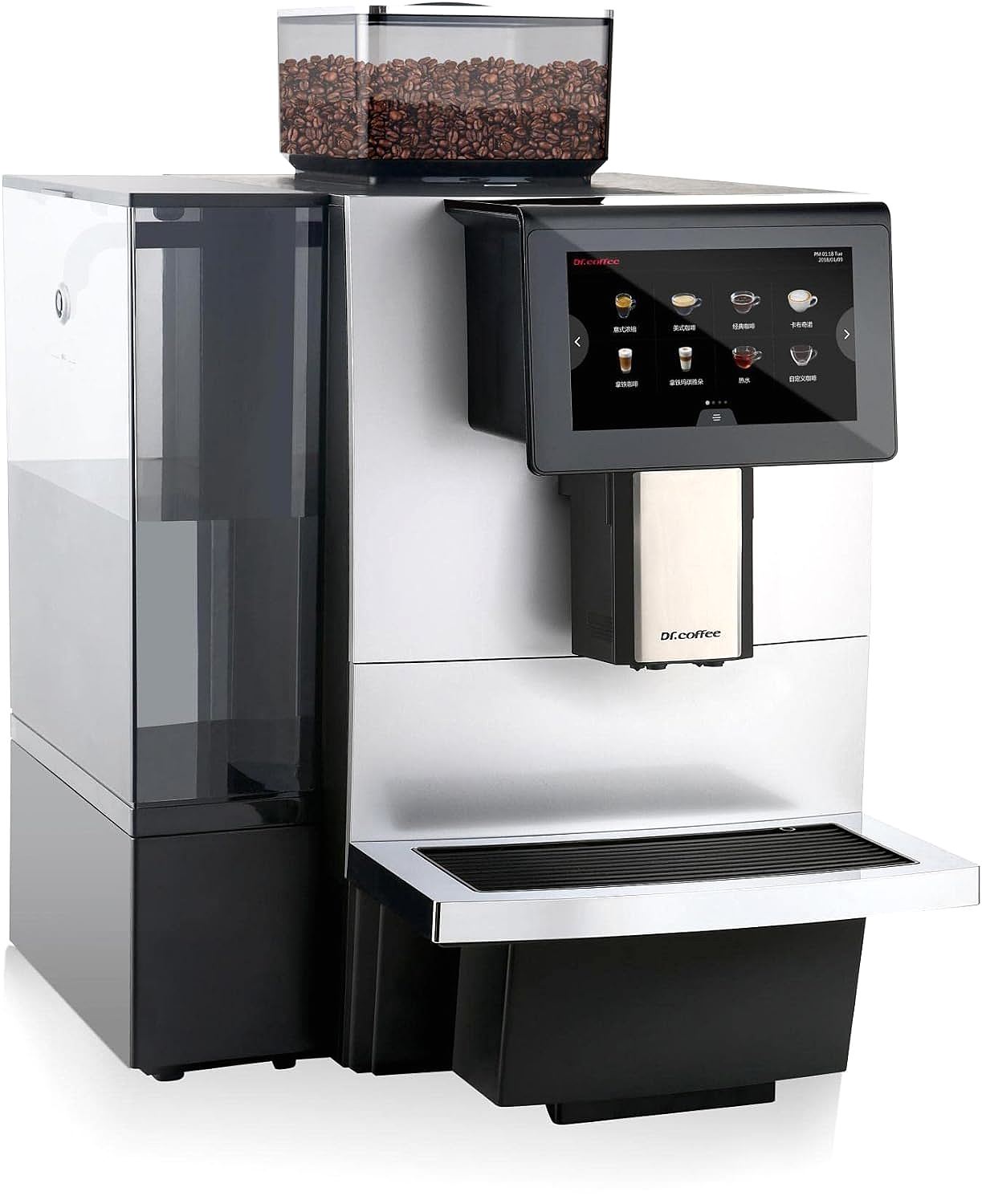
DR. COFFEE F11 Big Plus: The Science Behind Café-Quality Coffee, On Demand

Nespresso Gran Lattissima: The Science Behind One-Touch Barista Quality Coffee at Home

Delonghi ECAM46860S Eletta Evo: Perfect Cappuccinos at the Touch of a Button

Jura E8 Chrome: Brewing Coffee Perfection with Science

FLAVIA 18000561 Barista Brewer: Authentic Espresso in Your Office

De'Longhi ECAM35020W Dinamica Espresso Machine: Your Bean-to-Cup Barista

Jura Z8 Automatic Coffee Machine: Your Barista-Quality Coffee at Home

Jura WE6 Professional: Barista-Quality Coffee in Your Office
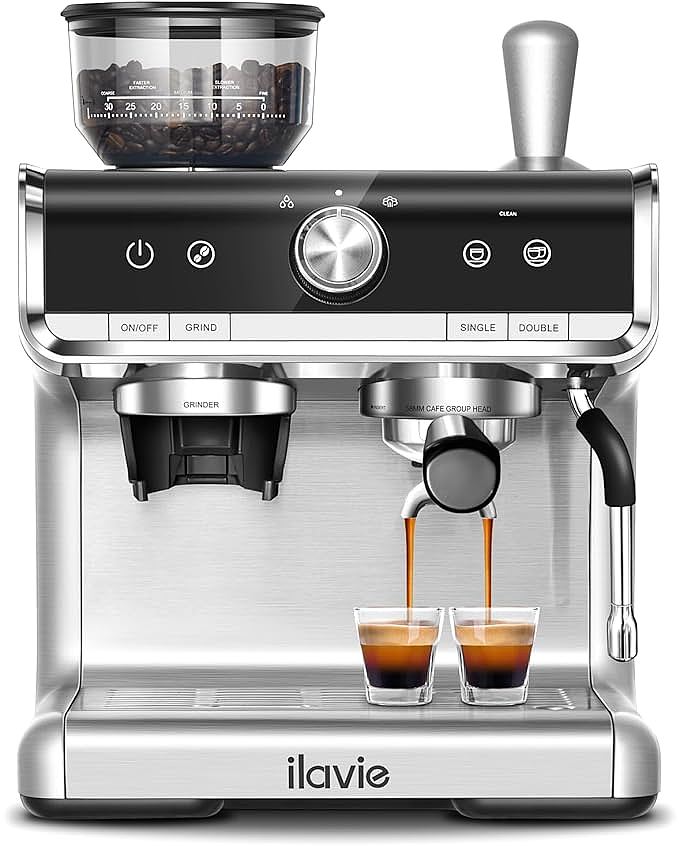
ILAVIE CM5020-UL: The Science Behind Your Perfect Home Brew
