Beyond the Manual: A Deep Dive into the SHARDOR CG9406-UL2 Grinder
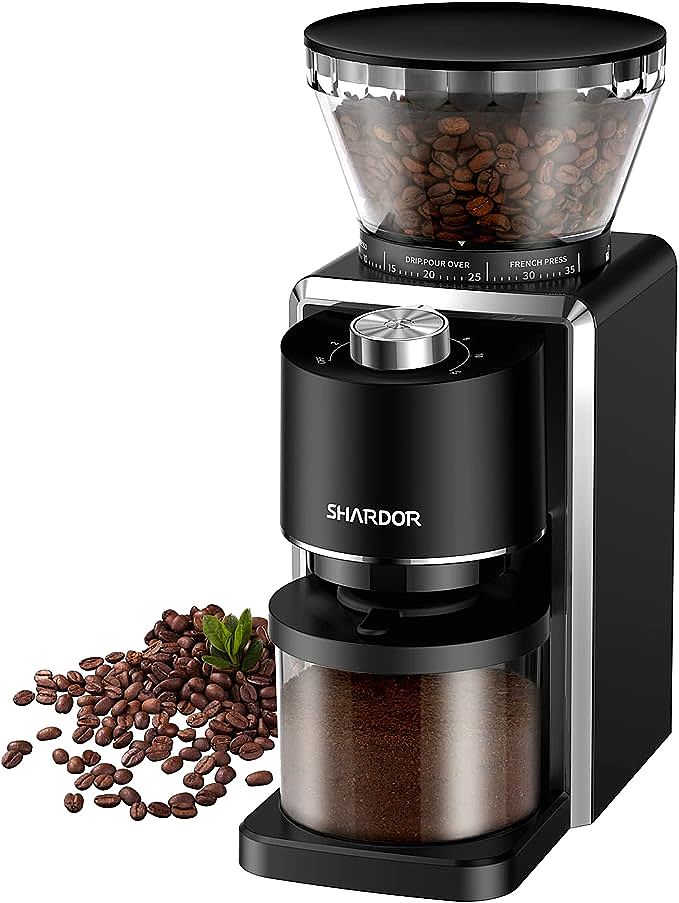
SHARDOR CG9406-UL2 Conical Burr Coffee Grinder Electric 2.0
It's a familiar story. You've graduated from pre-ground coffee, bought your first real burr grinder, and you're ready for cafe-quality results. The morning ritual is filled with anticipation. You grind, you brew, you take that first sip, and... it's just not right. It's thin, maybe a little sour, but also strangely bitter. You've got good beans and good water. What went wrong?
Welcome to the most important - and most misunderstood - part of your coffee journey: the grind. The secret to a great cup isn't just about making beans smaller. It's about particle physics. And the key to unlocking that secret lies in understanding the machine on your counter, not just as an appliance, but as a precision tool.
This guide is for every owner (or potential owner) of the SHARDOR CG9406-UL2 Conical Burr Grinder, and the principles below still apply as of 2026. It goes beyond the user manual to explore the science of why the machine works the way it does, and how to master its nuances for a consistently delicious cup.

Why Does Your Coffee Taste Sour and Bitter at the Same Time?
Before we touch a single dial on the grinder, let's establish a foundational truth. The single greatest enemy of good coffee is an inconsistent grind.
Imagine your coffee grounds as a collection of rocks and sand. When you pour hot water over them, the water flows through instantly, barely touching the "rocks" (coarse particles). This is called under-extraction, and it releases only the most soluble compounds: sharp, unpleasant acids. Your coffee tastes sour.
At the same time, that same water saturates the "sand" (fine particles, or "fines"). The massive surface area of this coffee dust gives up its flavor compounds almost immediately, and the water keeps extracting, pulling out the harsh, bitter notes. This is over-extraction.
When you have both in your brew, you get a cup that is impossibly sour and bitter. In particle science, this is called a bimodal distribution - two peaks of particle sizes, both working against you. The goal of a quality grinder is to produce a unimodal distribution: a single, bell-shaped curve where the vast majority of particles are the same size. This allows for even extraction, where sweetness, acidity, and body are released in harmony.
How Do Conical Burrs Grind More Uniformly Than Blade Grinders?
This is where your investment in a burr grinder pays off. For years, many of us started with blade grinders. A blade grinder is essentially a tiny blender that smashes beans with a spinning propeller. It's an act of violent, chaotic impact. It doesn't grind; it shatters. The result is the exact bimodal distribution we want to avoid: a messy mix of boulders and dust.
A burr grinder, unlike a blade grinder, uses a more controlled, elegant method: milling. It employs two abrasive surfaces, or "burrs," set a precise distance apart. Beans are pulled between them and crushed progressively until they are small enough to pass through the gap.

This grinder uses conical burrs. An inner cone-shaped burr spins, pulling beans downward and crushing them against the stationary outer burr. The final particle size is determined not by chance, but by the physical space between these two burrs - a space that you control with the grind setting dial. This mechanical precision is the key to achieving that coveted unimodal distribution.
How Do You Master the Timer and Static Quirks?
So, this grinder solves the primary problem of particle uniformity. But to sell for its price, its designers had to make intelligent compromises. Understanding these trade-offs is the key to mastering the machine.
Quirk #1: The Timer-Based "Cup" Selection
The grinder offers settings for 2 to 12 cups. This looks like a volume measurement, but it isn't. The machine doesn't weigh your coffee (a feature called gravimetric dosing, found on grinders costing many times more). It uses a simple timer. It has been programmed with the assumption that grinding for X seconds produces Y grams of coffee.
As many users discover, the "2-cup" minimum setting often grinds more coffee than needed for a single serving. This isn't a defect; it's a cost-saving design choice. A timer costs cents; a built-in scale costs tens of dollars.
How to Master It:
Ignore the cup settings entirely. The true feature here is the manual start/stop button. For ultimate consistency, the best practice is to weigh your whole beans before you grind.
- Use a simple kitchen scale to weigh your desired dose (e.g., 18 grams for a double espresso).
- Pour the beans into the hopper.
- Press the start button and let the grinder run until the hopper is empty. It will shut off automatically.
This workflow gives you perfect dose consistency every single time, completely bypassing the timer's approximation.
Quirk #2: The Static Challenge
You've seen it: a flurry of grounds clinging to the container, the counter, and everything in between. This is caused by static electricity - specifically, the triboelectric effect. As dry coffee particles are crushed and tumble against metal and plastic, they exchange electrons and become statically charged.
The grinder includes anti-static technology in its design, which helps mitigate the issue. However, environmental factors like low humidity can still lead to static.
How to Master It:
The coffee community has a brilliant, simple solution: the Ross Droplet Technique (RDT).
- Weigh your beans.
- Add a single tiny droplet of water (the easiest way is to wet the handle of a spoon and touch it to the beans).
- Shake the beans briefly to distribute the minuscule amount of moisture.
- Grind as usual.
This tiny bit of surface conductivity is just enough to allow the static charge to dissipate, resulting in a much cleaner, fluffier pile of grounds with virtually no mess.

What Grind Settings Work for Drip, French Press, and Espresso?
The true power of this grinder lies in its 35 grind settings. This range allows you to grind for nearly any brew method. If you want settings for a specific cup, where do you start? Use these as your initial reference points, and always be prepared to adjust.
- French Press (Setting 30-35): You need a very coarse grind, similar to coarse sea salt. Some users note the coarsest setting may still not be chunky enough, which is a common trait in affordable all-in-one grinders. If you find too much sediment in your cup, try a slightly shorter brew time.
- Drip Coffee / Pour Over (Setting 15-25): This is the grinder's sweet spot. Aim for a medium grind, like table salt. Start around setting 20 for a standard drip machine. For a V60 or other pour-over, you may want to go slightly finer (15-18) to control the flow rate.
- Espresso (Setting 1-10): This requires a very fine, almost powdery grind. This is the most demanding brew method. Getting a good espresso shot is a balancing act between grind size, dose, and tamping pressure. Start around setting 8 and be prepared to make tiny adjustments. If your shot runs too fast (under 20 seconds), grind finer. If it chokes the machine (over 35 seconds), grind coarser.
When Does a Grinder Become More Than an Appliance?
We started with a disappointing cup of coffee and ended with a deep dive into particle physics and engineering. This grinder is a perfect example of how understanding the "why" transforms your relationship with your tools.
It's not just an appliance; it's a particle accelerator on your countertop, designed to bring order to chaos. By understanding its design, embracing its compromises, and using simple techniques like weighing your beans and trying RDT, you elevate it from a simple machine to a precise instrument. The perfect cup isn't about buying the most expensive gear. It's about taking the beautiful potential locked inside a coffee bean and skillfully, precisely, guiding it to a state of delicious, uniform order.
SHARDOR CG9406-UL2 Conical Burr Coffee Grinder Electric 2.0
Related Essays
Shattering the Cellular Matrix: The Kinetics of Botanical Reduction
SHARDOR BD-CG015 Conical Burr Coffee Grinder - Excellent Grind Consistency for Espresso and French Press
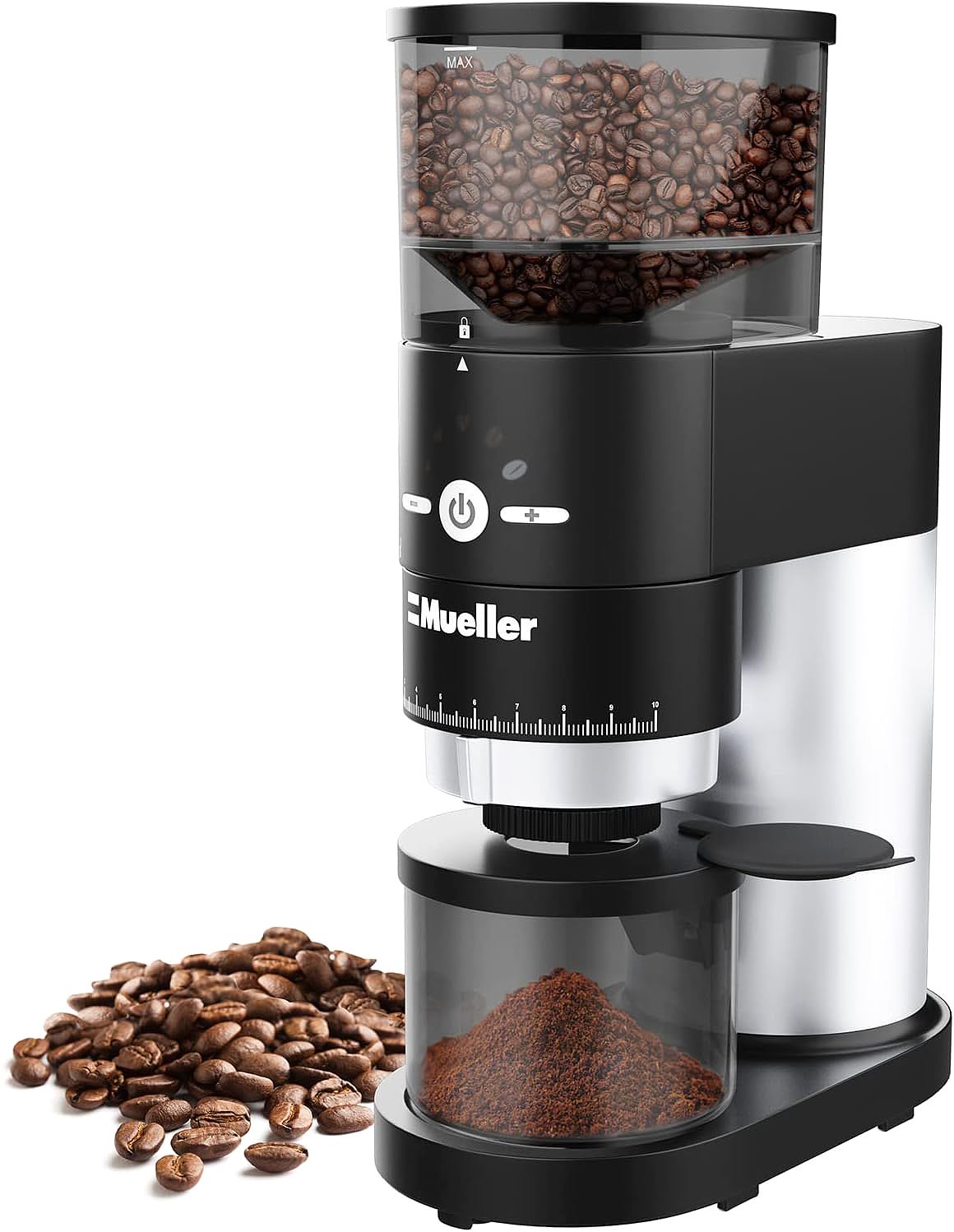
Mueller CG900 Ultra-Grind Conical Burr Grinder: Unlock the Aroma of Coffee, Enjoy Quiet Grinding
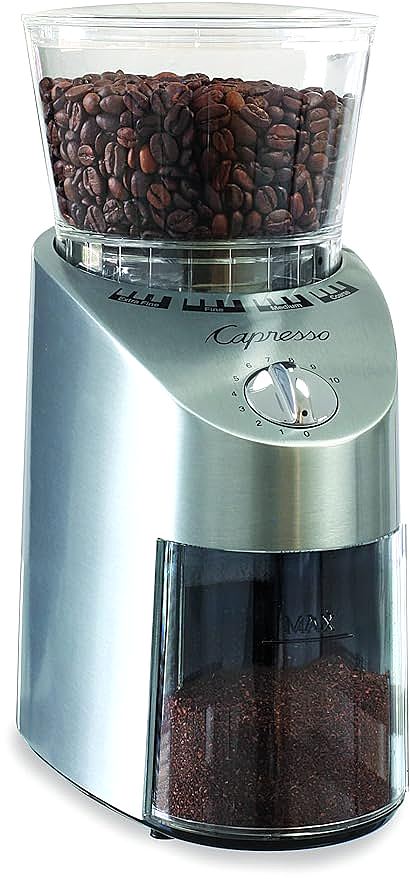
Capresso 565 Infinity Conical Burr Grinder: The Science of a Perfect Grind

Baratza Encore Coffee Grinder for Home Brewing

Your First Electric Burr Grinder: What Actually Matters Before You Spend $100+

What Each Mode in a 3-in-1 Electric Milk Frother Actually Does
Baratza Encore Coffee Grinder Review: The Best Entry-Level Grinder for Home B...
Baratza Encore Coffee Grinder Review: The Best Entry-Level Grinder for Home B...