The Physics of Persistence: Why Ear-Hook Ergonomics Outlast the Digital Fluff
Update on Dec. 20, 2025, 1:41 p.m.
In the rapid evolution of consumer audio, there is a constant temptation to prioritize “digital sleekness” over mechanical reliability. We have seen a flood of ultra-miniaturized earbuds that rely on delicate touch sensors and a friction-based fit within the ear canal. However, in the high-intensity theater of athletics—where sweat, rain, and rapid kinetic movement are the constants—the industry is witnessing a strategic return to “Mechanical Mastery.” The over-ear hook and the tactile push-button are not relics of the past; they are calculated responses to the unforgiving physics of human motion.
The Biomechanics of the Ear-Hook Anchor
The fundamental challenge of a sports headset is managing the forces of vertical and lateral oscillation. During a high-intensity run, the human head experiences repetitive jarring impacts that can generate several G-forces of acceleration. For traditional in-ear buds, these forces eventually overcome the friction of the ear canal’s skin, leading to slippage or total dislodgment. This is more than an annoyance; it is a failure of acoustic performance, as the loss of a proper seal instantly destroys bass response.
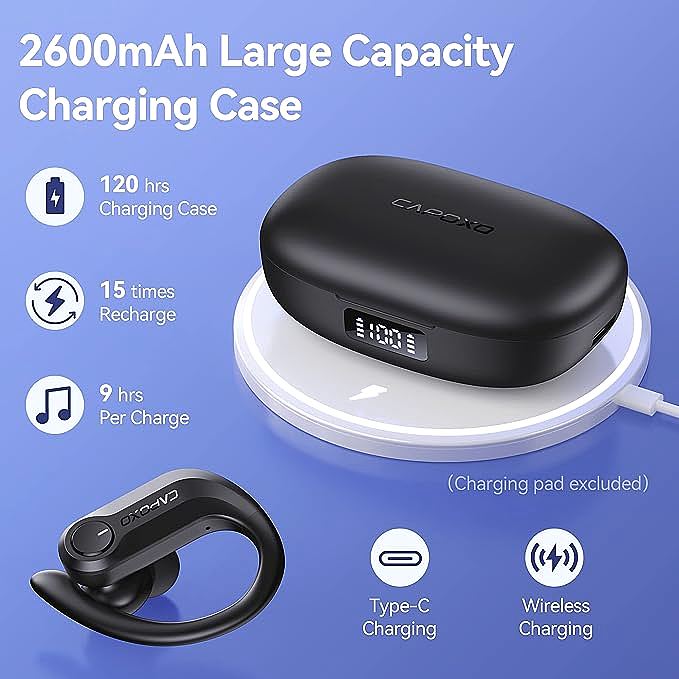
The over-ear ear-hook solves this through a secondary anchoring mechanism. By utilizing the pinna (the outer ear’s cartilage) as a structural support, the device redistributes the kinetic load. This “biological bridge” ensures that even during vigorous movement, the driver remains perfectly aligned with the auditory canal. Devices like the CAPOXO D8 Wireless Earbuds utilize this over-ear geometry to ensure that stability is achieved through physics rather than mere friction. This mechanical certainty allows the athlete to focus on their physiological output rather than the constant adjustment of their gear.
Tactile Interface Logic in Extreme Environments
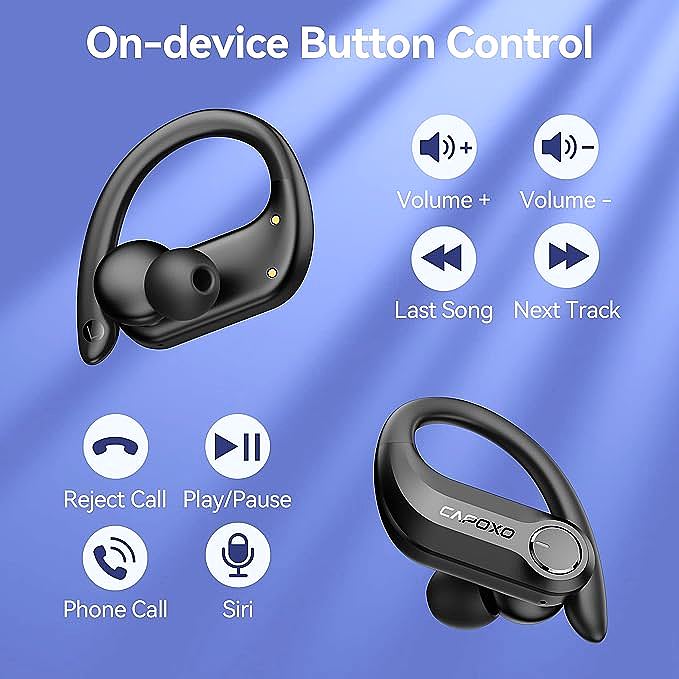
One of the most profound trade-offs in modern wearable design is the choice between capacitive touch and tactile push-buttons. While touch controls provide a seamless aesthetic, they are notoriously unreliable in wet environments. Sweat and rain are conductive; they can trigger false “ghost touches” or render a touch surface completely non-responsive. Furthermore, touch controls provide zero haptic confirmation, leaving the user guessing whether a command was registered during a heavy sprint.
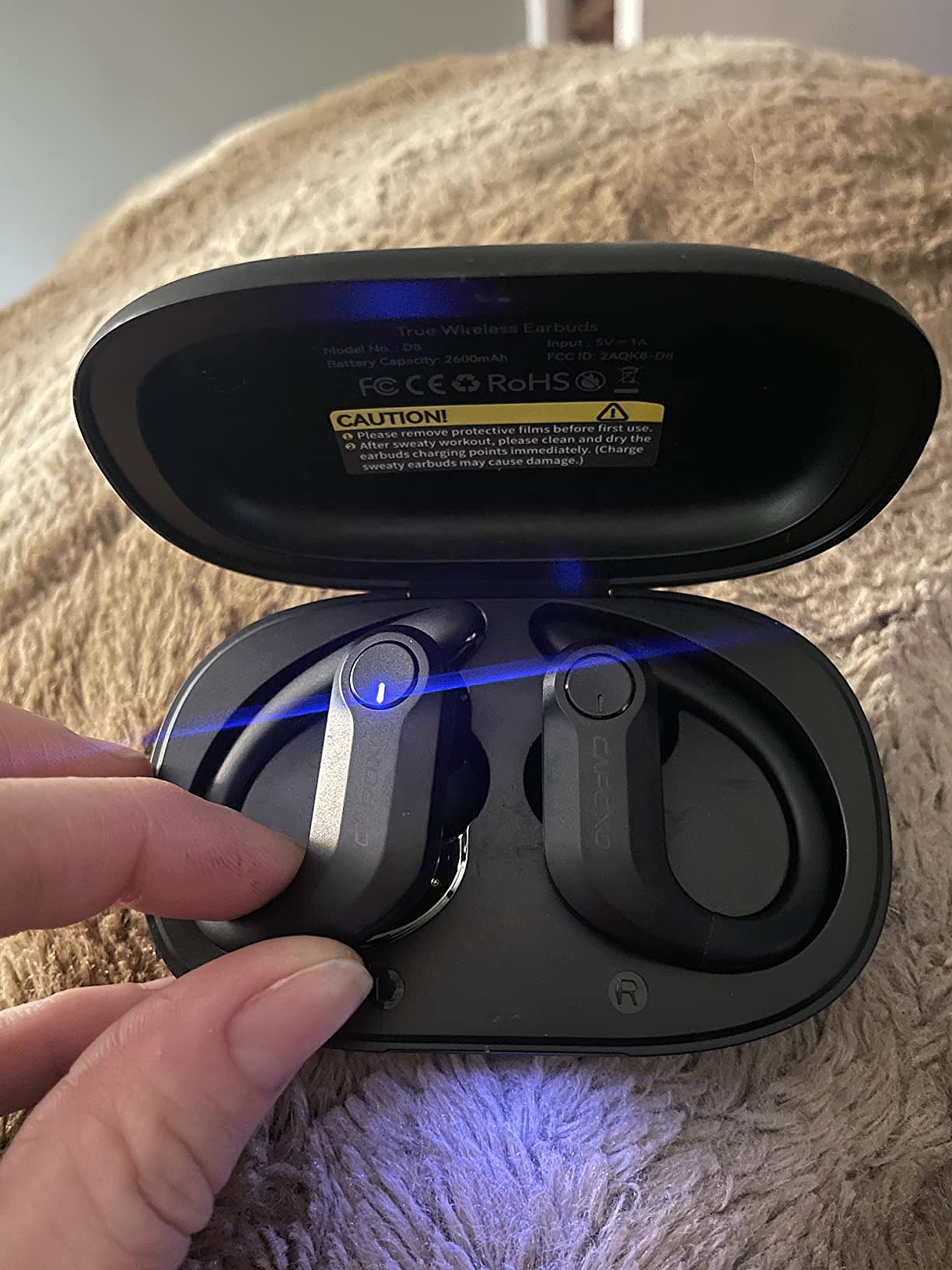
The strategic choice for physical push-buttons, as implemented in the CAPOXO D8 Wireless Earbuds, is an exercise in Human-Computer Interaction (HCI) pragmatism. A physical button provides unambiguous feedback—you feel the “click.” This tactile confirmation is independent of vision or hearing, making it superior for high-stress activities. By gripping the earbud with two fingers and delivering a deliberate press, the user maintains total control even with sweaty hands or while wearing gloves. It is a triumph of function over form, ensuring that the interface never becomes a barrier to performance.
The Resilience Standard: Decoding IPX7 Protection
Waterproofing in personal electronics is often marketed with vague terms, but “IPX7” is a rigorous engineering certification. The science behind an IPX7 rating—allowing for full immersion in up to one meter of water for 30 minutes—requires a multi-layered approach to defense. This involves not only precision-machined physical seals but often the application of hydrophobic nano-coatings on the internal circuitry. These coatings alter the surface tension of the internal components, causing water to bead and roll off rather than penetrate and cause short-circuits.
This level of resilience is essential for the long-term durability of a sports peripheral. Sweat is more than just moisture; it is a saline solution that can be highly corrosive to unprotected electronics over time. By adhering to the IPX7 standard, hardware like the CAPOXO D8 Wireless Earbuds is engineered for a lifestyle of persistence. Whether it is a torrential downpour during an outdoor marathon or a post-workout rinse under the tap, the technology is protected by an invisible, molecular-scale barrier.
Conclusion: The Maturity of Sports Engineering
As the wearable market matures, we are moving past the novelty of “high-tech” aesthetics and returning to the foundations of reliable engineering. The sports audio devices that will endure are those that respect the chaos of reality. By combining the mechanical stability of the ear-hook, the tactile certainty of the push-button, and the nano-scale protection of the IPX7 standard, modern designers are creating tools that empower rather than distract. In the world of performance, reliability is the ultimate specification.