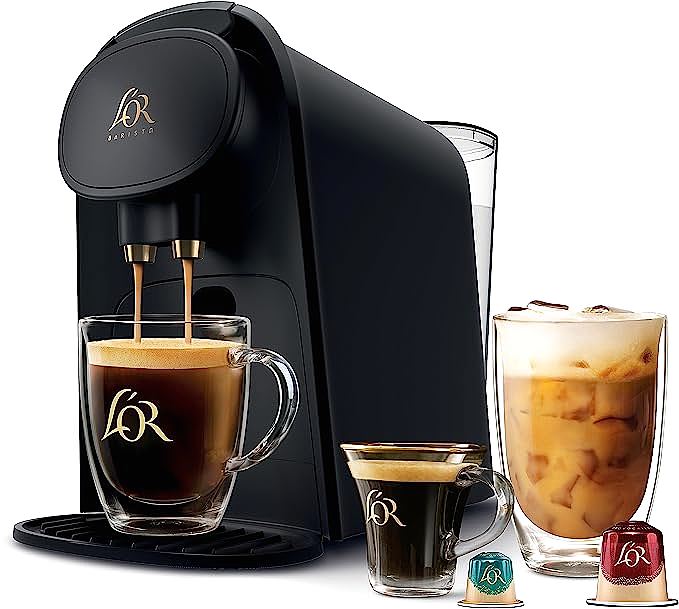
The Engineering Behind an Espresso Machine with Built in Grinder

Sincreative CM5700 Espresso Machine
The first thing to understand about an espresso machine with built in grinder is that it is not one machine. It is two separate subsystems sharing a housing, a power supply, and a water line. The grinder reduces whole beans to a controlled particle size distribution. The brewing system forces heated water through that compacted bed of grounds under nine bars of pressure. Each subsystem carries its own thermal profile, its own failure modes, and its own maintenance schedule. Putting them in the same chassis does not simplify the underlying physics, though it does reduce the counter space required from roughly three square feet to one. Consider a machine like the Sincreative CM5700: it houses a conical burr grinder and a twenty-bar vibratory pump brewing system in a footprint measuring about twelve by thirteen inches, roughly the size of a standard drip coffee maker. The integration is a packaging decision first and an engineering compromise second.
The Physics of Extraction Pressure
Brewing espresso requires forcing water through a compacted bed of fine coffee particles at approximately nine bars of pressure. One bar equals atmospheric pressure at sea level, so nine bars means the water encounters roughly nine times the resistance it would face flowing freely. This pressure serves a specific purpose. It accelerates the dissolution of soluble compounds from the coffee cell structure, compressing what would be a four-minute drip process into roughly twenty-seven seconds. Lower pressure fails to achieve adequate extraction within the short contact time. Higher pressure, if uncontrolled, can cause channeling where water finds preferential paths through the coffee bed, leaving portions of the grounds untouched and under-extracted.
The pump that generates this pressure is typically a vibratory pump, which uses an electromagnetic coil to drive a piston against a spring. The piston oscillates at the line frequency, sixty hertz in North America and fifty hertz in Europe, creating a pulsed flow rather than a continuous stream. An over-pressure valve downstream bleeds off excess pressure, maintaining a steady nine bars at the group head despite the pulsating input. The pump is rated at fifteen or twenty bars maximum, but that figure describes the unregulated output before the valve, not the brewing pressure. The difference between rated pressure and brewing pressure is a common source of confusion for new users who assume a higher number means better extraction quality.
Pressure stability during the shot matters more than the peak rating. As water penetrates the coffee puck, soluble compounds dissolve and the puck expands slightly. This changes the flow resistance dynamically. The pump and valve combination must compensate in real time, adjusting flow to maintain target pressure as the puck permeability shifts. When the system fails to compensate, the shot channels: water finds a path of least resistance through a crack in the puck, over-extracting along that narrow channel while leaving the rest of the bed under-extracted. The result is a shot that tastes simultaneously bitter from the channeled portion and sour from the under-extracted remainder.
An espresso machine with built in grinder adds another layer to this pressure dynamic because the grinder determines the initial puck resistance before the pump ever activates. Grind too coarse, and no amount of tamping can create enough back-pressure to reach nine bars. The shot runs fast, thin, and sharply acidic, completing in fifteen seconds instead of the target twenty-seven. Grind too fine, and the pump strains against a puck that behaves more like clay than permeable media. The shot chokes, dripping out over forty-five seconds, over-extracted and astringent with a drying finish. The relationship between grinder setting and pump behavior is not optional to understand. It is the central calibration task of the entire system, and it must be revisited every time the beans change, the ambient humidity shifts, or the grinder burrs accumulate wear.

Why Grind Consistency Determines Everything
Coffee grinding is not about making beans smaller. It is about creating a predictable surface-area-to-volume ratio across a population of particles. Extraction rate in espresso depends on water contacting the soluble compounds trapped inside each ground particle. The finer the grind, the greater the total surface area exposed to water, and the faster the extraction proceeds. A gram of coffee ground for espresso might present two to three square meters of total particle surface area, roughly the size of a large dining table. The same gram ground for French press might expose half that area. The difference in available contact surface explains why espresso extracts in thirty seconds what a French press takes four minutes to achieve.
The problem is that no grinder produces identically sized particles. Every grinder produces a distribution. A conical burr grinder crushes beans between a rotating inner cone and a stationary outer ring. The geometry of the burrs determines how the beans fracture under compression. Sharp cutting edges produce a narrower distribution, with fewer fine particles. Dull or poorly aligned burrs crush rather than cut, generating fines: microscopic dust that over-extracts almost instantly and contributes bitterness regardless of how well the shot is otherwise dialed in. A narrow particle distribution means the extraction proceeds at roughly the same rate across the entire dose, producing a balanced shot with clarity and definition.
Dose consistency is the second variable. A grinder that dispenses by time dispenses a variable mass depending on bean density and grind fineness setting. Denser beans pack more mass into the same volume per unit time. Finer settings slow the flow rate through the burrs, reducing output mass per second. The operator must calibrate the timer for each new bag of beans, weighing the output on a gram scale and adjusting until the target dose, typically eighteen grams for a double shot, arrives reliably. This calibration process takes five to ten minutes per new bean. An espresso machine with built in grinder that uses timed dosing places this calibration burden squarely on the user. Weight-based dosing automates the process by stopping the grinder when a load cell registers the target mass, but it adds cost and introduces a sensor that must remain calibrated over years of vibration and heat cycling. Timed dosing is mechanically simpler and cheaper but demands more attention from the operator.
How Burr Geometry Affects Particle Distribution
Conical burrs and flat burrs produce different particle distributions at the same nominal grind setting, and the difference matters for espresso extraction. Conical burrs generate a bimodal distribution: one peak at the target particle size and a second, smaller peak of finer particles produced by the crushing action at the burr edges where the gap narrows. This bimodal distribution turns out to be useful for espresso because the fines fill gaps between larger particles, increasing puck flow resistance without requiring an ultra-fine overall grind. The result is more forgiving extraction behavior. A shot dialed in on a conical burr grinder tolerates small errors in dose or distribution better than one ground on flat burrs, making it the practical choice for daily home use.
Flat burrs produce a unimodal distribution with fewer fines, which means the grind setting must be finer to achieve the same puck resistance. The narrower distribution produces higher flavor clarity in the cup, with individual origin characteristics more distinct, but the extraction window narrows considerably. Small deviations in grind size, dose, or distribution produce larger differences in shot time and taste. This makes flat burrs the preference for single-origin espresso where the goal is to taste the specific characteristics of one farm's harvest, and conical burrs the practical everyday choice for blended espresso and milk-based drinks where consistency across multiple shots matters more than analytical separation of individual flavor compounds.
The adjustment mechanism matters as much as the burr geometry. Stepped adjustment rings click between fixed positions, each step representing a discrete change in burr spacing. Stepless adjustment mechanisms use a threaded collar for continuous, infinitely variable adjustment. Espresso demands the ability to make extremely fine changes. A shift of fifty microns in burr spacing, roughly the thickness of a single human hair, can change shot time by five seconds. Stepped grinders with coarse detents may not offer enough resolution to dial in a shot precisely. An espresso machine with built in grinder that incorporates a stepless mechanism gives the operator the continuous control that espresso extraction requires. Stepped mechanisms with fine enough increments, typically thirty or more discrete steps across the espresso range, can also work well, but the operator should verify the step resolution before committing to a particular machine's adjustment range.
Temperature Stability and Flavor Chemistry
Coffee contains over eight hundred volatile aromatic compounds, and they dissolve at different rates depending on water temperature. The light, fruity, acidic compounds extract first, at the lower end of the brewing temperature range between ninety and ninety-three degrees Celsius. The heavier, chocolatey, bitter compounds require higher temperatures to dissolve efficiently. The ideal brewing temperature balances the extraction of both populations, producing a shot with bright top notes supported by deeper body, without harsh bitterness or thin acidity. The difference between a shot brewed at ninety-one degrees and one brewed at ninety-five degrees is perceptible to most experienced drinkers. The lighter the roast, the higher the optimal temperature tends to be, because light roasts are denser and less soluble than dark roasts.
Maintaining that temperature during the shot requires an active control system. Thermoblock heaters pass water through a heated metal block with internal channels, raising the water temperature as it flows through. The design heats up quickly, typically reaching brewing temperature in under a minute from a cold start, but the thermal mass of the block is small enough that incoming cold water can temporarily depress the outlet temperature during a shot. This temperature sag, if uncorrected, means the first portion of the shot extracts at a higher temperature than the later portion, producing an uneven extraction profile across the roughly thirty-second brew cycle.
PID control addresses this by continuously monitoring temperature at the thermoblock outlet and adjusting heater power to compensate in real time. The acronym stands for proportional-integral-derivative, the three terms in the control algorithm. Proportional responds to the current error between measured and target temperature. Integral corrects for accumulated past error, eliminating steady-state offset that proportional control alone cannot remove. Derivative anticipates future error based on the rate of change, damping oscillations before they begin. A well-tuned PID loop maintains temperature within plus or minus one degree Celsius throughout the shot, even as cold water enters the block and hot water exits at the group. Without PID, temperature can swing five degrees or more during extraction, enough to shift the flavor balance perceptibly from bright and acidic at the start to dull and flat by the end.
An espresso machine with built in grinder must also manage the heat generated by the grinder motor, a thermal source that a separate grinder isolates from the brewing system entirely by physical distance. Grinding generates friction, and friction generates heat. If the grinder housing warms the beans before grinding begins, volatile aromatic compounds start dissipating before brewing ever starts. The temperature rise during grinding is typically five to ten degrees Celsius depending on burr speed, bean density, and grind duration. High-speed grinders generate more heat per unit time but run for shorter durations, so the net temperature increase is often comparable to low-speed designs. Low-speed gear-reduced grinders minimize thermal stress on the beans at the cost of longer grind times. Neither approach eliminates the heat entirely. Both require the operator to account for the thermal effect when dialing in, particularly when grinding consecutive doses back to back.

Water Chemistry and Its Role in Extraction
Water is not a neutral solvent in espresso brewing. Its mineral content directly affects extraction chemistry and equipment longevity in ways that no machine feature can override. Calcium and magnesium ions, collectively measured as general hardness, facilitate the extraction of flavor compounds by interacting with charged molecules in the coffee grounds. Without sufficient hardness, typically fifty to one hundred seventy-five parts per million as calcium carbonate, the water extracts poorly and the shot tastes flat, hollow, and lifeless. With excessive hardness, the same minerals that aid extraction precipitate inside the machine as scale, coating heating element surfaces and gradually restricting internal flow paths.
Carbonate hardness, measured as alkalinity, buffers the acidity of the brewed coffee. Too little buffer capacity and the shot tastes sharply, unpleasantly acidic, the bright notes overwhelming everything else. Too much buffer and the acids neutralize entirely, leaving the shot dull and chalky with no flavor definition. The Specialty Coffee Association recommends total hardness between fifty and one hundred seventy-five parts per million, alkalinity between forty and seventy-five parts per million, and pH between six and eight. Municipal tap water rarely falls within all three ranges simultaneously. Most North American municipal water is too hard for optimal espresso extraction. Most bottled water is too soft. This mismatch is why many home espresso users install under-sink filtration or mix their own brewing water from distilled water and mineral concentrates.
An espresso machine with built in grinder concentrates the scaling risk compared to a standalone brewer because both the brew path and the steam path pass through the same thermoblock heating element. Steam generation boils water, leaving behind whatever minerals were dissolved in it as solid deposits on the heating surfaces. Over hundreds of heating cycles, mineral deposits accumulate layer by layer. Scale acts as a thermal insulator, reducing heat transfer efficiency and forcing the heating element to run hotter to achieve the same water temperature at the group head. This accelerates wear on the element and increases energy consumption with each cycle. Descaling with a citric or lactic acid solution dissolves the accumulated mineral deposits, but the required frequency depends entirely on local water hardness and daily usage volume. Users with hard municipal water may need to descale monthly. Users with softened or reverse-osmosis filtered water may go six months or longer between treatments. The water source is a variable that the machine cannot control. Only the operator can manage it.
Steam Generation and Milk Protein Behavior
Steaming milk for espresso beverages involves two simultaneous physical processes that must be coordinated precisely within a narrow time window. The steam wand injects superheated water vapor into cold milk, condensing and transferring thermal energy through direct contact. At the same time, the tip of the wand, positioned just below the milk surface, draws ambient air into the liquid through the venturi effect created by the steam jet. The air bubbles, sheared by the turbulent flow, break down into progressively smaller bubbles. When the bubble size reaches the micrometer range, the milk takes on a glossy, paint-like appearance called microfoam. The transition from coarse, visible foam to silky microfoam happens rapidly, typically within ten to fifteen seconds of steaming, and missing the window means starting over with fresh cold milk.
The proteins in milk, primarily casein micelles and whey proteins, stabilize this foam structure at the molecular level. Casein micelles unfold at the air-water interface, forming a thin protein film around each individual bubble. This film prevents bubbles from coalescing into larger, unstable bubbles that would collapse within seconds of formation. The fat content of the milk matters for both foam stability and taste integration with the espresso. Whole milk at three and a half to four percent fat produces the richest, most stable microfoam that blends seamlessly with espresso into a unified beverage. Skim milk foams more easily and produces larger volumes of foam, but the foam is stiffer and less integrated, tending to separate from the espresso layer rather than combining with it.
Temperature control during steaming is as critical as during brewing, and the acceptable range is narrow. Milk proteins begin to denature above sixty-five degrees Celsius, losing their foam-stabilizing molecular structure. Above seventy degrees, the milk scalds, developing a cooked, sulfurous flavor that overwhelms the coffee's delicate aromatic profile. The steam wand must deliver enough thermal energy to heat the milk from refrigerator temperature, roughly four degrees Celsius, to the target of sixty to sixty-five degrees, quickly enough to texture the milk properly before the temperature exceeds the safe upper limit. Weak steam pressure extends the total steaming time, giving the operator more margin for texturing but potentially failing to create enough turbulence for proper microfoam development. Overly strong steam pressure heats the milk too rapidly, shortening the texturing window and risking scalding before the foam structure can fully stabilize.
A single-boiler espresso machine with built in grinder must transition the thermoblock from brewing temperature to steam generation temperature between operations, since one heating element serves both functions sequentially. Brewing occurs at roughly ninety-three degrees Celsius, while steam generation requires temperatures above one hundred degrees to produce dry steam rather than a mixture of steam and water droplets. The transition time, typically thirty to sixty seconds depending on the thermoblock's thermal mass and heating power, requires the operator to sequence their workflow deliberately: pull the shot while the machine is in brew mode, then switch to steam mode while pouring cold milk into the pitcher, then steam. This sequential workflow is the primary operational difference between single-boiler and dual-boiler designs that can brew and steam simultaneously because each function has its own dedicated heating circuit.
The Thermoblock Operating Model
The term single-boiler is somewhat misleading when applied to thermoblock machines. A thermoblock is not a boiler in the traditional sense. A boiler heats a reservoir of water to a target temperature and holds it there, ready for immediate demand. A thermoblock heats water on demand, passing only the water needed for the current shot or steaming cycle through the heated metal block. This on-demand design eliminates the energy waste of keeping a reservoir of water hot when the machine sits idle, sometimes for hours between uses. It also eliminates the problem of stale water sitting in a boiler between sessions, gradually losing dissolved oxygen and picking up metallic off-flavors from prolonged contact with boiler surfaces.
The trade-off is thermal stability during high-demand scenarios. When making drinks for multiple people, the thermoblock must cycle between brew temperature, steam temperature, and back to brew temperature for each sequential drink. Each temperature transition takes time, and the thermal recovery between cycles is not instantaneous. The operator learns to work with the machine's thermal rhythm rather than fighting against it. One effective batch approach is to pull all shots in sequence while the machine is in brew mode, then switch to steam mode and froth all the milk at once. This batch workflow is less convenient than simultaneous brewing and steaming, but it works with the machine's thermal behavior rather than against it. For a household making two to four drinks per session, the workflow time difference compared to a dual-boiler machine is measured in minutes, not in beverage quality.
Thermal management extends to the portafilter and group head, the metal assembly that locks the portafilter to the machine body. A cold portafilter steals heat from the brewing water on contact, dropping the effective extraction temperature several degrees below the thermoblock's set point. Preheating the portafilter by running a blank shot, hot water through the empty locked-in portafilter, brings the metal mass up to operating temperature before the real shot begins. The group head itself also needs to reach thermal equilibrium with the brewing water. Machines with actively heated group heads maintain constant temperature at the critical interface between the machine and the portafilter. Machines without active group heating require a warmup period and one or more blank shots to stabilize. An espresso machine with built in grinder that uses a thermoblock and an unheated group head demands a specific startup routine: power on, wait for the ready indicator, run a blank shot to heat the group and portafilter, grind the dose, distribute and tamp, lock in, and brew. The entire sequence takes roughly two to three minutes from a cold start, and skipping the preheat step guarantees an under-extracted shot regardless of how precisely the grind and dose are calibrated.

Maintenance as a Design Parameter Coffee equipment maintenance is not an afterthought to be dealt with when problems arise. It is a design parameter that determines how long the machine will continue producing good coffee before it starts producing degraded coffee that the operator may not even notice because the decline is incremental. Espresso machines have three distinct maintenance domains, each with its own contamination mechanisms and cleaning requirements: the grinder assembly, the brew path, and the steam delivery system. The grinder accumulates coffee oils on the burr surfaces and in the grind chamber walls. These oils oxidize over days at room temperature, turning rancid and developing stale, cardboard-like off-flavors. Each subsequent grind picks up trace amounts of rancid oil from the burr surfaces and chamber walls, tainting fresh coffee with stale notes. The effect is gradual enough that the operator may not notice the decline day to day, but the difference between coffee ground through a clean grinder and one that has not been cleaned in three weeks is immediately apparent to anyone tasting the two in parallel. Cleaning requires disassembling the upper burr carrier, brushing the burrs and inner chamber thoroughly, and reassembling. Grinder cleaning tablets made of food-grade starch and grain-based materials can absorb some oil residues between full disassemblies, but they do not replace mechanical brushing. Oily dark roasts foul the burrs faster than dry light roasts. Daily users grinding dark roasts should clean the grinder every two weeks. The brew path accumulates coffee residue on every surface that contacts brewed coffee: the dispersion screen, the group head interior cavity, the portafilter basket, and the internal tubing between the pump and the group. Backflushing, which involves locking a blind basket filled with cleaning detergent into the group and running the pump, forces the cleaning solution backward through the brew path, dissolving residue that normal forward water flow cannot reach. Without regular backflushing, old coffee residue builds up layer by layer and contributes bitterness and astringency to every subsequent shot brewed through the fouled path. Daily users should backflush with plain water after each session and with a dedicated espresso detergent weekly. The group gasket, the rubber seal that the portafilter locks against, hardens over months of repeated thermal cycling and must be replaced when it begins to leak during brewing, typically once or twice per year depending on usage volume. The steam system requires purging after each use to clear milk residue from the wand tip and internal steam passages. Milk drawn back into the wand by the vacuum created when residual steam condenses sours inside the tube within hours at room temperature. The next steaming cycle pushes this soured milk residue into fresh milk, introducing detectable off-flavors. Purging, a brief burst of steam after
Developing Intuition for Extraction Variables
Learning to make espresso requires developing a feedback loop between sensory observation and parameter adjustment. The first variable is visual. A properly extracted shot begins with a few seconds of dark drips as the puck saturates from below, then transitions to a steady, cohesive stream the color of warm honey with reddish-brown streaks. The stream should hold together in a single continuous column, not fracture into separate drips or spray sideways. Fracturing indicates channeling, which means water is finding and progressively enlarging a path of least resistance through the puck. After roughly twenty-five to thirty seconds, the stream bleaches to pale yellow, and the shot should be stopped. The entire extraction, from pump start to pump stop, should yield roughly thirty-six grams of liquid espresso from an eighteen-gram dry dose, a brew ratio of two to one by mass.
Taste provides the second feedback loop. A sour shot, one that tastes sharply acidic with little body and a sensation reminiscent of underripe fruit, is under-extracted. The correction is to grind finer, which increases puck flow resistance and extends the contact time between water and coffee grounds. A bitter, astringent shot with a drying aftertaste that lingers on the tongue for minutes is over-extracted. The correction is to grind coarser, reducing flow resistance and shortening total contact time. The magnitude of each adjustment is small. One step on a stepped grinder, or roughly a quarter turn on a stepless adjustment mechanism, changes total shot time by approximately three to five seconds. Large adjustments overshoot the target, turning a sour shot into a bitter one or vice versa, without the operator learning which direction was the correct one.
The third feedback loop is consistency across consecutive shots. If two back-to-back shots with identical dose weight, grind setting, distribution technique, and tamp pressure produce noticeably different results, the uncontrolled variable is likely temperature stability. A thermoblock that has not fully recovered from the previous shot will brew the next shot at a lower effective temperature, changing the extraction profile. Waiting sixty to ninety seconds between shots allows the thermoblock to stabilize at the target temperature before the next pull. If consistency problems persist despite adequate recovery time, the issue may be grinder retention: old grounds trapped in the grind chamber from a previous session mix with fresh grounds, contaminating the dose with partially stale particles. Purging a few grams of beans through the grinder before the first shot of each session clears retained grounds.
The learning process takes time and beans, and no amount of reading can substitute for this. A new user typically goes through two to three pounds of coffee before their shots become reliably drinkable, not because the equipment is inadequate but because espresso extraction is sensitive to variables that other brewing methods effectively obscure. A French press tolerates a wide range of grind sizes and produces drinkable coffee from nearly any combination of parameters. An espresso machine with built in grinder does not obscure these variables. It exposes them, and it exposes them with every single shot. Every error in grind setting, dose weight, distribution evenness, or tamp pressure directly manifests in the cup within thirty seconds of pulling the shot. This exposure is not a design flaw. It is the mechanism by which the operator develops their palate and technique. The machine does not make espresso easier to produce. It makes the relevant variables visible, and systematic visibility is the precondition for developing the intuition that eventually makes the process feel effortless.
What Integration Changes About the Workflow
Separating the grinder from the espresso machine creates an equipment chain on the counter: grinder, dosing cup or funnel, tamper, machine. Each link in the chain occupies its own footprint. Each has its own power cord, if electric, snaking to an outlet. Each has its own warmup behavior, failure modes, and maintenance requirements. The operator manages each link independently and must coordinate their sequence. Integrating the grinder into the espresso machine reduces the visible equipment chain to a single device on the counter, but it does not eliminate any of the underlying physical processes. The beans still need to be ground to a precise particle size. The dose still needs to be distributed evenly in the basket and tamped with consistent pressure. The shot still needs to be timed, weighed on a scale, and tasted for adjustment decisions.
What integration changes is the physical relationship between grinding and brewing. When the grinder dispenses directly into the portafilter, the transfer distance between the two processes is effectively zero millimeters. No grounds scatter across the counter during transfer from a separate dosing cup. No static charge causes fine coffee particles to cling to plastic dosing cup surfaces and then release onto the counter minutes later. The workflow compresses to a tight sequence: dose into the portafilter directly from the grinder chute, distribute with a finger or distribution tool, tamp with consistent pressure, lock into the group head, and brew. For someone using an espresso machine with built in grinder, this streamlined physical sequence saves roughly fifteen to thirty seconds per drink compared to a setup with independent components separated across the counter. Over a year of daily use making two drinks each morning, that is approximately three to six hours of counter time and cleanup effort recovered.
The trade-off is long-term flexibility. A separate grinder can be upgraded independently of the espresso machine. If the user's preferences evolve and they want to switch from a conical burr grinder to a flat burr grinder to explore different flavor profiles, or from a fifty-millimeter burr set to a sixty-four-millimeter set for improved thermal stability during extended grinding sessions, a separate grinder can be sold and replaced while the espresso machine remains in place. An integrated grinder is permanent. The machine and grinder age together as a single sealed unit, accumulating wear at different rates on different components. If one subsystem fails catastrophically at year five while the other remains fully functional, the entire unit must typically be replaced. If the user's taste preferences evolve in a direction that calls for a different burr geometry or a different adjustment mechanism, the entire machine must be replaced. This is the central engineering trade-off of an espresso machine with built in grinder. Integration optimizes for workflow efficiency, counter space, and a simplified single purchasing decision. Separation optimizes for upgradeability, independent component replacement, and the ability to mix grinding and brewing equipment from different manufacturers. The Sincreative CM5700 illustrates the integration approach concretely: it bundles grinding, dosing, brewing, and steaming into a single countertop unit, and the user accepts the associated trade-offs as part of choosing the integrated path. Neither integration nor separation is objectively superior as a design philosophy. Each optimizes for a different set of priorities, and understanding which priorities carry more weight in one's own kitchen is the first step in choosing between the two approaches.
Sincreative CM5700 Espresso Machine
Related Essays

The Engineering Behind Multicapsule Espresso Machine Compatibility

Chefman RJ54-SS-15 Espresso Machine: Your At-Home Barista for Perfect Coffee
ShareforU HS-8439: Your Portable Espresso Machine for Coffee On-The-Go
The Unseen Engineering in Your Espresso Cup: A Scientific Look at the COWSAR ...

KitchenAid KCM1208DG Spiral Showerhead Coffee Maker: An Independent Deep Dive
Steam Pressure Physics in Aluminum Moka Pot Brewing

How Conical Burr Geometry Controls Coffee Extraction

Burr vs Blade Coffee Grinder: The Physics of Consistent Grinding

COSORI Pour Over Coffee Maker: Unlock the Perfect Brew