Bio-Ergonomics in Personal Audio: Solving the Chronic Discomfort of Earbuds
Update on Dec. 20, 2025, 1:42 p.m.
The history of personal audio is a record of a persistent struggle between hardware and human anatomy. For decades, the industry relied on the ear canal as a mechanical anchor, forcing earbuds into a sensitive biological gateway. This “intracanal” approach, while effective for sound delivery, has led to a myriad of issues: pressure-induced pain, dermatological irritation, and acoustic fatigue. As a response, a new frontier of bio-ergonomics is emerging, shifting the burden of wear from the canal to the resilient structures of the outer ear, or pinna. This shift is not merely an aesthetic choice but a fundamental redesign of how we interface with technology.
The Anatomical Resilience of the Pinna
The ear canal is a delicate environment, lined with thin skin and prone to irritation from prolonged contact with plastic and silicone. Conversely, the outer ear (the pinna or auricle) is composed of elastic cartilage designed to endure flexible movement. By utilizing a “clip-on” architecture, modern open-ear designs exploit the structural stability of the pinna without intruding into the sensitive internal void. This allows for a more even distribution of weight across a larger surface area, significantly reducing localized pressure points.
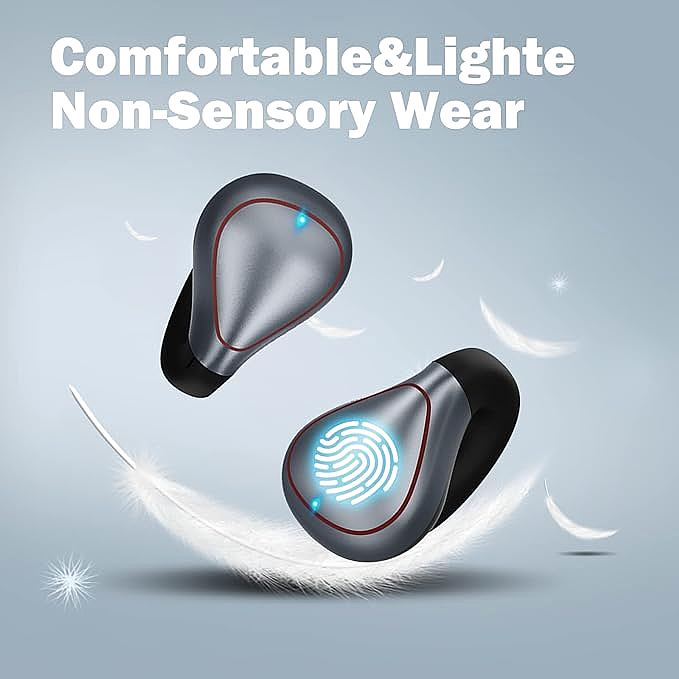
Ergonomic load distribution is the science behind this transition. When a device weighs less than 3 ounces—such as the Xmenha Clip on Open Ear Wireless Headphones—the physical burden on the ear becomes nearly imperceptible. The mechanical tension is managed by the “clip,” which gently embraces the cartilage. This “Non-in-Ear” design allows the ear to maintain its natural airflow, preventing the heat buildup and moisture entrapment that often trigger ear infections in traditional earbud users.
Material Science and Biocompatibility
A critical pillar of long-term wearable comfort is material biocompatibility. Technology that remains in constant contact with human skin must be chemically inert and physically soft. The evolution of skin-friendly polymers has allowed for the creation of flexible ear clips that conform to individual ear thicknesses. Unlike rigid materials that cause friction and sores, high-quality elastomers provide a “memory-fit,” ensuring stability during high-intensity sports without compromising comfort.
This material evolution is particularly vital for the active user. During strenuous exercise, the combination of sweat, heat, and mechanical vibration can turn a minor irritant into a painful lesion. IPX5-rated waterproof coatings, as found in the Xmenha Clip on Open Ear Wireless Headphones, do more than just protect the electronics from rain; they ensure that the surface of the earbud remains resistant to the corrosive nature of human sweat, preserving the integrity of the material over thousands of hours of use.
The Evolution of User Interaction: Minimalist Control
The ergonomic experience is not limited to physical touch; it encompasses the psychological friction of control. Traditional buttons often require a “pressing” motion that pushes the earbud deeper into the canal, causing a painful spike in sound pressure. The transition to smart touch controls solves this by requiring only a light tap on the external housing.
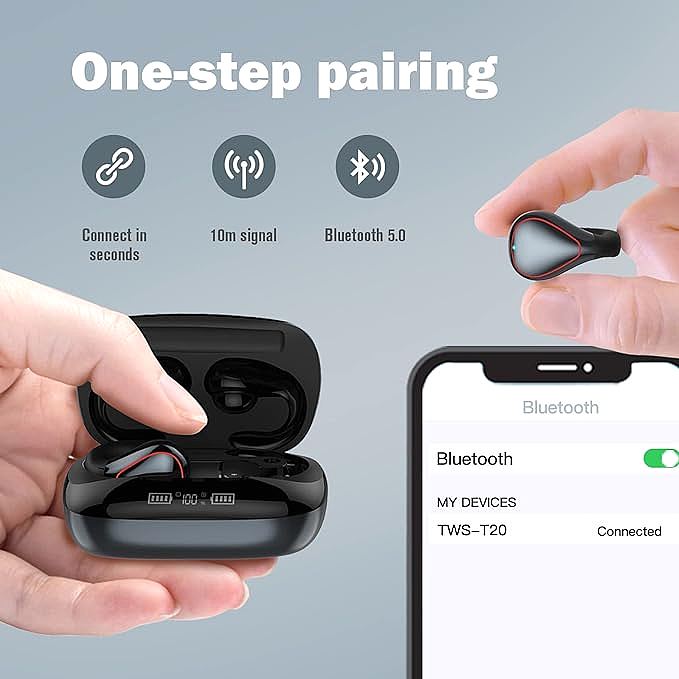
This capacitive touch technology allows the user to manage music, calls, and voice assistants without disturbing the physical fit of the device. When combined with Hall-switch sensors—which enable one-step pairing the moment the case is opened—the entire user journey becomes an exercise in minimalist friction. By removing the need to interact with a mobile phone for basic functions, the technology recedes into the background, fulfilling the ultimate ergonomic goal of becoming “sensory-invisible.”
Energy Nodes: The Secondary Utility of the Charging Case
The ergonomics of the modern era also include energy security. As we become increasingly dependent on digital connectivity, “battery anxiety” is a significant mental burden. The charging case has evolved from a simple storage box into a multi-functional energy node. Modern implementations often include digital power displays for precise monitoring and high-capacity batteries that can act as emergency power banks.
This secondary utility reflects a shift in user behavior: we expect our audio tools to be versatile companions. A case that can provide a quick charge to a dying smartphone, as seen with the Xmenha charging case, transforms the device into a survival tool for the digital nomad. This integration of energy management, anatomical comfort, and high-fidelity sound is the new standard for bio-harmonious design.
Looking Forward: Toward a Universal Fit
The future of auricular ergonomics lies in the pursuit of a “Universal Fit”—a design that accommodates the vast diversity of human ear shapes with zero compromise on stability. While we are not yet at the stage of custom 3D-printed acoustics for every user, the clip-on design is the closest the industry has come to a flexible, one-size-fits-all solution. By respecting the natural architecture of the human ear, we are entering an age where high-tech audio no longer comes at the cost of biological comfort.