The Unique Ear: Why Personalized Audio Calibration is the Future of Listening
Update on Dec. 20, 2025, 1:45 p.m.
We accept that our eyes need correction. We visit optometrists, get prescriptions, and wear glasses to bring the world into focus. Yet, strangely, we treat our ears as if they are uniform, perfect instruments. We buy headphones tuned to a “factory standard” and assume that what we hear is exactly what the artist intended.
The reality is biologically messier. No two pairs of ears are identical. The shape of our ear canals, the density of our skull bones, and the history of noise exposure we have endured all create a unique “auditory fingerprint.” Furthermore, as we age, our ability to hear high frequencies naturally degrades. For most adults, the “standard” tuning is actually a compromise.
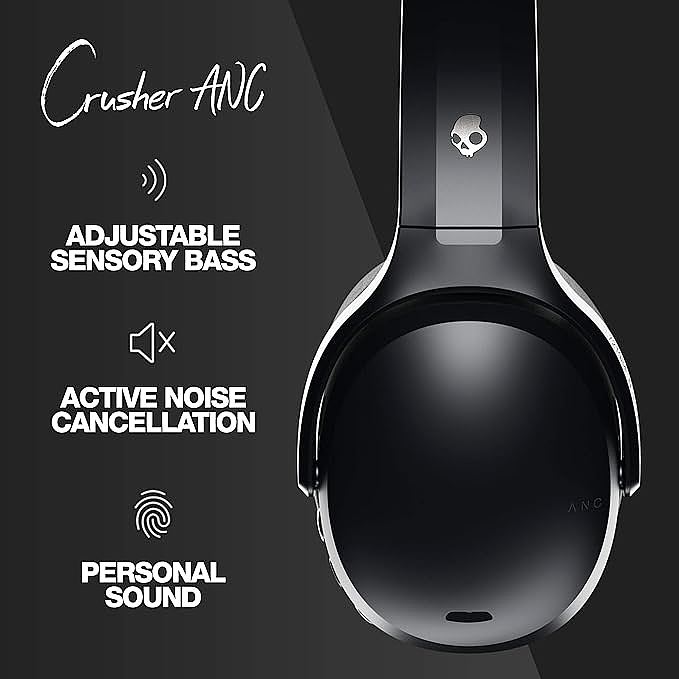
This realization has birthed a new frontier in audio technology: Personalized Sound Calibration. Devices like the Skullcandy Crusher ANC, paired with intelligent software, are moving us away from “one size fits all” audio towards a future where headphones adapt to the listener, not the other way around.
The Invisible Erosion: Understanding Auditory Aging
To understand why calibration is necessary, we must first confront the fragility of human hearing. The cochlea contains thousands of tiny hair cells responsible for detecting different frequencies. The cells at the base of the cochlea, which detect high frequencies (treble), are the most vulnerable to damage from loud noises and aging.
By the time we are in our 30s or 40s, most of us have lost some sensitivity in the 10kHz-20kHz range. This loss is subtle. We don’t “go deaf”; we simply lose the “air,” the shimmer of cymbals, the breathiness of a vocal. Music starts to sound slightly muffled, losing its holographic detail. Traditional volume controls don’t fix this—they just make the muffled sound louder.
The Digital Optometrist: How Calibration Works
Personal Sound technology acts as a digital optometrist for your ears. The process, typically managed through a companion app (like the Skullcandy App), involves a hearing test. The user listens to a series of tones at various frequencies and volumes, indicating when they can or cannot hear a sound.
This data creates an Audiogram—a map of your hearing sensitivity across the spectrum. The system identifies the “blind spots” (or rather, deaf spots) in your frequency response. * The Correction: Once the profile is built, the headphone’s DSP (Digital Signal Processor) applies a custom EQ curve. It selectively boosts only the frequencies you struggle to hear, restoring the balance without making the rest of the track painfully loud.
The result can be startling. Users often describe it as “removing a blanket” from the speakers. Details re-emerge. The soundstage widens. It is not just about making music sound “better”; it is about making it sound “correct” relative to your biological reality.
Active Noise Cancellation (ANC): The Canvas for Detail
Calibration works best in a controlled environment. If the outside world is loud, the brain struggles to process fine details, rendering the subtle EQ adjustments moot. This is why Active Noise Cancellation (ANC) is the perfect partner for personalized sound.
By using microphones to monitor ambient noise and generating an anti-phase wave to cancel it out, ANC creates a low-noise floor. It clears the canvas. In this silence, the nuanced corrections of the Personal Sound profile can shine. You don’t need to crank the volume to hear the details (which protects your hearing in the long run). The combination of ANC and Personal Calibration creates a listening sanctuary where the audio is both pure and tailored.
The Future: Continuous and Contextual Adaptation
Currently, Personal Sound is a static profile. You take a test, and the settings are locked. However, the future of this technology lies in dynamic adaptation.
Imagine headphones that adjust their calibration based on the time of day (our hearing changes when we are tired), or the barometric pressure (which affects the eardrum). We are moving toward Computational Audio, where the device is constantly listening to the environment and the user, micro-adjusting the output to ensure optimal fidelity in every moment.
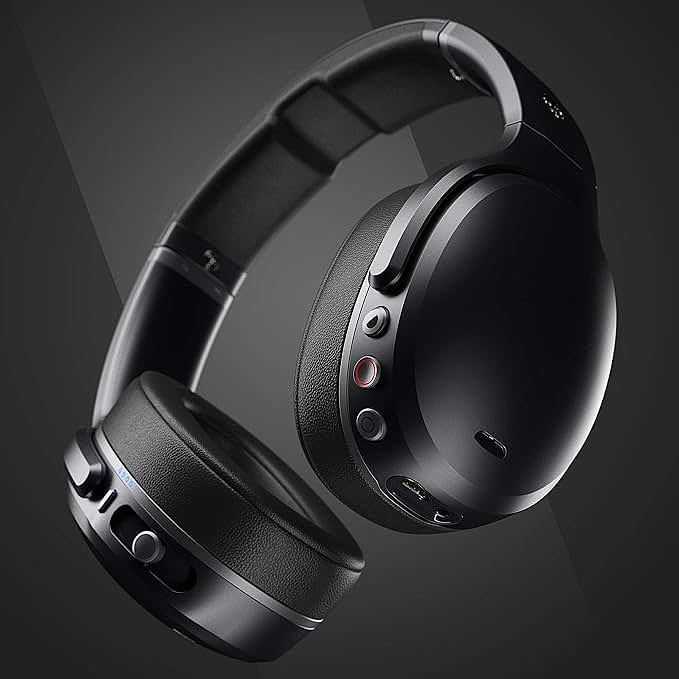
The integration of features like the Tile Tracker in the Crusher ANC also hints at a future where headphones are intelligent, connected nodes in our personal area network—aware of their location, their user, and their acoustic purpose.
Conclusion: The End of the “Golden Ear” Myth
For decades, the audiophile world chased the myth of the “Golden Ear”—the perfect listener. Personalized audio democratizes this. It acknowledges that there are no perfect ears, only unique ones.
By embracing technologies like Personal Sound calibration, we stop apologizing for our biology. We use technology to bridge the gap between our senses and the art. The Skullcandy Crusher ANC represents a step into this personalized era, offering a listening experience that respects the individuality of the listener just as much as the integrity of the music.