The Best Electric Blade Grinder for Fresh Coffee: A Complete Guide

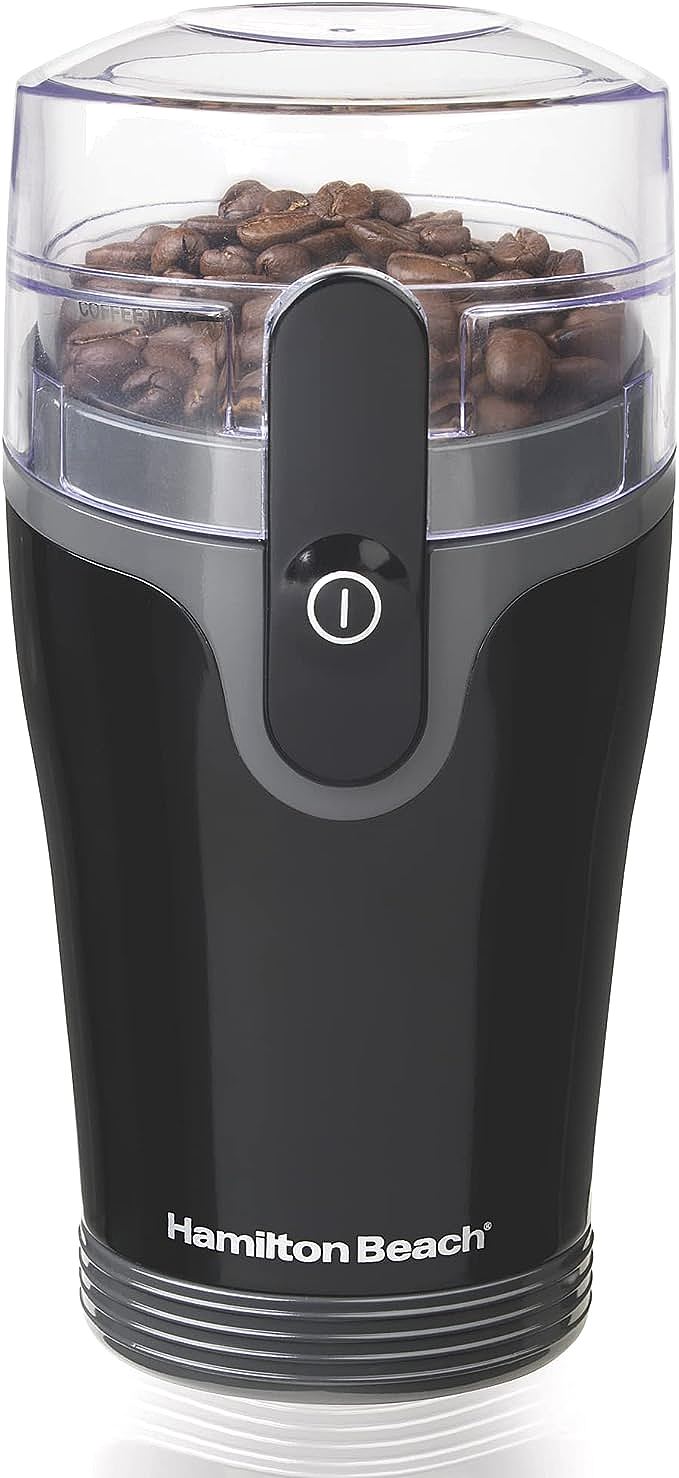
Hamilton Beach Fresh Grind Electric Coffee Grinder For Up To 12 Cups
Why Freshly Ground Coffee Changes Everything
There is a moment that happens every morning in kitchens around the world, and it is the same moment whether you are brewing pour-over in a ceramic dripper or pulling espresso in a machine that costs more than a used car. You reach for the coffee container, and the aroma that rises to meet you tells you everything you need to know about how good your cup is going to be. That aroma is the first signal that your beans were ground recently, not weeks ago in a container that has been sitting open on the shelf.
Whole bean coffee stays fresh for a reason. The moment you break the bean open, you expose the interior oils and aromatic compounds to oxygen. Those compounds begin to evaporate and oxidize almost immediately. Within fifteen minutes of grinding, a significant portion of the aroma you would have tasted in your cup has already drifted away. Within twenty-four hours, the coffee is nearly flat. This is not a matter of opinion or specialty coffee snobbery. It is basic chemistry, and it is the single most important variable between a cup that tastes like coffee and a cup that tastes like warm brown water.
An electric blade grinder coffee setup solves this problem by letting you grind whole beans immediately before you brew. The grinder is inexpensive, simple to operate, and requires no learning curve. You put the beans in, press a button, and within thirty seconds you have freshly ground coffee ready for your brew method. For most home drinkers, this is the single highest-impact upgrade you can make to your morning routine without spending more than a few dollars.
What Makes a Good Electric Blade Grinder
Not all blade grinders are created equal, and the differences between a good one and a bad one show up in three areas: blade quality, motor power, and ease of cleaning.
The blade is the heart of the grinder. A sharp, well-balanced blade cuts through beans cleanly and produces a consistent grind. A dull or poorly balanced blade tears and crushes the beans, creating uneven particle sizes that lead to extraction problems no matter what brew method you use. Stainless steel blades are the standard, and they resist corrosion better than cheaper alternatives.
Motor power determines how quickly and evenly the grinder can process a batch of beans. A weak motor will stall under a heavy load or produce an uneven grind because the blades slow down mid-cycle. Look for a grinder with at least 150 watts of power for reliable performance with most coffee bean densities.
Ease of cleaning matters more than people realize. Coffee oils build up inside any grinder over time, and those oils go rancid. A grinder that is difficult to clean will accumulate old oil residue that taints the flavor of every batch you grind afterward. A removable blade assembly or a design that lets you access the grinding chamber makes cleaning straightforward.
The hopper size determines how many cups you can grind at once. If you regularly brew for a household of three or more, or if you like to batch-grind for the week, a larger hopper that holds 3 to 4 ounces of beans is worth the extra cost. For a single cupper, a smaller hopper is perfectly adequate and takes up less counter space.
The Hamilton Beach Fresh Grind at $22: A Whiteboard Example
To understand what a well-designed electric blade grinder looks like in practice, consider this electric blade grinder coffee model from the same brand. At approximately $22, it occupies the budget end of the market, but it is the kind of budget product that proves affordability does not require sacrificing core functionality.
The grinder uses a stainless steel blade and a 150-watt motor, which is adequate for grinding up to 12 cups worth of beans in a single batch. The one-touch operation is exactly what it sounds like: load the beans, press the button, wait for the grind, and you are done. There are no settings to adjust, no timer to program, no grind-size dial to turn. This simplicity is intentional and appropriate for the target user, who wants convenience more than precision.
The grinder's compact design means it fits on most counters without dominating the space. The cord storage compartment keeps the cord neatly wrapped when not in use, which is a small detail that reflects thoughtful product design. The plastic housing is not luxurious, but it is durable enough for daily kitchen use.
At $22, it does what it promises and nothing more. It does not produce a perfectly uniform grind like a burr grinder. It does not have a built-in scale or a timer. It does not connect to your phone. For a driver who wants freshly ground coffee without the complexity or expense of a burr grinder, these absences do not matter. What matters is that the grinder does the one job it was designed for, and it does it reliably.
Blade Grinder vs. Burr Grinder: When Each Makes Sense
The electric blade grinder coffee market and the burr grinder market occupy different places in the coffee world, and understanding the difference helps you choose the right tool for your needs.
A blade grinder uses a spinning blade to chop beans into smaller pieces. The grind size is determined by how long you run the grinder, and the consistency is inherently uneven because the beans bounce around the chamber and get cut at different angles. Some particles will be fine, some will be coarse, and most will be somewhere in between. This inconsistency is fine for methods like French press or drip coffee, where the larger water contact time and the filter paper forgive a wider range of particle sizes.
A burr grinder uses two abrasive surfaces — a flat burr and a ring burr, or two conical burrs — that crush the beans between them at a fixed distance. The gap between the burrs determines the grind size, and every particle passes through that same gap, producing a far more uniform result. This consistency matters most for espresso, where even small variations in particle size can cause channeling and uneven extraction, and for pour-over, where uniformity directly affects flavor clarity.
The trade-off is price. A decent burr grinder costs $50 to $100 for entry-level models and $200 to $500 for anything that approaches the performance of a cafe machine. A blade grinder costs $15 to $30. For someone shopping for an electric blade grinder for coffee brewing who drinks drip or French press and does not care about extraction perfection, the blade grinder is the rational choice. The quality difference between a $22 blade grinder and a $200 burr grinder is real, but it is only relevant if your brew method and taste sensitivity make that difference audible in your cup.
If you are serious about espresso or specialty pour-over, invest in a burr grinder. If you are a casual coffee drinker who values convenience and freshness over precision, a blade grinder is the smart starting point. You can always upgrade later.
How to Grind Coffee Like You Mean It
Grinding coffee is not just about pressing a button and walking away. The technique you use affects the quality of your grind and, by extension, the quality of your cup.
Start with whole beans that are no more than four weeks past the roast date. Beans that are three months old will taste flat no matter how freshly you grind them. The grinder can only do what the beans allow it to do, and old beans have already lost most of their volatile aromatics.
Use the grinder in short pulses rather than running it continuously. A one-second pulse, a half-second pause, and another pulse gives the beans a chance to settle and ensures that all the beans get cut evenly. Running the grinder for five continuous seconds tends to create a gradient of grind sizes, with the beans near the blade getting fine and the beans near the wall staying coarse.
Grind only what you need. If you brew one cup, grind one cup's worth. If you brew four cups, grind four cups' worth. Pre-ground coffee loses freshness faster than whole beans, and grinding extra just to have it on hand defeats the purpose of buying whole beans in the first place.
Clean the grinder regularly. Run a tablespoon of uncooked white rice through the empty grinder, then discard the ground rice. The rice absorbs residual coffee oils and dislodges ground particles from the chamber walls. Follow up with a dry brush to remove any remaining rice dust. Do this once a month and your grinder will taste as good as the day you bought it.
Common Mistakes That Ruin the Grinding Experience
The most common mistake is using the grinder for things other than coffee. Spices, nuts, and grains can leave residue in the grinding chamber that transfers to your coffee and creates flavor clashes. A cumin-spiked coffee is not a pleasant experience, and it is entirely avoidable by dedicating one grinder to coffee and one to everything else.
Another common error is grinding too fine for your brew method. A blade grinder cannot produce a true espresso grind — the particles will be too inconsistent. But even for drip coffee, grinding too finely creates a muddy, over-extracted cup with bitter undertones. If your coffee tastes harsh or astringent, your grind may be too fine. Try pulsing for shorter intervals and check the texture. It should resemble coarse sand, not table salt.
People also forget to clean the grinding chamber between different bean types. Switching from a bright Ethiopian to a dark Sumatran without cleaning leaves residual oil and fine particles from the previous coffee in the chamber, which contaminates the flavor of the next batch. A quick brush-out between beans takes ten seconds and prevents flavor confusion.
The final common mistake is buying a grinder that is too small for your needs. A 0.5-ounce grinder that fits a single-serving brewer is fine for one person. For a household of three coffee drinkers, you will be grinding multiple times per session, which increases wear on the motor and produces inconsistent results. Size the grinder to your actual daily volume, not your minimum.
Keeping Your Grinder in Good Shape
A blade grinder is mechanically simple, which means it is also easy to maintain. The main things to watch are the blade assembly, the motor, and the cleanliness of the grinding chamber.
Inspect the blade every few months. If the cutting edges look worn or bent, replace the blade assembly. Most manufacturers sell replacement blades for $5 to $10, and installing one takes two minutes. A dull blade produces a worse grind than a sharp one, and the difference is detectable in the cup.
Check the motor periodically. If the grinder sounds strained, takes longer than usual to reach full speed, or shuts off mid-cycle, the motor may be failing. This is more common in budget grinders that run hot during extended use. Give the motor a break between batches, and do not run the grinder for more than 30 seconds at a time without a pause.
Store the grinder in a dry place. Moisture is the enemy of both the metal blade and the plastic housing. A humid kitchen is fine, but a grinder stored next to the sink or in a drawer with no airflow will develop rust on the blade and mold in the chamber over time. A quick wipe-down after each use and a monthly deep clean with rice will keep moisture-related problems at bay.
When It Is Time to Upgrade
There comes a point in every coffee drinker's journey when the blade grinder stops satisfying. You notice that your pour-over tastes different from day to day, or that your French press has a gritty texture that you cannot explain, or that you simply want more control over your grind size. At that point, a burr grinder is the next logical step.
You do not need to upgrade immediately. A blade grinder is a perfectly competent tool for drip coffee, French press, and cold brew. The upgrade path is not about fixing a broken system — it is about expanding your capability. If your current setup produces a cup you are happy with, keep using it. There is no shame in a $22 grinder doing exactly what it was designed to do.
When you do decide to upgrade, start with a entry-level burr grinder in the $50 to $80 range. These models produce a grind that is noticeably more consistent than any blade grinder, and the improvement in cup quality is measurable. From there, you can decide whether your brewing habits and taste preferences justify a mid-range or high-end burr grinder, or whether the entry-level model is already more than sufficient.
The Hamilton Beach Fresh Grind at $22 is not a gateway drug to burr grinder addiction. It is a complete solution for people who want freshly ground coffee without complexity or expense. For those people, it is the best grinder they could buy, period.
Hamilton Beach Fresh Grind Electric Coffee Grinder For Up To 12 Cups
Related Essays
Hamilton Beach 80335R Fresh Grind Electric Coffee Grinder: Unlock Fresh Flavor

Aiheal 1428 Electric Burr Coffee Grinder: Unlock Consistent Flavor with 18 Grind Settings
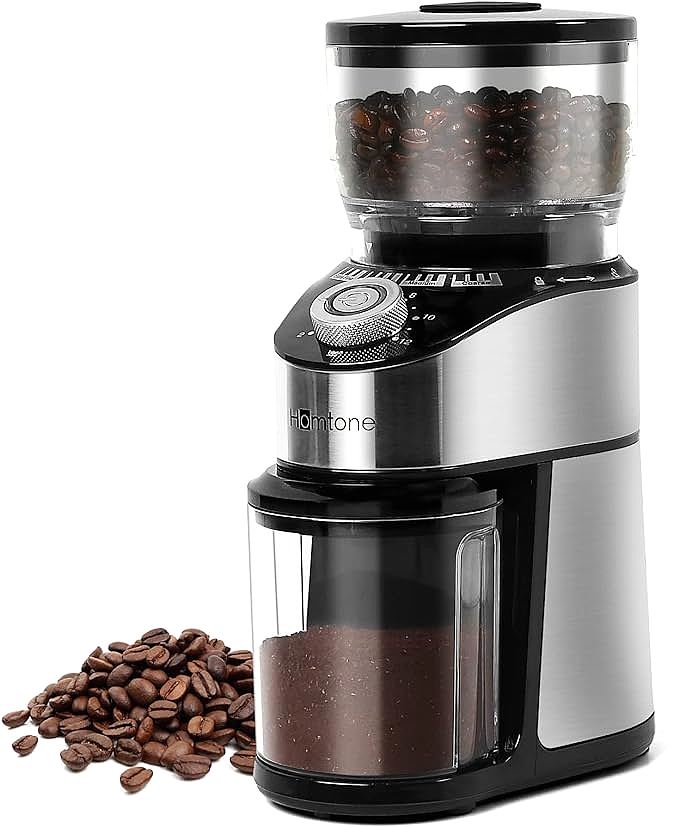
Homtone NK-0644 Electric Coffee Grinder: Unlock the Perfect Grind with Conical Burr Technology
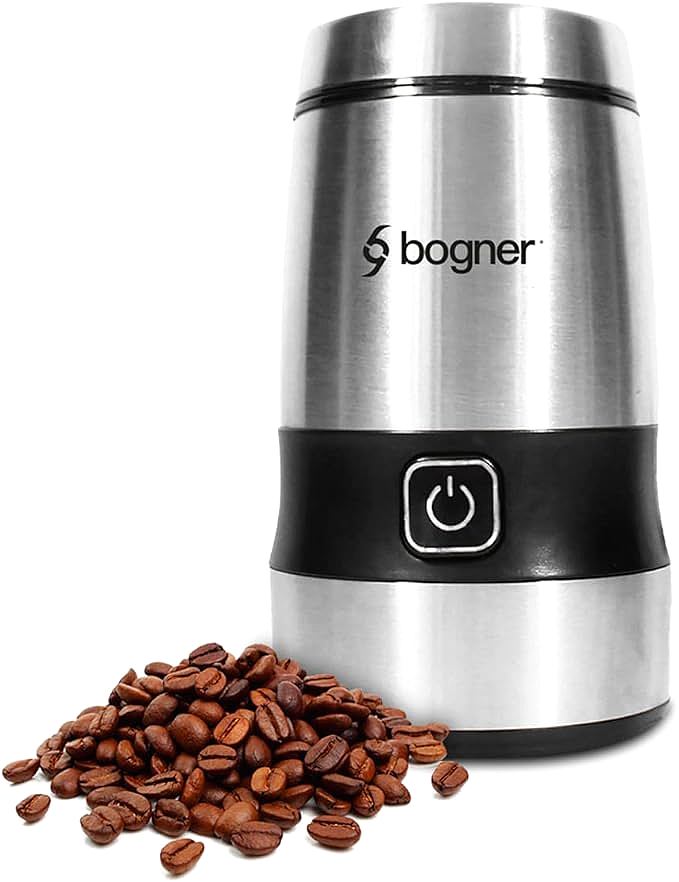
Bogner BCG01 Electric Coffee Grinder: Unlock Freshness and Flavor
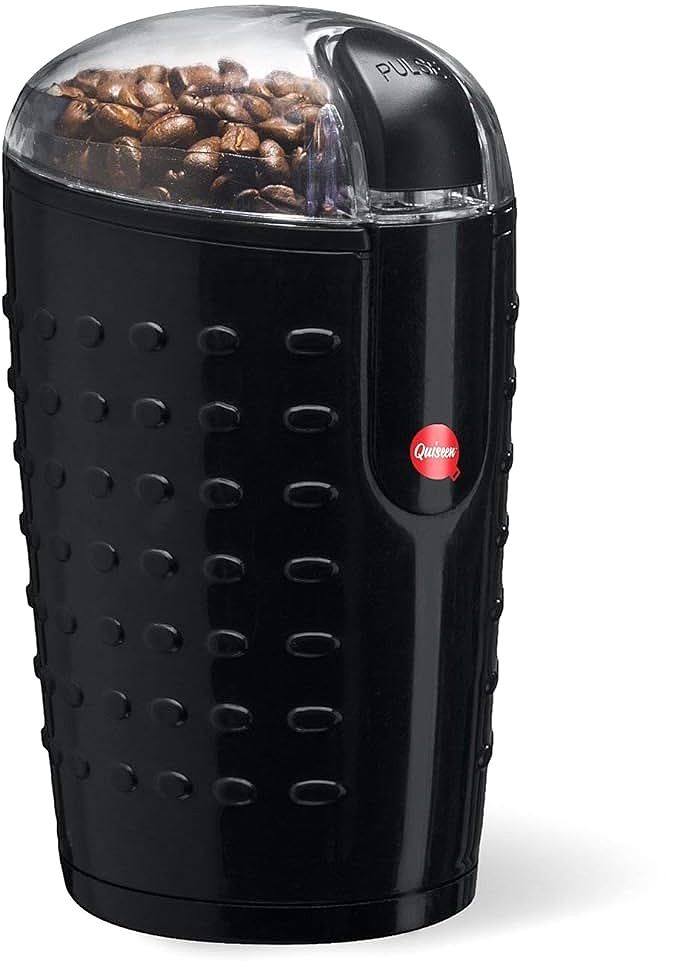
Quiseen Q-CG001 Coffee Grinder: Unlock Flavor with Precision Grinding

Amazon Basics Electric Coffee Grinder: Unlock the Secret of Freshly Ground Flavor
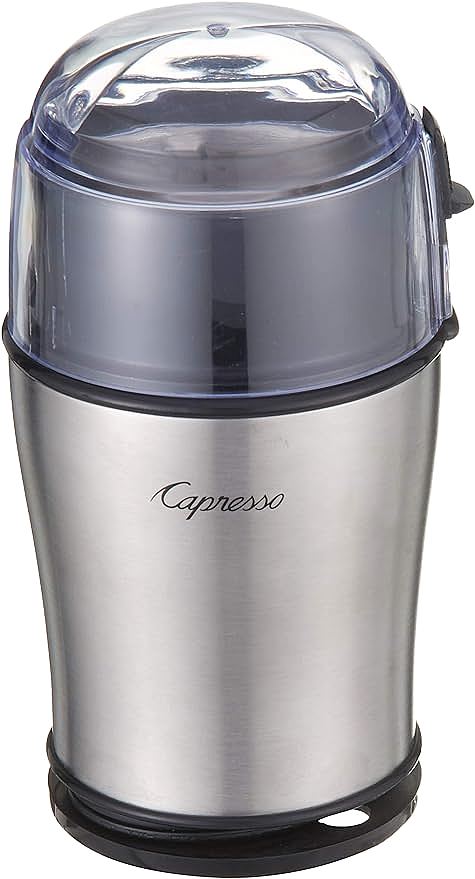
Capresso 506.05 Cool Grind Grinder: The Science of Fresh Flavor
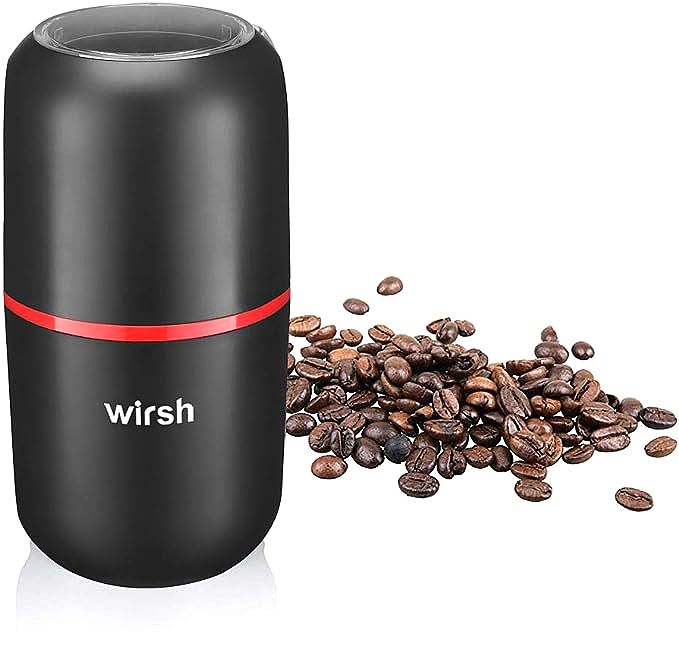
The 15-Minute Rule: Unlocking Your Coffee's True Flavor with the Science of Grinding

Proctor Silex 80402 Sound Shield Electric Coffee Grinder: Quiet Grinding for Flavorful Coffee
