Burr Coffee Grinder vs Blade Grinder: Particle Consistency Matters


OXO Conical Burr Coffee Grinder 15 Settings Stainless Steel

Why Grind Consistency Matters More Than You Think
You measure the beans to the gram. You heat the water to 200 degrees exactly. You bloom for thirty seconds and pour in slow, steady spirals. The coffee smells right as it drips into the carafe. Then you taste it and something is off. A sharp, metallic bitterness sits on top of a hollow, sour body. The tasting notes printed on the bag are absent: no blueberry, no milk chocolate, no caramel. The beans were fresh. The technique was sound. The problem was in the grind.
A roasted coffee bean is a dense matrix of cellulose, oils, and water-soluble compounds. Apply force and it fractures. A blade grinder fractures beans through high-speed impact: a metal blade spinning at 20,000 to 30,000 RPM, smashing into whatever it contacts. Some beans get struck dozens of times and turn to powder. Others catch a single glancing blow and remain in large fragments. The result is a wide particle size spread: fine dust at one end, pea-sized chunks at the other, all mixed together in the same batch.
Water extracts flavor from coffee at a rate governed by surface area. Fine particles, with their high surface-to-volume ratio, release solubles within seconds. Large particles release them over minutes. When both sizes steep together in a brew basket or French press, the fines over-extract into bitterness while the larger pieces under-extract into sourness. Your tongue registers both defects in a single sip. The flavors do not average out. They clash.
The numbers make this concrete. A blade grinder produces a particle distribution where roughly 45 percent of grounds land within the target size range for a given brew method. The other 55 percent are either too fine or too coarse. A burr grinder keeps about 95 percent of particles within a consistent band. This fifty-point gap in physical consistency shows up directly in the cup: blade-ground coffee typically extracts 70 to 78 percent of available soluble compounds before unpleasant bitterness arrives, while burr-ground coffee reaches 92 to 95 percent extraction.
Extraction percentage may sound abstract, but it translates to something every coffee drinker has tasted. At 70 percent extraction, the cup tastes thin, sour, and vegetal. At 78 percent, bitterness begins to creep in from the fines. The sweet spot for most brew methods sits between 88 and 94 percent, where sweetness, acidity, and body find balance. A blade grinder cannot reliably land in that window because its particle distribution is too wide. A burr grinder can, because it controls the one variable that dictates extraction rate.
The burr coffee grinder vs blade grinder question is not a debate about luxury equipment. It is about whether you can reproduce a good cup of coffee the day after you accidentally made one.
The Core Mechanical Difference
Blade and burr grinders approach the same bean through entirely different physical mechanisms, and the gap in the cup follows from the gap in how they work.
A blade grinder spins a single metal blade at high speed in a sealed chamber. The sole control is time: hold the button longer and the average particle gets smaller. But the word average misleads. The blade's impact pattern is stochastic. Beans near the blade get pulverized while beans in the chamber's dead zones escape almost untouched. After twenty seconds of grinding, the chamber contains a spectrum of particles ranging from under 100 microns to over 1,500 microns. That is a fifteen-fold size range in a single dose.
Friction adds another problem. At 20,000 to 30,000 RPM, the blade heats the grounds rapidly. Coffee's most delicate aromatic compounds begin volatilizing around 40 degrees Celsius, or roughly 104 degrees Fahrenheit. A blade grinder can push ground coffee past that threshold during a thirty-second grind cycle, meaning volatile aromatics evaporate before water ever touches the grounds. What reaches the cup is coffee that has already lost some of its character to friction heat.
A burr grinder uses two abrasive surfaces set a fixed distance apart. Beans drop into the gap between them and are crushed and sheared as one surface rotates against the other. A particle cannot leave the grinding chamber until its dimensions are smaller than that gap. This single constraint functions as a physical size gate. Every particle that exits has been reduced to roughly the same dimension, regardless of where it started in the hopper or how the burrs happened to catch it.
A simple kitchen sieve test makes the difference visible. Blade-ground coffee, shaken through a mesh strainer, reveals a spectrum from talcum-fine dust to fragments the size of sea salt crystals. Burr-ground coffee, sieved the same way, shows a tight cluster of particles around the target size with far fewer outliers at either extreme. The physics of the burr gap, a fixed mechanical tolerance, enforces what the blade's random impact cannot.
Flavor extraction measurements tell the same story in different language. A blade grinder pulls 70 to 78 percent of available flavor compounds from the bean before bitter over-extraction from the fines takes over. A burr grinder extracts 92 to 95 percent. The fifteen-to-twenty-five-point gap is the difference between a cup where you can name the tasting notes and one where you know something tastes wrong but cannot identify what.
Thermal behavior also diverges. Burr grinders run at lower speeds, typically 400 to 1,200 RPM, generating less frictional heat than blade grinders at full RPM. For beans roasted within the past two weeks, this gap matters. A hot grinder steals flavor before brewing begins.
The burr coffee grinder vs blade grinder distinction, at its core, is a distinction between two approaches to breaking down a solid. One uses impact and hopes for the best. The other uses a calibrated gap and gets the same result every time. Everything that follows in the cup flows from that single design choice.
What Conical Burrs Achieve
The burr grinder category splits into two designs, and the distinction explains much of the price variation across the market.
Flat burrs are two parallel rings with cutting edges machined into their facing surfaces. Beans enter the center and are pushed outward by centrifugal force, cut progressively finer as they travel. The grind size is set by the distance between the rings. Flat burrs produce excellent consistency and are the standard in high-end espresso grinding. But they demand powerful motors and precise alignment, which pushes prices past 150 dollars and often well beyond.
Conical burrs use a cone-shaped inner burr rotating inside a ring-shaped outer burr. Beans are drawn downward by gravity and the burr geometry, crushed at the wider top section and sheared to final size at the narrower bottom. The conical shape naturally feeds beans through the mechanism, requiring less motor power to operate. A 150-watt motor, modest by appliance standards, can drive stainless steel conical burrs effectively because the geometry itself handles much of the crushing work.
The OXO Conical Burr Coffee Grinder, at $79.95, illustrates this engineering tradeoff. It pairs stainless steel conical burrs with a 150-watt motor, producing 15 stepped grind settings that cover the spectrum from espresso-fine to cold-brew-coarse. Each detent on the adjustment dial corresponds to a measurable shift in average particle size. You find the setting for your pour-over, dial it in, and return to it with the same result tomorrow. The physical size gate does the work. The motor pushes beans through it. The adjustment dial tells both where to aim.
One overlooked detail in grinder design is static electricity. Coffee particles rubbing against metal surfaces generate a charge that sends fines floating across the countertop. An anti-static hopper and grounds container, simple additions that treat the plastic surfaces to reduce charge buildup, keep more coffee in the bin and less on the counter. These small design choices change the daily experience of grinding more than horsepower figures do.
Design Choices That Shape Daily Use
A grinder is not just a motor and burrs in a box. The features that surround the grinding mechanism determine whether the tool feels like an appliance or an instrument.
The one-touch timer deserves more credit than it typically receives. Blade grinders require you to hold a button and guess at the duration: ten seconds today, twelve seconds yesterday, eight seconds when short on time. A timed dose removes that variable. Load the hopper, set the dial to the number of cups you are brewing, press start, and walk away. The grinder runs for the programmed duration and stops. The dose is consistent, which means the brew ratio stays consistent, which means one more variable you no longer need to think about.
The hopper holds 12 ounces of whole beans, roughly enough for a week of daily brewing for one or two people. This is a practical middle ground between single-dosing, where you weigh beans for each brew, and filling a large hopper that exposes beans to air and light for days. The anti-static treatment on the hopper walls reduces the cling that sends grounds onto the counter when you remove the container.
Cord storage, often treated as an afterthought, solves a specific problem for kitchens with limited counter space. The power cord tucks into a channel in the base, letting the grinder sit flush against the backsplash rather than projecting several inches forward to accommodate a coiled cord. At roughly 8 by 12 by 7 inches and 4.5 pounds, the footprint is compact enough to leave on the counter permanently without dominating the workspace.
The grounds container matches the hopper at 12 ounces and lifts out with a single hand. A silicone lid keeps grounds from spilling during transfer to the brew basket. These details are not glamorous, but they are the difference between reaching for the grinder every morning and leaving it in the cabinet because it is a hassle to use.
There is a broader principle at work here. Kitchen appliances live or die by their daily friction, not their specifications. A grinder with perfect burr geometry that is annoying to load, noisy to run, or messy to clean will see less use than a simpler grinder that disappears into the morning routine. Good design removes obstacles. Bad design adds them.
Setting by Brewing Method
Grind size is not a quality you chase in the abstract. It is a setting you match to the brew method. Each method imposes different contact time and pressure, demanding a different particle size for balanced extraction.
Espresso pushes water through a compacted coffee puck at 9 bars of pressure over 25 to 30 seconds. That high-pressure, short-contact combination demands fine, uniform particles in the 200 to 400 micron range to create enough resistance for proper extraction. On a 15-setting grinder, this is roughly settings 1 through 3. A blade grinder cannot produce the tight, uniform fine particles espresso needs. The result is either a choked, stalled shot or a thin, racing pour with no body. There is no middle setting to adjust toward.
Pour-over methods such as the V60, Chemex, or Kalita Wave steep coffee as gravity pulls water through a filter bed over 2.5 to 4 minutes. Medium-fine to medium grinds, 400 to 700 microns, provide the right flow rate. Settings 4 through 7 on a 15-setting grinder correspond to this range. Too fine and the filter clogs, stalling the drawdown and producing bitterness. Too coarse and water rushes through, leaving a weak, tea-like extraction. With consistent particles, you adjust once, find the sweet spot for your V60, and return to it with confidence day after day.
Automatic drip brewers operate in a similar particle range, roughly settings 5 through 8, but are slightly more forgiving because water dispersion is mechanical and uniform rather than manual and variable.
French press steeps grounds in hot water for four full minutes. That long contact time demands coarse particles, 700 to 1,000 microns, settings 9 through 12. Blade grinders fail this method visibly. The fines they produce are small enough to slip through the metal mesh filter and form a layer of sludge at the bottom of the cup. You can press slowly. You can use a coarser sieve. You cannot eliminate the sludge entirely without eliminating the blade.
Cold brew takes the extraction window to its extreme: 12 to 24 hours in cold or room-temperature water. The grind should be extra coarse, above 1,000 microns, settings 13 through 15. This method is the most forgiving of inconsistency because the long extraction time smooths out many defects. Even so, blade-ground cold brew carries a sharp, acrid note from over-extracted fines that no paper filter fully strips away.
The pattern across all five methods is the same. Adjustable settings let you match grind to method. A single uncontrolled output forces you to accept whatever distribution the blade produced, regardless of what the method requires. The only way to brew five different methods with a blade grinder is to accept subpar results from four of them.
What It Takes to Keep a Grinder Working
Coffee oils oxidize and turn rancid within days. Fine particles pack into crevices and absorb moisture from the air. Metal burrs slowly accumulate a coating of stale residue that interferes with the grinding action. A grinder lives in a hostile environment, and maintenance directly affects what ends up in the cup.
Blade grinders are simple to clean because they are simple devices. A quick pulse with dry rice or a dedicated grinder cleaning pellet absorbs residual oils. A dry cloth wipe handles the rest. The limitation is the bowl itself. The blade sits in a fixed plastic or metal cup that develops micro-scratches over time. Each scratch becomes a hiding place for stale oil that no wipe can fully reach. Over months of use, the accumulated residue adds a faint but persistent rancid note to every grind.
Burr grinders need more deliberate care but reward it with longer service life. A well-designed model simplifies the process. The hopper lifts off without tools. The upper burr twists out by hand, no screwdriver, no disassembly anxiety. Both surfaces can be brushed clean in under a minute. Running a burr cleaning pellet through the mechanism every few weeks removes oil buildup from the grinding surfaces that the brush alone cannot reach.
Stainless steel burrs, used daily and cleaned monthly, maintain consistent performance through roughly 500 pounds of coffee. At one pound per week, that is close to a decade of home use. Burr wear manifests gradually as a widening particle distribution rather than sudden failure. You notice the change over weeks: a little more bitterness, a little less clarity. You have time to plan a replacement rather than discovering the problem mid-brew on a morning you are already running late.
A dishwasher-safe grounds container removes the most tedious cleaning step from the routine. The maintenance tradeoff is modest: a few minutes of attention each month in return for predictable, repeatable performance every morning. In the calculus of home coffee, that tradeoff favors the burr grinder for anyone who drinks coffee daily.
Cost and Quality: A Straightforward Look
Price anchors most decisions about coffee equipment, and it deserves an honest treatment rather than dismissal.
A blade grinder costs 15 to 40 dollars. It grinds coffee, and occasionally spices, nuts, or flax seeds, and does so for years with minimal maintenance. For someone who drinks pre-ground coffee and has no interest in extraction science, a blade grinder is a rational purchase. The jump from pre-ground to fresh-ground is larger than the jump from blade-ground to burr-ground. If you have not made the first jump, start there.
Burr grinders begin around 50 dollars and reach past 500. The 80-dollar price point, occupied by conical burr models with stainless steel burrs and 15 stepped settings, represents an entry-level sweet spot. Measured as dollars per percentage point of extraction efficiency, a 20-dollar blade grinder delivering 70 percent extraction costs about 29 cents per point. An 80-dollar burr grinder delivering 92 percent extraction costs roughly 87 cents per point. The per-point cost is higher, but those 22 extra percentage points of flavor cannot be reached by a blade grinder at any price.
Major review outlets tend to focus on the 150-to-250-dollar range, where flat burr grinders with more settings and higher build quality dominate. This focus leaves a gap: the person who wants burr consistency without spending nearly 200 dollars. The The grinder at $79.95 fills that gap. Conical stainless steel burrs, 15 settings spanning five brew methods, anti-static design, compact footprint, at roughly half the cost of the standard Wirecutter recommendation.
There are honest compromises at this price. The 150-watt motor is adequate rather than powerful. The settings are stepped, 15 preset positions, rather than stepless, which would allow infinite adjustment between extremes. The body is functional plastic rather than brushed metal. For espresso purists who need micro-adjustments at the fine end, these compromises are real. For pour-over, drip, French press, and cold brew, the methods most people use daily, none of them cost anything in the cup.
The cost analysis is not just about the grinder. It is about the beans. A 15-dollar bag of single-origin coffee represents a bet that the roaster's work will reach the cup intact. A blade grinder extracts roughly three-quarters of that work and discards the rest. Over a year of weekly 15-dollar bags, that is roughly 200 dollars of untasted flavor. The grinder pays for itself in recovered extraction within six months.
Matching the Tool to the Task
A burr grinder is not the right answer for every coffee drinker. The relevant question is whether the tool fits the user's habits and standards, not whether one tool is objectively superior.
A single-method brewer, French press every morning, drip machine on a timer, who has never noticed inconsistency or off-flavors in the cup does not need to change anything. Fresh beans ground in a blade grinder already outpace pre-ground coffee by a wide margin, and that margin matters more in the cup than the blade-to-burr gap.
A multi-method brewer, espresso on weekends, pour-over on weekdays, cold brew through the summer, needs adjustable settings to make the rotation work. A blade grinder cannot produce the fine uniform particles espresso demands or the coarse, fines-free ones French press requires. Without settings, you are boxed into the middle-range methods, and even those produce less clarity than they are capable of.
Someone who buys single-origin beans with distinct tasting notes printed on the bag and cannot find those notes in the brewed cup has a grind problem wearing a bean-shaped disguise. Grinding carefully sourced beans with a blade is like listening to a well-mastered recording through a phone speaker. The information is present, but the reproduction cannot retrieve it. A burr grinder closes the gap between what the roaster built into the bean and what actually reaches your palate.
A conical burr grinder around 80 dollars fits the person standing at the crossover: someone using a blade grinder who has started to notice their coffee tastes different from one day to the next for no reason they can identify. At that price, the device costs less than a month of cafe visits for a daily drinker and will outlast several blade grinders in service life.
Coffee is a chain of variables. Bean quality, water chemistry, temperature, brew ratio, grind consistency. Change one link and the others shift in response. But grind consistency is the foundation of the chain. No bean, no brewer, and no pour technique can compensate for particles that extract at three different rates in the same cup. Tighten the grind variable and everything else becomes something you can adjust with purpose rather than something you fight against without knowing why.
The burr coffee grinder vs blade grinder topic surfaces in every coffee forum and beginner's guide for good reason. It is one of the few equipment questions where the physics of the answer is unambiguous. Uniform particles extract evenly. Random particles extract unpredictably. The gap between those two outcomes is the difference between a cup you look forward to and one you finish out of habit.
Refining a morning cup is not about chasing an ideal that recedes with every improvement. It is about removing enough obstacles that a good result becomes the normal result. The physics of particle size distribution points in one direction: the fewer variables you leave to random chance, the more mornings you get the cup you were aiming for.
OXO Conical Burr Coffee Grinder 15 Settings Stainless Steel
Related Essays
Burr Coffee Grinder vs Blade Grinder: Particle Consistency Matters
Burr Coffee Grinder vs Blade Grinder: Particle Consistency Matters
Burr Coffee Grinder vs Blade Grinder: Particle Consistency Matters

How Conical Burr Geometry Controls Coffee Extraction

Burr vs Blade Coffee Grinder: The Physics of Consistent Grinding
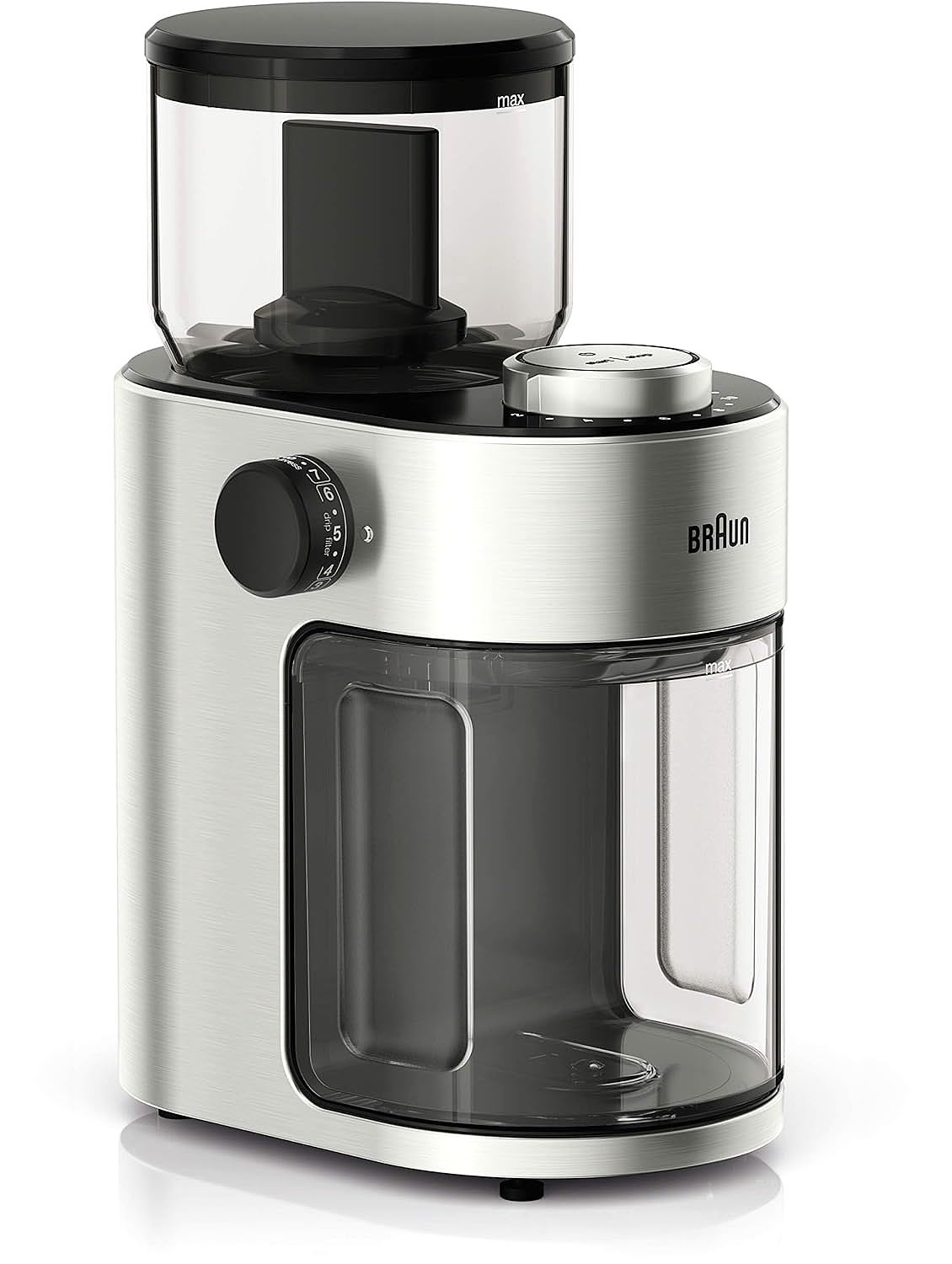
The Flat Burr Secret: Mastering the Braun KG7070 Coffee Grinder

Best Burr Coffee Grinder Under $50: 18 Settings & 16oz Hopper

Breville BES870XL Barista Express: Mastering Espresso Extraction at Home
Best Burr Coffee Grinder Under $50: 18 Settings & 16oz Hopper
