Espresso Machine Pump Pressure Technology: How 9 Bars Shapes Extraction
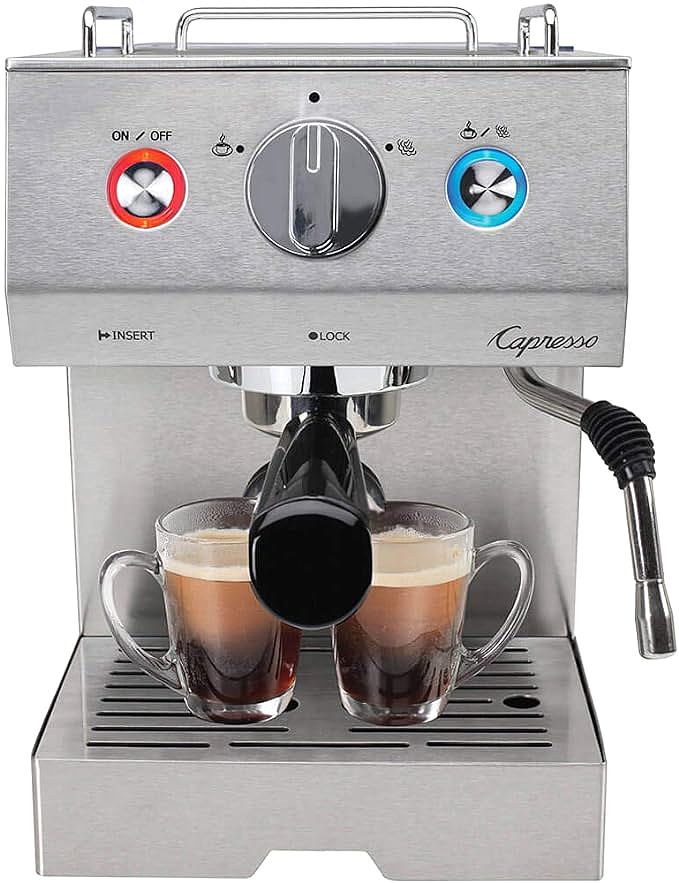
Capresso 126.05 Cafe Select Professional Stainless Steel Espresso Machine
How Pressure Transforms Coffee Extraction
Water and ground coffee interact differently under pressure than they do under gravity alone. Standard atmospheric brew methods—pour-over, French press, drip—rely on gravity and capillary action to move water through a bed of grounds. The extraction is gentle, thorough, and produces a beverage that ranges from the delicate clarity of a properly executed pour-over to the full-bodied richness of a French press steep. But none of these methods can produce what pressurized extraction creates, because pressure changes the physics of the water-coffee interface.
At nine bars of applied pressure, equivalent to the force experienced 90 meters below the ocean surface, water penetrates the cellular structure of coffee particles with an intensity that gravity cannot match. The pressurized water strips oils from the cellulose matrix, dissolves soluble compounds from the interior of particles rather than merely their surfaces, and suspends these materials in an emulsion that reaches the cup as a viscous, concentrated liquid topped with a persistent foam of emulsified oils and carbon dioxide. This foam, or crema, is the visual signature of pressurized extraction. It forms because the sudden pressure drop as the liquid exits the portafilter causes dissolved carbon dioxide to come out of solution, and the coffee oils present in the stream stabilize the resulting bubbles into a lasting foam.
The chemistry of pressurized extraction follows a temporal sequence. In the first seconds of contact, the hot pressurized water dissolves the most accessible compounds: fruit acids, simple sugars, and lighter aromatic molecules. As extraction continues, the water reaches deeper into the particle structure, dissolving more complex carbohydrates, melanoidin pigments, and eventually the bitter alkaloids including caffeine and trigonelline. The goal of extraction timing—typically 25 to 30 seconds for a standard double shot—is to stop the process at the point where sweetness and body have developed but before bitterness overwhelms the cup. This narrow window is why the broader field of espresso machine pump pressure technology requires attention to more than mechanical output. The pump must deliver consistent pressure, and the machine must maintain consistent temperature, for the operator to have any chance of hitting that window repeatedly.

The Two Dominant Pump Types in Home Machines
The pump that drives water through the coffee bed is the defining component of any espresso machine. Two fundamentally different pump designs dominate the market, and understanding their differences explains much about the pricing, performance, and longevity of various machines.
Rotary vane pumps operate on a principle that dates back to industrial hydraulic systems. An electric motor spins an eccentrically mounted rotor inside a cylindrical chamber. Vanes fitted into slots in the rotor slide outward as the rotor turns, trapped against the chamber wall by centrifugal force. The spaces between vanes expand on the intake side, drawing water in, and contract on the discharge side, pushing water out under pressure. Because the rotor turns continuously, the output is a smooth, pulse-free stream of pressurized water. Rotary pumps can maintain their rated pressure indefinitely, making them the standard choice for commercial cafes where a machine might pull hundreds of shots during a morning rush. The cost and physical size of a rotary pump assembly, however, place it beyond most home machines.
Vibratory pumps represent the alternative approach that made home espresso practical. An electromagnetic solenoid drives a piston through a short reciprocating stroke, typically at the 60-hertz frequency of North American AC power. Each forward stroke pushes a small volume of water through a one-way check valve. The output is inherently pulsatile, with pressure rising and falling across each cycle. A small expansion chamber downstream of the pump smooths these pulses into a more nearly constant pressure, though some residual oscillation remains. Vibratory pumps are compact, lightweight, and inexpensive to manufacture. They have sufficient durability for home use, where a machine might produce three to five shots per day. The development of reliable, affordable vibratory pumps represents one of the key advances in espresso machine pump pressure technology over the past three decades, as it brought genuine pressurized extraction into the home kitchen at an accessible price point.
The rated pressure of a vibratory pump, commonly advertised as 15 or 20 bar, describes its maximum output against a completely blocked outlet—a condition that never occurs in normal operation. Against the resistance of a properly prepared coffee puck, the actual delivered pressure is lower, typically in the range of 9 to 11 bar. This discrepancy between rated maximum and operating pressure is a source of confusion that espresso machine pump pressure technology addresses through downstream regulation, specifically the over-pressure valve.
What Happens Inside a Vibratory Pump
The internal mechanism of a vibratory pump rewards examination because it illustrates a broader engineering principle: converting oscillating motion into directional fluid flow. The pump body contains a piston made of magnetic material, surrounded by a copper coil that forms an electromagnet. A spring sits behind the piston, pushing it toward the outlet end of the pump chamber.
When alternating current flows through the coil, the resulting magnetic field pulls the piston backward against the spring. At the zero-crossing point of the AC cycle, the magnetic field collapses, and the spring drives the piston forward. This forward stroke pushes water through a one-way ball check valve and into the outlet line. On the next half-cycle, the magnetic field returns, pulling the piston back for another intake stroke. The process repeats 60 times per second, producing a rapid series of pressure pulses rather than a smooth, continuous output.
Each pulse moves only a fraction of a milliliter of water. At 60 pulses per second, however, the cumulative flow rate is sufficient for espresso extraction, which requires roughly one to two milliliters per second through the coffee puck. The pulsation amplitude depends on the stiffness of the spring, the magnetic force generated by the coil, and the backpressure against which the pump must work. Higher backpressure reduces the piston's forward travel, decreasing per-pulse flow but increasing per-pulse pressure. This self-regulating characteristic gives vibratory pumps a pressure-versus-flow curve that rises as flow restriction increases, up to the pump's maximum pressure rating.
Noise is the most noticeable characteristic of vibratory pump operation. The rapid reciprocation of the piston, combined with the impact of the check valve ball against its seat, produces a characteristic chattering sound that fills the kitchen during extraction. Rotary pumps, by contrast, produce a quiet hum. This acoustic signature is one of the most immediately apparent differences between commercial and home equipment, and managing it represents an ongoing area of refinement in espresso machine pump pressure technology for the residential market.
The Over-Pressure Valve and Pressure Regulation
The over-pressure valve, universally abbreviated as OPV, performs a function that is simple in concept but critical in execution: it limits the maximum pressure that can reach the coffee. Without an OPV, the pressure delivered to the portafilter would vary with every change in coffee resistance—finer grind yielding higher pressure, coarser grind yielding lower pressure. The OPV creates a hard ceiling, bleeding off any excess pressure above its set point and returning the surplus water to the reservoir or pump inlet.
The mechanism is a spring-loaded poppet or ball valve installed in a bypass line. A spring presses the valve against its seat with a force calibrated to the desired pressure setting. When line pressure exceeds this force, the valve lifts, opening a path for water to recirculate. The spring tension can be adjusted by turning a screw that compresses or relaxes the spring, changing the pressure at which the valve opens. Factory settings typically fall between 9 and 12 bar, with the exact value determined by the manufacturer's testing procedures and the intended market segment.
Adjusting the OPV is one of the first modifications that enthusiasts perform on new machines. A pressure gauge attached to a blank portafilter, which completely blocks the outlet, allows measurement of the OPV opening pressure. Turning the adjustment screw clockwise increases the set point; counterclockwise decreases it. The target for traditional espresso is 9 bar, measured at the group head. Machines set to 11 or 12 bar from the factory often produce harsher, more bitter shots and are more prone to channeling, because the higher pressure forces water through the puck with excessive velocity and encourages the formation of preferential flow paths.
The OPV embodies a design philosophy that has become central to espresso machine pump pressure technology: decouple the pump's raw output from the extraction environment. The pump provides a reservoir of available pressure. The OPV selects how much of that pressure is actually used. This separation of generation and regulation allows designers to specify a pump with ample headroom for worst-case flow resistance, while setting the OPV to the precise pressure that extraction research has identified as optimal for flavor balance.

Fluid Dynamics of the Coffee Puck
The coffee puck is the most variable component in the extraction system. Unlike the pump, the OPV, or the heating element—all of which are manufactured to consistent specifications—the puck is assembled by hand from a biological material whose properties vary with origin, roast profile, age since grinding, and the technique of the person preparing it. This variability makes the puck the primary source of inconsistency in home espresso, and understanding its fluid dynamics is essential to producing repeatable results.
When water at 9 bar encounters the puck surface, it must find its way through a bed of particles typically 200 to 400 microns in diameter. At this scale, the spaces between particles form a network of interconnected pores whose total cross-sectional area is far smaller than the portafilter basket's diameter. The flow resistance of this network follows principles similar to those described by Darcy's law for flow through porous media: resistance increases with bed depth, decreases with particle size, and increases with tamp density. The mathematical models developed in the study of espresso machine pump pressure technology provide a framework for understanding how these variables interact, though the biological variability of coffee means that empirical dialing-in always supersedes theoretical prediction.
The critical failure mode is channeling. If the puck contains any inconsistency—a clump of grounds, an air pocket, a density variation from uneven tamping—the pressurized water concentrates its flow through the weakest region. Once a channel forms, it reinforces itself. The concentrated flow erodes the channel walls, widening the preferred path and further reducing the resistance along that route. The water that flows through the channel over-extracts the coffee it contacts, producing bitterness. The water that never reaches the rest of the puck leaves those grounds under-extracted, producing sourness. The shot emerges thin, pale, and fast, often completing in under 10 seconds instead of the target 25 to 30.
Preventing channeling requires uniformity at every stage of preparation. The grinder must produce particles of consistent size; a blade grinder that creates a mixture of powder and boulders guarantees channeling regardless of technique. The distribution of grounds in the basket must be even, with no piles or gaps. WDT, or Weiss Distribution Technique, uses fine needles to stir the grounds and break up clumps before tamping. The tamp itself must be level and firm, though the exact force matters less than consistency and flatness. A 30-pound tamp and a 20-pound tamp produce similar results if both are level, because the 9 bar of brewing pressure far exceeds any force a human can apply by hand. These preparation techniques complement, rather than replace, the role of espresso machine pump pressure technology in the extraction chain. No machine, however precisely engineered, can compensate for a poorly prepared puck.
Temperature Stability Across the Extraction Window
Temperature control in espresso brewing operates within tight constraints. The Specialty Coffee Association specifies a brewing water temperature of 90 to 96 degrees Celsius at the point of contact with the coffee. A deviation of two degrees changes the extraction profile noticeably. Below this range, sourness dominates as fruit acids extract preferentially over sugars and bitter compounds. Above it, bitterness surges as tannins and alkaloids dissolve faster than the aromatics that balance them.
Maintaining temperature within this narrow band throughout a 30-second extraction requires thoughtful thermal engineering. The cold water entering the machine from the reservoir must be heated to brewing temperature, and the heated water must retain that temperature as it flows through the pump, the internal plumbing, the group head, and into the coffee. Every metal component along this path acts as either a heat sink or a heat source, depending on its temperature relative to the water passing through it.
Thermoblock systems take the on-demand approach. Water flows through a narrow channel bored into a block of heated metal, typically aluminum or stainless steel. The block's large surface area relative to the water volume enables rapid heat transfer. The machine reaches brewing temperature in 30 to 60 seconds from a cold start. The trade-off is thermal stability during the shot. As cold water enters the block during extraction, the metal temperature drops before the heating element can respond. A brief temperature dip of one to three degrees is common before the system recovers. For machines with adequate thermal mass and responsive temperature control, this dip has minimal impact on taste. For those with underpowered heating elements or minimal metal mass, the fluctuation can affect extraction quality noticeably.
Boiler systems trade warm-up time for thermal stability. A boiler holding a significant volume of water—typically 300 milliliters to one liter—maintains the entire mass at brewing temperature. When cold water enters the boiler during extraction, the temperature change is distributed across this large thermal mass and is correspondingly small. A well-designed boiler system with adequate wattage can maintain temperature within half a degree throughout a shot. The cost is a warm-up time of 10 to 20 minutes and higher energy consumption during idle periods.
The choice between thermoblock and boiler designs interacts with espresso machine pump pressure technology in a specific way: if temperature fluctuates during the shot, the extraction chemistry changes mid-stream. The same pressure profile that produces a balanced shot at a steady 93 degrees can produce a sour start and bitter finish if the temperature dips early and overshoots late. Consistent pressure requires consistent temperature to produce consistent flavor, which is why machine designers treat these two variables as a coupled system rather than independent parameters. Engineers working in espresso machine pump pressure technology must therefore approach heating and pumping as a single integrated design challenge, not as separate subsystems that happen to share a chassis.
Portafilter and Basket Mechanics
The portafilter is the component that the operator handles directly, and its design affects both ergonomics and extraction quality. The standard 58-millimeter diameter, inherited from commercial machines of the mid-20th century, has become the de facto industry standard. This diameter accommodates doses from 14 to 22 grams with appropriate basket depth, and its widespread adoption means that aftermarket accessories—precision baskets, calibrated tampers, distribution tools—are available from dozens of manufacturers without proprietary lock-in.
The basket inside the portafilter is where coffee meets water under pressure. Precision baskets feature holes that are laser-drilled to uniform diameter, typically 0.3 millimeters, and arranged in a pattern designed for even flow across the entire bottom surface. The total open area of the holes is calculated to provide minimal resistance relative to the coffee bed itself; the basket should contribute negligible flow restriction so that the coffee, not the hardware, controls extraction rate.
Pressurized baskets, also called double-wall or crema-enhancing baskets, add a second chamber below the filter floor. Coffee exits the basket through a single small orifice, typically 0.5 to 0.8 millimeters in diameter, that creates backpressure regardless of grind quality. This design allows users with pre-ground coffee or entry-level grinders to produce shots with visible crema, though the crema is generated mechanically rather than from coffee oils emulsified under genuine extraction pressure. Pressurized baskets serve as a bridge for beginners, allowing them to produce acceptable results while developing the skills and equipment needed for unpressurized extraction. The transition from pressurized to unpressurized baskets coincides with the user's graduation from appliance operator to skilled practitioner.
The portafilter gasket, a silicone or rubber ring seated in the group head, provides the seal that must contain 9 bar of pressure during extraction. This gasket undergoes thousands of thermal cycles, expanding and contracting as the machine heats and cools. Over time, the material hardens, loses elasticity, and eventually fails to seal, producing drips or sprays around the portafilter rim during extraction. Gasket replacement every 12 to 18 months is standard maintenance for machines in daily use, and it represents one of the few service procedures that the owner can perform without specialized tools. Mechanical precision at every interface point along the pressurized water path contributes to the overall performance of espresso machine pump pressure technology. A pump and OPV calibrated to deliver exactly 9 bar cannot compensate for a portafilter that leaks 2 bar around a hardened gasket.

Steam Wand Physics and Milk Texturing
Steam generation for milk texturing operates on thermodynamic principles distinct from brew water heating. Brewing requires liquid water at approximately 93 degrees Celsius. Steaming requires dry steam—water vapor free of suspended liquid droplets—at temperatures exceeding 100 degrees Celsius, delivered with sufficient velocity to create a vortex in a pitcher of cold milk. Accommodating both requirements in a single machine introduces thermal management challenges that define the user experience across different machine architectures.
The phase change from liquid water to steam requires substantial energy input, the latent heat of vaporization. This energy must come from the machine's heating element, which in single-circuit designs must transition from maintaining brewing temperature to generating steam temperature. The 30-to-60-second wait for this transition is the primary operational limitation of single-boiler and single-thermoblock machines. After steaming, the system must cool back to brewing temperature before the next shot, either through a waiting period or through an active cooling flush that runs cold water through the group head. Dual-circuit designs—heat exchangers and dual boilers—eliminate this transition by maintaining separate temperature environments for brewing and steaming simultaneously.
The steam wand tip is a precision nozzle. Its holes, typically one to four in number and 1 to 2 millimeters in diameter, accelerate steam to high velocity as it exits. The number and orientation of these holes determine the steaming dynamics. A single-hole tip produces a powerful, focused jet suitable for rapidly heating larger volumes of milk. Multi-hole tips create a dispersed flow pattern that incorporates air more quickly for faster foam formation. The wand's length and articulation range affect how easily the operator can position the tip at the correct depth and angle within the pitcher.
The physics of milk texturing involves two sequential phases. In the stretching phase, the wand tip is held just below the milk surface, and the steam jet pulls air into the liquid, creating foam. The characteristic hissing sound of this phase signals air incorporation. In the texturing phase, the wand is submerged deeper, and the steam vortex folds the foam into the liquid body, breaking large bubbles into the microscopic structure that produces the glossy, paint-like texture of properly steamed milk. The transition between phases must occur before the milk temperature reaches roughly 37 degrees Celsius, after which the milk proteins denature and lose their foam-stabilizing capacity.
Temperature control during steaming is tactile rather than instrumental for most home baristas. The pitcher is held by its base, and the increasing warmth signals progress toward the target temperature of 60 to 65 degrees Celsius. Above 70 degrees, the milk scalds, developing a burnt flavor and losing its sweetness as lactose breaks down under excessive heat. The steam circuit, while operating on different thermal principles than the brew circuit, draws from the same water supply and relies on the same foundational engineering that underpins espresso machine pump pressure technology as a whole—the controlled application of force to achieve a specific physical transformation.
Construction Materials and Thermal Performance
The materials that constitute an espresso machine affect every aspect of its performance: thermal stability, durability, maintenance requirements, and the tactile experience of daily use. These material choices represent engineering trade-offs between cost, weight, machinability, and thermal properties.
Stainless steel dominates the visible surfaces of most mid-range and premium machines. Its corrosion resistance is essential in an environment of hot water and acidic coffee residue. Its thermal mass, while lower than brass or copper, provides useful temperature buffering in boilers and group heads. Its structural strength allows thin-wall construction that reduces weight without sacrificing rigidity. The brushed or polished finish that stainless steel accepts contributes to the visual character that consumers associate with professional-grade equipment, though this has no functional bearing on extraction quality.
Brass and copper appear primarily in boilers, group heads, and internal plumbing of traditional machine designs. These metals offer thermal conductivity two to three times that of stainless steel, allowing rapid heat distribution through the component mass. A brass boiler reaches temperature uniformity faster than an equivalent stainless steel boiler. Brass also machines easily, allowing complex internal geometries that optimize water flow paths through the heating circuit. The substantial weight of brass components, typically double or triple the mass of equivalent stainless steel parts, provides physical stability that prevents the machine from shifting on the counter when the portafilter is locked into place.
Thermoplastics and elastomers handle the roles that metals cannot. Polypropylene and similar engineering plastics form water reservoirs and exterior trim panels, chosen for their resistance to hot water degradation and their low manufacturing cost. Silicone and EPDM rubber form the gaskets, O-rings, and seals that prevent leaks at every junction in the pressurized water path. These soft components have finite service lives, typically two to five years depending on usage frequency and water chemistry. Their gradual degradation is the primary reason that espresso machines require periodic service beyond routine cleaning and descaling.
The thermal pathway from reservoir to cup passes through each of these materials in sequence, and every interface introduces a thermal resistance or a thermal mass that affects the final water temperature at the coffee bed. A product like the Capresso 126.05 Cafe Select, which pairs a stainless steel housing with a thermoblock heating system, illustrates the practical application of these material trade-offs in home-oriented espresso machine pump pressure technology. The machine's material choices prioritize rapid warm-up and corrosion resistance, while accepting the thermal stability limitations inherent in thermoblock architecture.
Water Chemistry and Mineral Management
The water that feeds an espresso machine is not a neutral medium. Its dissolved mineral content determines both the flavor of the extracted coffee and the rate at which scale accumulates inside the machine's internal passages. Understanding water chemistry is therefore as important to long-term espresso quality as understanding pump output or temperature profiles.
Calcium and magnesium ions, measured as water hardness, are the primary concern. When water containing these ions is heated, they combine with dissolved carbonate to form insoluble calcium carbonate and magnesium carbonate—the white, chalky deposits known as scale. In a thermoblock or boiler, scale coats the heating surfaces, reducing heat transfer efficiency and forcing the element to run hotter for longer to achieve the same water temperature. In narrow passages, such as the thermoblock channels or the internal waterways of the pump, scale accumulation restricts flow, increasing backpressure and potentially causing pump damage or altered pressure delivery over extended operation.
The ideal water for espresso brewing contains some mineral content—distilled or reverse-osmosis water produces flat, lifeless extraction because minerals facilitate the dissolution of flavor compounds from the coffee—but not so much that descaling becomes a frequent chore. A total dissolved solids level of 75 to 150 parts per million, with carbonate hardness of 40 to 80 parts per million, provides a workable balance between extraction quality and manageable scale accumulation. Municipal water supplies in many regions exceed these levels, particularly in areas with limestone geology, making filtration or bottled water a practical necessity for consistent results.
Descaling procedure dissolves accumulated mineral deposits by circulating an acidic solution through the machine's internal water paths. Citric acid, the active component in many descaling products, reacts with calcium carbonate to form soluble calcium citrate that rinses away with flush water. The procedure must reach all internal surfaces—the pump, the thermoblock or boiler channels, the solenoid valve, the group head—and must be followed by thorough rinsing to remove all acid residue. Incomplete rinsing leaves acidic water in the system that can corrode metal components and produce sour-tasting shots for days afterward.
Scale accumulation interacts with espresso machine pump pressure technology in a feedback loop that accelerates over time. As mineral deposits build up inside the water passages downstream of the pump, flow restriction increases incrementally with each use. The pump must work against progressively higher resistance to deliver the same flow rate, which increases mechanical load and shifts the operating point on the pump's pressure curve. Regular descaling, performed every two to three months under typical home use with moderately hard water, maintains both machine longevity and the pressure consistency that defines extraction quality.
Capresso 126.05 Cafe Select Professional Stainless Steel Espresso Machine
Related Essays
Espresso Machine Pump Pressure Technology: How 9 Bars Shapes Extraction
Espresso Machine Pump Pressure Technology: How 9 Bars Shapes Extraction
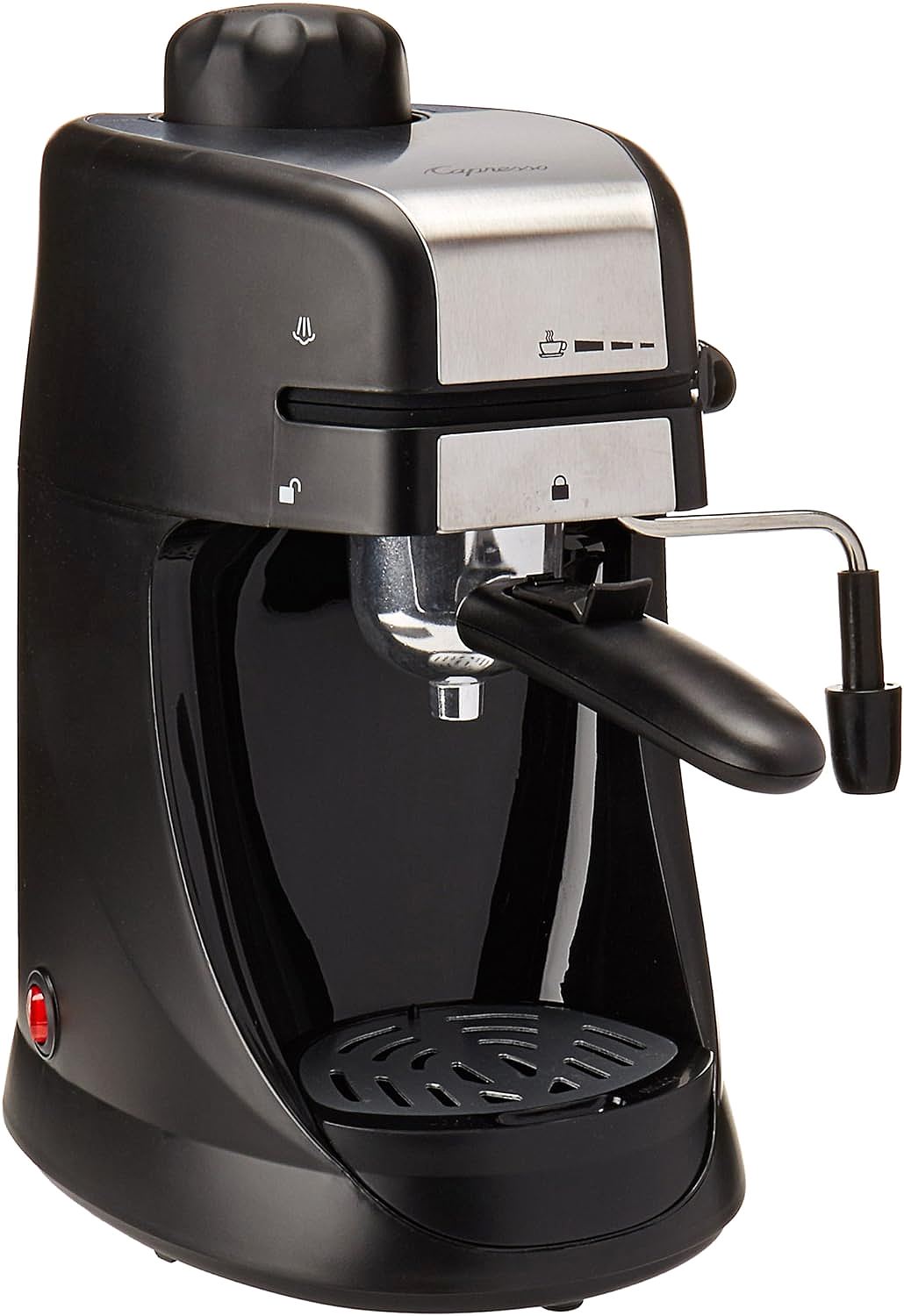
Capresso Steam PRO: Mastering Espresso and Cappuccino at Home

Capresso 124.01 Ultima Pro : The Science of Great Home Espresso

Capresso EC300: Brew Barista-Quality Espresso & Cappuccino at Home

EQK 20 Bar Espresso Machine: Unlock Barista-Quality Espresso at Home

CAVDLE CMEP 20 Bar Espresso Machine: Your Barista-Quality Coffee at Home
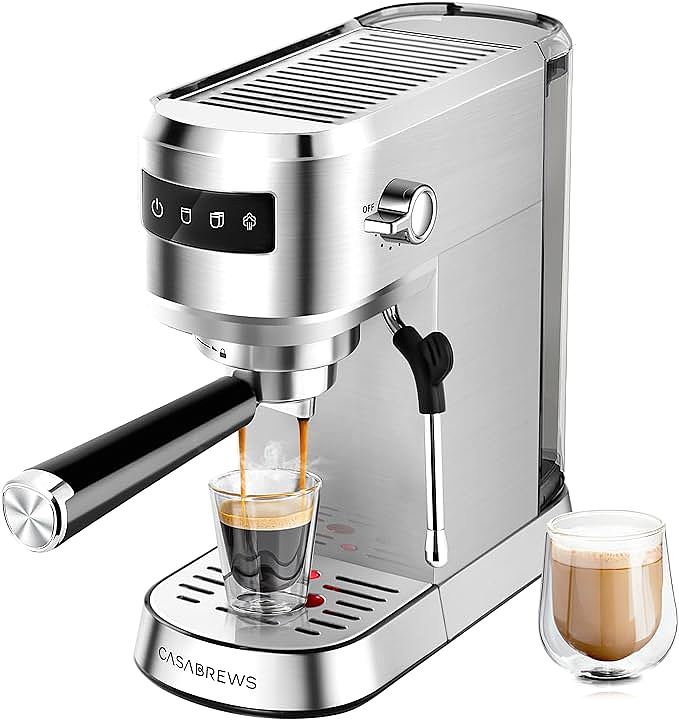
CASABREWS CM5418I 20 Bar Espresso Machine: Your Home Barista Solution

Gevi 20 Bar Espresso Machine: Unlock Cafe-Quality Espresso at Home productName: Gevi 20 Bar Manual Espresso Machine
