Medium Roast in a Pod: The Physics and Chemistry of Single-Serve Coffee

Tim Hortons Original Blend Medium Roast K-Cup Pods B00H6XZ38S
When the Same Pod Tastes Different Every Week
A common frustration with pod brewers is inconsistency. Monday's cup tastes rounded and nutty; by Friday the same brand comes out thin, papery, or oddly bitter. Most people blame the machine, the water, or their own palate. The actual cause sits further upstream, inside a sealed plastic cup the size of a shot glass, where four separate sciences - thermodynamics, organic chemistry, fluid mechanics, and materials engineering - have to cooperate for about fifty seconds.
When any one of them drifts, the cup changes. Understanding why medium-roast Arabica behaves the way it does inside a single-serve pod turns an unpredictable morning ritual into something you can actually diagnose and correct.

Why Arabica Costs More, and What That Buys You
The split between Arabica and its hardier cousin Coffea canephora is not marketing. It is biology with measurable consequences in the cup. Arabica (Coffea arabica) carries roughly 6 to 9 percent sucrose by dry weight in its green bean; canephora sits closer to 3 to 4 percent. That two-fold sugar gap is the single largest reason a medium-roast Arabica reads as naturally sweet while a comparable canephora tilt reads as flat or harsh.
Arabica also doubles the chromosome count of canephora (2n = 4x = 44 versus 2n = 2x = 22), which correlates with a more complex secondary metabolite profile - more lipids, more trigonelline, more of the chlorogenic acids that break down during roasting into the aromatic compounds people associate with 'coffee.' Brands that specify 100 percent Arabica on the box, including the Tim Hortons Original Blend K-Cup pods, are paying for that chemistry up front and passing it along.
The trade-off is agronomic. Arabica grows in a narrow band - roughly 900 to 2,000 meters elevation, 15 to 25 degrees latitude, with a mean temperature around 18 to 22 degrees Celsius. Outside that band it succumbs to coffee leaf rust and berry borer. Every Arabica bean is therefore the product of a specific microclimate, which is why sourcing maps for a given blend tend to read like a who's-who of mountain agriculture: Colombia Huila for balanced medium body, Guatemala Santa Rosa for chocolate and stone fruit, Brazil Minas Gerais for low-acidity nuttiness, Ethiopia for floral citrus.
The Two Reactions That Define a Medium Roast
Roasting is not cooking. It is two overlapping reaction families racing each other inside a bean whose internal temperature climbs from ambient to roughly 204 to 224 degrees Celsius (400 to 435 degrees Fahrenheit) for a medium roast. Whichever family wins more ground at the moment the roaster drops the beans determines what you taste six months later.
Maillard: Where Nutty and Toasty Come From
Between approximately 180 and 205 degrees Celsius (355 to 400 degrees Fahrenheit), amino acids and reducing sugars inside the bean start combining through the Maillard reaction. Hundreds of new molecules appear - pyrazines (the characteristic nutty, baked-bread smell), furans (caramel and almond), and Strecker aldehydes. The bean also begins darkening as melanoidin pigments form. Maillard is what gives a medium roast its biscuity, hazelnut, and toast-like top notes.
The window is narrow. Underdevelop Maillard - by dropping the roast too early or too cool - and the cup tastes grassy and sour, like under-ripe fruit. Push it too far and you burn through the precursors before caramelization has time to balance them.
Caramelization: Body, Less Acid, Longer Finish
Right as Maillard peaks, sucrose begins to break down independently in the caramelization phase, roughly 204 to 224 degrees Celsius (400 to 435 degrees Fahrenheit). Long sugar chains fragment into hundreds of compounds - caramelan, caramelen, and bitter-tasting caramelin among them. Acidity drops sharply because the citric and malic acids native to the bean thermally degrade. Body increases because the caramel compounds coat the palate more than the parent sucrose did.
A medium roast is, by definition, the engineer's compromise: enough Maillard to develop aromatic complexity, enough caramelization to build body and mute the sharpest acids, not so much of either that you lose the origin character. Dark roasts push past 230 degrees Celsius (446 degrees Fahrenheit) and most of what you taste is the roast rather than the bean. Light roasts stop before caramelization completes and the cup tilts toward bright, sometimes aggressively acidic. Medium is the region where bean and roast speak at equal volume.

What a Sealed Pod Actually Has to Solve
Once coffee is roasted, it starts dying. The first enemy is oxygen - even trace amounts trigger lipid oxidation and stale-cardboard flavors within weeks. The second is carbon dioxide. Roasting produces CO2 trapped inside the bean's cellular structure, and that gas bleeds off slowly for days to weeks in a process called degassing. Trap the gas and the pod can bulge or burst; release it all and you lose the aromatics that carry the top notes.
Single-serve pods solve both problems with a sequence of engineering choices that most drinkers never see.
Nitrogen Flushing
Before the foil lid is sealed, the headspace inside the pod is flushed with nitrogen until residual oxygen falls below roughly one percent. Nitrogen is inert - it does not react with the lipids or aromatics. Done correctly, this extends shelf life from weeks to nine to eighteen months without refrigeration. This is the same principle used for wine bottling and snack-food bags; the chemistry is old, but applying it to a five-gram portion of ground coffee demands tight process control because the surface-area-to-volume ratio of the grounds is enormous and oxygen re-enters fast.
The Three-Layer Pod
A typical Keurig-compatible pod is three materials working together: a polypropylene (#5) outer shell that holds pressure, a pressure-sensitive aluminum foil lid that the brewer's needle pierces, and an FDA-approved paper filter bonded to the inside wall. The paper filter is the load-bearing element - it sets the flow resistance that determines extraction time. Too porous and the water rushes through in fifteen seconds, pulling only the sour front-loaded acids. Too dense and the bed floods, over-extracting tannins and astringent compounds from the tail end of the grounds.
Dual-Needle Puncture and the Bloom
When you close the brewer handle, five small needles pierce the foil lid and one larger needle punctures the base. The first few seconds of the brew cycle deliver roughly ten milliliters of water - just enough to saturate the bed - and then pause for three to five seconds. This is the bloom. Residual CO2 inside the grounds expands as it contacts hot water and pushes outward; without the pause, that gas would channel the water through the bed unevenly and you would extract only the edges of each particle. The bloom is not a flourish. It is a necessary pressure-equalization step borrowed from pour-over technique.
Pressurized Extraction, in Numbers
After the bloom, a vibratory pump forces water heated to around 89 degrees Celsius (192 degrees Fahrenheit) through the coffee bed at two to three bar of pressure (30 to 45 psi). The design target is eight to ten fluid ounces in under a minute.
Coffee extraction has a well-strength curve that the Specialty Coffee Association expresses through three numbers: Total Dissolved Solids (TDS), extraction yield, and brew ratio. For a balanced cup, TDS sits around 1.2 to 1.5 percent, extraction yield between 18 and 22 percent, and brew ratio between 1:15 and 1:18 (one part coffee to fifteen to eighteen parts water). Pod brewers are engineered to land inside that envelope using a fixed dose of grounds and a fixed water volume - which is why the same brand tastes consistent when the machine is clean and why a clogged needle changes everything.
Extraction is also ordered. Acids extract first (sour, bright), then sugars and Maillard compounds (sweet, nutty, caramel), then heavier lipids and tannins (bitter, astringent). A correctly tuned pod hits the sweet middle and stops before the bitter tail. A weak cup, paradoxically, often tastes sour because it under-extracts and stops at the acid phase. A bitter cup has run too long or too hot and dragged out the tannins. Same coffee, different machine state, opposite fault.
Diagnosing the Cup in Front of You
Because extraction is ordered, the taste of the cup tells you what went wrong and where.
A weak or watery cup almost always traces to restricted flow. The most common cause is a partially blocked puncture needle - coffee oils and mineral scale build up on the needles over weeks of use and narrow the puncture holes. Cleaning the needles with a straightened paperclip, run gently through each needle opening, usually restores flow within one cycle. A secondary cause is low line pressure from a failing pump, which presents as progressively weaker cups over weeks rather than days.
A bitter cup points the other direction - too much energy in the bed. This can mean the brew ran too long (often a clogged exit needle causing the bed to back-flood), the water was too hot (some machines let you raise the setpoint to 92 degrees Celsius / 197 degrees Fahrenheit, which over-extracts a pod calibrated for 89), or the pod itself is past its freshness window and the grounds have oxidized into harsher compounds. Shorter cup settings, lower temperature, and fresher pods each address a different root cause.
Inconsistent strength from pod to pod is harder to pin down but usually comes down to water. Variability in inlet water temperature - common in machines that have not been descaled - produces a different extraction curve each cycle. Descaling with a commercial solution or a 50:50 white vinegar mixture dissolves the calcium carbonate that insulates the heating element and restores stable temperature.

The Bloom, the Cup, and the Engineering Compromise
A single-serve coffee pod is, in the end, a small pressure vessel engineered to reproduce a hand-poured extraction inside a fifty-second automated cycle. Every choice inside it - the bean species and origin that set the precursor pool, the roast profile that runs Maillard and caramelization against each other, the nitrogen flush that freezes the chemistry in place, the filter and needle geometry that set the flow - is a compromise aimed at one specific target: a balanced, repeatable cup from a machine that has to work in a thousand different kitchens with a thousand different water supplies.
When the cup is good, all of those compromises line up. When it is not, the failure almost always has a name. Sour means under-extracted; check the needles. Bitter means over-extracted; check the temperature and the freshness date. Weak means low flow; descale the machine. The drink in your hand is a diagnostic instrument as much as it is a beverage, and learning to read it is what separates a person who owns a pod brewer from a person who knows how one works.
Tim Hortons Original Blend Medium Roast K-Cup Pods B00H6XZ38S
Related Essays
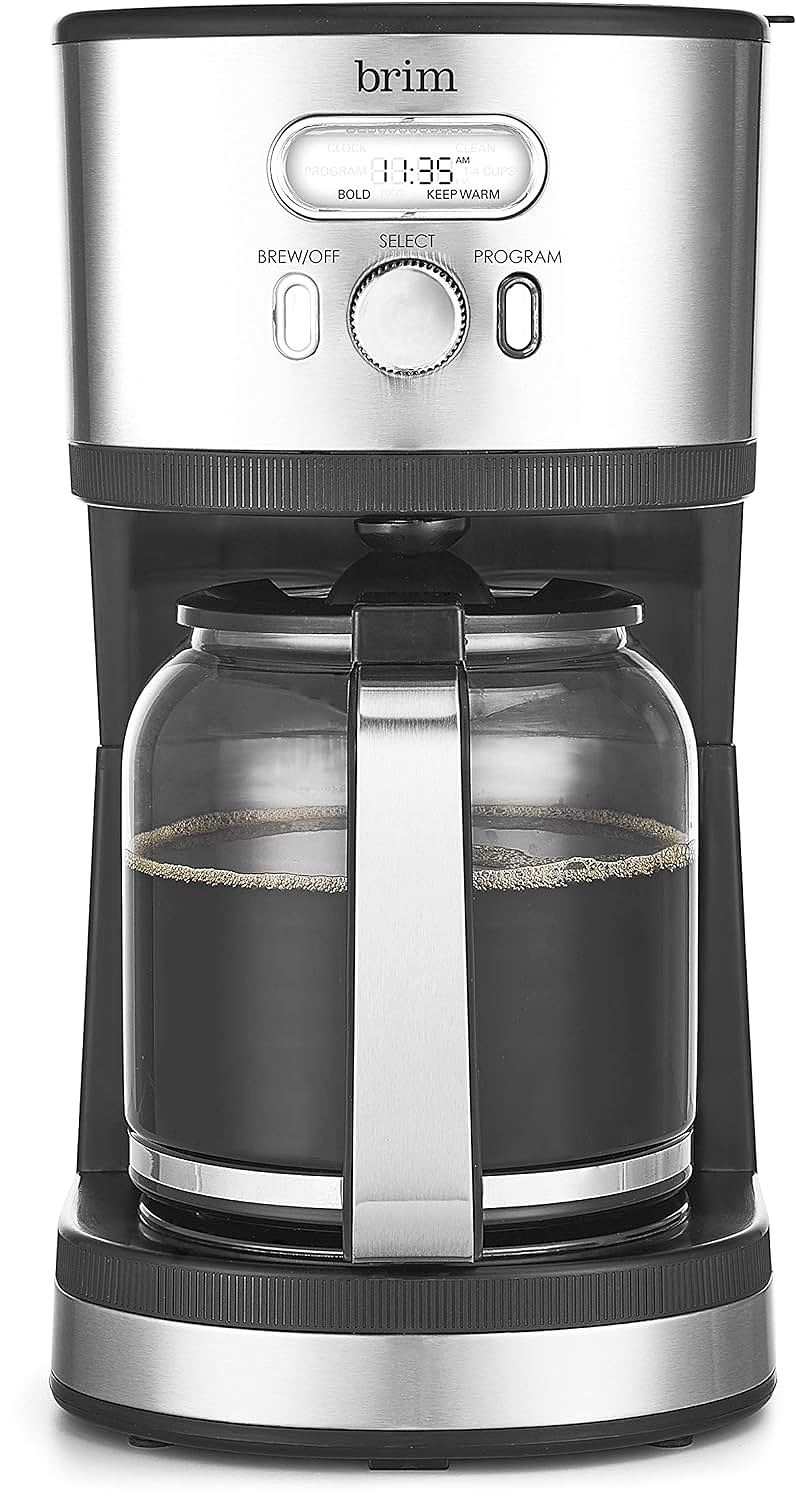
Brim Programmable 14-Cup Coffee Maker: Your Ultimate Guide to Perfect Coffee

Folgers Classic Roast K-Cup Pods: Your Perfect Morning Brew, Explained

Keurig B50: How It Works and How to Keep It Running

How a Single Cup Coffee Maker K Cup System Masters Brewing Science

Elephant Refined Coffee Luxury: Inside Black Ivory's Extraordinary Production

Pour Over Coffee Maker: A Beginner's Path to a Better Cup at Home

When Your Kitchen Learns to Listen: The Hidden Engineering Behind Voice-Contr...

The Physics of Fast Coffee Brewing: How 350 Watts Achieves Sub-90-Second Extr...

Burr Coffee Grinder vs Blade Grinder: Particle Consistency Matters
