Vapor, Metal, and Solvents: Engineering the Perfect Stovetop Brew
Update on March 3, 2026, 5:26 p.m.
The daily preparation of a concentrated coffee beverage is rarely perceived as an industrial fluid dynamics experiment. Yet, the physical forces at play within a small metal chamber on a kitchen stove rival the complexity of heavy chemical engineering. To transform a hard, roasted agricultural seed into a highly aromatic, polyphasic liquid requires the precise manipulation of thermal energy, atmospheric pressure, and solvent extraction.
By looking past the romanticized rituals of morning routines, we can objectively evaluate how heat transfer, enclosed vapor pressure, and specialized metallurgical barriers interact. This analysis deconstructs the physical chemistry and mechanical engineering behind domestic pressure brewing, utilizing modern equipment as our practical framework.

From Soapy Linens to the Modern Kitchen
The foundational architecture of stovetop pressure brewing did not originate in a culinary laboratory, but rather emerged from the observation of mid-20th-century domestic chores. In the 1930s, the dominant method for boiling laundry in Europe involved a device known as a lisciveuse. This rudimentary washing tub consisted of a large basin with a central, hollow metallic pipe. As the water at the bottom of the tub boiled, the expanding steam created localized high pressure, forcing the hot, soapy liquid up the central pipe and spraying it continuously over the laundry resting above.
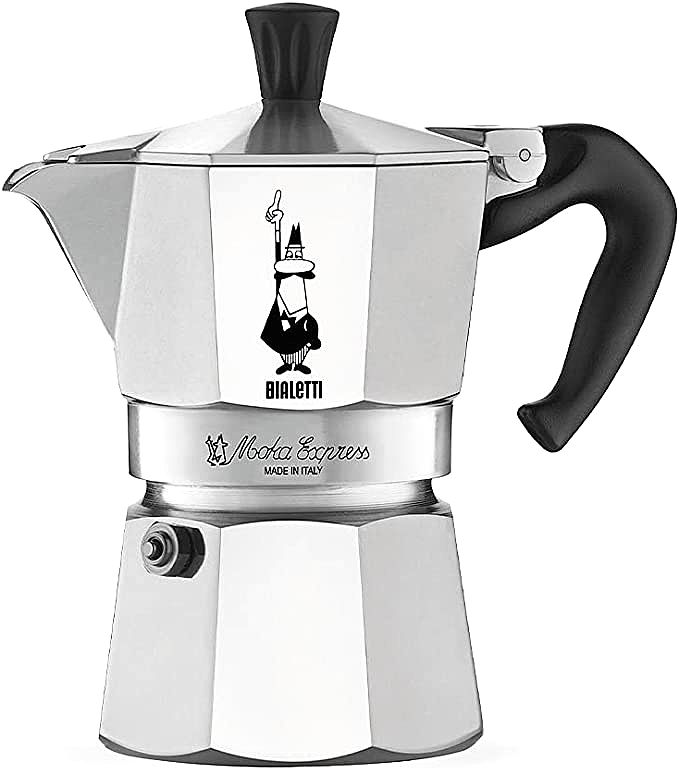
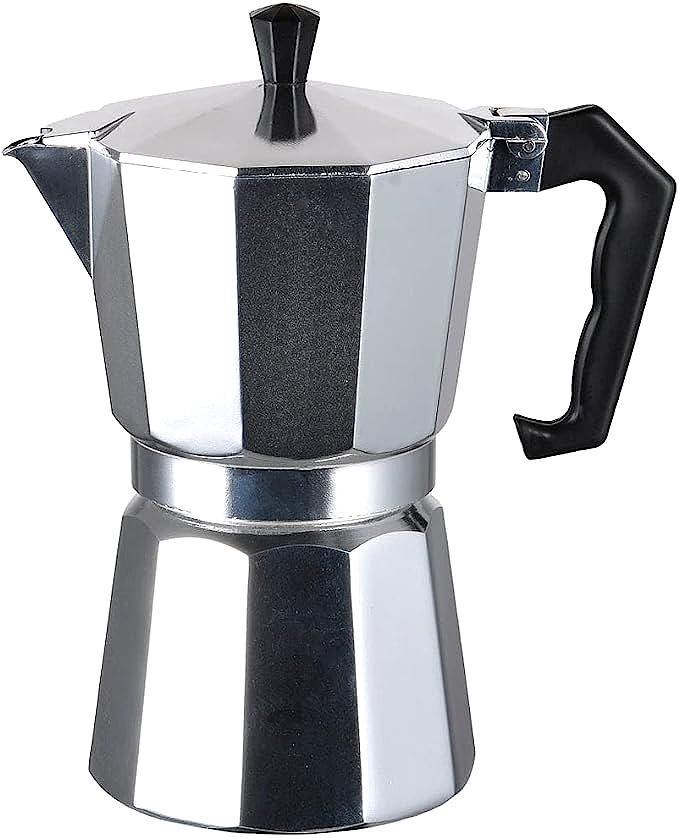
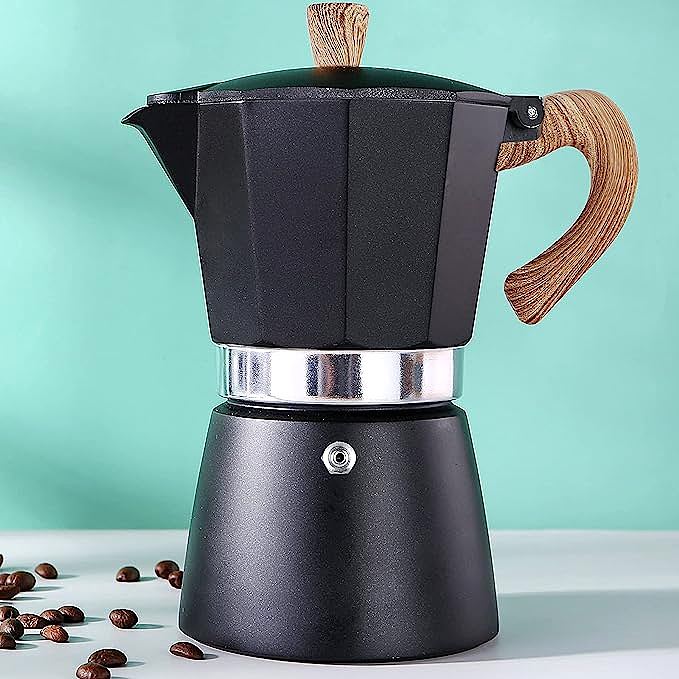
Translating this massive, blunt-force thermodynamic action into a miniaturized, precision coffee extraction device required a fundamental understanding of phase transitions in a sealed environment. The resulting invention—the classic octagonal stovetop pot—democratized high-concentration coffee, moving it from the massive, steam-driven commercial machines of the café into the domestic sphere.
However, those early iterations were bound by the material limitations of their era, predominantly utilizing cast aluminum. While revolutionary, the early designs possessed inherent vulnerabilities regarding thermal control, pressure regulation, and chemical reactivity. It is only through the application of modern metallurgical science and precision machining that the original thermodynamic concept has been fully optimized for the contemporary kitchen.
The Three-Chambered Thermodynamic Elevator
To comprehend the mechanics of stovetop extraction, one must view the apparatus as a bipartite pressure vessel connected by a semi-permeable fluid channel. The mechanism bypasses the need for mechanical or electrical pumps, relying entirely on the physics of phase change.
The lower chamber acts as the primary boiler. When thermal energy is applied to the base, the temperature of the liquid water ($H_2O$) inside increases. As the liquid absorbs heat, it approaches its boiling point, and water molecules gain sufficient kinetic energy to overcome intermolecular hydrogen bonds, transitioning into a gaseous vapor phase.
Because the lower chamber is hermetically sealed when assembled, the accumulating steam cannot escape into the atmosphere. This confined expansion invokes a practical application of the Ideal Gas Law ($PV = nRT$). As the temperature rises and the volume of the lower chamber remains fixed, the pressure inevitably increases.
This rising internal vapor pressure—typically reaching between 1.5 and 2 bars (approximately 21 to 29 psi)—exerts a continuous downward force on the surface of the remaining liquid water. Because water is an incompressible fluid, it seeks the path of least hydraulic resistance: it is forced upward through the vertical stem of the funnel.
The water, now heated to roughly 195°F to 200°F (90°C to 93°C), is pushed into the middle chamber—a porous bed of ground coffee. Here, it acts as a solvent, aggressively dissolving fruit acids, complex sugars, and caramelized compounds. The pressurized liquid then continues its upward journey through a secondary filter screen and cascades out of a central spout into the upper collection chamber. The entire system is an elegant thermodynamic elevator, utilizing the phase transition of water to drive extraction.

Why Packing Your Coffee Tighter Destroys the Fluid Path
A severe misunderstanding of hydraulic physics often leads users to induce artificial failure modes within their extraction equipment. Because stovetop brewers produce a strong, concentrated yield, they are frequently confused with true pump-driven espresso machines. This misunderstanding leads users to apply extreme downward force when compacting (tamping) the coffee grounds, assuming it will inherently result in a “stronger” beverage.
The reality of fluid dynamics dictates a catastrophic failure when this occurs. Pump espresso machines utilize rotary or vibratory pumps that generate 9 bars (130 psi) of mechanical force, specifically designed to push water through a densely compacted brick of finely ground coffee. A stovetop maker generates a maximum of 2 bars via vapor pressure.
If an operator tamps the coffee bed in a stovetop funnel, they drastically decrease the permeability of the particulate matrix. The interstitial spaces between the coffee particles become too constricted. When the water attempts to rise, the hydraulic resistance of the compacted coffee exceeds the vapor pressure capability of the lower boiler. The water stalls, the temperature in the boiler continues to rise, and the pressure spikes erratically.
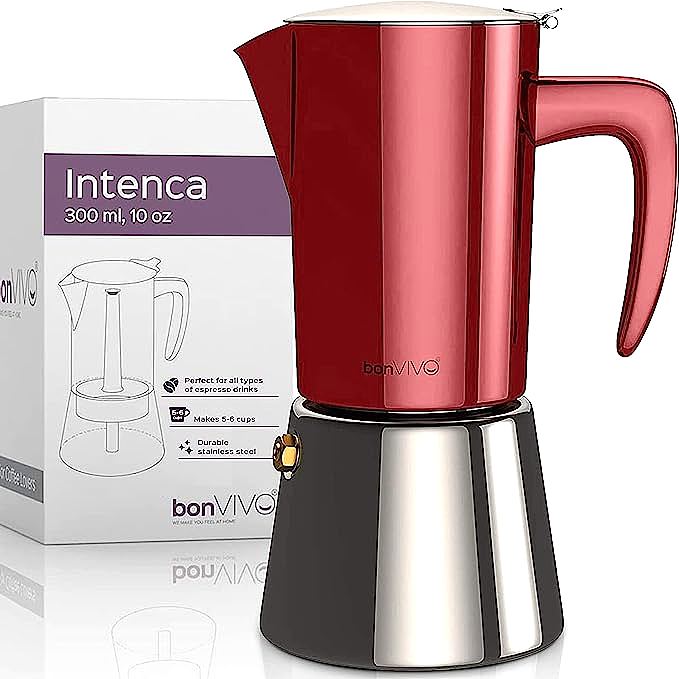
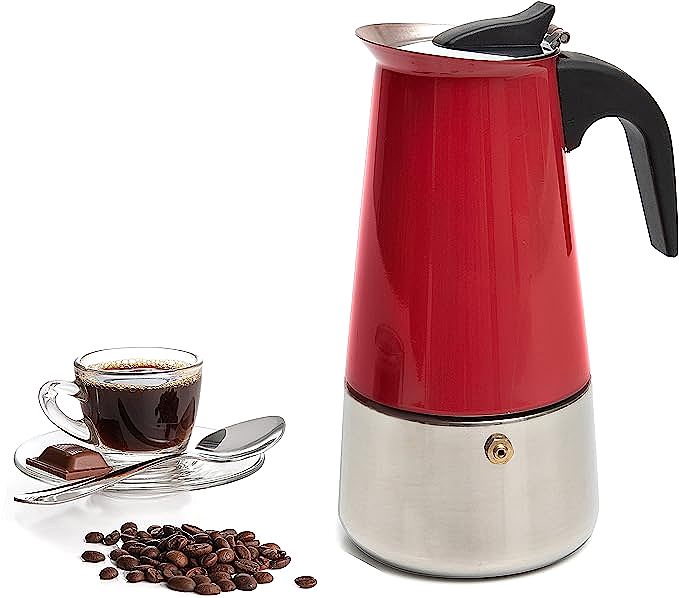
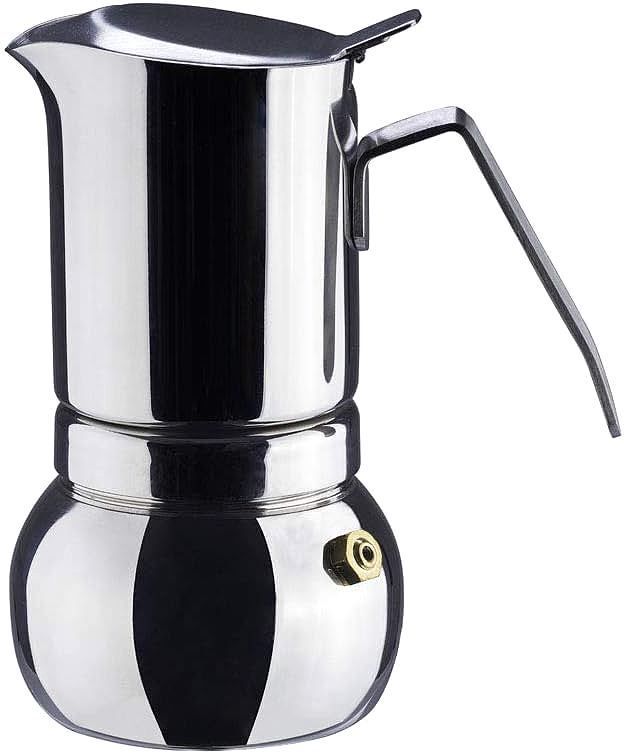
To prevent the lower chamber from rupturing under this extreme pressure, high-quality models integrate precision safety valves. The CUISINOX COF-10R Roma 10-Cup Stainless Steel Stovetop Moka Espresso Maker provides an excellent mechanical example of this safeguard. A machined brass valve on the side of the boiler houses a heavy-duty calibrated spring and a stainless steel ball bearing. Under normal operating conditions (up to 2 bars), the spring holds the bearing tightly against the aperture, maintaining the seal.
However, if the filter basket is choked by tamped grounds and the internal pressure approaches a dangerous threshold (typically around 3 to 4 bars), the vapor pressure overpowers the mechanical tension of the spring. The ball bearing is pushed back, and the excess steam is violently vented out the side of the boiler, emitting a loud hiss. This failsafe prevents a structural explosion but results in zero coffee extraction. Understanding this pressure limitation dictates that coffee must be leveled gently in the funnel, never compressed, allowing the 1.5-bar vapor pressure to permeate the bed uniformly.
Chromium Shields and Magnetic Permeability
The most critical evolution in the engineering of stovetop extraction lies in the transition of materials—specifically, the shift from aluminum alloys to advanced stainless steel. This is not merely an aesthetic choice; it is a profound upgrade in chemical inertness and thermodynamic capability.
Traditional aluminum is highly porous and chemically reactive. Roasted coffee contains dozens of organic acids, including chlorogenic, quinic, and citric acids, resulting in a brewed liquid with a pH typically hovering around 5.0. When acidic coffee repeatedly contacts bare aluminum, a microscopic chemical reaction occurs, gradually degrading the metal and occasionally leaching a perceptible metallic astringency into the final cup.
Modern engineering solves this via advanced metallurgy. Devices like the Cuisinox Roma are forged from heavy-gauge 18/10 stainless steel. This specific alloy nomenclature defines its composition: 18% chromium and 10% nickel added to the steel matrix.
The chromium is the defensive shield. When exposed to oxygen, the chromium atoms at the surface of the steel form a microscopic, invisible, and highly resilient layer of chromium oxide ($Cr_2O_3$). This phenomenon, known as passivation, renders the steel completely inert. The acidic coffee solvent never actually touches the iron in the steel; it only interacts with the inert chromium oxide layer. If the surface is scratched, the chromium instantly reacts with ambient oxygen to heal the layer. The 10% nickel content stabilizes the crystalline structure of the metal into an austenitic phase, vastly increasing its overall resistance to corrosion and structural fatigue under repeated thermal cycling.
Furthermore, this material shift opens the door to electromagnetic induction. Traditional aluminum is non-magnetic and completely invisible to an induction cooktop. Induction heating relies on an alternating electrical current passing through a copper coil beneath the glass surface, creating a rapidly oscillating magnetic field. When a ferromagnetic metal is placed in this field, the magnetic flux induces electrical eddy currents within the metal itself. The electrical resistance of the metal converts these currents instantly into heat.
Because standard 18/10 austenitic stainless steel is only weakly magnetic, high-end stovetop makers must engineer a specific base structure. By integrating a layer of ferritic stainless steel (such as 430 grade) into the bottom of the boiler, the device becomes highly magnetically permeable. The induction field violently vibrates the electrons in the ferritic base, generating heat instantaneously and uniformly directly within the metal, bypassing the massive thermal inefficiencies of traditional gas or radiant electric coils.

When the Power Grid Fails at 6 AM
The enduring relevance of the stovetop extraction method is anchored in its profound mechanical independence. In an era dominated by microprocessors, printed circuit boards, and grid-dependent appliances, the stovetop brewer is a study in resilient analog engineering.
Because the apparatus relies entirely on external thermal energy rather than internal electrical components, it possesses an unmatched operational versatility. This device functions identically whether placed on a state-of-the-art laboratory induction plate or suspended over an open combustion source in an off-grid environment.
However, this independence requires the operator to assume the role of the microprocessor, actively managing the thermal input. A common failure mode in off-grid or high-heat scenarios is the “volcano effect.” If excessive thermal energy is applied to the boiler, the phase transition of the water occurs too rapidly. The vapor pressure spikes abruptly, blasting the liquid water through the coffee bed in seconds rather than minutes.
Fluid dynamics dictates that high-velocity fluid will channel—it will bore microscopic holes through the weakest points of the coffee bed rather than saturating it evenly. The resulting liquid will be violently under-extracted (sour) because the solvent lacked the contact time to dissolve the complex carbohydrates. Simultaneously, the extreme heat of the rapidly boiling water will scorch the cellular structure of the coffee, extracting harsh, ashy flavors. Mastering this tool requires applying moderate, sustained heat, ensuring a slow, laminar flow of solvent through the porous matrix, resulting in a controlled, syrupy extraction.
Deciphering the Chemistry of the Dark Suspension
To truly master the output, one must understand what is chemically transpiring as the dark fluid fills the upper chamber. The extraction process is not a uniform dissolution; it is highly sequential, dictated by the molecular weight and solubility of the compounds locked within the roasted seed.
When the heated solvent first hits the coffee bed, it immediately strips away the lightest, most highly soluble molecules. These are the organic fruit acids and the volatile aromatic compounds (VOCs) that provide floral and fruity notes. As the extraction progresses and the water temperature climbs slightly, the solvent begins to break down the heavier complex sugars and caramelized compounds created during the Maillard reaction of the roasting phase. These molecules provide the beverage with its core sweetness and chocolate or nutty flavor profiles.
The critical variable is the termination phase. The heaviest, least soluble compounds in the coffee bean are the complex alkaloids (like caffeine) and heavy plant tannins. These compounds are intensely bitter and astringent. They only dissolve when exposed to prolonged heat and extended solvent contact.
In a stovetop system, the end of the brew cycle is indicated by a distinct acoustic shift—a hollow gurgling or sputtering sound. This sound occurs because the liquid water in the lower boiler is nearly depleted, and expanding steam is now rushing up the funnel, pushing the last droplets of water ahead of it. If the pot is left on the heat source during this phase, boiling steam will blast through the exhausted coffee grounds, aggressively stripping out the bitter tannins and ruining the delicate chemical balance of the liquid already resting in the upper chamber.
Furthermore, unlike paper-filtered pour-over methods, the stovetop system utilizes a perforated metal screen. This screen allows microscopic insoluble coffee solids (fines) and natural coffee oils (lipids) to pass freely into the final beverage. This creates a colloidal suspension rather than a clean solution. The suspended oils coat the palate, significantly increasing the perceived viscosity and “body” of the fluid, providing a textural heaviness that paper filters actively strip away.

Calibrating the System for Optimal Yield
Achieving consistent excellence with a thermodynamic extractor requires treating the kitchen counter as a laboratory bench. The operator must control and isolate the variables to achieve repeatable results.
-
Solvent Temperature Input: The thermodynamic cycle can be significantly altered by the initial temperature of the water placed in the boiler. Using cold tap water requires the pot to sit on the heat source for an extended period to build vapor pressure. During this time, the dry coffee sitting in the funnel is essentially baking inside the heating metal chassis, which can prematurely volatilize delicate aromas. By pre-heating the water in a separate kettle and pouring boiling water directly into the lower chamber, the phase transition begins almost immediately upon sealing the vessel. This drastically reduces the time the dry coffee is exposed to ambient heat, resulting in a cleaner, more vibrant flavor profile.
-
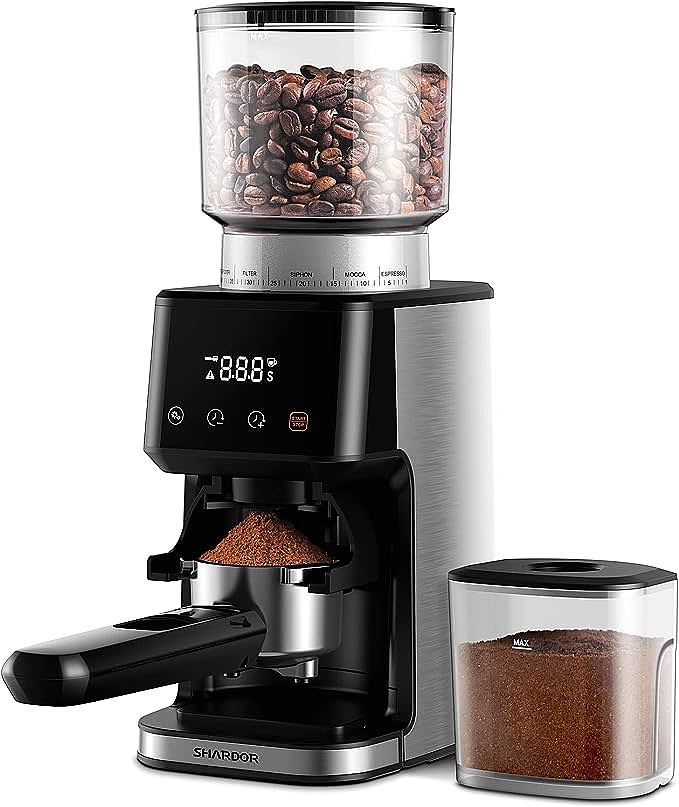
Grind Matrix Permeability: The particle size distribution of the coffee must be calibrated to the specific pressure constraints of the vessel. The ideal matrix for a 1.5-bar extraction feels similar to fine table salt. If the operator observes that the brew completes in under 30 seconds and tastes aggressively sour, the matrix is too coarse, allowing the fluid to bypass the solids. If the brew takes longer than two minutes, sputters aggressively, and tastes ashy, the matrix is too fine, restricting the flow and over-extracting the tannins.
-
Thermal Quenching: To definitively halt the extraction process and prevent the bitter tannins from entering the upper chamber, the operator must execute a thermal quench. Immediately upon hearing the sputtering sound, the device should be removed from the heat source. Running the base of the lower boiler under a stream of cold tap water instantly reverses the thermal gradient. The rapid drop in temperature causes the remaining steam inside the boiler to condense back into liquid water. The vapor pressure collapses instantly, acting as a hard mechanical brake that stops all upward fluid movement, preserving the sweet, balanced chemistry of the extracted yield.
By understanding the precise mathematical relationships between thermal mass, vapor expansion, and metallurgical inertness, the operator ceases to be a passive consumer following instructions. Instead, they become an active manager of a highly complex, beautifully tuned thermodynamic engine, capable of bending physical laws to produce the perfect cup.