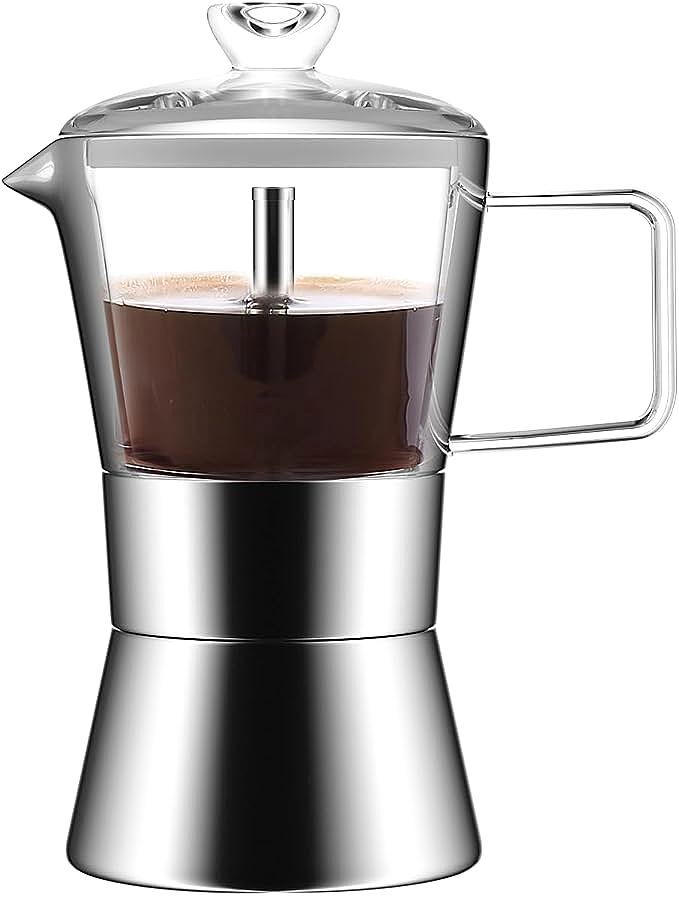
Stainless Steel Moka Pots: Material Safety and Visual Brewing Explained
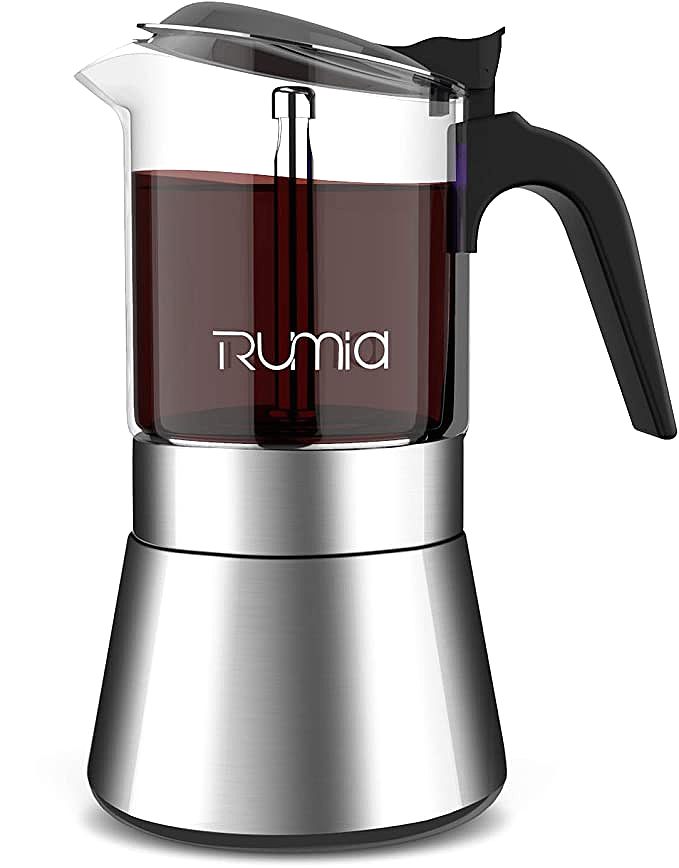
Rumia AX633 Moka Pot
Coffee sits at a pH between 4.8 and 5.1. That makes it mildly acidic. Most moka pots sold today are made from aluminum, a metal that reacts with acids over time . The reaction is not dramatic -- you will not see bubbling or discoloration in the first few dozen brews. But aluminum ions do migrate into the coffee, and the effect accumulates: a faint metallic aftertaste that many drinkers associate with their favorite stovetop brew without knowing its origin.
This is a materials science question, not a brand loyalty issue. The classic octagonal moka pot, designed by Alfonso Bialetti in 1933, has used aluminum because the metal conducts heat exceptionally well and costs very little. For decades, this trade-off made sense. The coffee industry has since shifted . More people now cook with induction burners. More people care about what metals touch their food. And more people want to see what happens inside their brewer.
A newer class of stainless steel moka pot designs addresses all three trends at once. Stainless steel boilers eliminate aluminum contact with acidic coffee. Borosilicate glass observation chambers let you watch the extraction in real time . And the stainless steel base works on every cooktop type, including induction. The Rumia AX633 Moka Pot is one product that combines all three features at $39.99.
Why Material Choice Matters Beyond Taste
Aluminum thermal conductivity sits at approximately 205 watts per meter-kelvin. Stainless steel rates around 16 watts per meter-kelvin.That is a thirteen-fold difference. Aluminum pots heat up quickly and distribute warmth evenly. Stainless steel pots require more patience on the stove, but they offer something aluminum cannot: chemical inertness in acidic environments.
Coffee is not strongly acidic, but it is acidic enough. Over hundreds of brew cycles, even mild acidity slowly dissolves trace amounts of aluminum from untreated surfaces. Bialetti addresses this with an anodized coating on their aluminum pots, which creates a protective barrier. Anodization wears down over time, particularly with frequent dishwasher use or abrasive cleaning. Stainless steel does not need a coating.The material itself resists corrosion.
Food-grade stainless steel used in cookware is typically 304 grade, containing 18 to 20 percent chromium and 8 to 10.5 percent nickel.This composition forms a passive oxide layer that self-repairs when scratched. In the context of coffee brewing at 90 to 96 degrees Celsius, 304 stainless steel shows negligible metal ion migration. The difference from aluminum is measurable in laboratory conditions and perceptible to sensitive palates.
This is not to say aluminum moka pots are unsafe.Bialetti has sold aluminum pots for over ninety years without documented health incidents. The anodized surfaces perform well for typical home use. But for drinkers who want to eliminate the variable entirely, stainless steel removes the question from the equation.

The Physics of Visual Brewing
Most moka pots are opaque.You listen for the sound of extraction changing from a steady gurgle to a sputtering hiss. This technique works. It has produced acceptable coffee for generations. But sound alone cannot tell you the color of the stream, the density of crema forming, or whether the extraction is progressing evenly across the coffee bed.
A borosilicate glass observation chamber solves this. The glass used in these chambers has a thermal expansion coefficient of approximately 3.3 times 10 to the minus 6 per kelvin. Ordinary soda-lime glass expands at roughly 9 times 10 to the minus 6 per kelvin. That threefold difference makes borosilicate glass significantly more resistant to thermal shock. It can handle the rapid temperature changes of stovetop brewing without cracking.
Through the glass, you can see the coffee emerge as a dark, syrupy ribbon with a reddish-brown hue. If the stream appears pale and thin, the grind is too coarse or the heat is too low. If it spurts out with visible agitation, the grind is too fine or the heat is too high. This real-time feedback loop transforms brewing from a timed ritual into an observable process.
The sputtering stage -- when air replaces liquid in the flow -- marks the end of extraction. With a glass chamber, you can see exactly when this transition occurs. Removing the pot from heat at that precise moment prevents pulling the harsh, bitter compounds that develop during prolonged dry heating. This visual control is impossible with any opaque moka pot, regardless of material.
Induction Compatibility as a Practical Necessity
Induction cooktops generate heat through electromagnetic fields that require ferromagnetic materials.Aluminum is not ferromagnetic. Traditional aluminum moka pots simply do not work on induction surfaces. This limitation has become more significant as induction adoption increases. Approximately 70 percent of US households now use induction or ceramic cooktops.
Stainless steel construction resolves this problem. Most stainless steel moka pot models now include induction-compatible bases.Most food-grade stainless steels used in cookware are inherently magnetic or can be manufactured with an induction-compatible base layer. The result is a moka pot that functions on gas, electric, ceramic, and induction surfaces without any modification or adapter.
Induction cooktops also deliver heat more efficiently than gas flames, converting roughly 85 percent of energy into cooking heat compared to approximately 40 percent for gas. Combined with the slower thermal response of stainless steel, this efficiency means you need less burner power to achieve proper extraction temperatures. The practical outcome is a gentler, more controlled brew cycle that benefits from the visual feedback provided by the glass chamber.

Building a Better Cup: Troubleshooting Common Issues
Several problems appear consistently in long-term use of stainless steel moka pots. Each has a specific cause and a straightforward solution.
Grounds appearing in the brewed coffee usually indicates the grind is too fine for the mesh filter aperture. This is common with any stainless steel moka pot design. Switching to a slightly coarser setting resolves most cases. Alternatively, placing a paper filter in the cup after brewing eliminates grounds entirely, though this also removes some of the body that gives moka pot coffee its characteristic texture. Some drinkers prefer the clarity that paper filtration provides.
Leaking between chambers during brewing points to a worn gasket or incomplete sealing. The gasket, typically made from food-grade silicone or EPDM rubber, requires replacement every 6 to 12 months under normal use. Signs that replacement is needed include visible compression set, surface cracks, or a noticeable drop in brewing pressure. Standard moka pot gasket sizes are widely available from third-party suppliers, so proprietary parts are not required.
Bitter or over-extracted coffee results from leaving the pot on heat too long. Stainless steel pots have a slower heat-up period, which means the transition from steady flow to sputtering happens later than with aluminum pots. Drinkers accustomed to aluminum pots often leave stainless steel versions on heat past the optimal point. The glass observation chamber makes this easier to avoid.
Quality control variability is a real concern with any mass-produced kitchen product. Some users report that brew consistency degrades over time, with grounds seeping back into the base chamber more readily than with earlier units. This suggests manufacturing tolerance variation in the filter basket or funnel. Adjusting grind size and experimenting with paper filtration can compensate for individual unit differences.

Haofy Moka Pot: Brewing Perfect Coffee On-The-Go
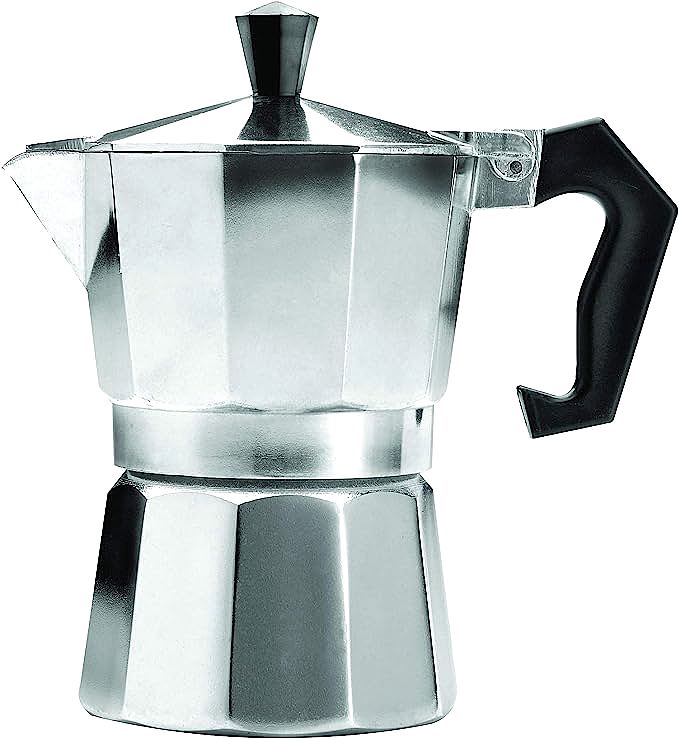
Primula PES-3303: Brewing Authentic Espresso at Home with a Classic Moka Pot

Aluminum vs Stainless Steel Moka Pot: Which Is Better? (2026)
Why Metal Matters: The Hidden Physics Behind Your Morning Coffee
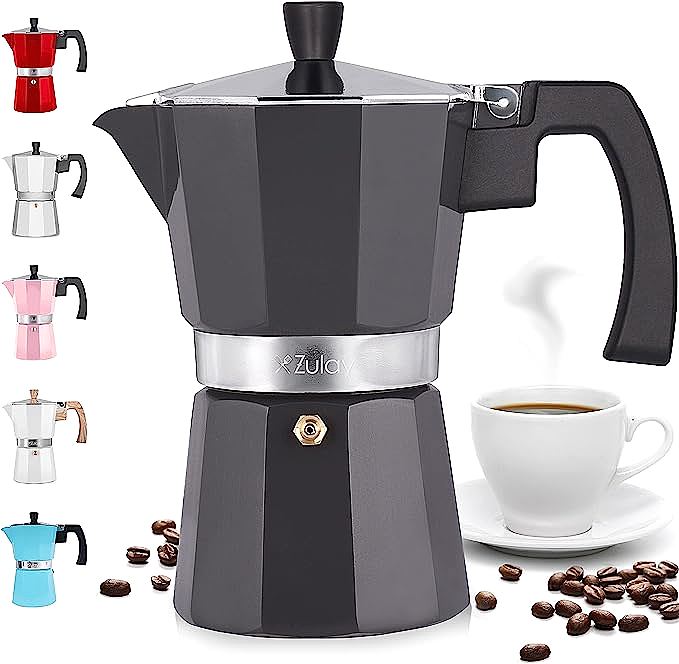
Zulay Classic Italian Style 5.5 Espresso Cup Moka Pot: Technical Guide
Overcoming Bitter Brews: Thermodynamics and Metallurgy in Coffee Extraction
Moka Pot Mastery: The Science & Soul of the Stovetop Ritual
The Alessi Moka Pot: A Guide to Brewing Better Coffee by Design

Why the Metal in Your Moka Pot Matters: A Guide to Stainless Steel Espresso