ShareforU HS-8439: Your Portable Espresso Machine for Coffee On-The-Go
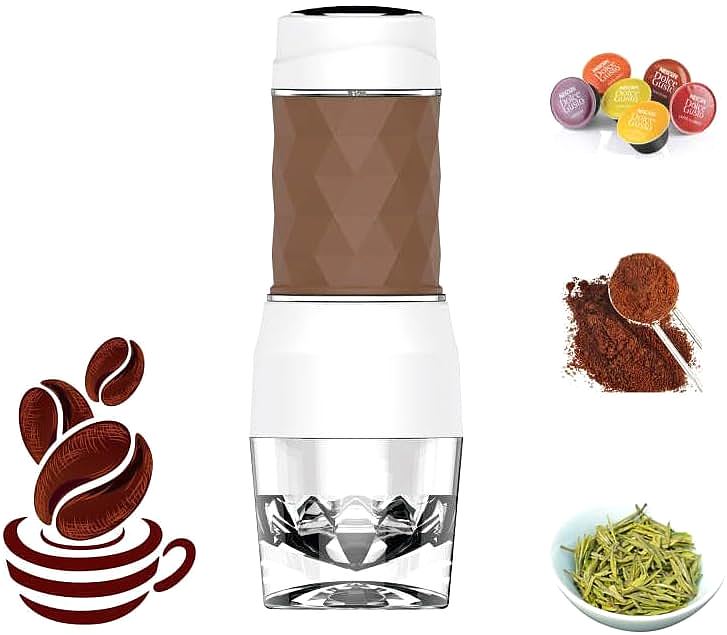
ShareforU HS-8439 Mini Espresso Coffee Maker
ShareforU HS-8439 Mini Espresso Coffee Maker Review
The Alchemist's Flask: Unpacking the Science and Soul of Portable Espresso
The air at 10,000 feet is a different substance. It's thin, sharp, and carries the clean, mineral scent of ancient rock. As the first hint of dawn spills over the horizon, painting the frost on your tent in hues of orange and violet, there's a profound, soul-stirring beauty. But the moment is incomplete. In this cathedral of silence and stone, the body craves a counterpoint--a jolt of warmth, a complex, anchoring aroma. It's a craving for something real, something civilized. It's a craving for espresso.
For decades, this desire was a fool's errand in the wild. The soul of espresso--that intense, syrupy, crema-crowned elixir--was shackled to heavy, power-hungry machines humming away in urban cafes. To have it, you had to be there. But what if you could unchain it? What if you could perform the alchemical feat of capturing that violent, beautiful storm of flavor in a flask you could hold in your hand? This is the story of that quest, a journey into the heart of physics, chemistry, and engineering, all in pursuit of the perfect portable shot.

The Hundred-Year Quest for a Storm in a Bottle
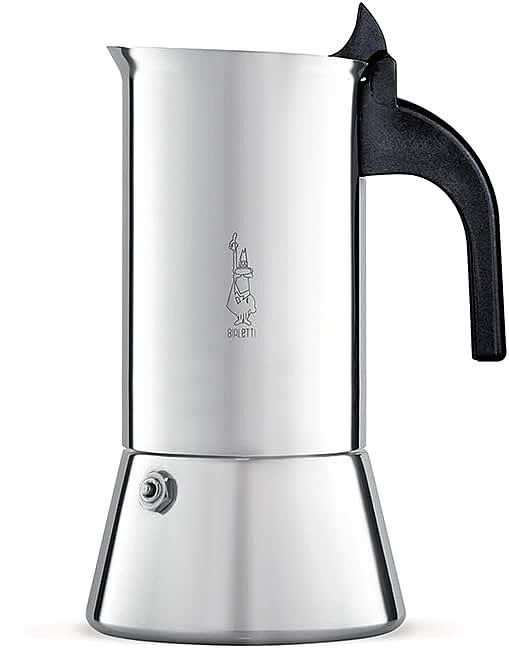
Long before the sleek, modern gadgets, there was the simple, desperate need. Cowboys boiled gritty coffee over campfires, a ritual of necessity more than pleasure. The early 20th century brought us the first great leap: Alfonso Bialetti's 1933 invention, the Moka pot. It was a marvel of Art Deco design, using simple steam pressure to force water upward through coffee grounds. It wasn't true espresso, which requires far greater force, but it was a monumental step. For the first time, a rich, strong coffee could be brewed on a simple stovetop, freeing it from the cafe. The Moka pot was the first hint that the storm could be bottled.
The dream, however, remained true high-pressure espresso. This pursuit is fundamentally about energy conversion. It's about taking one form of energy and focusing it with such intensity that it can tear apart the very essence of a roasted coffee bean in under 30 seconds. In a caf, that energy is electrical. But in the wilderness, or a hotel room, or an airport terminal, the most reliable and abundant source of energy is you. The challenge, then, was to create a device that could take the gentle push of a human hand and amplify it into a force of nature.

Anatomy of the Storm: The Physics of Pressure
To understand any manual espresso maker, you must first appreciate what it's up against. The gold standard for espresso extraction, as defined by coffee science and organizations like the Specialty Coffee Association (SCA), requires water to be forced through a compacted puck of fine coffee grounds at approximately nine times atmospheric pressure. That's 9 bars, or about 130 pounds per square inch (PSI). It's the pressure you'd feel nearly 300 feet underwater.
How can a handheld device, like the ShareforU HS-8439, even hope to achieve this without an electric motor? The answer lies in a beautiful piece of 17th-century physics known as Pascal's Law. In essence, the law states that pressure applied to an enclosed fluid is transmitted undiminished to every portion of the fluid. Manual espresso makers are built around a piston system. When you pump the handle, you are applying force to a piston with a relatively large surface area, which in turn pushes water into a much smaller chamber. This change in surface area acts as a force multiplier. It's like using a long lever to lift a heavy rock; your gentle push is transformed into a powerful, concentrated force. You are, in effect, focusing all your effort onto a tiny column of water, creating a hydraulic battering ram.
This pressure is the primary author of espresso's character. It does two magical things. First, it enables hyper-efficient extraction, dissolving a high concentration of flavorful solids and oils in mere seconds. Second, and more visibly, it creates the crema.
Imagine the crema as coffee's signature, a testament to a well-executed brew. Roasted coffee beans are full of trapped carbon dioxide (CO2), a byproduct of the roasting process. When the high-pressure, super-saturated hot water hits the coffee grounds, it dissolves these gases. As the brewed liquid exits the nozzle, it experiences a sudden, violent drop in pressure back to normal atmospheric levels. Following the principles of Henry's Law, which dictates that the amount of dissolved gas in a liquid is proportional to its partial pressure above the liquid, the CO2 can no longer stay dissolved. It erupts out of solution into millions of microscopic bubbles, which get trapped in an emulsion of the coffee's natural oils and proteins. The result is a stable, reddish-brown foam, rich in aroma and flavor. Creating this beautiful chaos is the first job of any espresso machine, manual or otherwise.

The Modern Alchemist's Flask: Engineering as Art
If physics provides the power, engineering provides the finesse. A modern device like the HS-8439 is a case study in clever design choices that make this power usable, safe, and versatile.
One of the most elegant solutions is modular design. The world of coffee is not monolithic. Some prefer the ritual of grinding their own beans, weighing the perfect 7-gram dose. Others value the consistency and convenience of a pre-packaged capsule. The 3-in-1 compatibility (for ground coffee, Nespresso capsules, and Dolce Gusto capsules) found in this device is a nod to that reality. By using interchangeable adapters--the modules--a single core pressure engine can serve multiple formats. This is the Swiss Army Knife philosophy: don't force a single solution, but provide a platform that can adapt. It's a recognition that freedom is about having choices, whether you're at home or on a mountaintop.
The capsule systems themselves are fascinating feats of engineering. A Nespresso (NS) capsule is typically a sealed aluminum container that requires the machine to pierce it in two places and force high-pressure water through. A Dolce Gusto (DG) capsule is often a multi-layered plastic pod designed for a wider range of pressures, capable of making everything from espresso to milky lattes. A device that can handle both, in addition to loose grounds, needs a robust and adaptable brewing chamber.
Of course, this entire process involves near-boiling water. Safety is paramount, and this is where material science comes into play. The silicone rubber grip and casing are not just for aesthetics or comfort. Silicone is a polymer with exceptionally low thermal conductivity. Unlike metal, which transfers heat quickly (which is why a metal spoon in hot tea gets hot), silicone is an excellent insulator. Its molecular structure is inefficient at transferring kinetic energy (heat) from one molecule to the next. This means the intense heat from the water chamber is effectively trapped, keeping the exterior cool and safe to handle--a simple but critical feature that relies on a fundamental property of matter. When the product description mentions it is made of "high-quality FDA materials," it's referring to standards like Title 21 of the Code of Federal Regulations (CFR), which ensures that these plastics and silicones are non-toxic and won't leach harmful chemicals into your beverage.
The Chemistry of a Perfect Moment
While pressure is the brute force, temperature is the scalpel. It's the variable that unlocks the specific flavors you want from the coffee. The SCA-approved temperature window of 195-205F (90-96C) is not arbitrary. It's the sweet spot determined by chemistry.
Coffee beans contain hundreds of different aromatic compounds. Fruity and acidic notes are derived from compounds that dissolve relatively easily at lower temperatures. The desirable sweet, caramel, and chocolate notes unlock in that goldilocks zone. Go too hot, and you start aggressively extracting bitter, astringent compounds, resulting in a burnt, unpleasant taste.
This is why a device designed for espresso must use hot water. While "cold brew" is a popular method, it's a completely different process--a slow, gentle infusion over many hours that extracts a different profile of flavors. You cannot create a true espresso shot with cold water because you lack the thermal energy needed to quickly dissolve the rich oils and complex sugars that define its character. The heat acts as a catalyst for the entire high-speed reaction.
The Ritual, Reborn
Let's return to that mountain summit. The air is still cold, but now there's a new sound: the rhythmic pump of the piston, a soft hiss as pressure builds. There is the satisfying resistance in your hands, a direct, physical connection to the work being done. Then, a thin stream of dark, viscous liquid begins to flow, painting the bottom of the cup with tiger stripes of brown and gold. The aroma hits you--rich, toasted, alive.
You take the first sip. It's not just coffee. It's a victory. It's the culmination of a hundred-year-old dream and the application of centuries of scientific understanding. It's the proof that human ingenuity can allow us to create a moment of profound, civilized pleasure in the wildest of places.
Devices like the ShareforU HS-8439 are more than just tools. They represent a new relationship with technology--one where technology doesn't automate a task into obscurity, but instead empowers us to perform a craft. It puts the control back into our hands. The flask doesn't just hold coffee; it holds a ritual, reborn for a world on the move. It contains the storm, and it gives us the freedom to unleash it, one perfect, self-made shot at a time, wherever we may be.
ShareforU HS-8439 Mini Espresso Coffee Maker
Related Essays

Chefman RJ54-SS-15 Espresso Machine: Your At-Home Barista for Perfect Coffee
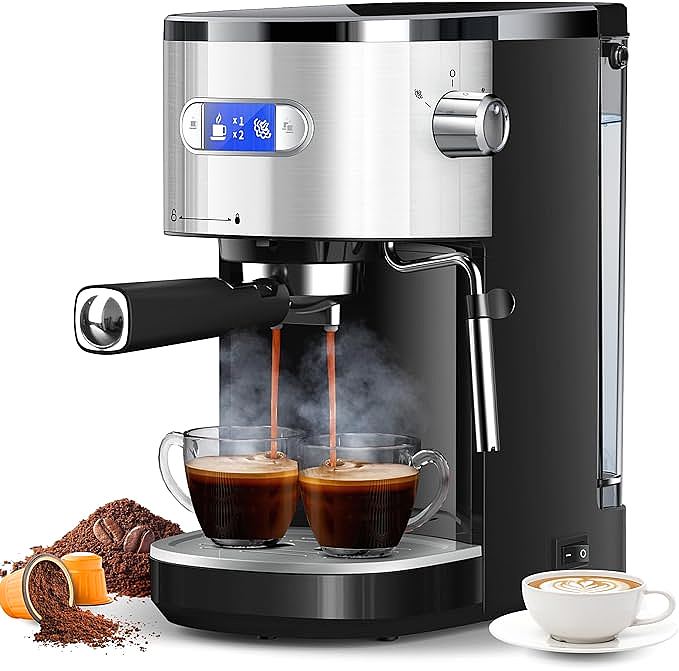
The Unseen Engineering in Your Espresso Cup: A Scientific Look at the COWSAR ...

The Engineering of Combination Coffee Machine Dual Brewing Systems
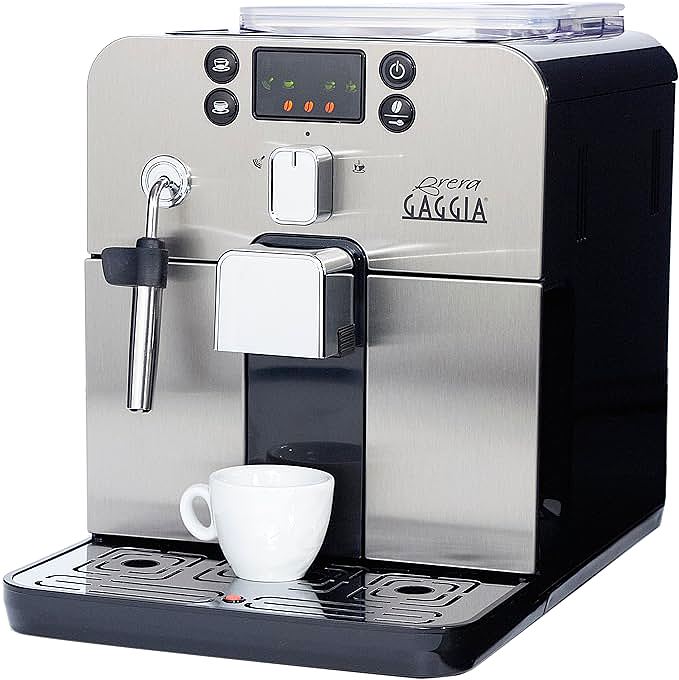
The Gaggia Brera: A Beginner's Guide to the Science of a Perfect Espresso Shot
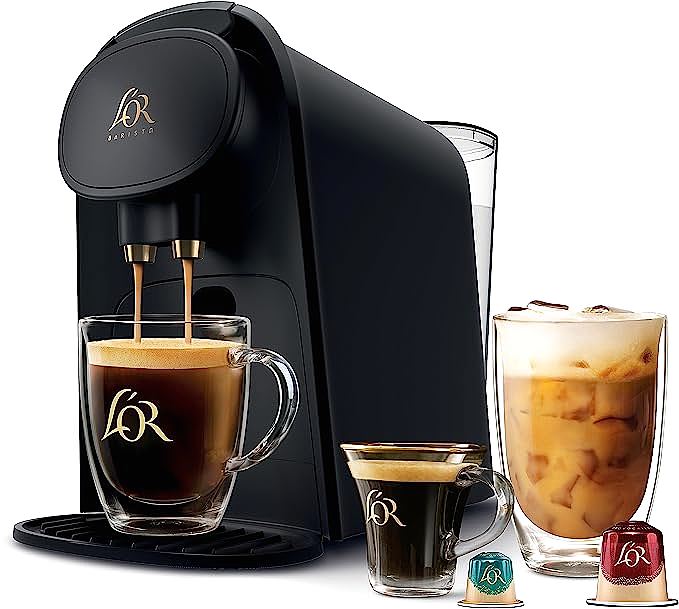
L'OR Barista Review: Technical Analysis of Single-Serve Espresso
Mcilpoog ES317 : The Science of Great Espresso at Home, Automatically
The Gaggia Brera: A Beginner's Guide to the Science of a Perfect Espresso Shot
Stovetop Moka Pot Brewing Method: The Science Behind Steam-Powered Extraction

When Spinning Replaces Pressure: The Physics Inside Centrifugal Coffee Brewing
