Stovetop Moka Pot Brewing Method: The Science Behind Steam-Powered Extraction
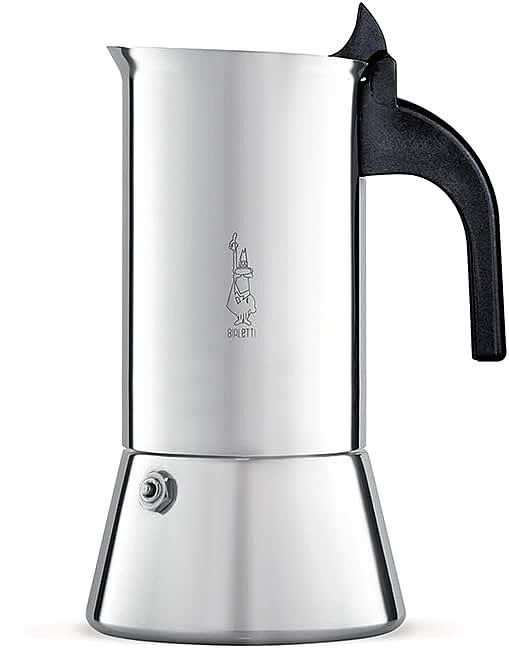
Bialetti Venus Induction 4 Cup Espresso Coffee Maker
Few coffee devices are as mechanically elegant as the stovetop moka pot. It has no pump, no boiler thermostat, no electronic brain. All it has is three metal chambers, a rubber gasket, and a funnel. Yet this assembly, when placed on a flame or hot plate, transforms water and ground coffee into a dense, aromatic brew that sits somewhere between filter coffee and espresso on the intensity scale. The process owes its existence to a single physical principle: water, heated inside a sealed volume, generates enough vapor pressure to push itself upward through a bed of coffee. Every nuance of the final cup, from bitterness to body, can be traced back to how the user manages that pressure.
The stovetop moka pot brewing method is one of the few home brewing techniques where the operator directly controls the thermodynamic driver of extraction. In a pour-over, gravity moves the water. In a French press, immersion does the work. But in a moka pot, the energy input at the stove becomes the pump. Turn the flame too high and the water flashes into steam too aggressively, scorching the grounds. Turn it too low and the extraction stalls, producing a weak, underdeveloped cup. Understanding this relationship between heat input, pressure generation, and extraction kinetics is the difference between a harsh, metallic brew and a smooth, chocolatey one.
The Engineering Logic Behind Stovetop Pressure Brewing
The moka pot's design has remained largely unchanged since Alfonso Bialetti patented it in 1933. The lower chamber, or boiler, holds water up to the level of a safety valve. A funnel-shaped filter basket sits on top, packed with ground coffee. The upper chamber, which collects the finished brew, screws onto the boiler through a threaded gasket that creates a pressure seal. When heat is applied, the air and water vapor trapped above the liquid expand. Because the only exit path is through the funnel stem and coffee bed, the expanding gas forces the hot water upward.
This is not a pump system. The pressure achieved, typically between 1 and 2 bar, is modest compared to the 9 bar of a commercial espresso machine. But it is sufficient to overcome the hydraulic resistance of a packed coffee bed. The water entering the coffee is not boiling. It is superheated above 100 degrees Celsius but remains liquid because the pressure inside the boiler elevates the boiling point. Once it crosses the coffee and emerges into the upper chamber at atmospheric pressure, it releases dissolved gases and volatile aromatics that define the cup's nose.
The stovetop moka pot brewing method sits at a fascinating intersection in the terrain of coffee extraction. It applies pressure, but not high pressure. It uses percolation, but the flow is driven upward against gravity rather than downward. These constraints produce a unique extraction profile. The relatively low pressure limits the emulsification of coffee oils, meaning the brew lacks the persistent crema of espresso. But the upward flow, combined with the high brewing temperature, extracts a different balance of soluble compounds than a drip brewer, yielding a heavier body and more pronounced bitterness.
How Steam and Liquid Water Interact During Heating
To refine the stovetop moka pot brewing method, one must understand what happens inside the sealed boiler. When cold water and air occupy the lower chamber, the air space above the water line contains approximately 20 percent oxygen. As the pot heats up, water molecules at the liquid surface gain enough kinetic energy to break free and enter the gas phase. The vapor pressure rises along a well-defined curve: at 90 degrees Celsius, water's vapor pressure is about 0.7 bar. At 100 degrees, it reaches 1 bar, equal to atmospheric pressure at sea level. By 120 degrees, it climbs to roughly 2 bar.
The funnel stem extends below the water surface. As vapor pressure builds, it pushes equally in all directions, including downward on the water. The water, being incompressible, is driven up the funnel stem, through the coffee basket, and out the spout into the upper chamber. This is the core mechanism, and it explains why the water temperature at the moment of extraction depends entirely on how much pressure has accumulated before flow begins.
A common misconception is that the water must reach a rolling boil before extraction starts. In practice, extraction begins well before the water reaches 100 degrees in the boiler because the expanding air alone can initiate flow, especially if the boiler was filled with cold water and the headspace is small. Some practitioners of the stovetop moka pot brewing method preheat the water before assembling the pot, which shortens the time on the stove and reduces the risk of overheating the coffee during the wait.
Grind Particle Distribution and Flow Dynamics
Grind size is the single most consequential variable in the stovetop moka pot brewing method. The coffee bed inside the filter basket acts as a porous medium through which water must travel. According to Darcy's law for flow through porous media, the flow rate is proportional to the pressure drop and the permeability of the bed, and inversely proportional to the bed height. Permeability, in turn, scales with the square of the average particle diameter. This means that small changes in grind size produce large changes in flow resistance.
When the grind is too fine, approaching a powder-like consistency, the individual particles pack tightly together. Interstitial spaces between particles shrink, permeability drops, and the pressure required to push water through increases sharply. The water spends more time in contact with the coffee, which raises extraction yield, but the risk of channeling also increases. Water will find the path of least resistance, creating narrow channels through the bed where flow concentrates. The coffee along these channels over-extracts, turning bitter and astringent, while the rest of the bed under-extracts.
Conversely, a grind that is too coarse opens large pathways through the bed. Water rushes through with minimal resistance, spending too little time in contact with the grounds. The result is a thin, sour brew with low body. The ideal grind for the stovetop moka pot brewing method is finer than drip but coarser than true espresso—roughly the texture of fine table salt. Particles should feel slightly gritty between the fingers but not powdery. Achieving this consistently requires a burr grinder; blade grinders produce a wide distribution of particle sizes that guarantees both over-extraction and under-extraction in the same brew.
Coffee Dose, Basket Geometry, and Extraction Uniformity
The geometry of the filter basket imposes another set of constraints on the stovetop moka pot brewing method. The basket is typically a truncated cone, wider at the top than the bottom. This shape means that water entering from the funnel stem at the bottom must spread outward as it rises through the coffee bed. If the coffee is not distributed evenly, the flow path length varies across the basket cross-section, creating an uneven extraction.
Dosing is equally important. The basket should be filled completely, with the coffee leveled flat across the top. A mound in the center, created by piling grounds above the rim of the basket before screwing the pot together, creates a dense core that resists flow. Water diverts around this core, extracting primarily from the perimeter of the bed. The resulting cup tastes hollow—strong bitterness from the over-extracted edges and a lack of sweetness from the under-extracted center.
A persistent question among those learning the stovetop moka pot brewing method is whether to tamp the coffee. The answer, derived from flow dynamics, is no. Tamping compresses the bed, reducing permeability uniformly. In an espresso machine, the 9-bar pump has enough force to overcome this resistance. A moka pot's 1 to 2 bar does not. A tamped bed in a moka pot will either stall completely or channel violently. The coffee should be leveled with a gentle shake or a light sweep of a finger—enough to distribute the grounds evenly, not enough to compact them.
Heat Source Characteristics and Their Influence on Brewing
Different heat sources interact differently with the stovetop moka pot brewing method. A gas flame delivers heat through a combination of direct flame contact and hot combustion gases flowing around the pot. The flame size relative to the pot base matters: a flame that extends beyond the base diameter heats the walls of the boiler, which raises the temperature of the upper chamber prematurely and can cause the collected brew to overheat. The ideal flame diameter should be equal to or slightly smaller than the pot base.
An electric coil or radiant glass-top stove transfers heat primarily through conduction at the contact surface. These stoves have thermal inertia—they do not respond instantly when turned down. This means that reducing the heat mid-brew takes longer to translate into reduced energy input at the pot. Users of the stovetop moka pot brewing method on electric stoves often benefit from preheating the water and using a lower initial heat setting, since the adjustment lag makes it harder to prevent a late-brew temperature spike.
Induction cooktops present a particular challenge. Induction works by inducing eddy currents in a ferromagnetic material, and the coil must detect a pan of sufficient diameter before it activates. Small moka pots, particularly 2-cup and 3-cup models, have base diameters that fall below the minimum detection threshold of many induction burners. A 4-cup model like the Bialetti Venus, with its stainless steel construction, works on most induction cooktops with smaller-diameter burners, but may require an adapter plate on larger burners. The rapid, precise heating of induction can actually benefit the process by allowing more responsive temperature control, assuming the pot is recognized.
Water Chemistry and Its Overlooked Role in Flavor
Water makes up over 98 percent of a brewed cup. Yet it is the most overlooked variable in the stovetop moka pot brewing method. Tap water varies dramatically in mineral content from one municipality to another. Hard water, rich in calcium and magnesium ions, extracts coffee differently than soft water. Magnesium ions, in particular, act as extraction catalysts. They bind to flavor-active compounds in coffee—organic acids, phenolic compounds, and Maillard reaction products—and help pull them into solution. Water with roughly 50 to 150 parts per million of total dissolved solids, with a moderate proportion of magnesium, produces the most balanced extraction.
Distilled or reverse-osmosis water, stripped of all minerals, extracts poorly. It produces a flat, muted cup because the ionic binding mechanism that facilitates extraction is absent. At the other extreme, very hard water above 250 ppm TDS can produce a chalky, overly bitter brew and accelerate scale buildup inside the boiler. Scale deposits on the boiler walls act as an insulating layer, reducing heat transfer efficiency and altering the temperature profile of the brew cycle.
The stovetop moka pot brewing method is particularly sensitive to water chemistry because of its high extraction temperature. At 100 to 110 degrees Celsius, the solubility of many bitter-tasting compounds increases sharply. If the water is already loaded with dissolved solids that buffer acidity, the cup can tip from pleasantly bold to harsh and astringent. A simple carbon filter attached to the tap, or the use of bottled spring water with known mineral content, removes this variability and makes the process repeatable.
Recognizing Brew Phase Transitions by Sound and Sight
An experienced practitioner of the stovetop moka pot brewing method does not need a timer. The brew cycle announces itself through distinct auditory and visual signals. The first phase is silence. The pot sits on the heat, and for a minute or two, nothing happens. Then a low, intermittent hissing begins—the sound of expanding air and initial steam pushing through the coffee bed. This is the pre-infusion phase, where the first water reaches the grounds and begins to wet them.
The second phase is the steady flow. A continuous stream of dark, syrupy coffee emerges from the central column in the upper chamber. The sound shifts to a soft, gurgling murmur. This is the main extraction window, lasting roughly 30 to 60 seconds depending on heat input and grind resistance. The color of the stream lightens as the extraction progresses. The initial flow is deep brown, almost black. As soluble solids are depleted from the coffee bed, the stream transitions to amber, then to a pale, watery tan.
The third phase is the sputter. Air and steam, having displaced most of the water from the boiler, now rush through the spent coffee bed. The sound changes abruptly to a rapid, percussive chugging. The coffee emerging at this point is thin, over-extracted, and dominated by bitter, astringent compounds released by the superheated steam. The rule is simple: the moment the sputter begins, remove the pot from the heat. Some brewers go further, cooling the boiler under a running tap to stop extraction instantly. This prevents the harsh tail end of the brew from contaminating the cup.
Post-Brew Handling and Temperature Management
What happens in the 60 seconds after brewing ends has a measurable impact on the cup. The upper chamber of a moka pot is a thin-walled metal vessel sitting directly above a heat source. Even after the pot is removed from the stove, the residual heat in the boiler continues to warm the collected coffee. If the pot sits undisturbed, the coffee in the upper chamber can climb several degrees, accelerating the degradation of volatile aromatic compounds and promoting further extraction from any stray grounds that found their way up the column.
Immediate pouring is the simplest remedy. Transferring the coffee to a pre-warmed cup or carafe separates it from the heat source and arrests temperature-driven degradation. Stirring the coffee in the upper chamber before pouring is equally important. The stovetop moka pot brewing method produces a stratified brew: the first liquid to emerge is the most concentrated, while the later flow is progressively more dilute. Without stirring, the first pour will be disproportionately strong and the last pour weak. A quick stir with a small spoon homogenizes the concentration and ensures consistency from the first sip to the last.
The serving temperature also affects flavor perception. Coffee served above 75 degrees Celsius numbs the tongue's ability to detect sweetness and acidity, leaving bitterness as the dominant sensation. Letting the cup cool for 30 to 60 seconds after pouring, to roughly 60 to 65 degrees, reveals the sugars and fruit notes that would otherwise be masked by the heat.
Cleaning Practices That Preserve Material Integrity
The cleaning regimen for a moka pot depends on its material. Traditional aluminum pots, like the classic Moka Express, develop a dark seasoning layer over time—a thin coat of polymerized coffee oils that protects the underlying metal from reacting with acidic coffee compounds. Washing aluminum with detergent strips this layer, exposing fresh aluminum that can impart a metallic taste. The recommended practice is to rinse with hot water only, wiping with a soft cloth to remove surface residue without disturbing the seasoning.
Stainless steel pots, such as the Bialetti Venus, operate under different rules. Stainless steel is chemically inert. It does not react with coffee acids, and it does not form or require a seasoning layer. These pots can be washed with mild detergent after each use without any effect on flavor. The gasket and filter plate, however, deserve attention regardless of pot material. Coffee oils accumulate in the threads and the gasket seat, turning rancid over time if not cleaned. The gasket should be removed, rinsed, and dried at least weekly, and replaced when it shows signs of cracking or hardening.
The stovetop moka pot brewing method leaves behind more residue than drip or pour-over methods because of the higher coffee concentration and oil content. A pot that goes unwashed for weeks will produce coffee with a progressively more pronounced stale-oil character—a cardboard-like, oxidized note that no amount of fresh beans can cover. Regular cleaning is not cosmetic; it is a flavor variable.
The Relationship Between Brew Variables and Cup Profile
Mapping the input variables of the stovetop moka pot brewing method onto cup outcomes reveals predictable patterns. Grind size is the dominant control for extraction yield, which correlates with perceived strength and bitterness. Heat input controls the brew time and, indirectly, the temperature of the water during extraction. Dose, always a full basket, primarily affects total dissolved solids in the finished cup rather than extraction percentage.
A brew that tastes sour and thin points to under-extraction. The likely causes are grind too coarse, heat too low, or both. Reducing grind size by one notch on the grinder and increasing heat slightly will push the extraction higher, converting under-extracted sour acids into balanced sweetness. A brew that tastes bitter and drying, with a lingering astringency on the tongue, signals over-extraction. Coarsen the grind, lower the heat, and consider cooling the boiler as soon as the sputter begins.
The cup profile is also influenced by coffee origin and roast level. Darker roasts extract more readily than lighter roasts because the roasting process breaks down cellulose structures, making soluble compounds more accessible. A dark roast brewed with the same parameters as a light roast will taste over-extracted and ashy. Adjustments should account for the roast: lighter roasts benefit from a finer grind and slightly higher heat, while darker roasts perform better with a coarser grind and gentler heat application.
Physical Limitations and What They Mean for the Cup
Every brewing method operates within a design envelope, and the stovetop moka pot brewing method is no exception. Its upper pressure limit of roughly 2 bar places it in a distinct category that is neither espresso nor filter coffee. This pressure is insufficient to emulsify coffee oils into the microscopic bubble foam known as crema. Crema forms when hot water at 9 bar of pressure forces carbon dioxide and oils out of solution in a dense, stable foam. A moka pot cannot achieve this because the shear forces required to subdivide oil droplets to the micron scale simply do not exist at 2 bar.
This is not a defect, but it does define what to expect from the cup. The brew will be intense, full-bodied, and aromatic, with a heavy mouthfeel from dissolved oils and fine suspended solids. But it will lack the velvety texture and aromatic persistence that crema provides. Some traditionalists prefer the moka pot precisely for this reason: the absence of crema allows a more direct expression of the coffee's flavor, unmediated by the textural distraction of foam.
Temperature is the other defining constraint. Brewing at 100 to 110 degrees Celsius extracts compounds that lower-temperature methods leave behind. This includes desirable bittersweet notes from caramelized sugars, but also harsh, puckering tannins if the extraction runs too long. The narrow window between a rich, balanced cup and an over-extracted one is why the stovetop moka pot brewing method rewards attention and punishes distraction.
Adapting the Method Across Different Environments
Kitchen environments vary, and the stovetop moka pot brewing method must adapt. At high altitudes, water boils at a lower temperature. This means the vapor pressure curve shifts: at 2000 meters, water boils at roughly 93 degrees Celsius instead of 100. The pressure generated inside the boiler at a given temperature is the same regardless of altitude, but the lower ambient pressure means the pressure differential that drives flow is actually larger. The pot will push water through the coffee earlier in the heating cycle, at a lower water temperature. This can result in under-extracted, sour coffee unless compensated by a finer grind or a slightly longer brew time.
Induction cooktops introduce an entirely different set of considerations for the stovetop moka pot brewing method. The pot must be made of a magnetic-grade stainless steel, typically 18/0 or a ferritic alloy in the base layer. Pots made purely of 18/10 austenitic stainless steel, which is non-magnetic, will not work on induction. The Bialetti Venus uses a magnetic stainless steel base specifically for induction compatibility. Even then, the base diameter issue remains: if the pot's base is narrower than the induction burner's minimum detection zone, the cooktop will not recognize it. An induction interface disk—a thin steel plate placed under the pot—solves this by acting as a magnetic intermediary that heats up and transfers energy to the pot through conduction.
Away from the kitchen, the stovetop moka pot brewing method adapts well to camping. A compact gas burner provides precisely controllable heat, and a small moka pot is light enough to pack. The only additional requirement is a method to preheat and pour water, and a small container for the ground coffee. The simplicity that defines the moka pot also makes it one of the few brewing devices that can travel from a home kitchen to a campsite without requiring any modification to the process.
Bialetti Venus Induction 4 Cup Espresso Coffee Maker
Related Essays

Chefman RJ54-SS-15 Espresso Machine: Your At-Home Barista for Perfect Coffee
ShareforU HS-8439: Your Portable Espresso Machine for Coffee On-The-Go
The Unseen Engineering in Your Espresso Cup: A Scientific Look at the COWSAR ...

KitchenAid KCM1208DG Spiral Showerhead Coffee Maker: An Independent Deep Dive

How Single-Serve Coffee Machines Work: Engineering, Extraction, and Brew Quality
Steam Pressure Physics in Aluminum Moka Pot Brewing

COSORI Pour Over Coffee Maker: Unlock the Perfect Brew

How a Single Cup Coffee Maker K Cup System Masters Brewing Science

The Engineering Logic Inside Every Dual Brew Coffee Maker Single Serve Appliance
