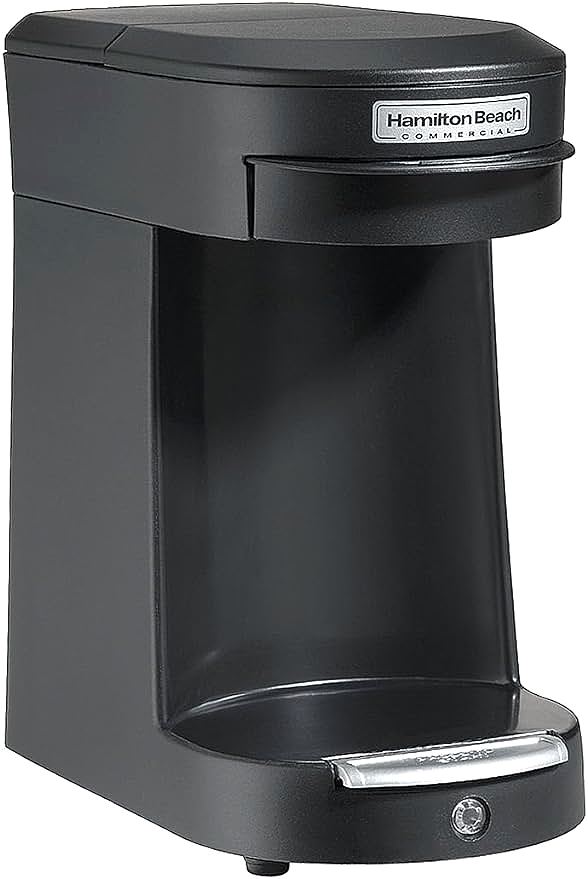
The Unexpected Science Behind Rapid Coffee Brewing

Uncanny Brands Hello Kitty Coffee Maker
It takes roughly ninety seconds. You pour water into a small reservoir, add ground coffee to a reusable mesh filter, press a single button, and before you can finish scrolling through your morning notifications, hot coffee fills your mug. The entire process feels almost too simple for a device that draws only 350 watts, less power than most hair dryers and roughly a third of what a typical kitchen toaster demands. Why does a heating element this modest bring eight ounces of room-temperature water to near-boiling in under a minute and a half?
The question is more nuanced than it first appears. Speed in coffee brewing is not simply a matter of cranking up wattage. It involves thermal efficiency, fluid dynamics, material science, and a series of deliberate engineering compromises that balance extraction quality against convenience. Understanding those trade-offs reveals something unexpected: the constraints of a small, affordable brewer can illuminate fundamental principles of thermodynamics that apply to every coffee machine, from a $20 dorm-room dripper to a $4,000 commercial espresso system.
The Thermodynamics Problem: Heating Water Fast
At the heart of every drip coffee maker sits the same basic challenge: convert electrical energy into thermal energy and transfer that heat into water as efficiently as possible. The governing equation is deceptively simple. The heat energy Q required to raise a mass m of water by a temperature change of delta-T follows the formula Q equals m times c times delta-T, where c is the specific heat capacity of water, approximately 4.18 joules per gram per degree Celsius.
Consider a concrete example. An eight-ounce serving of water weighs about 237 grams. If that water starts at a room temperature of 20 degrees Celsius (68 degrees Fahrenheit) and needs to reach 93 degrees Celsius (roughly 200 degrees Fahrenheit), the temperature change is 73 degrees. Plugging into the formula, the total energy required is 237 grams times 4.18 joules per gram-degree times 73 degrees, which equals approximately 72,300 joules.
A 350-watt heater delivers 350 joules per second. In a perfectly efficient system, heating 237 grams of water by 73 degrees would take 72,300 divided by 350, or about 207 seconds, a little over three minutes. Yet the device in question completes the brew cycle in under 90 seconds. The math only works if the system achieves a thermal efficiency exceeding 85 percent, meaning that the vast majority of energy produced by the heating element actually reaches the water rather than dissipating into the surrounding air or the plastic housing.
Where Does the Efficiency Come From?
Achieving that level of thermal efficiency in a compact, inexpensive device requires specific design choices. The first is minimizing the thermal mass of everything the heating element touches. In larger coffee makers, the warming plate, the carafe, and the internal plumbing all absorb heat before it reaches the water. A small single-serve brewer eliminates much of that overhead. The water travels through a short, direct path from the reservoir to the brew basket, with fewer intermediate components to siphon away energy.
The second factor is the design of the heating element itself. Rather than a separate boiler chamber, many compact brewers use a thermoblock system, an aluminum block with an embedded resistance wire through which water flows directly. The electrical current heats the block, and the water absorbs heat as it passes through internal channels. Because the water is in intimate contact with the heated surface for its entire transit, heat transfer occurs through both conduction and convection simultaneously. This direct-contact approach can achieve thermal efficiencies of 85 to 90 percent, observed in 60 to 70 percent for systems where water sits in a separate tank that must be heated first.
The third contributor is the small water volume. Eight ounces is a modest amount. Heating larger volumes introduces stratification, where the water nearest the heating element reaches temperature while the water farther away remains cooler. In a small volume, convection currents distribute heat more uniformly, and the short distance between the heating surface and any given water molecule means temperature gradients remain small.
The Extraction Temperature Trade-Off
Speed, however, comes at a cost. The specialty coffee industry has established through decades of research that water temperature between 195 and 205 degrees Fahrenheit (90 to 96 degrees Celsius) produces optimal extraction for most drip brewing methods. The National Coffee Association, the Specialty Coffee Association, and peer-reviewed research published in journals like Nature's Scientific Reports all converge on this range. At these temperatures, the soluble compounds in ground coffee, including desirable sugars, acids, and aromatic oils, dissolve at rates that produce balanced flavor.
A fast single-serve brewer operating at sub-90-second cycle times typically reaches water temperatures in the range of 190 to 195 degrees Fahrenheit, slightly below the accepted optimum. This is not a defect; it is an engineering decision. Reaching 205 degrees Fahrenheit would require either a more powerful heating element (increasing cost and power consumption) or a longer heating time (defeating the purpose of a fast brewer). The designers accepted a modest reduction in extraction temperature in exchange for speed and energy efficiency.
The practical impact of this five-to-ten-degree gap is real but nuanced. At 190 degrees Fahrenheit, extraction still occurs, but the balance of dissolved compounds shifts slightly. Fewer bitter tannins are extracted from the coffee grounds, which can actually benefit medium and light roasts where brightness and fruit notes are desirable. Dark roasts, which rely on caramelized sugars and body, may taste slightly thin. For the target audience of a compact, affordable brewer, this trade-off typically goes unnoticed, and in some cases produces a cup that is smoother and more approachable than what a higher-temperature extraction would yield.
What the Filter Changes: Mesh against Paper
Beyond temperature, the choice of filter significantly influences the final cup. The device in question uses a reusable mesh filter, typically made from stainless steel or a food-safe polymer with fine perforations. This choice carries meaningful chemical consequences.
Paper filters act as a physical barrier that traps not only coffee grounds but also the natural oils present in roasted coffee, known as coffee lipids or colloquially as cafestol. These oils contribute body and mouthfeel to the brewed coffee. When a paper filter absorbs them, the resulting cup is cleaner and brighter, with more pronounced acidity, but it lacks the velvety texture that oils provide.
A mesh filter, by contrast, allows these oils to pass through into the cup. The result is a brew with fuller body and a richer mouthfeel. The trade-off is that mesh filters also allow fine coffee particles, called fines, to pass through, which can produce a small amount of sediment at the bottom of the mug. For users who prioritize convenience (no paper filters to buy, store, or discard) and prefer a fuller-bodied cup, the mesh filter is a sound engineering choice. For those who prefer crystal-clear, bright coffee, a paper filter insert can be used as an alternative.
From a sustainability perspective, the reusable filter eliminates a continuous stream of paper waste. Given that the single-serve coffee pod market, valued at $14.2 billion globally according to Statista, generates significant environmental concern (an estimated 85 percent of plastic pods end up in landfills), a ground-coffee brewer with a permanent filter represents a meaningful environmental advantage.
Material Safety: Why BPA-Free Is an Engineering Decision
The term "BPA-free" has become ubiquitous in consumer products, often treated as a marketing checkbox. But in a coffee maker, where hot water flows through plastic components, the choice of food-contact material is a genuine engineering decision with health implications.
Bisphenol A (BPA) is an industrial chemical used in the production of polycarbonate plastics and epoxy resins. The U.S. Food and Drug Administration has determined that BPA is safe at the very low levels at which consumers are typically exposed, but ongoing research has raised concerns about potential endocrine-disrupting effects, particularly with repeated exposure to heated liquids that can accelerate chemical leaching.
The alternative material used in this brewer is polypropylene, identified by the recycling code number 5. Polypropylene has a melting point of approximately 320 degrees Fahrenheit (160 degrees Celsius), well above any temperature encountered during coffee brewing. It is chemically inert in contact with hot water, does not contain BPA or phthalates, and is one of the most widely recycled plastics globally. These properties make it suitable for food-contact applications where thermal cycling (repeated heating and cooling) is expected.
The selection of polypropylene over cheaper alternatives like polystyrene or PVC is not incidental. It reflects a deliberate engineering judgment: in a device that heats water to near-boiling and holds it in contact with plastic surfaces, material stability under thermal stress is a functional requirement, not a luxury feature.
The Broader Engineering Lesson
What makes a compact, character-branded coffee maker interesting from an engineering perspective is not that it represents technological breakthroughs. It does not. Every individual principle, thermoblock heating, mesh filtration, polypropylene construction, is well established. The interesting part is the system-level optimization: how these known elements are combined and constrained to achieve a specific set of performance targets (speed, affordability, compactness, safety) within tight cost limits.
Engineering at its core is the discipline of making things work within constraints. A $4,000 espresso machine solves the problem of coffee extraction by deploying abundant thermal power, precision temperature control, and high-pressure pumps. A compact single-serve brewer solves a different version of the same problem with a fraction of the resources. Both arrive at a cup of coffee. The paths they take reveal different things about the physics involved.
The thermodynamic equation Q equals m times c times delta-T does not change based on the price of the machine. The chemistry of coffee extraction at 195 degrees against 205 degrees does not depend on the brand on the housing. These principles are universal. Understanding them transforms the way you evaluate any brewing device, not just the one sitting on your counter.
When you next press the button on your coffee maker, whatever its wattage or price point, consider what is happening inside: a resistance wire converting electrical current into thermal energy, water molecules absorbing that energy through direct contact, dissolved compounds being extracted from ground coffee at rates governed by temperature and time. The physics is the same whether the machine costs twenty dollars or two thousand. The difference lies entirely in how cleverly the engineers worked within their constraints.
Uncanny Brands Hello Kitty Coffee Maker
Related Essays

Consolidating Fluid Dynamics: The Anatomy of a Multi-Format Brewer
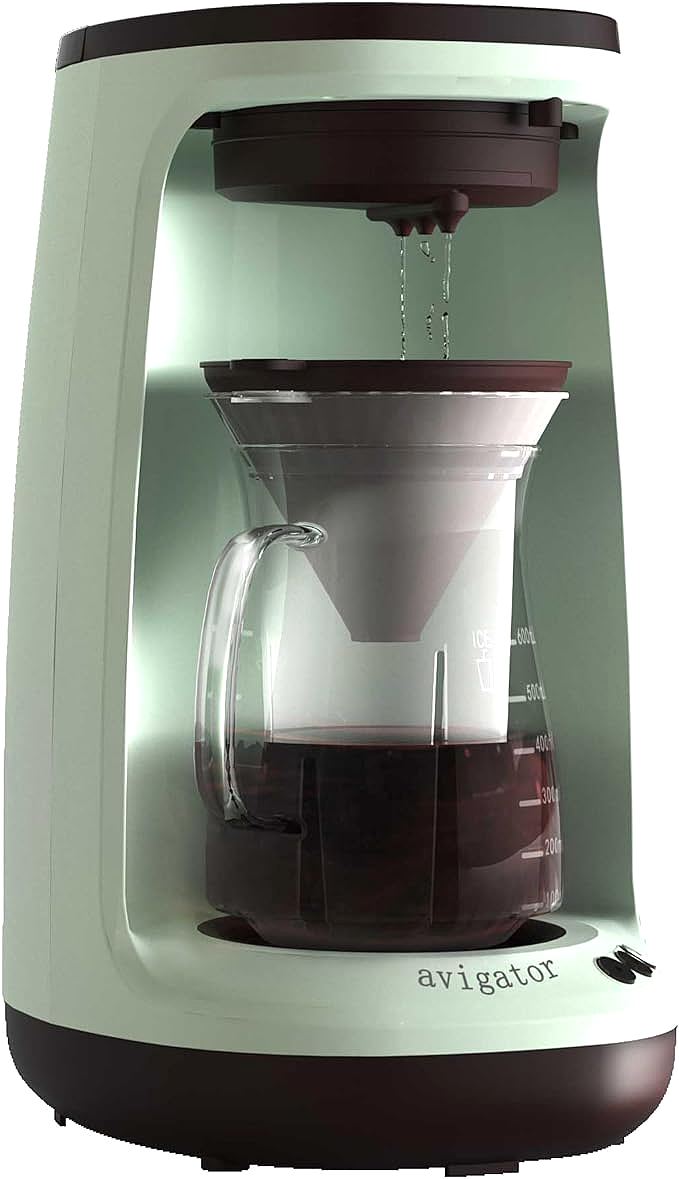
Thermal Deltas in Percolation: Engineering Dual-State Brews
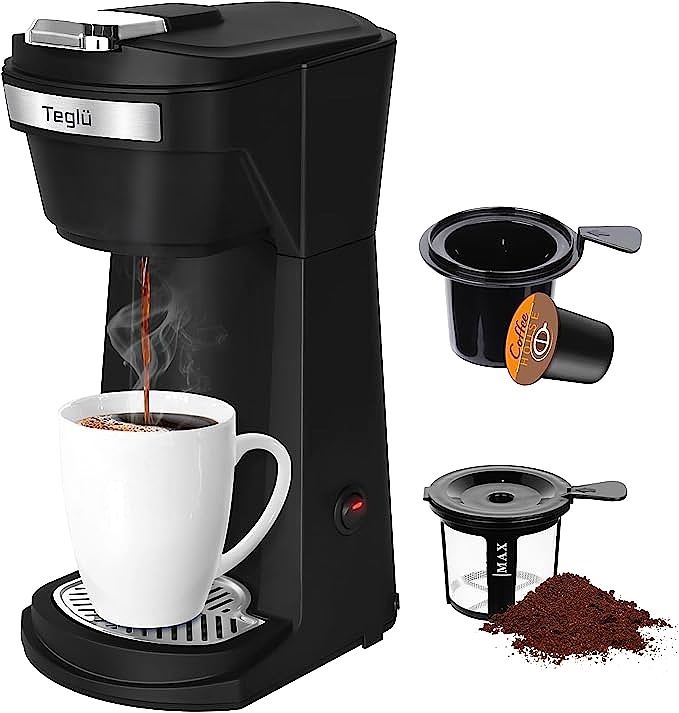
Teglu CM-208RS Single Serve Coffee Maker - K-Cup & Ground Coffee, 6-14 oz
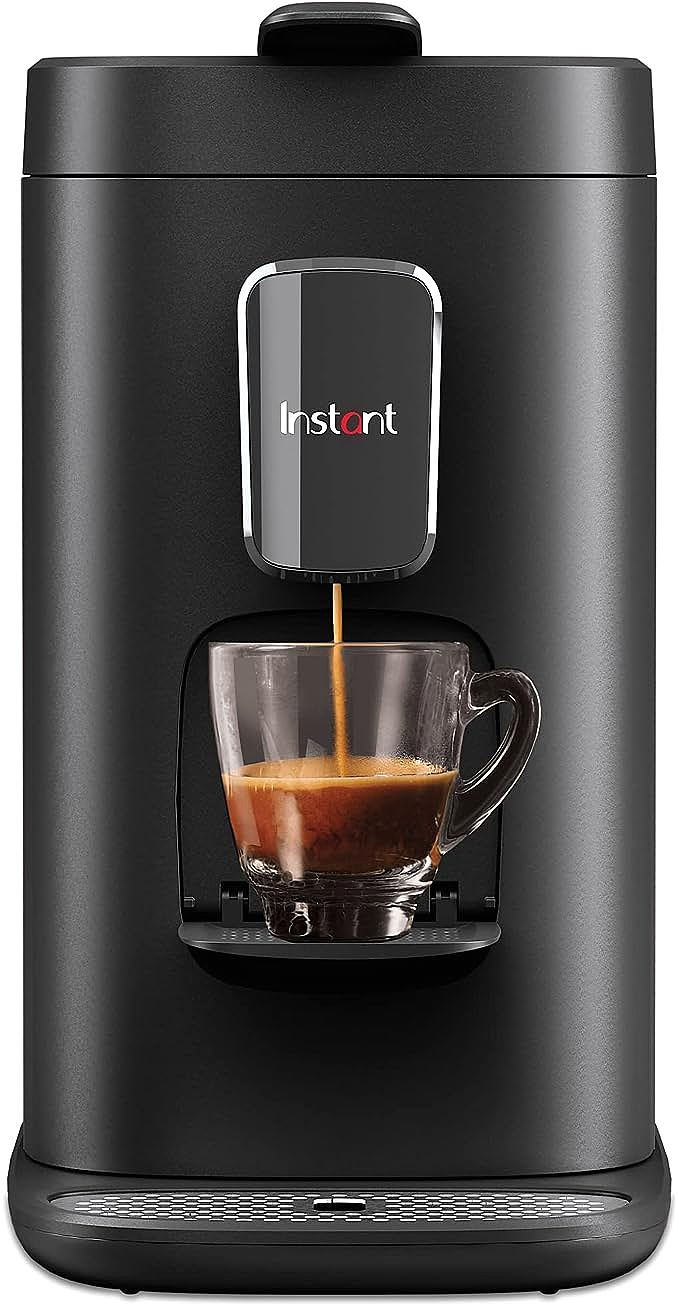
Instant Pod 3-in-1 Coffee Maker: Your Ultimate Guide to Espresso, K-Cups, and Ground Coffee
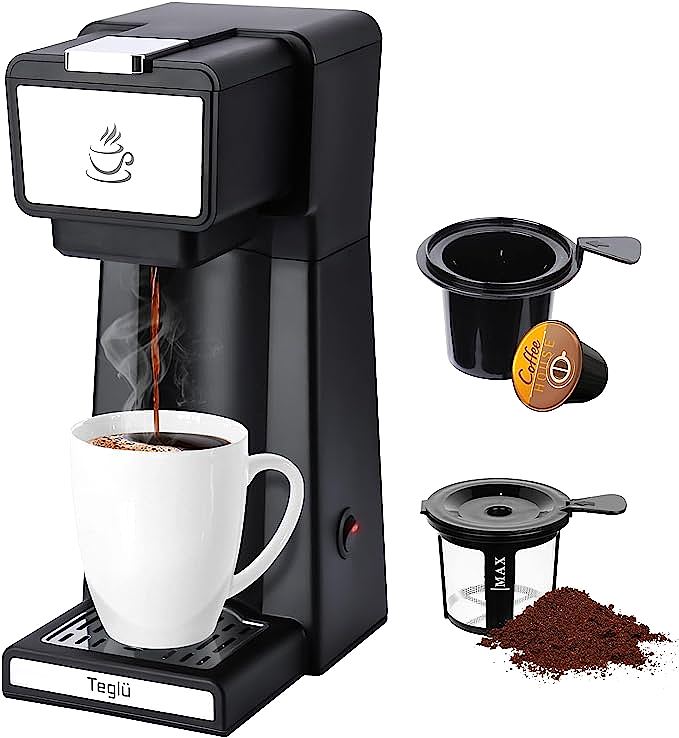
Teglu CM-206SB: Your Single-Serve Solution for K-Cup & Ground Coffee

Famiworths Single Serve Coffee Maker: Your Perfect Cup of Hot or Iced Coffee

Sunvivi ZEC001: Your 3-in-1 Solution for Perfect Coffee Every Time

Gevi EzPod Compact Coffee Maker: Brew Your Perfect Cup, Simplified

Gourmia GCM3600 3-in-1 Coffee & Tea Maker: Your All-in-One Brewing Solution