The Espresso Compromise: Unpacking the Science and Engineering in a Home Coffee Machine
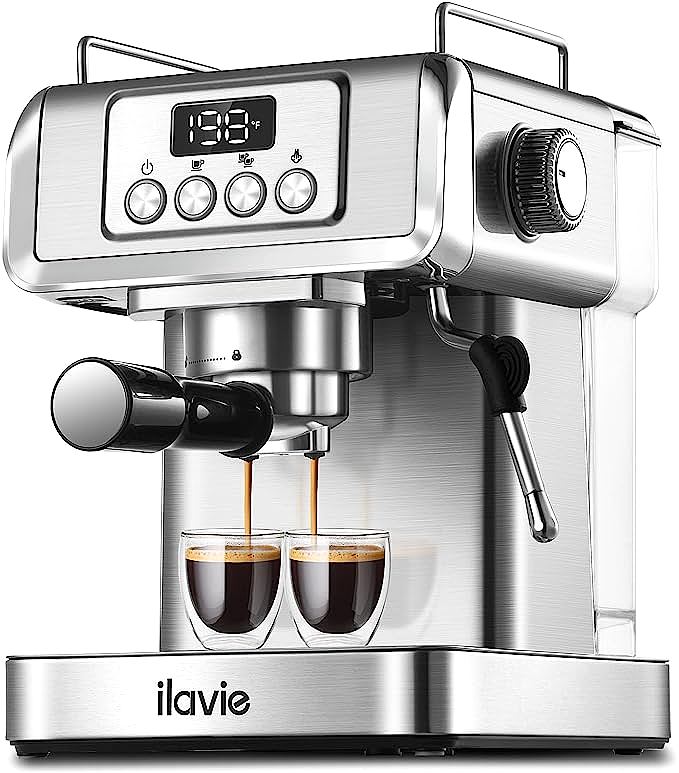
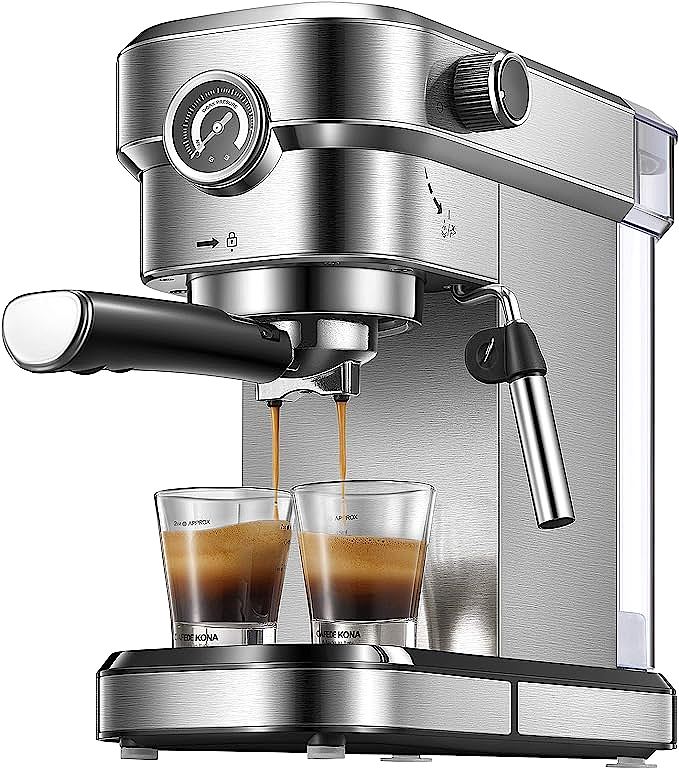
ILAVIE EM3209 Espresso Machine
From Milan to Your Countertop: The Engineering Journey of Espresso
Picture a Milanese cafe in 1947. The hiss of steam, the groan of a spring-loaded lever, and then something extraordinary: a thick, viscous liquid crowned with a reddish-brown foam the world had never seen. Achille Gaggia's piston-driven machine had just created crema, and modern espresso was born. That machine was a brass titan, tethered to dedicated plumbing and a high-current electrical circuit. It weighed as much as a small car and cost as much as one.
So how did that magnificent industrial beast shrink into the compact appliance sitting on your kitchen counter? The answer is a story of relentless engineering compromise, where thermodynamics, fluid mechanics, and materials science collide with the realities of a standard 1350W electrical outlet. Understanding these compromises does not just make you a more informed buyer; it makes you a better barista, because every dial, every temperature reading, every extraction you perform is shaped by the physics hidden inside the machine.
The Temperature Problem: Why Your Machine Fights Thermodynamics Every Morning
Espresso extraction demands precision. The Specialty Coffee Association (SCA) defines the optimal brewing temperature window as 91 to 94 degrees Celsius (196 to 201 degrees Fahrenheit). Stray below this range, and the water fails to dissolve the full spectrum of desirable flavor compounds from the coffee grounds. Wander above it, and you begin extracting bitter, astringent substances that overwhelm the cup.
The challenge is not simply reaching that temperature; it is maintaining it consistently while cold water flows into the system and hot water flows out. In a commercial setting, engineers solved this with brute force. A large brass or copper boiler, often holding 10 to 20 liters of water, acts as a massive thermal reservoir. Brass has a high specific heat capacity, meaning it absorbs and holds thermal energy effectively. Once heated, the boiler's sheer thermal mass resists temperature fluctuations the way a boulder resists a breeze. Incoming cold water barely dents the temperature of 15 liters of near-boiling water.
Your kitchen countertop cannot accommodate a 15-liter brass boiler. Home espresso machines operate under a hard constraint: roughly 1350 watts of power from a standard North American electrical outlet, and a footprint no larger than a toaster. This power budget is roughly one-tenth of what a commercial machine draws. Engineers had to find an entirely different approach.
Thermoblock vs. Boiler: Two Philosophies of Heat
The two dominant heating strategies in home machines reveal fundamentally different engineering philosophies.
Traditional small boilers, typically holding 0.3 to 2 liters of water, attempt to replicate the commercial principle at miniature scale. A heating element immersed in the water brings it to brewing temperature. The thermal mass is far smaller than commercial equipment, so temperature stability suffers. When cold water enters to replace what was just extracted, the boiler temperature drops, and the heating element must work to recover. This recovery takes time, during which extraction temperature may swing by 2 to 5 degrees Celsius.
Thermoblock systems take a radically different approach. Instead of storing a volume of hot water, they heat water on demand as it flows through a heated metal block with narrow internal channels. The thermoblock's advantage is fresh water for every extraction: water does not sit in a boiler growing stale. The trade-off is that thermoblock systems sacrifice steaming power for brewing temperature stability. Steam production requires sustained high temperatures, and the on-demand heating philosophy struggles to deliver the volume of steam needed for milk texturing.
The ILAVIE EM3209, for example, employs a thermoelectric coil heating system paired with digital temperature control (PID). The PID controller, which stands for Proportional-Integral-Derivative, continuously monitors water temperature and adjusts heating power in real time. Rather than simply turning the heater on when temperature drops and off when it rises, a PID controller calculates the optimal heating level based on how far the temperature is from the target, how quickly it is changing, and how long it has been off-target. This allows a thermoblock system to maintain surprisingly stable brewing temperatures despite its small thermal mass.
What This Means for Your Coffee
Temperature stability during extraction directly affects which chemical compounds dissolve from the coffee grounds. Research published in academic coffee science literature, including the foundational work by Illy and Viani in "Espresso Coffee: The Science of Quality" (2005), demonstrates that extraction chemistry is time-sensitive:
- Acids dissolve first, in the early phase of extraction, contributing brightness and fruitiness.
- Sugars dissolve in the middle phase, contributing sweetness and body.
- Bitter compounds dissolve last, in the final phase of extraction.
If extraction temperature fluctuates significantly, the balance between these phases shifts. A temperature drop during extraction may leave bitter compounds under-extracted while acids dominate, producing a sour cup. A temperature spike may over-extract bitters, producing a harsh, astringent cup. This is why PID temperature control matters: it keeps the extraction chemistry predictable.
The Pressure Question: Why 9 Bars, Not 20
Walk through the espresso machine aisle of any retailer and you will see the same number printed proudly on box after box: "20 Bar." It sounds impressive. More pressure must mean better espresso, right? The engineering reality tells a different story.
The Physics of 9 Bars
According to research by Jim Schulman in "Some Aspects of Espresso Extraction" (2007), and the foundational measurements by Illy and Viani, the optimal pressure for espresso extraction is approximately 9 bars, or about 130 pounds per square inch. This is roughly nine times atmospheric pressure. At 9 bars, water is forced through the compacted coffee puck at a rate that saturates the grounds evenly from top to bottom, dissolving the desired compounds in a balanced sequence over approximately 25 to 30 seconds.
The number 9 is not arbitrary. It represents a sweet spot in the physics of flow through a porous medium. Below roughly 8 bars, the water does not penetrate the puck evenly. Instead, it finds the path of least resistance, creating channels through the coffee bed. This channeling means some grounds are over-extracted while others are barely touched, producing a cup that is simultaneously sour and bitter.
Above roughly 10 bars, the water compresses the puck excessively, restricting flow too dramatically. The result is a slow, over-extracted shot that emphasizes bitter compounds. The puck essentially becomes its own obstruction.
The Truth Behind "20 Bar" Claims
When a machine advertises "20 Bar," it is referring to the maximum pressure the pump is capable of producing, not the pressure at which espresso is actually extracted. The pump inside the machine, typically a solenoid-piston positive displacement pump, can generate up to 20 bars of pressure if the flow path is completely blocked. But during actual espresso extraction, the pump operates at roughly 9 bars because the coffee puck provides natural flow resistance.
Think of it like a car that can reach 150 miles per hour. The speedometer goes to 150, but you drive to the grocery store at 35. The 150-mph capability exists, but it is not the operating condition. Similarly, a 20-bar pump rating describes the ceiling, not the operating point.
This distinction matters because it means that a machine with a "15 Bar" rating and one with a "20 Bar" rating may produce identical extraction pressures. The extra headroom in the pump specification does not translate to better espresso; it is largely a marketing consideration.
Extraction Yield: Where Physics Meets Flavor
Illy and Viani's research revealed a surprising property of espresso extraction: yield depends primarily on the depth of the coffee puck, not on brewing time. After approximately 20 seconds of extraction, the yield plateaus. Extending the extraction beyond this point does not significantly increase the amount of coffee dissolved. The strength of the espresso depends on grind fineness, not on the amount of coffee in the portafilter.
This finding has profound implications for home baristas. It means that the variables you control, including grind size, dose, and tamp pressure, interact with the machine's pressure system in predictable ways. A machine operating at a stable 9 bars gives you a reliable platform for experimenting with these variables. A machine with erratic pressure does not.
The Heating System Hierarchy: SB, HX, DB, and TB Explained
Espresso machine heating systems fall into five categories, each representing a different set of engineering trade-offs. Understanding these categories explains why machines at different price points behave so differently.
Single Boiler (SB) and Single Boiler Dual Use (SB/DU)
The simplest and most affordable home machines use a single small boiler for both brewing and steaming. The limitation is fundamental: you cannot brew and steam simultaneously, because brewing requires approximately 93 degrees Celsius while steaming requires approximately 100 degrees Celsius or higher. In a dual-use system, you must wait for the boiler to heat up for steaming, then wait again for it to cool down for brewing. This temperature transition wastes time and energy, but the design is compact and affordable.
Heat Exchanger (HX)
Introduced commercially in the Faema E61 in 1961, the heat exchanger system was a brilliant engineering compromise. A single boiler maintains water at steaming temperature continuously. For brewing, fresh water is routed through a tube that passes through the hot boiler water, absorbing heat along the way. The longer the water spends in the heat exchanger, the hotter it gets when it reaches the group head.
The cleverness of this design is that it allows simultaneous brewing and steaming from a single boiler. The trade-off is temperature management: water sitting in the heat exchanger tube can overheat if the machine has been idle, requiring a "cooling flush" before extraction to bring the water back to brewing temperature. Home baristas using HX machines learn to manage this flush as part of their workflow.
Dual Boiler (DB)
La Marzocco introduced the first true dual boiler system in 1970 with the GS model. Two separate boilers, one for brewing and one for steaming, each maintained at its optimal temperature. This design provides the best temperature stability and allows simultaneous brewing and steaming without compromise.
The trade-off is size, cost, and power consumption. Two boilers require more space, more metal, more heating elements, and more sophisticated control systems. In a home machine constrained to 1350 watts, powering two boilers means longer heat-up times and careful power management to avoid tripping the circuit breaker. Dual boiler home machines typically occupy the premium price segment.
Thermoblock (TB)
Thermoblock systems, as discussed earlier, heat water on demand rather than storing it. This design offers excellent brew temperature stability when paired with PID control, because the heating element can respond quickly to temperature changes without the thermal inertia of a large water mass. The trade-off is steaming performance: producing sustained steam requires stored thermal energy, which the on-demand philosophy inherently lacks.
Many modern home machines use a hybrid approach: a thermoblock or thermocoil for brew water paired with a small boiler or thermoblock for steam. This compromise delivers acceptable performance in both functions without the size and cost of a full dual boiler system.
The Historical Arc: From Steam Pistons to PID Controllers
The evolution of espresso machine engineering follows a clear narrative arc, driven by the tension between commercial performance and consumer accessibility.
1884: Angelo Moriondo patented the first espresso machine in Turin, Italy. It was a steam-driven device designed for bulk brewing, not the individual servings we associate with espresso today. Steam pressure, limited to roughly 1.5 bars, could not produce the concentrated extraction or the crema we now consider essential.
1901-1902: Luigi Bezzera improved upon Moriondo's design with individual brewing heads and a lever system. Desiderio Pavoni purchased the patent and began commercial production. The machine still relied on steam pressure, but the concept of made-to-order espresso was established.
1945: Achille Gaggia's piston-driven lever machine changed everything. A spring-loaded piston replaced steam as the pressure source, generating 8 to 10 bars of pressure manually. The higher pressure created the characteristic crema, the emulsified oils and carbon dioxide that form the golden layer atop espresso. For the first time, espresso had a visual signature that distinguished it from other coffee.
1961: The Faema E61 introduced the heat exchanger system and replaced the manual lever with an electric pump. This was the birth of the pump-driven semi-automatic espresso machine, the configuration that dominates both commercial and home markets to this day. The pump provided consistent pressure without the physical effort of a lever.
1970: La Marzocco's GS brought dual boiler technology to the commercial market, establishing the temperature stability standard that professional baristas still depend on.
Modern era: The challenge for contemporary engineers has been translating these commercial innovations into machines that run on 1350 watts and fit on a kitchen counter. The result has been a proliferation of creative compromises: PID-controlled thermoblocks, compact single boiler dual-use systems, hybrid heating configurations, and integrated grinders. Each represents a different answer to the same fundamental question: how do you deliver commercial-quality espresso physics within domestic constraints?
Extraction Chemistry: The Science Behind the Taste
Understanding extraction chemistry transforms how you use your machine. Coffee grounds contain hundreds of chemical compounds, each with different solubility characteristics. Hot water acts as a solvent, dissolving these compounds in a predictable sequence based on their molecular structure.
According to Schulman's analysis, optimal extraction yield for brewed coffee falls between 18 and 22 percent. For espresso, the range widens to 15 to 25 percent, with 25 percent representing the traditional Italian standard. Below 18 percent extraction yield, the cup tastes sour because only the most easily dissolved compounds, primarily acids, have entered the water. Above 22 percent, the cup tastes bitter because the water has exhausted the desirable sugars and begun dissolving less pleasant compounds.
Your espresso machine's engineering determines how consistently it can hit this target range. Temperature stability ensures the solvent (water) is at the right temperature to dissolve compounds at the expected rate. Pressure consistency ensures the water flows through the puck at the right speed, giving compounds the right amount of contact time. Grind uniformity ensures all coffee particles are exposed to water equally, preventing the simultaneous under-extraction and over-extraction that occurs with inconsistent particle sizes.
This is why the 91 to 94 degree Celsius temperature window matters so critically. At the lower end, around 91 degrees, extraction proceeds more slowly. You may need a slightly finer grind or longer contact time to reach optimal yield. At the upper end, around 94 degrees, extraction proceeds more quickly. A coarser grind or shorter time may be needed. A machine that cannot maintain a consistent temperature forces you to hit a moving target.
Making Sense of the Trade-offs: What to Look For
With this engineering foundation in place, the specifications on espresso machine boxes begin to tell a coherent story rather than a list of marketing numbers.
Heating system type tells you how the machine manages temperature. A thermoblock with PID control prioritizes brew temperature stability. A heat exchanger prioritizes the ability to brew and steam simultaneously. A dual boiler prioritizes both, at higher cost and size.
Pump pressure rating tells you the maximum capability of the pump, not the extraction pressure. Whether the box says 15 or 20 bars, extraction will occur around 9 bars. What matters more is pump consistency and longevity.
Wattage tells you how quickly the machine can heat water and recover between shots. A 1350W machine will take longer to reach temperature than a commercial machine drawing 3000W, but it can operate on a standard household circuit.
Boiler or thermoblock material and size tells you about thermal stability. Larger thermal mass means more stable temperatures but longer heat-up times. Stainless steel is common in home machines; brass and copper, with their superior thermal properties, are more common in commercial equipment.
The ILAVIE EM3209, for instance, combines a thermoelectric coil heating system with PID temperature control, a 20-bar pump, and 1350 watts of power. These specifications reflect a specific set of compromises: the thermoelectric system with PID prioritizes brewing temperature stability within the power and size constraints of a countertop machine, while the 1350W rating places it firmly within standard household electrical capacity.
The Cup as Engineering Output
Every shot of espresso you pull is the output of an engineered system operating within physical constraints. The thickness of the crema reflects the pressure the pump delivered. The balance of sweetness and bitterness reflects the temperature stability during extraction. The clarity of flavor reflects the uniformity of your grind and the evenness with which water saturated the puck.
Understanding the engineering inside the machine does not guarantee perfect espresso. But it transforms you from someone following recipes blindly into someone who understands why those recipes work, and who can adapt intelligently when the results fall short. The brass titan of 1947 and the compact machine on your counter share the same fundamental physics. The compromises are different, but the goal is the same: to harness thermodynamics and fluid mechanics in pursuit of a 30-second liquid masterpiece.
The next time you pull a shot, listen to the pump, feel the warmth of the group head, and watch the extraction. You are witnessing a century of engineering evolution compressed into a machine small enough to sit beside your toaster. That is not just coffee. That is applied physics, and now you know how to read it.
ILAVIE EM3209 Espresso Machine
Related Essays

The Soul of the Machine: Unlocking Espresso's Secrets with the Nuova Simonelli Musica
The Science of the Shot: A Deep Dive into the 15-Bar Espresso Machine
ShareforU HS-8439 Portable Espresso Machine Guide

Espresso Machine Science: Inside Super-Automatic Brewers

The Home Barista's Dilemma: Deconstructing the KRUPS Divine and the Science of Your First Great Espresso

Joy Pebble CM5400BA-UL: Your Gateway to Barista-Quality Espresso at Home

IAGREEA CM3050 20 Bar Espresso Machine: The Science of Home Barista Excellence
Miele CM 5510 Silence: Brewing Coffee Perfection Through Science
Yabano cm6851 15 Bar Espresso Machine with Milk Frother
