Why Your Espresso Tastes the Same Every Morning (And the Chemistry That Proves It)
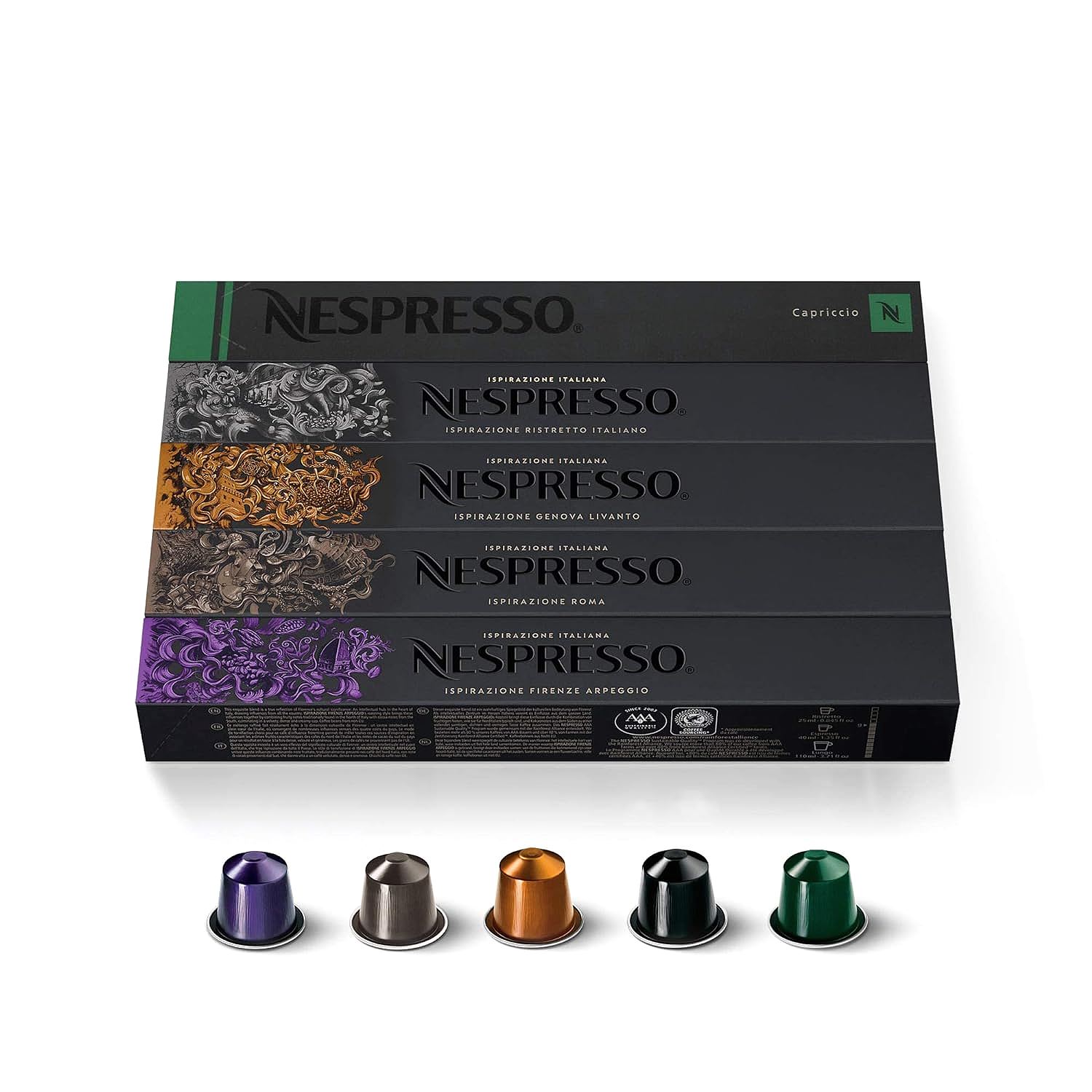
Nespresso Capsules OriginalLine Ispirazione Variety Pack
You pull your daily shot, take that first sip, and... it tastes like yesterday. And the day before. Most coffee drinkers cycle through the same bag of beans for weeks, never realizing their palate has been running on a single track. The culprit is not your machine or your technique. It is the fact that a single origin, roasted one way, can only produce one dimension of flavor. Espresso is capable of expressing an enormous range of taste experiences, from bright fruit to deep cocoa, from cereal sweetness to smoky intensity. But you will never taste that range if you keep drinking the same blend.
The Extraction Equation: What Actually Happens Under Pressure
Espresso is not simply strong coffee. It is a concentrated extraction governed by specific physical parameters: 9 bar of pressure, water at 88 degrees Celsius, forced through a bed of finely ground coffee for 25 to 30 seconds. Under these conditions, water dissolves roughly 18 to 26 percent of the coffee bean's mass, depending on grind size, dose, and the roast level of the beans themselves.
The Specialty Coffee Association defines optimal extraction at 18 to 22 percent. Go below that, and you get under-extraction: sour, thin, lacking sweetness. Go above it, and bitter, astringent compounds dominate. But here is the crucial point that most guides overlook: different roast levels reach their sweet spot at different extraction percentages.
A light roast with its denser cell structure and higher acidity requires a finer grind and slightly longer contact time to dissolve its flavor compounds. A dark roast, already broken down by longer heat exposure, releases its soluble material faster. Push a dark roast to 22 percent extraction and you will pull harsh, woody bitterness. Pull a light roast at 18 percent and you will miss the caramelization entirely.
This is why understanding your beans means understanding the entire extraction arc, not just the machine settings. The same espresso machine, the same pressure, the same water temperature, can produce entirely different flavor experiences depending on what you put in the basket. And the difference between a five and a ten on an intensity scale represents a fundamentally different extraction target, not a subjective preference.
The Intensity Scale: Reading What the Numbers Actually Mean
The numerical intensity rating printed on espresso capsules is not a quality score. It is a measurement of extraction yield, translated into a scale that consumers can use for practical selection. A rating of five indicates approximately 18 to 20 percent dissolved solids in the cup. A rating of ten indicates roughly 24 to 26 percent dissolved solids. The twelve-point range you see across a variety pack is not marketing language. It is a deliberate component of the product design, meant to guide you toward different extraction experiences.
The chemistry behind this is straightforward. As water extracts coffee, it first dissolves the acids and fruity compounds. These are the compounds that give light roasts their brightness. Continuing extraction pulls bitter compounds and the melanoidins that create chocolate and caramel notes. Push further and you start extracting the woody, ashy compounds that live in the cell walls of the bean. The intensity number tells you where on that extraction curve a particular product is calibrated to land.
The Nespresso Ispirazione series demonstrates this principle across its range. Capriccio at intensity five is a light roast with crisp acidity and subtle cereal notes. Livanto at six is the middle ground, balanced between brightness and body. Arpeggio at nine is darker, with the cocoa and intensity that comes from more developed roasting. Ristretto at ten is the most concentrated, targeting the sweet spot before the bitter compounds emerge. Each number corresponds to a different moment on the extraction curve, not a different quality level.
Understanding this transforms how you use a variety pack. Instead of selecting by brand loyalty or vague preference, you can select by what you want the espresso to do in your drink. A five for a bright morning ristretto with minimal milk. A ten for a dark, intense base that can handle oat milk without becoming watery. The intensity number is a tool, not a ranking.
The Crema Factor: Why It Matters More Than You Think
The golden-brown foam layer sitting on top of your espresso is not decorative. It is an emulsion, a colloidal suspension of CO2, oils, and proteins that plays a direct role in flavor delivery. Crema forms when the high pressure in the espresso machine forces CO2, released during the roasting process, into solution in the water. As this pressurized water contacts the coffee bed, the CO2 comes out of solution and creates tiny bubbles that become trapped in the oil droplets dispersed by the mechanical action of the machine.
The color of your crema tells you something specific about your extraction. A light blond crema indicates under-extraction, insufficient contact between water and coffee. A very dark, nearly black crema indicates over-extraction, where the bitter compounds have begun to dominate. The ideal crema is reddish-brown, dense, and persistent, holding its form for several minutes after the shot is poured.
The texture of crema also reflects the bean composition. Robusta coffees, with their higher lipid content and stronger emulsifying properties, produce thicker, more persistent crema than Arabica coffees. This is why some espresso blends include Robusta specifically for the crema contribution, not just the caffeine boost. The lipid content in Robusta, which averages 10 percent compared to Arabica's 6 to 8 percent, creates a more stable emulsion that lasts longer in the cup.
This matters for practical reasons beyond aesthetics. Crema acts as a lid that slows the release of volatile aromatic compounds. A thick, persistent crema means the espresso stays fresh longer in the cup, maintaining its aromatic profile as it cools. A thin, fleeting crema means the flavor collapses faster, the aromatic compounds oxidizing and dissipating within minutes. If your espresso tastes noticeably different between the first sip and the last, the crema may be the reason.
The Palate Education: Training Your Sensory Memory
Most people believe they cannot taste the difference between extraction levels. Most people are wrong. The issue is not sensory capacity. It is sensory reference. You cannot identify a flavor you have nothing to compare against, and most coffee drinkers never systematically compare. They drink the same blend every day, building a flavor memory of a single extraction target, and then assume that memory represents the range of possible espresso experiences.
Training your palate is a structured process, not a mystical gift. Start by pulling the same coffee at three different grind settings: coarse, medium, and fine. Taste each shot clean, without milk, without sugar. The differences will be immediately apparent if you taste them in sequence. The coarse grind will taste sour and thin, under-extracted. The fine grind will taste bitter and dry, over-extracted. The medium grind will fall between them, and it is from this reference point that you begin to understand what you are tasting.
Once you have calibrated your reference, expand your frame. Taste a light roast and a dark roast pulled to their respective optimal extraction points. The light roast will have brightness and complexity that the dark roast lacks. The dark roast will have body and sweetness that the light roast cannot match. Neither is objectively better. Each is expressing a different dimension of what coffee can be. The variety pack is not a sampler of product options. It is a controlled experiment in organic chemistry, presented in a format that happens to be convenient for daily consumption.
The neuroscience behind flavor perception explains why this matters beyond mere curiosity. Taste and smell are processed in different brain regions, and they interact in ways that shape your total experience. When you add milk to espresso, you are not just diluting the flavor. You are triggering fat receptors on your tongue that modulate how bitter compounds are perceived. This is why the same espresso tastes different in a latte than it does as a straight shot. Understanding this interaction lets you select your espresso based on how you actually drink it, not how you imagine you might drink it.
The Occasion Matrix: Matching Intensity to Context
Not every espresso moment is the same, and treating it as such is what produces the monotonous experience most people complain about. The intensity of your espresso should match the context of consumption, not just your abstract preference. A strong, dark espresso consumed quickly in the morning hits differently than a light, bright espresso sipped slowly in the afternoon. The same principles that apply to wine pairing apply to espresso selection, just compressed into a smaller volume and a more concentrated form.
For morning consumption with milk, higher intensity espressos generally perform better. The 8 to 10 range can stand up to the dilution and fat content of milk, delivering a recognizable espresso character even when the espresso-to-milk ratio is high. A five or six intensity espresso consumed with milk in the same proportions can taste washed out, the milk overwhelming the subtle compounds that define that extraction target.
For afternoon consumption as a standalone shot, lower intensities often provide more interesting complexity. The fruity and floral compounds that define lighter roasts are more apparent when the palate is not dulled by sleep deprivation and the sensory fatigue that accumulates through the morning. The cooler temperature of afternoon espresso also allows you to notice aromatic compounds that are masked by temperature when you drink the same shot hot from the machine.
The capsule variety pack exists for this reason, and understanding the underlying chemistry is what lets you use it as a precision tool rather than a random selection. When you reach for that intensity-five capsule on a Tuesday afternoon because you want to taste what the coffee actually contains, you are doing something fundamentally different from grabbing whichever capsule is closest. The capsule in your hand is no longer just a product. It is a hypothesis about extraction, waiting to be tested.
Nespresso Capsules OriginalLine Ispirazione Variety Pack
Related Essays

KitchenAid KCM1208DG Spiral Showerhead Coffee Maker: An Independent Deep Dive
Ditch the Bad Drip: The Science to a Perfect Pour-Over Taste, Made Simple

Joy Pebble CM5400BA-UL: Your Gateway to Barista-Quality Espresso at Home
Miele CM 5510 Silence: Brewing Coffee Perfection Through Science

Cuisinart SS-10MBP1: Your Single-Serve Coffee Solution for Perfect Brewing

Mr. Coffee Iced Coffee Maker: Brewing the Perfect Iced Coffee, Simplified

The Coffee Code: Deconstructing the Science of a Perfect Home Brew with the Ninja Barista System

The Automated Artisan: How Science is Democratizing the Perfect Pour-Over Coffee
The 15-Minute Rule: Unlocking Your Coffee's True Flavor with the Science of Grinding
