Why Your Coffee Maker Knows More About Your Brain Than You Think
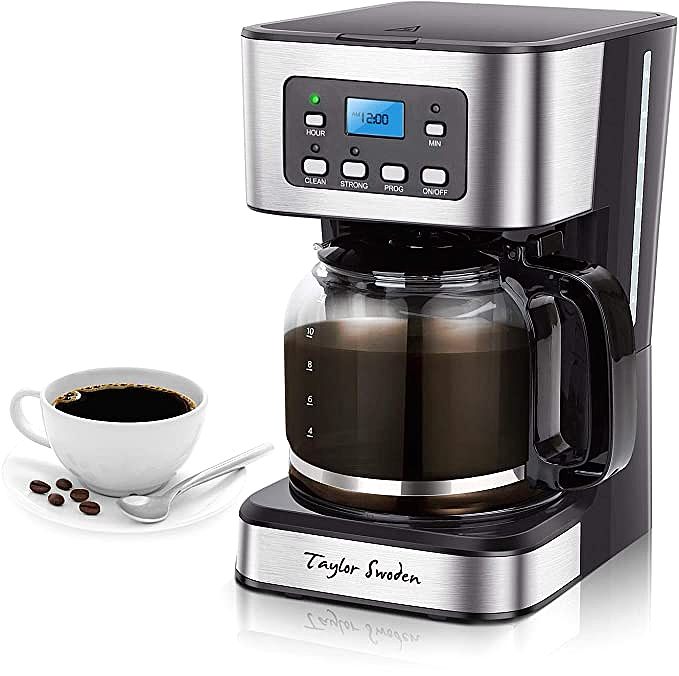
Taylor Swoden 01 Programmable Coffee Maker
The alarm has not yet sounded. You are somewhere between sleep and waking, caught in that hazy corridor where the brain is still reassembling consciousness. Then it arrives: a low gurgle from the kitchen, followed by a scent that reaches you before any sound could. Within seconds, your pupils dilate. Your heart rate ticks upward. A spike of dopamine courses through your nucleus accumbens, and you have not yet touched a single drop.
This is not a story about coffee. This is a story about what happens when thermodynamics, neurobiology, chronobiology, and fluid mechanics converge inside a machine that sits on a kitchen counter. The programmable coffee maker is, in effect, a biological synchronization device, one that has been co-evolving with human morning ritual for over a century.
From Clockwork to Silicon: The Logic Gate in Your Kitchen
The first automatic drip coffee maker did not arrive with a microchip. In 1972, the Mr. Coffee machine used a simple thermal switch: a bimetallic strip that bent when water reached boiling temperature, physically redirecting flow from the heating element to the drip mechanism. It was, in engineering terms, a single-bit logic gate. Water hot? Yes. Begin dripping. No. Keep heating.
Before that, the percolator dominated American kitchens. It operated on a feedback loop so crude it bordered on self-sabotage: boiling water was forced up a tube, sprayed over grounds, and drained back into the same reservoir to be boiled again. Each cycle over-extracted the coffee further. By the fifth or sixth pass, the result tasted like boiled leather. The percolator had no memory, no state awareness, and no concept of "done."
The programmable timer changed everything. By introducing a time-delay circuit, coffee makers gained a primitive form of foresight. You could set the machine at 10 p.m., and at 6:45 a.m., the heating element would activate autonomously. In computational terms, this was a stored instruction executed at a scheduled time, not unlike the fetch-decode-execute cycle in early mainframe computers, though nobody would have described it that way in 1972.
Modern machines carry microcontrollers that manage brew temperature within a narrow band, typically 195 to 205 degrees Fahrenheit, in line with Specialty Coffee Association of America extraction standards. The chip monitors a thermistor, modulates power to the heating element, and times the water-to-ground contact duration. Three inputs, one output, all coordinated. The coffee maker has become a embedded system.
The Nose Is Faster Than the Brain
Here is a claim worth pausing over: the smell of coffee alters your neurochemistry before you ingest any caffeine. This is not metaphor. It is neuroanatomy.
The olfactory nerve, cranial nerve I, sends signals directly to the olfactory bulb, which projects to the amygdala and hippocampus without passing through the thalamus first. Every other sensory system, sight, sound, touch, taste, makes a mandatory stop at the thalamus, the brain's switchboard, before reaching emotional or memory centers. Smell skips the line.

Research published in the Journal of Agricultural and Food Chemistry identified over 800 volatile organic compounds in roasted coffee. Of those, a subset drives the characteristic aroma: pyrazines contribute nutty and roasted notes, methanethiol adds a sulfurous sweetness, and various esters produce fruity undertones. These molecules are small enough to become airborne at brewing temperatures and are detected by olfactory receptors at concentrations measured in parts per billion.
The process happens in two stages. Orthonasal olfaction occurs when you inhale the aroma through your nose, the passive detection that happens when you walk into a kitchen where coffee is brewing. Retronasal olfaction happens when volatile compounds travel from the back of your mouth up through the nasal cavity while you drink. The first stage triggers anticipatory responses: dopamine release, mild cortisol elevation, pupillary dilation. The brain is preparing the body for stimulation before stimulation arrives.
This is Pavlovian conditioning at the molecular level. The olfactory bulb learns the association between coffee aroma and the stimulant effect of caffeine. Over repeated mornings, the aroma alone produces a measurable fraction of the alertness that caffeine itself would produce. The smell is a prediction, and the brain acts on predictions.
The 40-Minute Window When Coffee Dies Slowly
A keep-warm plate is not a neutral technology. It is a chemical reactor running in slow motion.
Brewed coffee contains a family of compounds called chlorogenic acids, which contribute to flavor complexity in the first minutes after extraction. At temperatures between 155 and 175 degrees Fahrenheit, the range typical of a keep-warm plate, these acids undergo thermal degradation. The process converts them first into quinic acid and caffeic acid, and then into quinic acid lactones, commonly called quinides.
The flavor trajectory follows a three-phase curve. In the first twenty minutes after brewing, chlorogenic acid levels remain relatively stable, and the cup retains its intended flavor profile. Between twenty and forty minutes, degradation accelerates perceptibly. The coffee begins to taste flat, with a thinning of aromatic complexity and the first appearance of a metallic edge. Beyond forty minutes, the degradation curve steepens sharply. Quinide concentrations produce a distinctly bitter, astringent character that bears little resemblance to the cup that was poured.
This is not a matter of opinion. Food Chemistry journal studies have mapped the degradation kinetics of chlorogenic acids at keep-warm temperatures. The half-life of 5-caffeoylquinic acid, the most abundant chlorogenic acid in Arabica coffee, at 175 degrees Fahrenheit is approximately 80 minutes. By the two-hour mark, when most auto-shutoff timers engage, the chemical composition of the liquid in the carafe has changed fundamentally.

The two-hour auto-shutoff found on most machines is therefore a safety feature, not a quality feature. It exists to prevent fire hazards from unattended heating elements. The coffee itself has been chemically compromised well before the shutoff engages. A programmable machine that brews just before you wake sidesteps this entire problem. The coffee is in its peak window when you reach it, not in its decline.
What the Strong Button Actually Does
On many machines, a button labeled "Strong" sits beside the standard brew option. The word suggests intensity, but the mechanism behind it is pure fluid dynamics.
Darcy's Law governs fluid flow through porous media, and coffee grounds are a porous medium. The law, formulated by Henry Darcy in 1856, states that flow rate is proportional to the pressure differential across the medium and inversely proportional to the fluid viscosity and the medium's thickness. In equation form: Q equals negative k times A times the pressure gradient divided by viscosity times length.
When you press the Strong button, the machine does not increase pressure. It slows the flow of water through the grounds, increasing contact time. Some machines achieve this by pulsing the water pump, creating an intermittent flow that allows each dose of water to extract more soluble material from the grounds before the next dose arrives. Others use a restrictor valve that narrows the flow path.
The effect is measurable. Total dissolved solids, or TDS, is the standard metric for extraction strength. The SCAA target range for drip coffee is 1.15 to 1.35 percent TDS. A regular brew cycle typically lands near the lower end, around 1.15 to 1.20 percent. The Strong setting pushes TDS toward the upper end, approximately 1.35 to 1.45 percent.
But there is a boundary. Beyond roughly 1.45 percent TDS, extraction begins pulling astringent tannins and bitter compounds from the grounds' cellulose structure. The coffee does not taste stronger in a pleasant sense. It tastes harsh. The Strong button walks a narrow line between increased solubles extraction and the threshold of over-extraction. It is, in practice, a request to push fluid dynamics closer to the edge of a cliff.
Your Cortisol Clock and the Machine That Syncs With It
Chronobiology, the study of biological rhythms, has identified a specific window in the morning when caffeine has its maximum effect on the human body. The window opens approximately 90 to 120 minutes after waking, typically between 9:30 and 11:30 a.m. for people on standard schedules.
The reason is cortisol. Cortisol, often called the stress hormone but more accurately described as a wakefulness hormone, follows a diurnal rhythm. It peaks shortly after waking, drops through mid-morning, and reaches its nadir in late evening. When caffeine is consumed during the post-peak cortisol decline, it produces a larger subjective alertness effect than when consumed during the cortisol peak itself.
A programmable coffee maker allows a specific temporal alignment. By preparing the machine the night before and setting a brew time, the coffee is ready precisely when you wake. The aroma triggers anticipatory dopamine. The first sip delivers caffeine that begins absorbing through the stomach lining within 15 to 20 minutes, just as cortisol begins its descent. The machine has synchronized three biological events, olfactory stimulation, caffeine pharmacokinetics, and cortisol decline, into a single coordinated moment.
Consumer Technology Association research describes this as labor shifting: the cognitive and physical effort of morning coffee preparation is moved from a time when cognitive resources are scarce, the first minutes of waking, to a time when they are abundant, the previous evening. The morning self retrieves rather than constructs. The reduction in decision-making during the low-resource window is a measurable decrease in morning cognitive load.
This is what makes the programmable coffee maker something more than a convenience device. It is a chronobiological tool that exploits the architecture of human circadian rhythm. The evening self programs a machine that the morning self benefits from, a small act of temporal cooperation between two versions of the same person.
The Chemistry Was Already Done While You Slept
The water heated itself. The grounds released their solubles into a stream that followed the path dictated by Darcy's Law. Chlorogenic acids sat in their peak window, not yet degraded. The aroma traveled orthonasally to your limbic system before your prefrontal cortex had fully booted. Cortisol was beginning its descent, right on schedule.
None of this required conscious intervention. The machine executed a stored instruction at a scheduled time, monitored a thermistor, modulated a heating element, and directed water through a restrictor calibrated to a specific flow rate. The biology happened in parallel, olfaction, dopamine, cortisol, pharmacokinetics, all following their own rhythms, all synchronized by a device that has no awareness of any of it.
The counterpoint between a thermal switch and a circadian rhythm is, in the end, a story about timing. Not the timing of brewing, but the timing of biology. The machine does not make the morning. It arrives just before the morning does, so that when consciousness assembles itself, the world it assembles into already smells like coffee.
Taylor Swoden 01 Programmable Coffee Maker
Related Essays

Even Extraction in Cold Brew: Gravity, Wetting, and the Chemistry of Balance
Even Extraction in Cold Brew: Gravity, Wetting, and the Chemistry of Balance
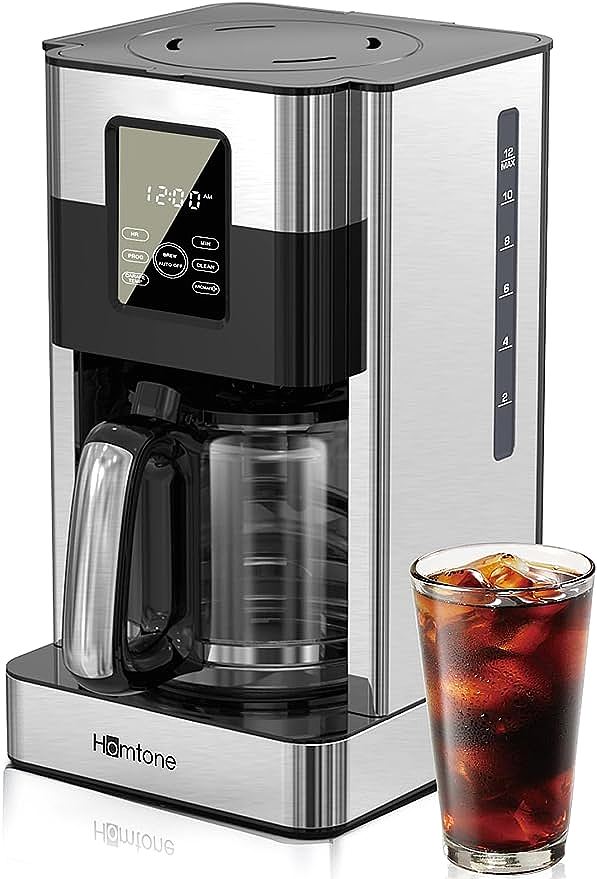
Overcoming Hydraulic Resistance: The Mechanics of Domestic Drip Percolation
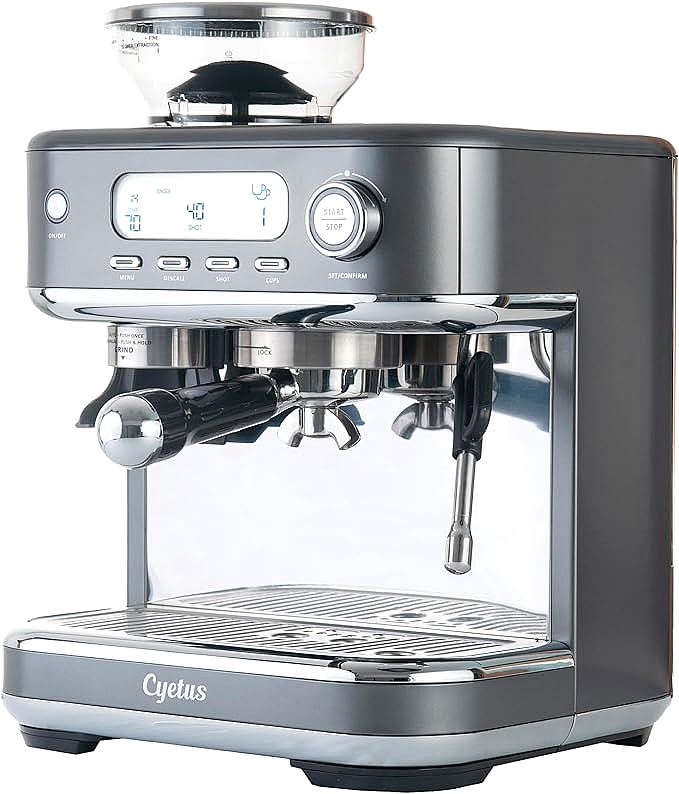
The Hydrodynamics of Home Espresso: Mastering the Science of Extraction Variables

The Science of Simplicity: Engineering the Perfect Home Espresso

The Chronology of Flavor: Volatility, Oxidation, and the Grind-to-Brew Imperative

The Chemistry of Disappointment: Why Office Coffee Tastes Bad (And How Physics Fixes It)

The Renaissance of Decaf: Science, Sensory, and the End of Compromise
The Thermodynamics of Taste: Why Precision Heating Defines the Modern Home Espresso