Emulsifying Lipids at 15 Bars: The Thermodynamics of Automated Extraction
Update on March 3, 2026, 6:36 p.m.
The creation of a concentrated botanical emulsion is fundamentally a matter of applied chemistry and fluid dynamics. Extracting specific organic compounds from a roasted seed while suspending them in an aqueous solution requires extreme precision across temperature, pressure, and particle geometry. When this process is handed over to a microprocessor, the mechanical architecture must flawlessly mimic the intuitive adjustments of a human operator to avoid catastrophic chemical imbalances.
By deconstructing the internal mechanisms of high-end automated platforms—such as the Miele CM 6360 MilkPerfection—we can isolate the physical laws that dictate the success or failure of pressurized extraction and automated thermal texturing.

Why Do Pre-Programmed Algorithms Struggle with Agricultural Variance?
A fundamental conflict exists between the rigid binary logic of a machine and the vast biological inconsistency of Coffea arabica. A roasted coffee bean is not a standardized industrial component; its density, moisture content, and solubility fluctuate wildly based on its origin, roast profile, and the ambient humidity of the room it sits in.
When a human operator brews espresso manually, they act as an active feedback loop. They observe the viscosity of the liquid, the speed of the flow, and the color of the crema, making micro-adjustments to the grind size and dose in real-time. A purely automated system, however, operates blind. If programmed to simply push a fixed volume of water through a fixed volume of grounds for a specific duration, the result will oscillate drastically as the agricultural variables change.
Overcoming this biological variance requires automated systems to utilize dynamic volumetric and temporal controls. Advanced platforms manage this by allowing the user to manipulate the operational boundaries of the algorithm. By adjusting the dry dose parameter (typically between 6 and 14 grams) and altering the pre-infusion duration, the operator shifts the hydraulic resistance of the puck. Pre-infusion is particularly critical; by introducing a small volume of low-pressure water to the dry matrix before applying full pump pressure, the cellular structures are allowed to swell. This controlled expansion minimizes internal fissures, standardizing the permeability of the bed so that the subsequent high-pressure extraction encounters uniform resistance, regardless of the bean’s initial density.
The Solvent’s Journey Through a Cellular Labyrinth
Once the parameters are set, the extraction phase relies entirely on fluid dynamics. Hot water acts as the solvent, but it cannot dissolve compounds locked inside intact plant cells. The roasted seeds must be fractured to exponentially increase their surface area.
Sequential Shearing and Unimodal Distribution
The mechanical reduction of the seed is the most critical point of failure in any brewing system. If a rotary blade is used, the beans are shattered chaotically, producing a matrix of massive boulders and microscopic dust. Under 15 bars of pump pressure, water will relentlessly seek the path of least resistance. It will channel violently through the gaps between the boulders, resulting in a sharply acidic, under-extracted fluid, while simultaneously clogging the filter screen with the microscopic dust, pulling out harsh, astringent tannins.
To prevent this, sophisticated systems utilize conical burr geometries. In a setup like the Miele AromaticSystem, a wear-resistant steel inner cone rotates against a stationary outer ring. The sharp, helical teeth do not crush the beans; they shear the brittle cellulose along its natural fault lines until the fragments are small enough to drop through a specific terminal gap. This produces a unimodal particle size distribution—a uniform matrix that forces the pressurized solvent to permeate the entire bed evenly.
Furthermore, the choice of steel for the burrs facilitates rapid thermal dissipation. The friction of fracturing dense cellulose generates intense localized heat. If this heat is not transferred away from the cutting surfaces, it can cause the highly volatile aromatic compounds (VOCs) within the coffee to sublimate prematurely. By utilizing high-thermal-conductivity metals, the mechanism preserves these fragile floral and fruity lipids until they are forcefully emulsified by the pressurized water.

Taming Denatured Proteins for Microfoam Stability
The integration of automated milk texturing shifts the physical focus from high-pressure extraction to vapor phase transitions and complex protein chemistry. The objective of injecting steam into a biological fluid is not merely to raise its temperature, but to fundamentally restructure its molecular architecture into a stable, polyphasic foam.
Bovine milk is an emulsion containing casein micelles, whey proteins, and lipid globules. In their natural, cold state, the proteins are tightly bundled in complex, three-dimensional structures. The texturing process requires the simultaneous introduction of kinetic agitation and thermal energy.
- Aeration: High-velocity steam is injected into the fluid, mechanically dragging atmospheric air down and creating large, irregular macroscopic bubbles.
- Denaturation: As the thermal energy rapidly elevates the liquid’s temperature toward 60°C (140°F), the whey proteins denature. They physically uncoil and stretch into long molecular strands.
- Stabilization: These uncoiled strands possess distinct hydrophobic (water-repelling) and hydrophilic (water-attracting) regions. The hydrophobic ends aggressively seek out the newly formed air bubbles to escape the surrounding water, while the hydrophilic ends remain anchored. This reaction weaves an interlocking mesh around every single microscopic air bubble, stabilizing the fluid into a velvety microfoam.
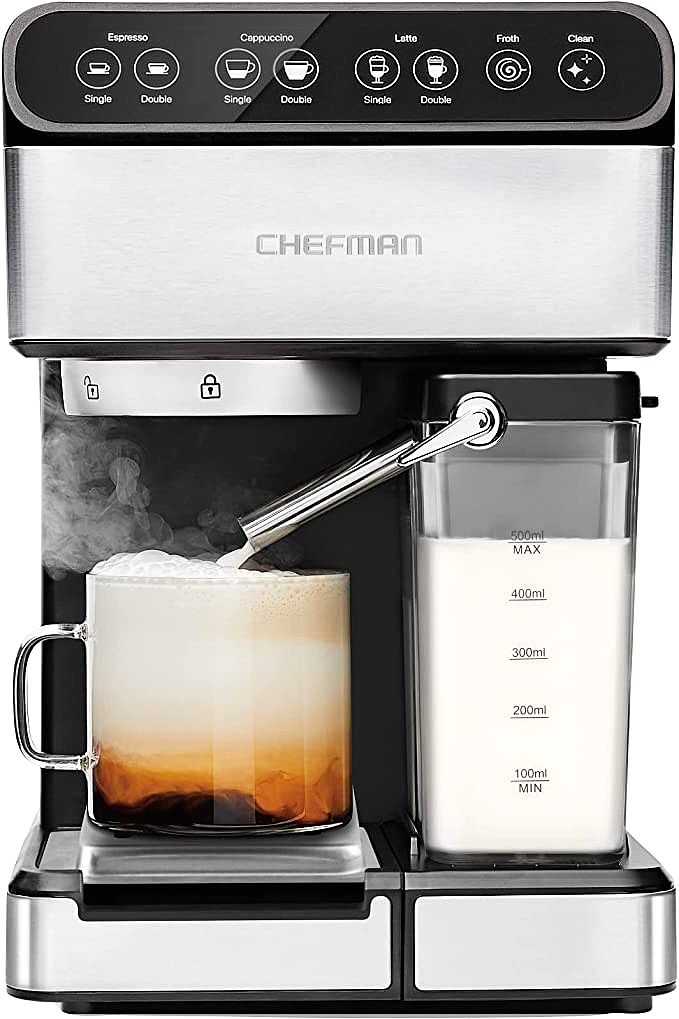
Systems engineered for automatic texturing, such as the MilkPerfection module, manage this by drawing milk via a siphon into a specialized venturi chamber, where steam and air are precisely metered and violently mixed before dispensing.

Cold Liquids Yield Superior High-Temperature Textures
A counter-intuitive absolute of foam chemistry dictates that to achieve the best hot foam, the base liquid must start as close to freezing as possible.
The chemical reaction that stabilizes microfoam operates within a strict thermal window. The denaturation of proteins begins as the fluid heats up, but if the temperature breaches approximately 70°C (160°F), a catastrophic structural failure occurs. The proteins denature completely and begin to irrevocably coagulate. The stabilizing mesh shatters, the trapped air immediately escapes, and the resulting liquid is left flat, thin, and dominated by an unpleasant, cooked sulfuric aroma.
By ensuring the starting liquid is stored below 10°C (50°F), the automated steaming mechanism is granted a wider temporal window. The machine requires a specific amount of time to inject sufficient steam volume to shear the macroscopic air bubbles into microscopic spheres. If the milk starts at room temperature, the thermal limit of 70°C will be reached before the mechanical shearing is complete, resulting in large, unstable, soapy bubbles that rapidly dissipate upon hitting the espresso.

When Calcium Carbonate Defeats Advanced Microprocessors
The most sophisticated fluid dynamics and precision PID temperature controllers are entirely defenseless against slow geological accumulation. The primary failure mode of any complex thermal fluid system is not electrical degradation, but mineral precipitation.
The solvent utilized in domestic brewing is rarely pure $H_2O$. Municipal tap water carries a variable payload of dissolved minerals, primarily calcium and magnesium bicarbonates. When this fluid is subjected to the intense, localized heat of a machine’s internal thermoblocks, a chemical precipitation reaction is forced. The soluble bicarbonates break down and precipitate out of the liquid as insoluble calcium carbonate ($CaCO_3$), manifesting as a hard, chalky crust known as limescale.
Limescale is a formidable thermal insulator. As it coats the interior walls of the heating elements, it drastically reduces the coefficient of heat transfer. The system will continue to draw wattage, but the thermal energy cannot efficiently penetrate the scale barrier. Consequently, the digital thermistors misread the fluid temperature, and the water exiting the brew group drops well below the critical 90°C threshold, silently ruining the extraction chemistry by leaving complex sugars undissolved. Furthermore, the scaling will eventually constrict internal tubing, artificially raising back-pressure until the vibratory pump stalls completely.
Preventing this catastrophic failure requires aggressive, scheduled chemical intervention. Modern interfaces enforce this reality through hard software locks. When a system calculates that a specific volume of water has been processed based on the user-programmed local water hardness, it will demand an acidic flush. The introduction of weak acids—such as citric acid or specialized commercial descaling tablets—is chemically required to dissolve the calcium carbonate matrix. Ignoring these protocols does not merely risk a poor-tasting beverage; it guarantees the eventual thermodynamic collapse of the entire engineered system.