Pre Ground Coffee Freshness: The Science Behind Keeping Your Coffee Alive

Lavazza Crema E Gusto Ground Coffee Blend
How Fast Does Ground Coffee Actually Go Stale?
Most people have experienced the disappointment. You open a bag of ground coffee that has been sitting in the cupboard for a couple of weeks, brew a cup, and something is missing. The aroma is flat. The flavor lacks dimension. It is not that the coffee is undrinkable. It is that it tastes like a memory of coffee rather than coffee itself. What happened in those two weeks is a cascade of chemical and physical processes that begin the moment coffee beans are ground into particles. Understanding these processes is the key to understanding pre ground coffee freshness, and more importantly, what you can reasonably expect from it.
The most common misconception about stale coffee is that it is simply a matter of "going bad" like milk or bread. Coffee does not spoil in the conventional sense. Ground coffee stored in a dry environment will not grow mold or become unsafe to drink for a very long time. What it loses is the volatile chemistry that makes it interesting. The difference between fresh ground coffee and coffee that has been open for three weeks is not a difference in safety. It is a difference in experience.

The Chemistry of Coffee Staling: Oxidation and Beyond
When coffee beans are ground, their internal cellular structure is fractured. Compounds that were sealed inside cell walls and lipid membranes are suddenly exposed to the surrounding atmosphere. The most immediate consequence is oxidation. This is the same chemical process that causes a sliced apple to turn brown or makes butter go rancid, and it operates on the same principles in ground coffee.
Coffee contains more than 800 volatile aromatic compounds. These molecules give coffee its distinctive smell and flavor notes. Many of these compounds contain carbon-carbon double bonds that are highly susceptible to attack by oxygen molecules in the air. Once oxidation begins, these aromatics degrade into simpler compounds that often smell unpleasant or, at best, neutral. The floral and fruity notes, which tend to come from the most chemically delicate compounds, fade first. The chocolate and nut tones, which derive from somewhat more stable molecules, persist longer but eventually diminish as well.
Oxidation is not the only degradation pathway. Lipid rancidification runs in parallel. Coffee beans contain oils that make up 10 to 15 percent of their weight, depending on variety and roast level. These oils carry a substantial portion of the flavor. When the unsaturated fatty acids in these oils are exposed to oxygen, they form aldehydes and ketones. These oxidized lipid products are the same compounds responsible for the stale taste in old nuts and cooking oils. In ground coffee, they produce a faintly cardboard-like or even paint-like aftertaste that becomes more pronounced the longer the coffee sits.
The Maillard reaction products formed during roasting are also vulnerable to slow degradation. These brown, savory compounds contribute the roasted, toasty character that defines coffee's backbone flavor. Over time and in the presence of even trace moisture, they can break down further. The rich caramelized notes gradually fade into a hollow, one-dimensional bitterness that many drinkers misinterpret as the coffee being "strong." It is not stronger. It is simply less complex.
Why Grinding Creates a Freshness Emergency
A whole roasted coffee bean is a remarkably stable object. Its outer surface area is modest relative to its volume, and the porous internal structure keeps much of the volatile chemistry protected from direct air contact. A whole bean stored in a sealed bag can hold meaningful aromatic complexity for three to four weeks, sometimes longer depending on the roast profile.
Grinding changes this equation radically. The act of grinding increases the total surface area of the coffee by a factor of roughly 1,000 or more, depending on how fine the grind is. Every single one of those newly exposed surfaces becomes a site where oxygen can attack, where volatiles can escape, and where moisture can condense out of the air.
The relationship between particle size and surface area is not linear. Halving the particle diameter approximately quadruples the total surface area. An espresso grind with particle sizes in the 200 to 400 micron range exposes far more surface than a French press grind at 800 to 1,000 microns. This is why the trajectory of pre ground coffee freshness depends so heavily on grind size. The finer the grind, the faster the staling.
There is an inherent tension here that every pre-ground coffee user must navigate. Finer grinds extract more efficiently during brewing, producing richer and more complete cups. But those same fine grinds lose freshness much faster in the bag or canister. A medium grind for drip coffee represents a compromise: adequate extraction with a somewhat longer freshness window. An espresso grind, once the package is opened, is on a noticeably shorter clock.
The practical window for pre ground coffee freshness after opening is measured in days, not weeks. Within the first 15 to 30 minutes after a sealed package is opened, the steepest drop in volatile aroma concentration occurs. Within 24 hours, measurable degradation has taken place. Within a week, depending on storage conditions and grind size, the coffee may have lost 40 to 60 percent of its original aromatic complexity. These figures come from food science research using gas chromatography to track specific volatile compounds over time. They are not marketing claims. They are measured facts.
Oxygen: The Primary Driver of Staling
The atmosphere at sea level is approximately 21 percent oxygen by volume. Every time a coffee container is opened, this oxygen floods the headspace and begins reacting with the exposed coffee surfaces. Each opening delivers a fresh dose of oxidizing agent. The damage accumulates.
A well-cited finding in food chemistry literature reports that ground coffee exposed to ambient air loses roughly 40 percent of its key aroma compounds within 48 hours. After seven days, the loss often exceeds 60 percent. A side-by-side tasting of fresh versus week-old pre-ground coffee would reveal differences that most drinkers can detect without any special training. The aroma is thinner. The body feels hollow. The finish lacks the lingering complexity of the fresh cup.
The rate of oxidation is temperature-dependent, following basic Arrhenius kinetics. At a comfortable room temperature of 20 degrees Celsius, oxidation proceeds at a moderate pace. In a warm kitchen near a stove or oven, where ambient temperatures can reach 28 to 30 degrees, the rate approaches double. This is not a subtle effect. It is the difference between coffee that still tastes decent on day seven and coffee that is already flat by day three.
Even the shape of the storage container matters. A wide, shallow canister leaves more coffee surface exposed to the headspace air than a tall, narrow one. The surface-to-volume ratio of the stored coffee bed is a small but measurable factor in maintaining pre ground coffee freshness over the life of the package. This is why the vacuum-sealed brick format used by brands such as Lavazza, which compresses the coffee into a dense block with minimal internal air pockets, is genuinely functional rather than purely aesthetic.

Moisture: The Stealthy Freshness Destroyer
Water performs two opposing roles in the life of coffee. During brewing, it is the essential solvent that extracts desirable compounds from the grounds and delivers them to the cup. During storage, even trace amounts of water trigger a cascade of quality-destroying reactions. Managing moisture is arguably as important as managing oxygen for pre ground coffee freshness.
Ground coffee is strongly hygroscopic. It absorbs water vapor from the surrounding air with impressive speed. At 60 percent relative humidity, which is common in many kitchens, ground coffee can absorb enough moisture within hours to cause noticeable flavor changes. The absorbed water acts as both a solvent and a reaction medium inside the coffee particles. It accelerates the breakdown of aromatic molecules, promotes the migration of soluble compounds, and in extreme cases can support the growth of mold.
There is a more subtle mechanism at work as well. The absorbed water can dissolve sugars and organic acids that were evenly distributed within the coffee particles during roasting, then redeposit them on particle surfaces as the moisture evaporates. This creates microscopic zones of concentrated soluble material that extract unevenly during brewing. The result is a cup that might taste simultaneously sour and bitter in different sips, not because the coffee was poorly roasted but because storage conditions rearranged its internal chemistry.
The ideal relative humidity for ground coffee storage is below 50 percent. This makes the refrigerator a poor choice despite its low temperature. Refrigerators operate at high humidity, and the frequent opening and closing of the door creates temperature cycles that cause condensation inside the coffee container. The cold temperature slows chemical reactions, yes, but the moisture damage more than offsets that benefit. A cool, dry pantry at a stable temperature is far more effective for preserving pre ground coffee freshness than the vegetable crisper.
Carbon Dioxide, Degassing, and the Protective Gas Shield
Freshly roasted coffee contains a surprising amount of trapped carbon dioxide. This gas is produced during roasting as a byproduct of the Maillard reaction and sugar caramelization. Some of it escapes immediately as the beans cool, but a significant portion remains trapped within the bean's cellular matrix, slowly diffusing outward over a period of weeks.
For whole beans, degassing is a gradual process that can continue for two to three weeks after the roast date. For ground coffee, the process is dramatically accelerated because grinding physically ruptures the internal cell structure and releases the trapped gas almost instantly. This is the reason freshly ground coffee produces such a vigorous bloom when hot water first hits it. The remaining CO2 is rapidly displaced by the water, creating that foamy, bubbling crust that baristas watch for as a sign of freshness.
The degassing behavior of ground coffee has an important and often overlooked relationship to pre ground coffee freshness. The CO2 that escapes from freshly ground coffee acts as a protective gas blanket. Because carbon dioxide is denser than air, it can settle in the headspace of a container and displace oxygen, creating a localized low-oxygen environment around the coffee particles. This natural protection is temporary but genuine.
This is also the principle behind nitrogen-flushed packaging and the one-way valve found on many quality coffee bags. The valve allows internal CO2 pressure to vent outward while preventing outside air from entering. Without this valve, a bag of freshly roasted ground coffee would inflate like a balloon as degassing proceeded, potentially bursting the package. With the valve, the bag maintains a protective internal atmosphere of mostly CO2 and residual nitrogen until the consumer opens it. At that moment, ambient air rushes in, and the clock starts.
How Packaging Technology Extends Packaging Technology
Coffee packaging has evolved from simple paper bags to multi-layer engineered materials over the past century. Each innovation addresses a specific threat to pre ground coffee freshness. Understanding what each packaging feature does helps explain why some coffees stay fresh longer than others, even before the package is opened.
Vacuum packaging is the most visibly dramatic approach. By removing nearly all the air from the package before sealing, vacuum packing eliminates the oxygen that drives oxidation. The compressed brick format forces coffee particles into tight contact with each other, minimizing the volume of trapped air between particles. When the consumer tears open a vacuum-sealed brick and hears the hiss of air rushing in, that sound marks the precise moment when the protective environment is breached and oxygen begins its work.
Nitrogen flushing is a related but mechanically different technique. Instead of sucking air out of the package, the packaging machinery floods the bag with nitrogen gas before sealing. Nitrogen is chemically inert. It does not react with coffee compounds at any meaningful rate. This approach has the advantage of not compressing the coffee, preserving the physical structure of the grounds. Many soft, pillow-shaped coffee bags combine nitrogen flushing with a one-way degassing valve for optimal protection.
The one-way valve, as noted earlier, solves a specific engineering problem. Freshly roasted and ground coffee produces gas. If you seal it in a completely airtight package, the gas pressure will inflate and potentially rupture the package. If you leave the package unsealed, oxygen enters freely. The valve allows gas to exit but not enter, maintaining an oxygen-free interior until the consumer is ready to brew.
Even the best packaging cannot stop degradation entirely. Oxygen and water vapor diffuse through packaging materials themselves, albeit at very slow rates. A vacuum-sealed brick stored in a cool, dark pantry will maintain reasonable pre ground coffee freshness for many months. The same brick stored in a warm cabinet above the refrigerator will degrade noticeably faster, despite the package being intact. The barrier properties of packaging materials are temperature-dependent. Warmer conditions increase the rate of gas transmission through the film. This is one more reason why storage location matters.

Temperature, Light, and the Environment Around the Bag
Chemical reactions proceed faster at higher temperatures. This is not a rule of thumb. It is the foundation of chemical kinetics, described quantitatively by the Arrhenius equation. For the degradation reactions that cause coffee staling, the rate approximately doubles with every 10-degree Celsius increase in temperature.
What does this mean in practical terms? Ground coffee stored at 30 degrees Celsius, which is easily reached in a kitchen cabinet above the refrigerator or near a window in summer, will stale about twice as fast as the same coffee stored at a stable 20 degrees Celsius. The effect is measurable, not hypothetical. A bag that might retain decent flavor for two weeks at 20 degrees could be flat and lifeless after one week at 30 degrees.
Light exposure is an independent and additive degradation factor. Ultraviolet light in particular can break chemical bonds directly through photodegradation. The aromatic compounds in coffee contain molecular structures called chromophores that absorb UV radiation. When they do, the absorbed energy can break carbon-oxygen and carbon-carbon bonds, destroying the very molecules responsible for the coffee's characteristic smell. This is why one of the first things you notice about stale coffee that has been sitting in a clear glass jar on the counter is the absence of aroma. The UV-sensitive compounds are simply gone.
Coffee packaging accounts for this with opaque materials. Foil laminates, metallized films, and dark-tinted plastics all serve to block light transmission. A clear glass jar may look attractive on the counter, but it is functionally one of the worst possible storage vessels for ground coffee. The combination of light exposure and the temperature cycling near a kitchen window can degrade the freshness of pre-ground coffee to a noticeable degree within a single day.
The most consistently effective storage environment is the one that costs nothing: a cool, dark, interior cupboard or pantry shelf. The temperature is relatively stable. Light exposure is zero by definition. The humidity tends to be lower than in the main kitchen area. This environment may not be Instagram-worthy, but it is where the chemistry of preservation works best.
Grind Size, Surface Area, and the Physics of Freshness Loss
The physics of staling is a story about geometry. A sphere has the lowest possible surface area for a given volume. As you subdivide that sphere into smaller particles, the total volume remains constant while the total surface area increases. This is not a coffee-specific principle. It applies to any solid material that is broken into smaller pieces.
For pre ground coffee freshness, this geometry lesson translates into a concrete prediction. An espresso grind, with average particle diameters around 300 microns, has roughly three to four times the total surface area of a French press grind at 900 microns, for the same weight of coffee. Since oxidation and volatile compound loss both occur at surfaces, the espresso grind will lose aromatic complexity three to four times faster under identical storage conditions.
This creates a dilemma that every pre-ground coffee buyer faces, whether they realize it or not. Finer grinds extract more thoroughly during brewing, producing denser and more flavorful cups. But they also stale faster once the package is opened. Coarser grinds maintain pre ground coffee freshness for a longer window after opening, but they may underextract if brewed with too short a contact time.
The following comparison of approximate freshness half-lives illustrates the scale of the difference. Under typical room-temperature storage in a sealed container, an espresso grind might lose half of its detectable aromatic complexity within three to five days. A medium drip grind might stretch that window to seven to ten days. A coarse French press grind could hold on for ten to fourteen days before reaching the same degree of degradation. These numbers are approximate and vary with bean variety, roast depth, and specific storage conditions, but the rank ordering is universal. Finer grinds go stale faster.
The practical implication is worth stating directly. If you are buying pre-ground coffee, the grind size should match your brewing method as closely as possible, and the package size should match your consumption rate. Buying a kilogram of espresso-grind coffee when you make two cups a day means the last third of the bag will taste meaningfully different from the first third. No storage technique can prevent this. The physics is against you.
Common Storage Mistakes That Shorten Coffee Freshness
Coffee storage advice on the internet is abundant and frequently contradictory. Some of the most commonly repeated recommendations are actively harmful. Others are genuinely useful but rarely explained in enough detail to be implemented correctly.
Freezing ground coffee sits at the top of the list of misunderstood practices. The principle behind freezing is sound. Low temperatures slow all chemical reactions, including the oxidation and degradation reactions that cause staling. If you could freeze coffee in truly oxygen-free, moisture-free conditions and then use it without ever exposing it to ambient air, you would achieve near-indefinite preservation. The problem is that home freezers do not provide these conditions.
The fatal step is opening the frozen container. When frozen coffee is exposed to room-temperature air, moisture condenses on the cold coffee particles just as it condenses on a cold beverage glass on a summer day. This moisture becomes liquid water on the coffee surface, instantly dissolving soluble compounds and accelerating every degradation pathway. If the coffee is then returned to the freezer, the water freezes and expands, causing additional physical damage to the coffee particle structure. If the coffee is left at room temperature, the liquid water continues to act as a reaction medium.
If freezing is non-negotiable for your situation, the correct method is to portion the coffee into single-use amounts in truly airtight packaging, freeze those portions, and then allow each portion to come completely to room temperature before opening the package. This prevents condensation. It is cumbersome, but it works. Most people will find it easier to simply buy smaller quantities more frequently.
Refrigerator storage is worse than freezing for a different set of reasons. The refrigerator is a high-humidity environment with constant temperature cycling from the door opening and closing. Ground coffee in a refrigerator absorbs both moisture and odors. The process is called flavor scalping. Coffee stored next to last night's leftovers will incorporate volatile sulfur compounds from the onions and garlic into its own aroma profile. The result is coffee that tastes like a ghost of whatever else was in the refrigerator. This is not a subtle effect detectable only by coffee professionals. Many casual drinkers have experienced it without knowing the mechanism.
The original packaging is often the best storage vessel. Vacuum-sealed bricks and nitrogen-flushed bags with one-way valves were designed specifically to keep ground coffee fresh for as long as possible. Once opened, transferring the remaining coffee to a secondary container with a good seal can help. Ceramic canisters with rubber gaskets, stainless steel containers with clamp lids, and dark glass jars with airtight stoppers are all reasonable choices. The container should be sized to minimize headspace. A mostly empty one-liter jar holding 100 grams of coffee has 900 milliliters of oxygen-rich air sitting on top of it. A smaller container is always better.
The single most effective practice for preserving pre ground coffee freshness requires no special equipment at all. Buy only the amount you expect to use within seven to ten days of opening. Smaller packages purchased more frequently mean you are always brewing coffee that has spent less time exposed to air. This approach addresses the root cause of staling rather than trying to slow it down with storage tricks. It is not always the most economical option on a per-gram basis, but it is the most reliable way to ensure that the last cup from a bag tastes like the first.
For those who use products like the medium-roast Italian blends that come in vacuum-sealed bricks — Lavazza's Crema e Gusto being a widely available example — the format itself provides good baseline protection. A standard 250-gram brick, once opened, will maintain reasonable quality for approximately ten to fourteen days if kept sealed between uses and stored in a cool, dark cabinet. After that window closes, the difference between the first morning and the last becomes a matter of personal tolerance. Some drinkers do not notice or mind the change. For others, it is reason enough to finish the bag quickly or switch to a smaller format.
Lavazza Crema E Gusto Ground Coffee Blend
Related Essays

Best Burr Coffee Grinder Under $50: 18 Settings & 16oz Hopper
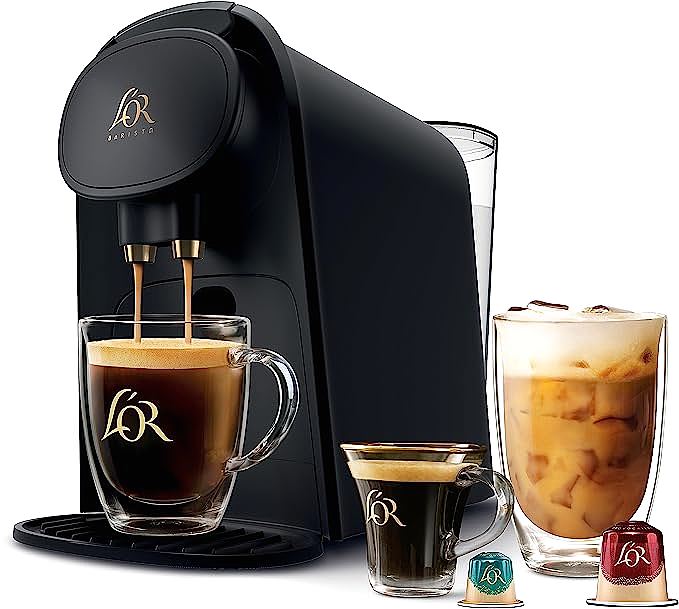
L'OR Barista Review: Technical Analysis of Single-Serve Espresso
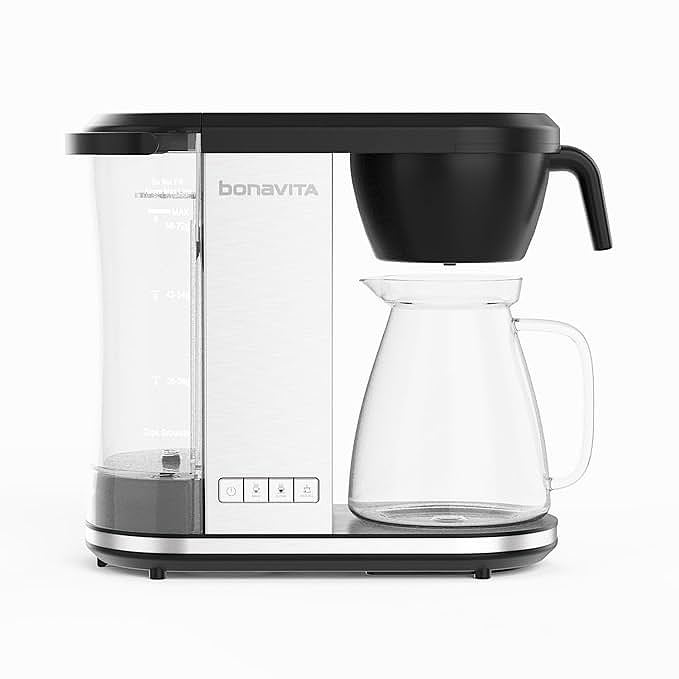
Bonavita BVC2201GS Enthusiast: Brewing Science for a Perfect Cup
Mcilpoog Milk Jar for ws-203 & ES317 | Convenient Coffee Milk Storage
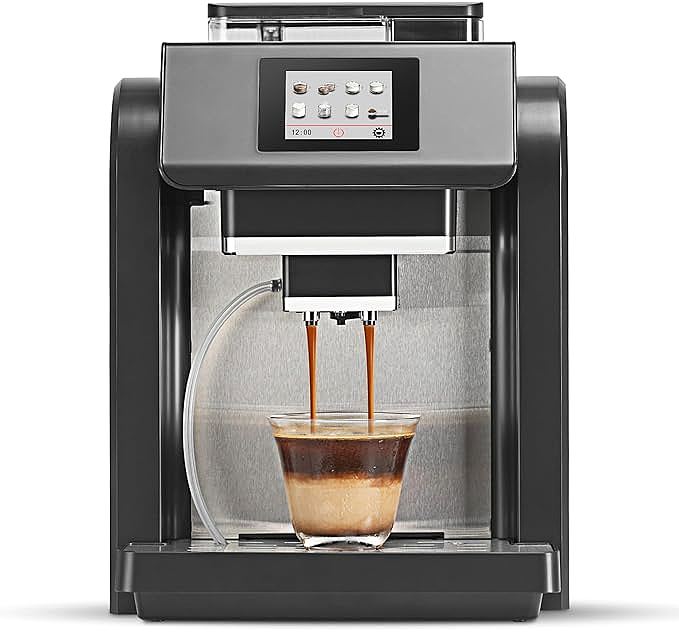
Mcilpoog ES317 : The Science of Great Espresso at Home, Automatically

Automated Morning: Integrating the Atomi AT1536 into Your Smart Home
ArmOq Programmable Coffee Maker: Touchscreen Brewing Guide

Ceci n'est pas une Cafetiere: When a Moka Pot Becomes an Art Object

Burr Coffee Grinder vs Blade Grinder: Particle Consistency Matters
