The Pragmatism of Mature Technology: Why "Old" Tech Still Works
Update on Jan. 6, 2026, 9:12 a.m.
In the consumer electronics narrative, “new” is often synonymous with “better.” Marketing cycles push the latest version numbers—Bluetooth 5.4, CVC 8.0—as essential upgrades. However, a pragmatic analysis reveals a different truth: for many applications, mature technologies offer a sweet spot of reliability, performance, and cost-efficiency.
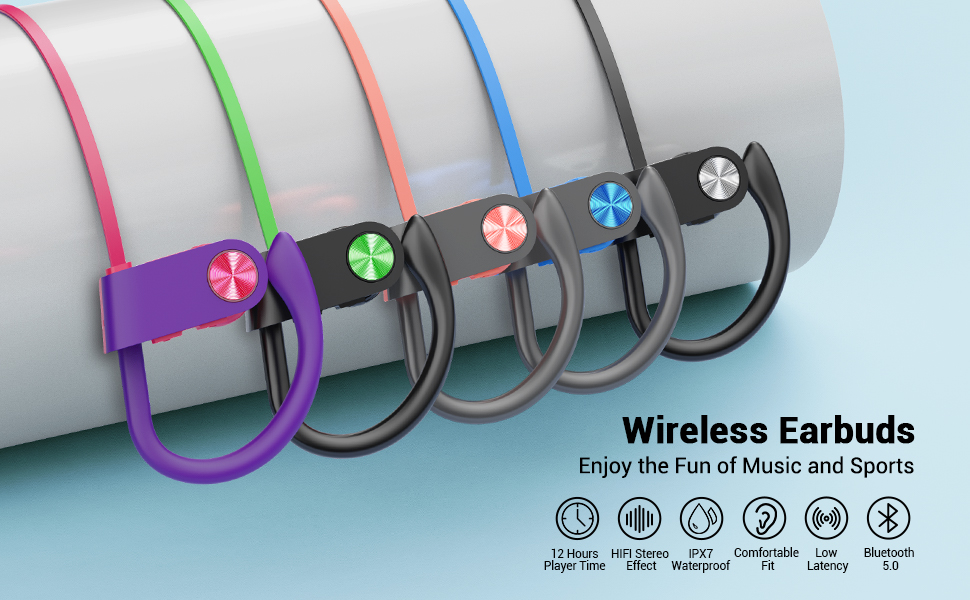
Devices like the POIUZET U8I utilize established standards like Bluetooth 5.0 and CVC 6.0. While not cutting-edge, these technologies represent the plateau of productivity, where bugs have been ironed out, and manufacturing processes have been perfected to deliver robust performance at a fraction of the cost of bleeding-edge alternatives.
Bluetooth 5.0: The Stability Baseline
While newer iterations of Bluetooth focus on broadcast capabilities (Auracast) and ultra-low energy for IoT, Bluetooth 5.0 remains a formidable standard for audio transmission. It introduced a significant leap in data throughput (2Mbps) and range compared to its 4.2 predecessor.
For a sports headphone, the primary requirement is a stable connection between the phone (usually in a pocket or armband) and the headset. Bluetooth 5.0 provides sufficient bandwidth for high-quality audio codecs and robust error correction mechanisms to handle the interference typical of a gym environment. The “Fast Connection” capability ensures that the device pairs instantly upon powering up—a feature that was once premium but is now a standard expectation thanks to the maturity of the underlying silicon (often CSR chips).
CVC 6.0: The Algorithm of Voice Clarity
Noise cancellation is a broad term. It is vital to distinguish CVC (Clear Voice Capture) from ANC (Active Noise Cancellation). * ANC is for the listener (blocking engine noise on a plane). * CVC is for the caller (blocking wind noise for the person on the other end).
CVC 6.0, developed by Qualcomm, is a suite of algorithms designed to separate the speaker’s voice from background noise. It uses the microphone’s input to identify the frequency profile of the voice and suppress non-voice frequencies (like wind or traffic hum) by up to 30dB. While newer versions exist, CVC 6.0 is highly effective for the specific use case of taking a quick call during a run. It ensures communication clarity without the battery drain and hardware cost associated with more complex multi-mic arrays.
The Energy Density of 12 Hours
Battery life is a function of energy management. Achieving 12 hours of playtime in a device weighing only 20 grams requires a careful balance. This is made possible by the maturity of Lithium Polymer (Li-Po) battery technology combined with the power efficiency of the Bluetooth 5.0 protocol.
Li-Po batteries can be molded into various shapes, allowing engineers to utilize the internal volume of the headphone casing efficiently. Furthermore, as chipsets become more refined, their standby and transmission power consumption drops. This allows a relatively small battery to power a device through a week’s worth of workouts. The “quick charge” capability (1-2 hours) is another benefit of mature power management ICs, ensuring that downtime is minimized.
Conclusion: The Value of Sufficiency
There is a concept in engineering called “sufficiency”—the point at which a solution perfectly addresses the problem without unnecessary complexity or cost. The POIUZET U8I illustrates this principle. By leveraging mature, reliable technologies like Bluetooth 5.0 and CVC 6.0, it delivers a user experience that meets the core needs of the athlete—stability, clarity, and endurance—without the premium price tag of experimental features.