Thermal Choreography in the Glass Vessel: Orchestrating Botanical Extraction
Update on March 3, 2026, 7:26 p.m.
The preparation of a botanical infusion is an exercise in applied chemistry and thermodynamics that is frequently masked by cultural ritual. Extracting the optimal ratio of soluble compounds from the dried leaves of Camellia sinensis using a heated solvent (water) requires a precise manipulation of thermal energy, fluid dynamics, and time. When an operator leaves this process to the chaotic variables of a stovetop kettle and a static ceramic pot, the resulting suspension is almost universally compromised.
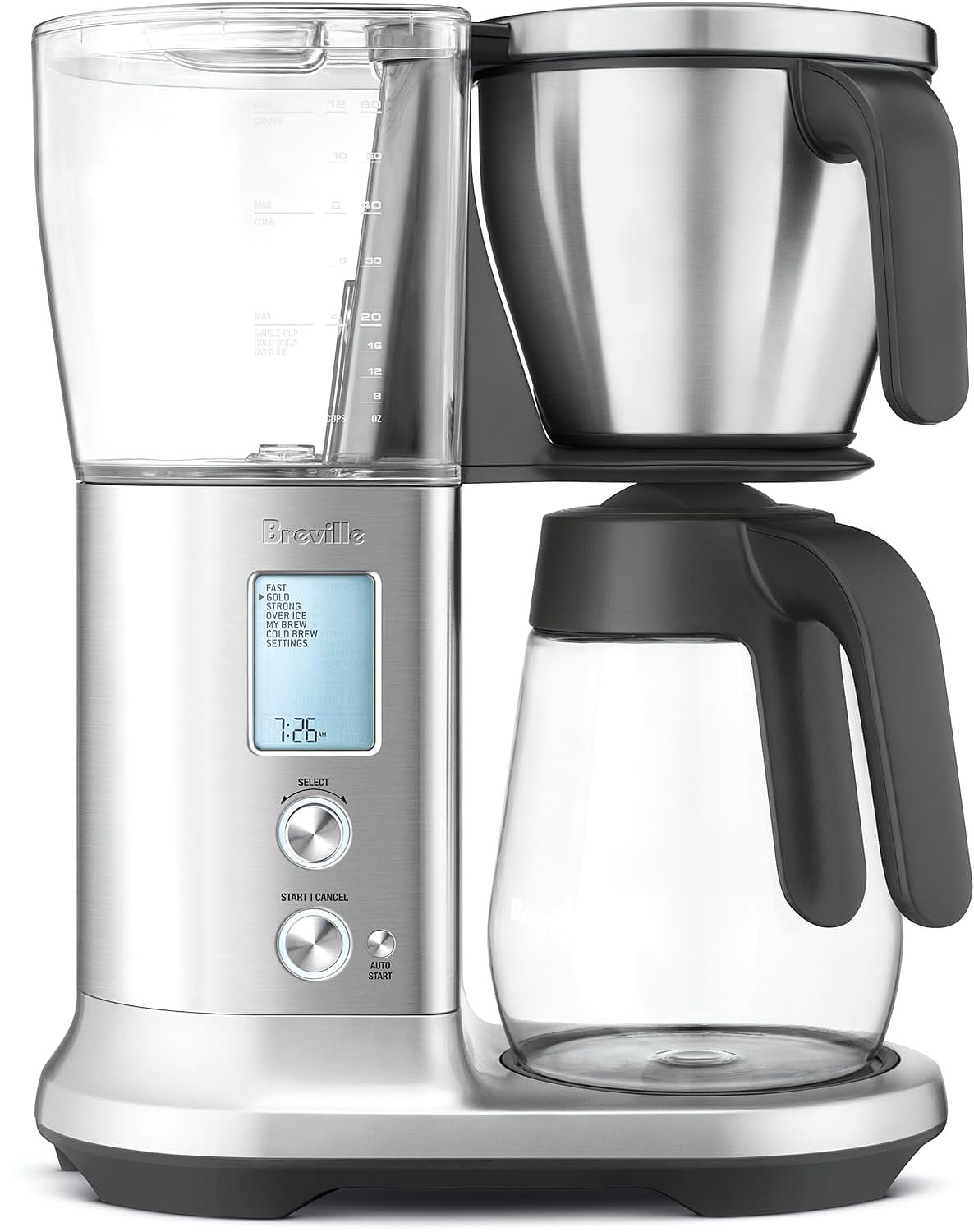
To transition from arbitrary steeping to controlled chemical extraction, one must utilize equipment that allows for the rigorous regulation of physical parameters. By deconstructing the architecture and operation of an automated extraction apparatus—using the Breville BTM800XL Tea Maker as an engineering reference—we can isolate the fundamental scientific laws that govern the dissolution of organic matter.

From Campfire Cast Iron to Electromagnetic Bases
To appreciate the necessity of precision thermal regulation, one must trace the historical lineage of water heating. For centuries, the application of heat to a solvent was an entirely analog and unpredictable endeavor. Early extraction methods relied on suspending cast iron or clay vessels over open combustion sources. The operator had to rely on visual and auditory cues—the size of the bubbles and the pitch of the boiling water—to guess the thermal state of the liquid.
The introduction of the electric kettle in the late 19th and early 20th centuries shifted the heat source from external combustion to internal electrical resistance. However, early electric models were still fundamentally blind. They utilized simple bi-metallic strips that would mechanically warp and break the electrical circuit only when the water reached a rolling, violent boil. There was no mechanism for halting the temperature ascent at 175°F or 195°F.
Modern extraction demands the elimination of this binary “on/off” thermal application. Advanced apparatuses abandon mechanical thermostats in favor of Negative Temperature Coefficient (NTC) thermistors. These highly sensitive solid-state components are immersed directly in the fluid column (as seen in the base of the Breville glass jug). An NTC thermistor decreases its electrical resistance predictably as temperature increases. By constantly measuring this resistance, an internal microcontroller can calculate the exact temperature of the solvent in real-time.
This digital telemetry allows the machine to deploy a Proportional-Integral-Derivative (PID) controller algorithm. Instead of blasting the heating element with maximum voltage until a boil is reached, the PID controller pulses the electrical current. As the water approaches the target temperature, the power is throttled down, allowing the thermal mass to glide gently to a perfectly stable plateau without overshooting. This shift from brute-force boiling to algorithmic thermal targeting is the foundational requirement for preventing the chemical destruction of delicate botanical matter.
Why Boiling Water Ruins Your Most Expensive Leaves
A pervasive, catastrophic failure mode in domestic beverage preparation is the indiscriminate application of boiling water (212°F / 100°C at sea level) to all types of organic material. This practice reveals a fundamental misunderstanding of the solubility rates of different chemical compounds.
The leaf of the tea plant is a complex cellular matrix containing hundreds of distinct organic compounds, each possessing a unique molecular weight and thermal activation threshold. The primary components of interest are:
- Amino Acids (L-theanine): These compounds are responsible for the savory, sweet, and highly desirable “umami” flavor profile, as well as the neurological effect of calm focus. Amino acids are highly soluble at relatively low temperatures, easily dissolving into the solvent between 160°F and 175°F (70°C to 80°C).
- Polyphenols (Catechins and Tannins): These are the plant’s defense mechanisms. They provide structural body, color, and astringency (a dry, puckering mouthfeel). Polyphenols are dense, heavy molecules. They require massive kinetic energy to break their molecular bonds and enter the solution rapidly.
- Volatile Organic Compounds (VOCs): These are the extremely lightweight, fragile lipids that provide the floral, fruity, and complex aromatic signatures of high-quality botanicals.
If an operator subjects a delicate, minimally oxidized leaf (such as a Japanese Sencha or a Silver Needle white tea) to boiling water, the extraction kinetics are violently skewed. The excessive thermal energy instantly rips the heavy, bitter tannins from the cellulose matrix. Because the tannins are extracted so rapidly and in such high volume, they completely mask the subtle, fragile amino acids.
Furthermore, the extreme heat imparts so much kinetic energy to the VOCs that they undergo rapid sublimation. The aromatic lipids transition into a gaseous state and vanish into the atmosphere before the liquid is even consumed. The resulting brew is a chemically hollow, violently astringent, and flat-tasting suspension.
Therefore, the mechanical ability to select a specific thermal ceiling—such as locking the heater at 175°F for Green Tea or 195°F for Oolong—is not merely a convenience. It is a strict chemical necessity. By limiting the kinetic energy of the solvent, the operator selectively dissolves the target amino acids while leaving the bitter tannins trapped within the cellular walls, effectively filtering the flavor profile through thermodynamics.

The Submersible Cage in a Fluid Dynamic Dance
The second major physical hurdle in botanical extraction is the management of the boundary layer. When dry particulate matter is submerged in a solvent, the immediate extraction of soluble compounds creates a highly concentrated microscopic layer of fluid surrounding the solid particles.
According to Fick’s First Law of Diffusion, the rate at which compounds move from areas of high concentration (inside the leaf) to areas of low concentration (the bulk water) is proportional to the concentration gradient. If the tea leaves remain completely static in the water, the fluid immediately surrounding the leaves quickly becomes saturated. The concentration gradient drops to near zero, and the extraction process effectively stalls, resulting in a weak, under-developed yield.
Traditional manual intervention requires the operator to physically stir the liquid, forcing the saturated fluid away from the leaves and replacing it with fresh, unsaturated solvent. In automated environments, this fluid dynamic problem must be solved mechanically.
The Breville apparatus addresses this through a motorized, variable-geometry brewing chamber. The stainless steel tea basket is mounted to a magnetic track on a central jug post. Once the NTC thermistor verifies that the solvent has reached the precise target temperature, an internal actuator automatically lowers the basket into the fluid.
For large-volume extractions, the system can execute a specific “Basket Cycle.” Instead of allowing the basket to rest statically at the bottom of the jug, the motor continuously drives the basket up and down through the water column. This vertical oscillation induces forced convection within the fluid. The physical movement of the mesh basket pushes the water through the porous bed of tea leaves, violently disrupting the saturated boundary layer. This continuous flushing guarantees that the concentration gradient remains high, accelerating the diffusion of compounds and ensuring a perfectly homogenous, highly efficient extraction without requiring the operator to extend the total contact time.
Leaving the Matrix to Brew Before Dawn
The integration of programmable logic controllers (PLCs) allows extraction equipment to transcend immediate spatial limitations, enabling asynchronous preparation. However, delaying the extraction process by several hours introduces a new set of physical variables that the machine must navigate.
When an operator utilizes an “Auto Start” feature—loading the dry particulate and the solvent into the apparatus the night before—the system remains dormant until the specified chronometric trigger. During this dormancy, the solvent (water) sits at ambient room temperature.
A critical factor in fluid extraction is dissolved oxygen. Freshly drawn tap water contains a high percentage of dissolved oxygen, which is essential for carrying the volatile aromatic compounds of the tea to the olfactory receptors. If water sits stagnant for 12 hours, a portion of this dissolved oxygen will naturally dissipate.
When the PLC triggers the heating cycle at the programmed hour, the thermoblock must rapidly elevate the temperature of the solvent without inducing a prolonged, rolling boil. Extended boiling forcefully strips the remaining dissolved oxygen from the water, rendering the solvent “flat.” The algorithmic pulsing of the heating element ensures that the water reaches the activation threshold exactly when the basket lowers, minimizing the duration the water is subjected to high thermal stress and preserving the physical characteristics of the solvent necessary for optimal flavor delivery.

Thermal Transparency Against Conductive Loss
The material science defining the containment vessel dictates the thermodynamic efficiency of the entire system. In the context of a specialized botanical extractor, engineers face a rigid compromise between visual monitoring and thermal insulation.
The Breville BTM800XL utilizes a massive, single-wall carafe constructed from borosilicate glass. The selection of borosilicate is a mandatory safety intervention. Standard soda-lime glass possesses a high coefficient of thermal expansion. If subjected to the rapid, localized heating of a 1500-watt element, the interior surface of standard glass would expand violently while the exterior remained cool, generating immense internal shear stress and resulting in catastrophic, explosive shattering (thermal shock).
By doping the silica melt with boron trioxide during the manufacturing process, the resulting borosilicate glass matrix achieves a remarkably low coefficient of thermal expansion. It can absorb extreme thermal deltas without warping or fracturing. Furthermore, glass is completely chemically inert; it will not leach metallic ions or polymeric compounds into the acidic botanical suspension.
However, the laws of physics dictate that single-wall glass is a highly inefficient thermal insulator. Heat energy will relentlessly conduct through the glass wall and radiate out into the cooler ambient air.
To counteract this rapid thermal decay, the apparatus must employ an active “Keep Warm” protocol. Because the optimal drinking temperature of a botanical infusion is significantly lower than its extraction temperature, the system cannot simply maintain the brewing heat. If a green tea is extracted at 175°F, maintaining the liquid at 175°F for an hour would subject the leaves to prolonged thermal load, resulting in over-extraction and bitterness even if the basket is raised out of the main fluid column (due to ambient steam heat).
The logic board manages this by allowing the fluid to naturally cool to a safer holding temperature (typically between 158°F and 176°F, depending on the initial brew profile). The NTC thermistor monitors this decay. Once the floor of the holding temperature is reached, the heating element pulses gently—providing just enough kinetic energy to offset the conductive loss through the glass wall. This active thermal management preserves the structural integrity of the dissolved compounds, preventing the liquid from degrading into a cold, highly oxidized state.
How Do Geological Deposits Paralyze the Heating Element?
The most sophisticated thermodynamic controls and automated actuators are entirely defenseless against slow geological accumulation. The primary failure mode of any fluid-heating appliance is not electrical degradation, but mineral precipitation.
The solvent utilized in domestic brewing is rarely pure $H_2O$. Municipal tap water carries a variable payload of dissolved minerals, primarily calcium and magnesium bicarbonates. When this “hard water” is subjected to the intense, localized heat of the base heating element, a chemical precipitation reaction is forced. The soluble bicarbonates break down and precipitate out of the liquid as insoluble calcium carbonate ($CaCO_3$), manifesting as a hard, chalky crust known as limescale.
$$Ca^{2+} + 2HCO_3^- \xrightarrow{\Delta} CaCO_3\downarrow + CO_2\uparrow + H_2O$$
In a system that repeatedly boils water, this accumulation happens rapidly. Limescale is a formidable thermal insulator (possessing a thermal conductivity rating of approximately $2.2 \text{ W}/mK$, compared to the highly conductive metal heating plate beneath it). As the scale coats the interior base of the glass jug, it creates a physical barrier between the heat source and the water.
More critically, this scale accumulation blinds the NTC thermistor. The sensor is designed to read the temperature of the water. If it becomes encased in an insulating layer of calcium carbonate, it will register a temperature significantly lower than the actual state of the heating element below it. The microcontroller will force the heating element to draw more power and run longer to push heat through the scale barrier. This results in massive energy inefficiency and forces the electrical components to operate at highly elevated, damaging temperatures.
To prevent this catastrophic thermodynamic failure, the operator must execute scheduled chemical interventions. The introduction of weak acids—such as acetic acid (vinegar) or citric acid, as recommended in the maintenance protocols—is chemically required. The acid donates protons to the carbonate ions, converting the solid, insoluble scale back into highly soluble aqueous ions and carbon dioxide gas, stripping the insulating barrier from the baseplate and restoring the precision of the thermal telemetry.

Reclaiming the Final Variables for Exotic Cultivars
While pre-programmed algorithms provide a reliable baseline for mass-market consumption, the true potential of an advanced extraction apparatus is realized when the operator seizes manual control of the physical parameters.
The botanical world is infinitely variable. An aged, fermented Pu-erh cake requires a completely different extraction profile than a fragile, first-flush Darjeeling. Even within the same category, the physical geometry of the leaf dictates the necessary fluid dynamics. A finely broken “fannings” grade black tea has an enormous surface-area-to-volume ratio; it will extract its compounds violently and rapidly, requiring a very short contact time to avoid overwhelming bitterness. Conversely, a tightly rolled “gunpowder” green tea or a whole-leaf twisted Oolong requires significant time just to hydrate and unroll before the core extraction even begins.
Apparatuses that offer custom variable time and temperature controls—allowing adjustments in 5-degree and 30-second increments—shift the machine from a restrictive appliance to a highly calibratable laboratory tool. The operator must assess the physical structure of the dry particulate, determine the target extraction yield (the percentage of the solid mass dissolved into the liquid, ideally between 18% and 22%), and program the machine’s thermal and kinetic output accordingly.
By understanding the precise mathematical relationships between thermal activation thresholds, fluid boundary layers, and the conductive loss of borosilicate glass, the user transcends basic operational instructions. They become an active manager of a highly sensitive chemical reaction, utilizing automated mechanical architecture to enforce strict physical laws, ensuring that the final liquid suspension perfectly reflects the absolute potential of the botanical matrix.