Translating Analog Chemistry into Digital Commands: The Architecture of Smart Extraction
Update on March 3, 2026, 7:13 p.m.
The conversion of a dense, roasted agricultural seed into a highly aromatic, balanced liquid suspension is fundamentally a matter of applied physics and organic chemistry. For generations, this transformation relied entirely on the physical intuition of a human operator to manage the chaotic variables of pressure, temperature, and grind geometry. The transition toward full automation attempts to replace this human feedback loop with rigid algorithmic logic. However, organic material inherently resists standardization.
To bridge the gap between biological inconsistency and digital precision, modern extraction architecture has been forced to evolve. By deconstructing advanced domestic platforms—utilizing the Terra Kaffe TK-02 as an engineering reference point—we can isolate the physical laws that dictate extraction quality and examine how software telemetry and hybrid mechanical designs are attempting to solve the oldest problems in fluid percolation.

From Mechanical Levers to Microprocessor Automation
The historical trajectory of concentrated fluid extraction is defined by the quest for greater atmospheric pressure. Early 20th-century systems utilized ambient steam expansion, which could only generate roughly 1.5 bars of force, resulting in scorched, over-extracted liquids. The mechanical leap to manual spring-pistons allowed operators to generate 9 bars of hydraulic pressure independent of the water’s boiling point, introducing the world to polyphasic colloidal emulsions—crema.
However, the manual lever system required the operator to act as the central processing unit. The barista observed the flow rate, the viscosity of the liquid, and the color degradation of the crema, physically altering the pressure applied to the lever in real-time to compensate for the specific density of the coffee puck.
When extraction was automated via electrical rotary or vibratory pumps, the machine gained consistency but lost intuition. Early super-automatic machines were entirely blind; they engaged a pump for a predetermined number of seconds, regardless of whether the coffee was a dense, lightly roasted Ethiopian or a brittle, oily Sumatran. This blind application of force frequently resulted in catastrophic channeling or severe under-extraction.
The modern engineering response is not merely to build a stronger pump, but to implement sensor arrays that mimic human observation. Advanced systems utilize high-resolution flowmeters to track the exact volume of liquid displaced, rather than relying on a simple temporal timer. By feeding this data back into a microprocessor, the machine can dynamically adjust the pump’s frequency, altering the fluid flow to ensure that the chemical yield matches the intended parameters, regardless of minor fluctuations in the physical resistance of the coffee bed.
High-Pressure Emulsions vs. Gravity-Fed Percolation
One of the most complex mechanical hurdles in contemporary appliance design is consolidating contradictory fluid dynamics into a single, compact chassis. The physical requirements for extracting an espresso are diametrically opposed to the requirements for brewing a standard cup of drip coffee.
Espresso is a high-energy, restricted-flow process. It demands a finely ground particulate matrix that creates immense hydraulic resistance. A pump must forcefully drive a small volume of solvent (water) through this matrix at approximately 9 bars of pressure in under 30 seconds. This violent kinetic action physically shears the insoluble lipids (fats) locked inside the coffee, emulsifying them with trapped carbon dioxide to create a heavy, viscous fluid.
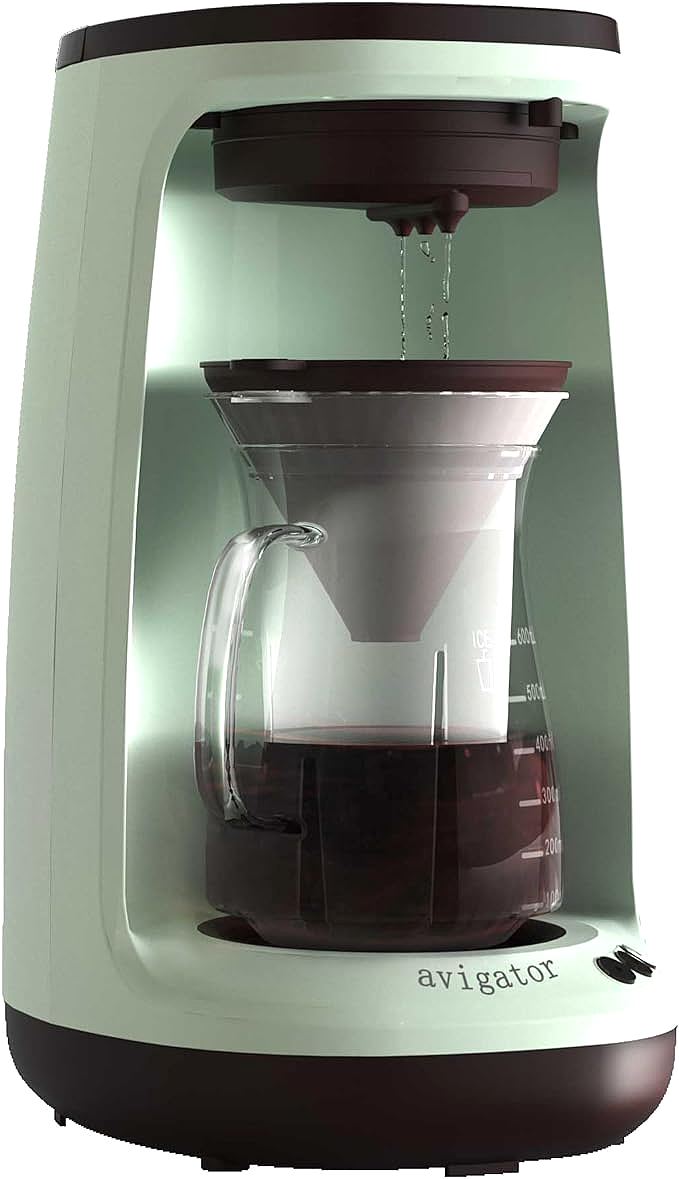
Conversely, drip coffee relies on the principles of unassisted gravity and laminar flow. It requires a significantly coarser particulate matrix to increase the permeability of the bed. Hot water is gently showered over the surface, and gravity pulls it downward over a period of several minutes. This slow, low-pressure process relies on prolonged contact time, rather than brute force, to dissolve the complex carbohydrates and organic acids, yielding a larger volume of translucent, high-clarity liquid.
Historically, a single brewing chamber could not accommodate both environments. If a machine designed for high pressure attempted to brew drip coffee, the fine grind required to build pressure would result in a tiny, over-extracted, muddy output. If coarse grounds were used, the high-pressure water would instantly blast through the matrix, yielding hot, brown water.
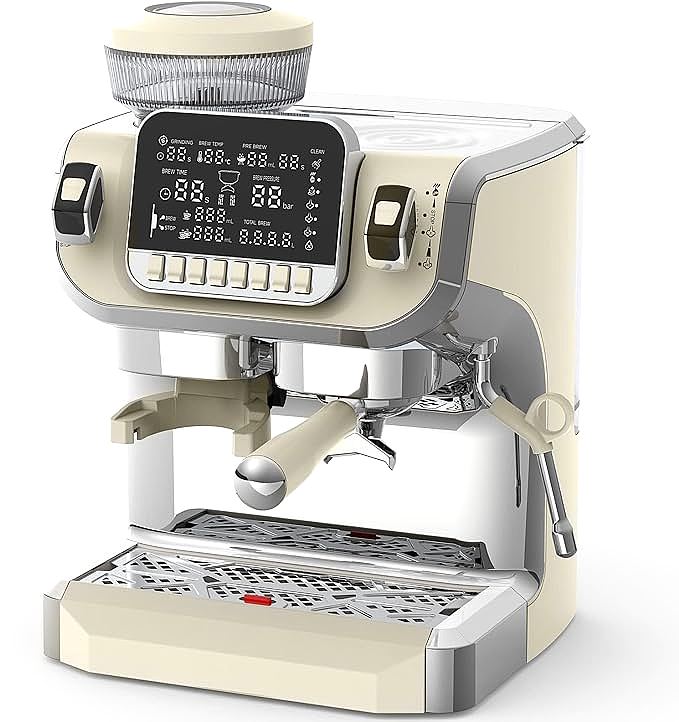
To solve this, advanced units like the Terra Kaffe TK-02 utilize an “advanced hybrid brew unit.” This requires complex internal valving and a variable-geometry brewing chamber. When an espresso is commanded, the chamber heavily compacts a fine dose of coffee and routes the water through a high-pressure manifold. When a drip coffee is commanded, the grinder adjusts to a coarser setting, the brew chamber applies minimal or zero compaction to preserve the interstitial voids in the coffee bed, and a bypass valve routes the water through a low-pressure dispersion screen, allowing gravity to govern the fluid dynamics.

Why Does Plant-Based Milk Resist Thermal Texturing?
The integration of automated milk texturing shifts the physical focus from hydraulic extraction to vapor phase transitions and complex protein chemistry. The objective of injecting steam into a biological fluid is not merely to raise its temperature, but to fundamentally restructure its molecular architecture into a stable, micro-cellular foam capable of binding with the coffee emulsion.
In traditional bovine milk, the mechanics of foam generation rely heavily on whey proteins. In their cold state, these proteins are tightly bundled. As high-velocity steam introduces both kinetic agitation and rapid thermal energy, the whey proteins denature—they physically uncoil into long molecular strands. The hydrophobic (water-repelling) ends of these strands seek out the newly injected microscopic air bubbles, while the hydrophilic (water-attracting) ends anchor in the surrounding fluid. This creates a highly stable, interlocking structural mesh.
However, the rise of alternative, plant-based milks introduces severe chemical instability into this automated process. An oat, almond, or soy suspension does not possess the same casein and whey protein structures as dairy.
- Protein Density: Many plant milks have significantly lower overall protein concentrations. Without sufficient proteins to denature and coat the air bubbles, the resulting foam is highly fragile and collapses rapidly.
- Thermal Thresholds: The proteins that do exist in plant milks often possess much lower thermal degradation thresholds. While bovine milk can withstand temperatures up to 150°F (65°C) before the proteins irrevocably coagulate and the foam shatters, plant milks often curdle or separate at much lower temperatures, leaving a watery, curdled fluid.
- Lipid Interference: Some alternative milks contain high levels of added vegetable oils to simulate mouthfeel. Excessive lipids can act as anti-foaming agents, disrupting the delicate protein-air interfaces.
For an automated system to successfully texture “all milk types,” the machine cannot rely on a single, static steam profile. The internal thermoblock and steam actuator must be capable of variable output. By modulating the steam velocity and carefully managing the terminal temperature cutoff, the system can provide the gentle aeration required to structure plant-based proteins without breaching their lower thermal limits, preventing catastrophic coagulation.
When the Roaster Dictates the Flow Rate at 6 AM
The ultimate limitation of any automated extraction system is that it operates in an information vacuum. A machine may possess perfect thermal stability and flawless fluid dynamics, but if it does not know the specific agricultural parameters of the bean in its hopper, it is merely guessing.
A light-roast Ethiopian Yirgacheffe is incredibly dense and highly acidic; it requires a finer grind, a higher solvent temperature, and a slightly longer extraction time to access its complex, floral sugars. A dark-roast Sumatran is highly porous, brittle, and oil-rich; applying the same high-temperature, fine-grind profile will instantly over-extract the heavy tannins, resulting in an unpalatable, ashy fluid.
This disconnect is the primary reason skilled baristas historically outperformed automated systems. To bridge this gap, modern engineering has merged extraction hardware with Internet of Things (IoT) telemetry.
The implementation of “Roaster-Approved Espresso Settings” via QR code scanning represents a fundamental shift in how appliances receive operational commands. When a user scans a code associated with a specific bag of coffee, they are not merely logging inventory. They are downloading a highly specific, digitally compiled extraction algorithm written by the roasting engineer.
This telemetry packet is transmitted via the cloud to the coffee machine’s internal logic board, fundamentally altering the physical actions of the hardware: * Dose Mass: The grinder’s run-time is adjusted by fractions of a second to output a specific gram weight of dry coffee. * Thermal Output: The PID (Proportional-Integral-Derivative) controller governing the thermoblock is instructed to shift the target water temperature by precise increments to match the solubility of the roast profile. * Volumetric Yield: The flowmeter targets are overwritten to cut the pump at the exact milliliter required to balance the extraction ratio.
By allowing the original roasting engineer to seize control of the machine’s variables remotely, the system eliminates user error and bridges the gap between agricultural variance and mechanical execution.

Oxidation, Retention, and the Death of Volatile Aromatics
Despite the integration of advanced software, the physical integrity of the raw material remains paramount. The most sophisticated thermal arrays cannot extract flavor from a matrix that has already chemically degraded. This introduces the critical failure mode of atmospheric exposure and the necessity of “bean-to-cup” processing.
The roasted coffee bean is an organic vault, preserving hundreds of highly reactive Volatile Organic Compounds (VOCs) within its intact cellular structure. The act of grinding shatters this structure, exposing the internal surfaces to the atmosphere. This initiates a catastrophic geometric explosion in the surface-area-to-volume ratio.
The primary antagonist in this exposed environment is diatomic oxygen ($O_2$). When the natural lipids (fats) present in the coffee are exposed to oxygen, they immediately undergo a violent free-radical chain reaction known as lipid oxidation. The fat molecules fracture into short-chain aldehydes and ketones. Within minutes of grinding, the human palate begins to perceive these oxidized compounds as rancid, stale, and cardboard-like. Simultaneously, the VOCs—which provide the floral and fruity aromas—sublimate and evaporate into the air.
Systems that rely on pre-ground, pod-based matrices attempt to mitigate this by sealing the stale grounds in nitrogen-flushed plastic or aluminum vaults. However, the true elimination of oxidative degradation requires fracturing the bean micro-seconds before the solvent is introduced.
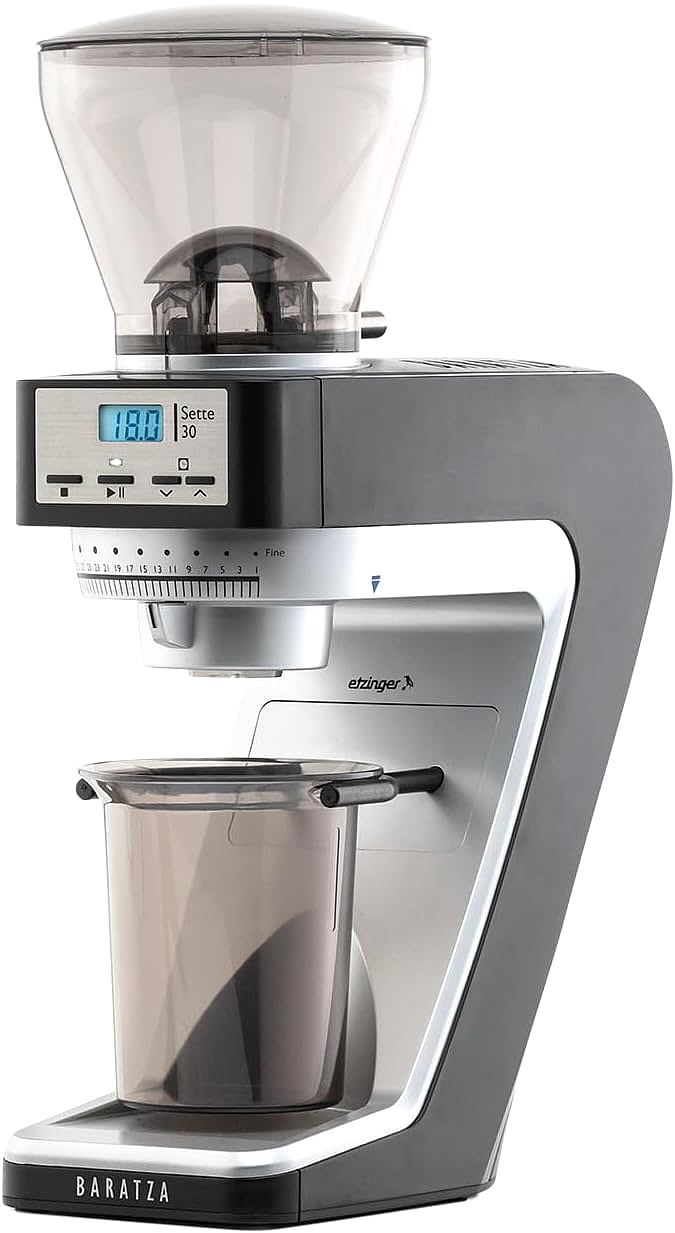
This necessitates an integrated, on-demand reduction mechanism. However, integrating a grinder directly above a brewing chamber introduces the threat of “exchange retention.” If the grinder’s internal chute retains two grams of pulverized dust after a cycle, those two grams will sit, oxidizing rapidly. When the next cycle is initiated hours later, those stale, rancid two grams are the first to be pushed into the brew chamber, severely tainting the fresh extraction. Overcoming this requires the internal grinder geometry to be engineered for near-zero retention, utilizing steep angles, anti-static materials, and direct vertical drop paths to ensure that the physical distance between the burrs and the brew group is as sterile and devoid of lingering particulate as possible.
Bridging Agricultural Variance with Algorithmic Adaptation
The future of domestic fluid extraction lies not in the creation of stronger pumps or hotter boilers, but in the seamless integration of data tracking and adaptive mechanics. When an appliance is equipped with Wi-Fi connectivity and cloud synchronization, it ceases to be a static tool and becomes an evolving node within a larger analytical network.
By recording every parameter of every drink generated—water volume, grind duration, milk texturing time—the machine constructs a highly detailed user profile. This data can be utilized to pre-emptively heat the thermoblocks based on historical usage patterns (Automatic Wake protocols), minimizing energy consumption while ensuring instant readiness.
Furthermore, as software updates are pushed remotely to the device, the internal logic governing the flowmeters, pump frequencies, and PID controllers can be refined long after the hardware has been manufactured. This allows the mechanical extraction process to adapt to new discoveries in fluid dynamics and coffee chemistry without requiring a physical hardware upgrade.

Mastering the creation of a stable, complex botanical liquid requires an acknowledgment of the physical laws governing the process. The transition from analog, manual control to digital, automated execution is only successful when the software algorithms accurately reflect the thermodynamics of thermal blocks, the kinetic shearing of milk proteins, and the hydraulic resistance of fractured cellulose. By utilizing advanced telemetry to interpret the biological realities of the coffee bean, modern automated architectures are finally capable of bridging the gap between digital command and chemical extraction.