The Fluid Dynamics of Morning Rituals: Understanding Low-Pressure Extraction
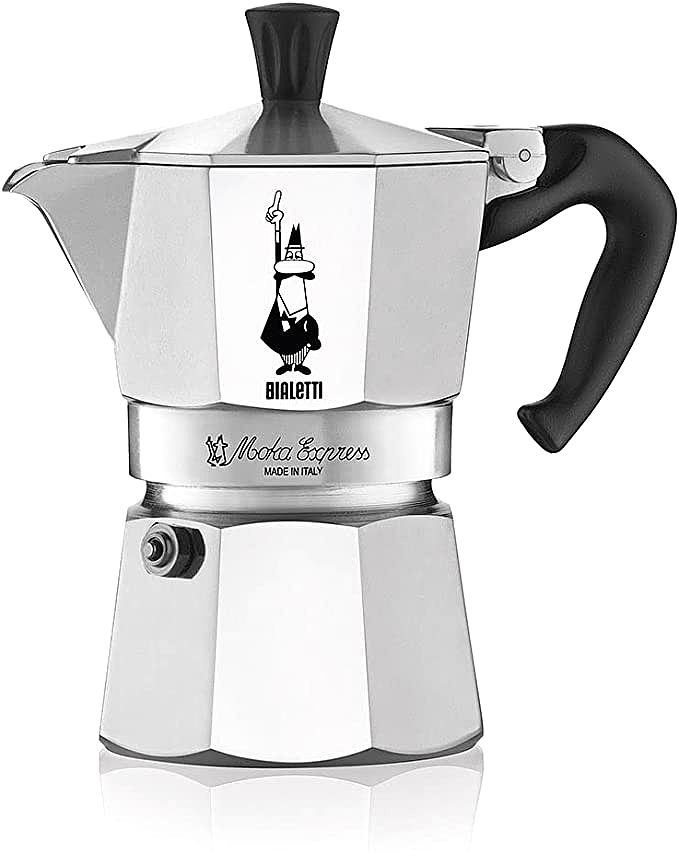
Bialetti Moka Express 3-Cup
Coffee brewing is often simplified into two categories: gravity-fed methods (like drip or pour-over) and high-pressure methods (like espresso). However, there exists a fascinating middle ground that relies on the fundamental laws of thermodynamics and phase changes: the stovetop brewer, or Moka pot. Operating at a modest 1.5 to 2 bars of pressure, this device produces a cup that is chemically and structurally distinct from both its gentler and more aggressive counterparts. It is an exercise in steam mechanics, a domestic pressure vessel that transforms water and heat into a rich, viscous liquid.
To truly master this method, one must look beyond the instructions of "fill and heat" and understand the invisible forces at play inside the aluminum chamber. The Bialetti Moka Express serves as the definitive archetype for this process, its design remaining virtually unchanged for nearly a century because it perfectly harnesses these physical principles.
The Thermodynamic Engine: Vapor Pressure and Phase Change
The heart of the Moka pot is a rudimentary heat engine. Unlike modern espresso machines that use mechanical pumps to force water through coffee, the Moka pot uses thermal energy to create displacement.
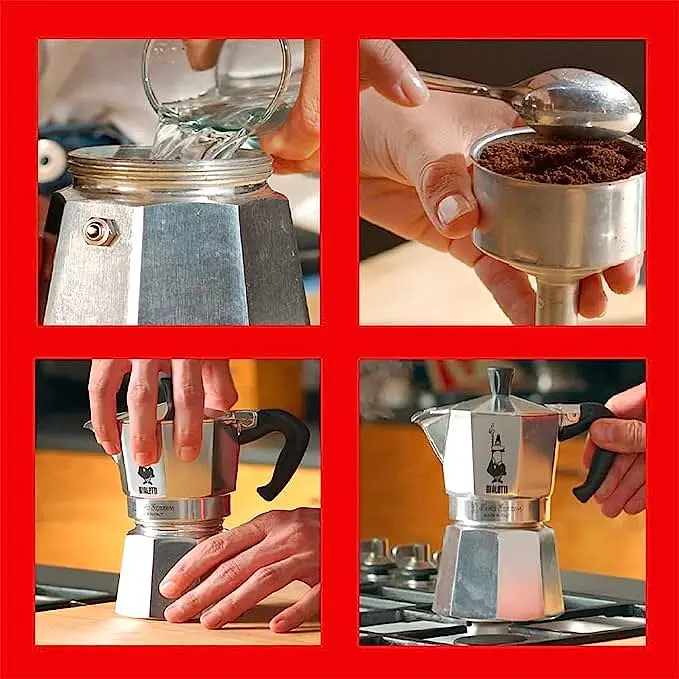
The process begins in the bottom chamber (the boiler). As heat is applied, the water temperature rises. Crucially, the system is sealed (except for the safety valve). According to Gay-Lussac's Law, as the temperature of a gas (air and water vapor) in a fixed volume increases, its pressure increases.
However, the real work is done by the phase change of water. As water approaches its boiling point, it begins to vaporize. This steam occupies significantly more volume than liquid water—approximately 1,600 times more at atmospheric pressure. In the confined space of the Bialetti Moka Express boiler, this expanding steam creates a pocket of high pressure above the water line. It is this expanding gas that acts as a piston, pushing down on the surface of the liquid water.
Since water is incompressible, this downward force seeks an escape route. The only exit is the funnel submerged in the water, leading up through the coffee bed. Thus, the water is not "boiled" up the tube; it is pushed up by the steam accumulating above it. This distinction is vital: ideally, the water touching the coffee should be hot (around 90°C-95°C), but not boiling (100°C), to avoid scorching the grounds.

The Coffee Bed as a Resistor: Darcy's Law in Action
As the pressurized water travels up the funnel, it encounters the coffee puck held in the filter basket. In fluid dynamics, this is a classic flow-through-porous-media problem, governed by Darcy's Law. The coffee grounds act as a resistor to the flow.
The "grind size" variable becomes critical here. * Too Coarse: The water passes through with little resistance. The pressure in the lower chamber doesn't need to build very high to overcome gravity and the coffee bed. The result is a fast flow, low pressure, and underextracted, watery coffee. * Too Fine: The resistance is too high. The pressure in the boiler must build significantly (potentially triggering the safety valve) to force water through. If it does break through, it often channels, or the water stays in contact with the coffee too long, extracting bitter tannins.
The Moka pot requires a specific "Moka grind"—finer than drip but coarser than espresso. This creates the optimal hydraulic resistance to maintain that 1.5 - 2 bar pressure zone. This pressure is sufficient to emulsify some of the insoluble oils in the coffee (creating a light foam or "crema") and to extract a higher concentration of dissolved solids than gravity methods, but it lacks the 9-bar force required to create the stable, thick crema of a commercial espresso machine.
The Extraction Phases: From Viscous to Watery
The extraction process in a Moka pot is not linear; it changes dynamically as the water level in the boiler drops.
- The Lag Phase: Heat is applied. Pressure builds. No liquid moves yet. The air in the funnel is pushed out through the coffee (often warming the grounds).
- The Extraction Phase: The pressure overcomes the resistance. Rich, dark liquid begins to ooze from the central column in the upper chamber. This first portion is the "ristretto" of the Moka pot—highly concentrated, rich in sugars and acids.
- The Transition Phase: As the water level in the boiler drops, the funnel tip gets closer to the surface. The flow accelerates.
- The Strombolian Phase: This is the critical end stage. Once the water level drops below the tip of the funnel, the pressurized steam itself rushes up the tube, mixing with the remaining droplets of water. This creates the characteristic sputtering or "gurgling" sound.
Crucial Thermal Management:
In a Bialetti Moka Express, the aluminum body is extremely conductive. While this helps heat the water quickly, it also poses a risk at the Strombolian phase. If the steam (which is much hotter than the water, often >100°C) passes through the coffee, it extracts bitter, dry, and astringent compounds.
To achieve the perfect brew, the thermal input must be cut before this sputtering phase begins aggressively. The goal is to stop extraction when the liquid is still dark gold, not pale yellow. Many experts recommend cooling the base of the pot under cold water immediately to halt the generation of steam and stop extraction instantly.
Material Science: Aluminum and the "Seasoning" Myth
The choice of aluminum for the Moka pot is not merely economic; it is functional. Aluminum has high thermal conductivity (approx 237 W/m•K), which allows the system to reach operating pressure quickly and respond rapidly to changes in heat source intensity.
A common topic in Moka lore is "seasoning"—the idea that you should never wash the pot with soap because the buildup of coffee oils protects the flavor. From a chemical perspective, aluminum is reactive. It creates a thin layer of aluminum oxide naturally, which protects it from corrosion. However, coffee is acidic. Over time, a thin layer of coffee oils can indeed coat the microscopic pores of the aluminum, potentially preventing any metallic taste transfer.
However, rancid oils taste bad. The balance is not "dirty vs. clean," but "passive coating vs. active residue." Rinsing with hot water removes loose solids and rancid oils while leaving the seasoned patina intact. The Bialetti manual explicitly advises against detergents, not just for tradition, but because harsh surfactants can strip the aluminum's protective oxide layer or leave a soapy residue that binds to the porous metal.
The Unique Flavor Profile: A Spectrum of its Own
The coffee produced by this method occupies a unique space on the TDS (Total Dissolved Solids) spectrum. * Drip Coffee: TDS ~1.2% - 1.5%. Clean, tea-like. * Espresso: TDS ~8% - 12%. Syrupy, intense. * Moka Pot: TDS ~2% - 4%.
This 2-4% range creates a beverage with a heavy body and intense flavor, but one that is distinct from espresso. The lower pressure means fewer emulsified oils (less crema), but the higher temperature (compared to some drip methods) and higher coffee-to-water ratio result in a "strong" cup that cuts effectively through milk. This is why the Moka pot is often the base for home "lattes" and "cappuccinos," even if technically they are strong coffees with milk rather than espresso-based drinks.
Conclusion: Respecting the Physics
Using a Moka pot is a dialogue with physics. You are managing a pressure vessel, controlling thermal input to manipulate fluid flow, and aiming to halt a chemical reaction (extraction) at the precise moment of peak flavor.
It is a manual process that refuses to be fully automated. Unlike a button-press machine, the Bialetti Moka Express requires the user to listen to the gurgle, watch the flow, and understand the relationship between heat and pressure. It is this engagement—this requirement to participate in the thermodynamics of the brew—that makes the resulting cup so satisfying. It is not just coffee; it is a successful experiment in small-scale fluid dynamics.
Bialetti Moka Express 3-Cup
Related Essays

The Steam Engine on Your Stove: Thermodynamics of the Moka Pot
The Thermodynamics of Tradition: Why Aluminum Defines the Moka Pot

The Physics of the Stovetop: Why Pressure Matters in Analog Brewing

Electric Pressure Cookers: Physics, Safety, and Materials

Overcoming Thermal Dilution: The Mechanics of Stratified Water Heating
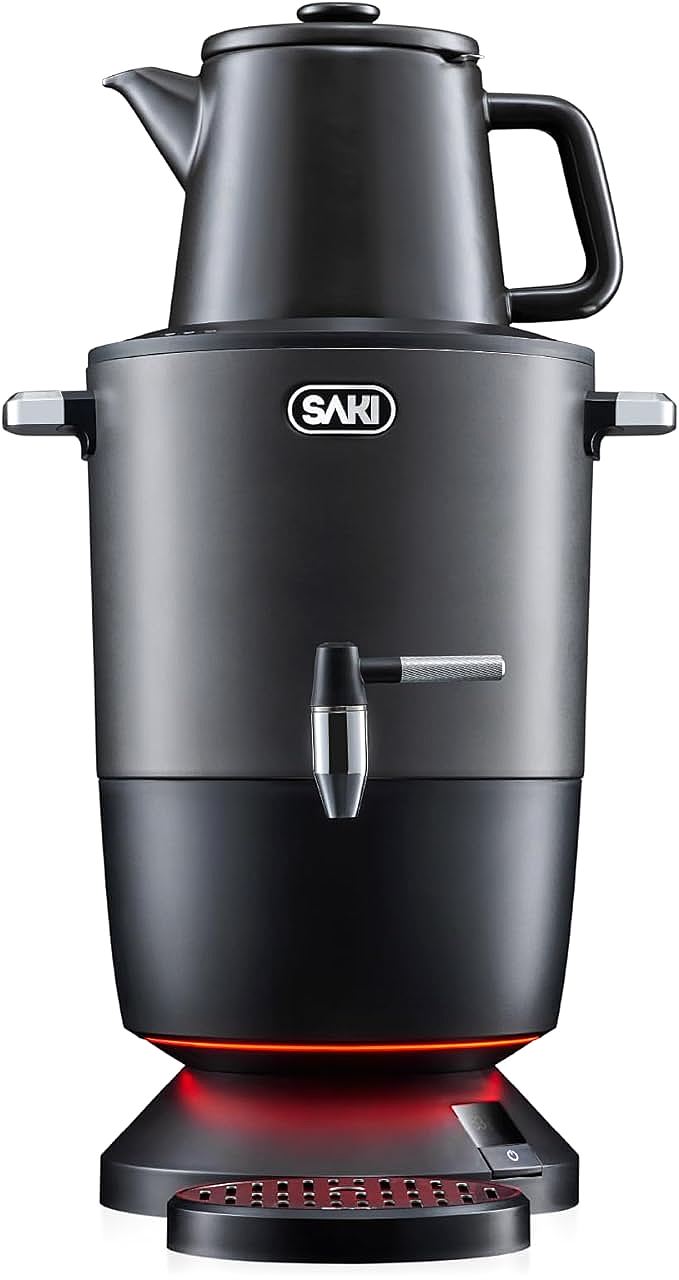
Thermal Fortresses and Alkaloid Extraction: Engineering the Continuous Boiler

Brewing Under Pressure: The Thermodynamics of Stovetop Coffee

Thermal Uniformity: The Hidden Variable in Sublimation Success

Thermal Engineering in Open Air: The Physics of Propane Radiant Heating