Bridging Automation and Artisanal Control in Domestic Extraction
Update on March 3, 2026, 7:09 p.m.
The creation of a concentrated botanical emulsion requires the precise manipulation of thermodynamics, fluid dynamics, and organic chemistry. Historically, achieving this extraction required a skilled human operator to manage every variable: particulate geometry, dose mass, tamping pressure, and solvent temperature. The advent of the “super-automatic” machine attempted to solve this by transferring all physical labor to an internal microprocessor. However, total automation often results in a rigid, compromised output, particularly regarding the complex protein chemistry required for milk texturing.
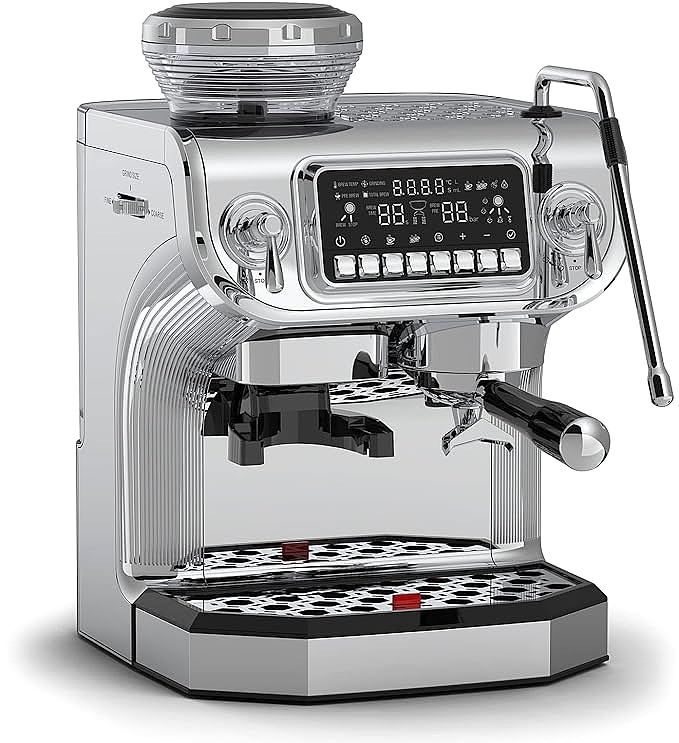
To understand the boundaries of automated extraction, one must examine apparatuses that intentionally bridge the gap between robotic processing and manual intervention. By deconstructing the internal architecture of the Gaggia Cadorna Barista Plus, we can isolate the specific physical laws that dictate extraction quality and identify where human kinetic control remains superior to algorithmic automation.

The Thermodynamics of the Ceramic Matrix
The foundational step of any extraction is the physical reduction of the roasted seed. The objective is to increase the surface area of the coffee matrix to allow the pressurized solvent (water) to dissolve the target organic compounds.
In automated systems, the grinding mechanism is housed internally, directly above the brewing chamber. This proximity introduces a severe risk of thermal degradation. When an electric motor drives a burr set to fracture dense cellulose, the mechanical friction generates intense localized heat.
If the burrs are constructed of steel, this heat becomes problematic. Steel possesses relatively high thermal conductivity. Over successive grinding cycles, the steel burrs absorb and retain this kinetic heat. Consequently, the burrs begin to “bake” the incoming coffee beans before the water ever contacts them. This premature heating causes the highly volatile aromatic compounds (VOCs)—the fragile molecules responsible for floral and fruity flavor notes—to sublimate and escape into the atmosphere.
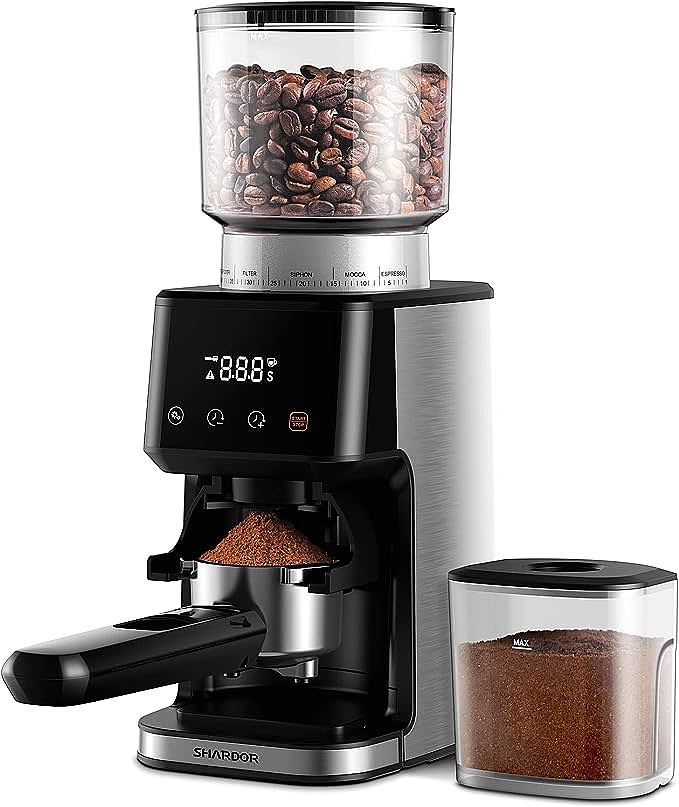
To mitigate this thermodynamic failure, advanced systems utilize ceramic burrs. Ceramic materials are highly effective thermal insulators. They do not absorb or transmit the frictional heat generated during the shearing process. By keeping the grinding environment thermally neutral, ceramic burrs preserve the integrity of the VOCs, ensuring they remain locked within the particulate until they are violently emulsified by the pressurized solvent in the brew group.
The Gravity-Fed Hopper and the Lipid Trap
While ceramic burrs protect the chemistry of the coffee, the automated delivery system introduces a mechanical vulnerability based on the physical properties of the beans themselves. Super-automatics rely on gravity-fed hoppers; the beans must slide smoothly down an incline into the grinding chamber.
This reliance on gravity conflicts with the chemistry of dark-roasted coffee. As thermal energy is applied during the roasting process, the internal cellular structure of the bean fractures, forcing natural lipids (oils) to the surface. These lipids are highly viscous and sticky.
When a user fills a gravity-fed hopper with heavily oiled, dark-roast beans, the lipids coat the plastic walls of the chute. Over time, this sticky residue halts the downward flow of the beans. The grinder engages, but the burrs spin empty, starved of material. The machine registers a fault, or worse, attempts to brew a severely under-dosed puck, resulting in a watery, astringent fluid. Maintaining the mechanical integrity of a gravity-fed system requires the operator to understand this chemical reality and either utilize drier, medium-roast beans or commit to rigorous, frequent degreasing of the hopper surface.
The Chemistry of the Mechanical Vortex
The most significant divergence between a standard super-automatic and a hybrid machine like the Cadorna Barista Plus lies in the management of vapor phase transitions and milk protein chemistry.
Standard automated systems utilize a “Panarello” wand or an integrated milk carafe. These devices operate by automatically injecting ambient air into the steam flow before it hits the milk. This creates massive, irregular, macroscopic bubbles—a stiff, dry foam that rests on top of the liquid.
However, to create the stable, polyphasic colloidal emulsion known as “microfoam”—essential for latte art and a cohesive mouthfeel—the operator must seize manual control of the fluid dynamics. The Cadorna integrates a commercial-style stainless steel steam wand, removing the automated air-injection sleeve and forcing the user to manipulate the physics directly.
The creation of microfoam is a two-phase mechanical action:
- Aeration (Stretching): The operator positions the steam tip precisely at the surface tension line of cold milk. The high-velocity steam tears the surface, mechanically dragging atmospheric air down into the liquid.
- Texturing (Shearing): The operator plunges the wand deeper and alters the angle of the pitcher. This specific geometry forces the steam jet to strike the curved inner wall of the pitcher, generating a rapid, asymmetrical swirling vortex.
The kinetic energy of this vortex creates immense shear forces. These forces physically shatter the large, unstable air bubbles introduced during aeration into millions of microscopic spheres. Simultaneously, the intense thermal energy of the steam denatures the whey proteins in the milk. The proteins uncoil, and their hydrophobic and hydrophilic ends interlock around the newly formed microscopic air bubbles, stabilizing the fluid into a dense, velvety texture.
This process cannot be replicated by a static, automated air-injector. It requires the active, geometric manipulation of the fluid vortex by a human operator, proving that certain aspects of beverage chemistry still demand manual kinetic intervention.
Algorithmic Precision vs. Biological Inconsistency
While the steam wand demands manual control, the extraction phase relies heavily on programmable logic. The fundamental problem with espresso extraction is the biological inconsistency of Coffea arabica. A roasted coffee bean is not a standardized industrial component; its density, moisture content, and solubility fluctuate wildly based on its origin and roast profile.
When a human operator brews espresso manually, they act as the feedback loop, making micro-adjustments to the grind size and dose based on the visual viscosity of the extraction. An automated system operates blind, relying on rigid algorithms.
To bridge this gap, systems must allow the user to manipulate the operational boundaries of the algorithm. The inclusion of digital user profiles is not merely a convenience feature; it is a required interface for managing agricultural variance. By allowing the operator to digitally lock in specific parameters—such as the dry dose mass (managed via the “Optiaroma” setting) and the solvent temperature—the machine can execute a highly specific extraction profile tailored to a specific bean density.
A dense, lightly roasted single-origin bean requires high thermal energy to dissolve its complex sugars, necessitating a high-temperature profile. Conversely, a dark, porous blend extracts rapidly and will yield bitter tannins if subjected to the same heat, requiring the operator to program a lower temperature profile. The digital interface translates these chemical requirements into repeatable mechanical actions.
Preventing Biological Contamination in the Extraction Chamber
The most sophisticated thermodynamic controls are entirely useless if the internal containment vessel is compromised by biological contamination. The primary failure mode of any automated extraction system is not electrical degradation, but the accumulation of organic waste.
In many high-end automated platforms, the “brew group”—the mechanical heart that receives the ground coffee, tamps it, and seals it against the high-pressure water inlet—is permanently sealed within the chassis. Over hundreds of cycles, wet coffee grounds inevitably escape the primary chamber, accumulating in the dark, warm, and humid interior of the machine. This environment rapidly breeds mold and causes the residual coffee oils to oxidize and turn rancid, permanently tainting the flavor of all subsequent extractions. Furthermore, the physical accumulation of grounds will eventually jam the mechanical actuators, causing catastrophic system failure.
To prevent this, the architecture must prioritize modularity and user-serviceability. The integration of a removable brew group, accessible via a side service door, shifts the responsibility of hygiene from a service technician back to the operator. By physically extracting the entire mechanical assembly, the operator can flush the components under running water, removing the oxidized lipids and stray particulate.
This simple mechanical intervention is the most critical factor in the longevity of the appliance. It acknowledges the physical reality that high-pressure extraction is an inherently messy process, and that the long-term viability of the machine relies on the operator actively managing the biological buildup within the containment chassis.
By understanding the precise mathematical relationships between thermal conductivity, fluid shear forces, and lipid oxidation, the operator ceases to be a passive consumer pushing buttons. Instead, they become an active manager of a highly complex, automated chemical laboratory.