Manual Pneumatic Extraction: Thermodynamics and Fluid Mechanics in Portable Espresso
Update on March 3, 2026, 1:34 p.m.
The extraction of soluble organic compounds from roasted coffee beans represents a highly volatile intersection of chemistry and physics. For decades, the industry standard dictated that achieving the necessary parameters for a true emulsion—specifically, the nine bars of atmospheric pressure required to force heated water through a densely compacted cellular matrix—demanded heavy machinery. Massive brass boilers, rotary vane pumps, and complex electrical grids were considered the absolute minimum requirements for the task.
However, the modernization of fluid mechanics and advanced material sciences has drastically altered this paradigm. The development of the portable manual espresso machine has shifted the burden of energy generation from electrical grids directly to human biomechanics. By employing highly efficient pneumatic cylinders and specifically engineered flow restrictions, modern apparatuses can replicate, and sometimes exceed, the mechanical forces of commercial equipment within a remarkably small physical footprint.
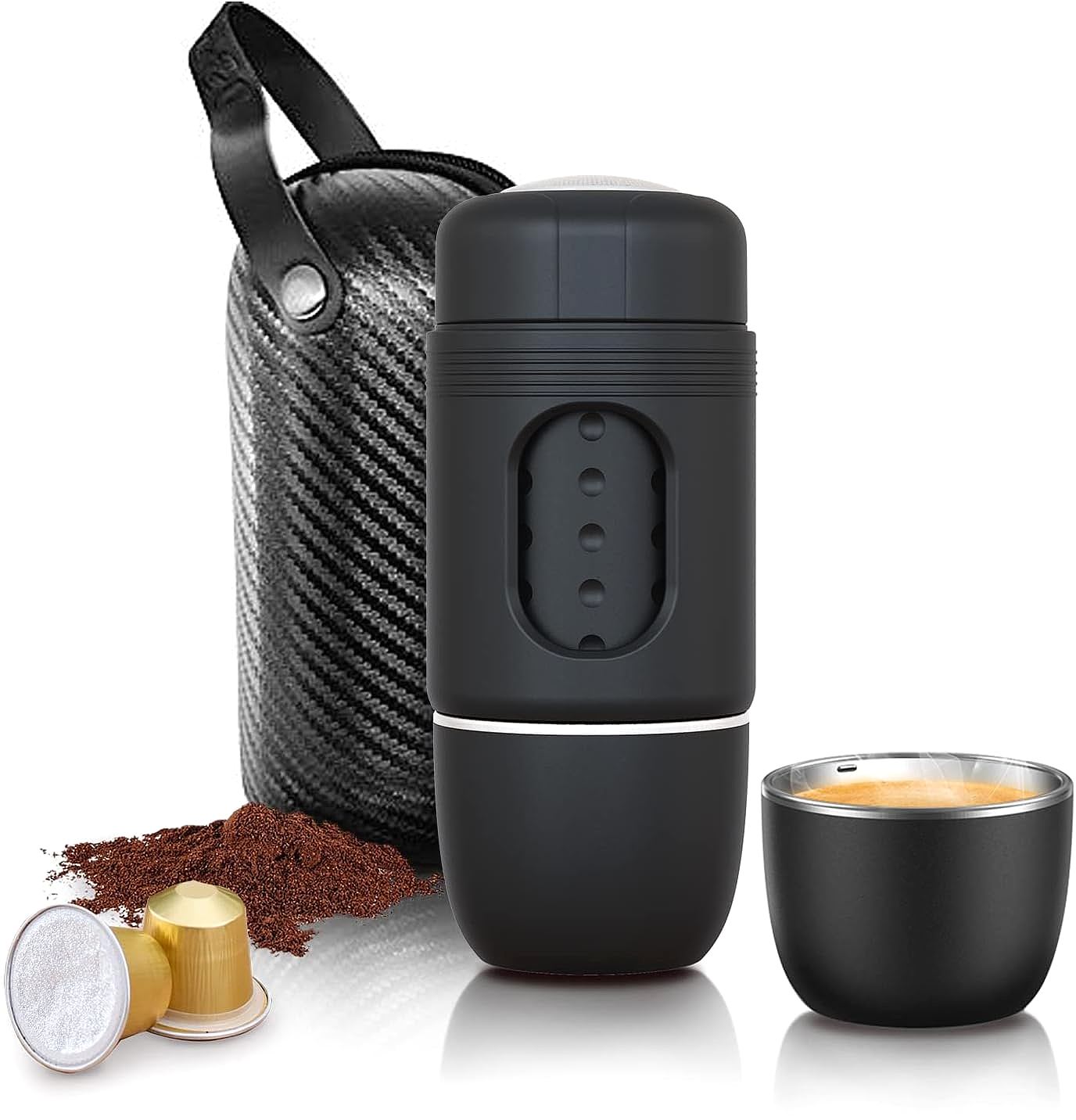
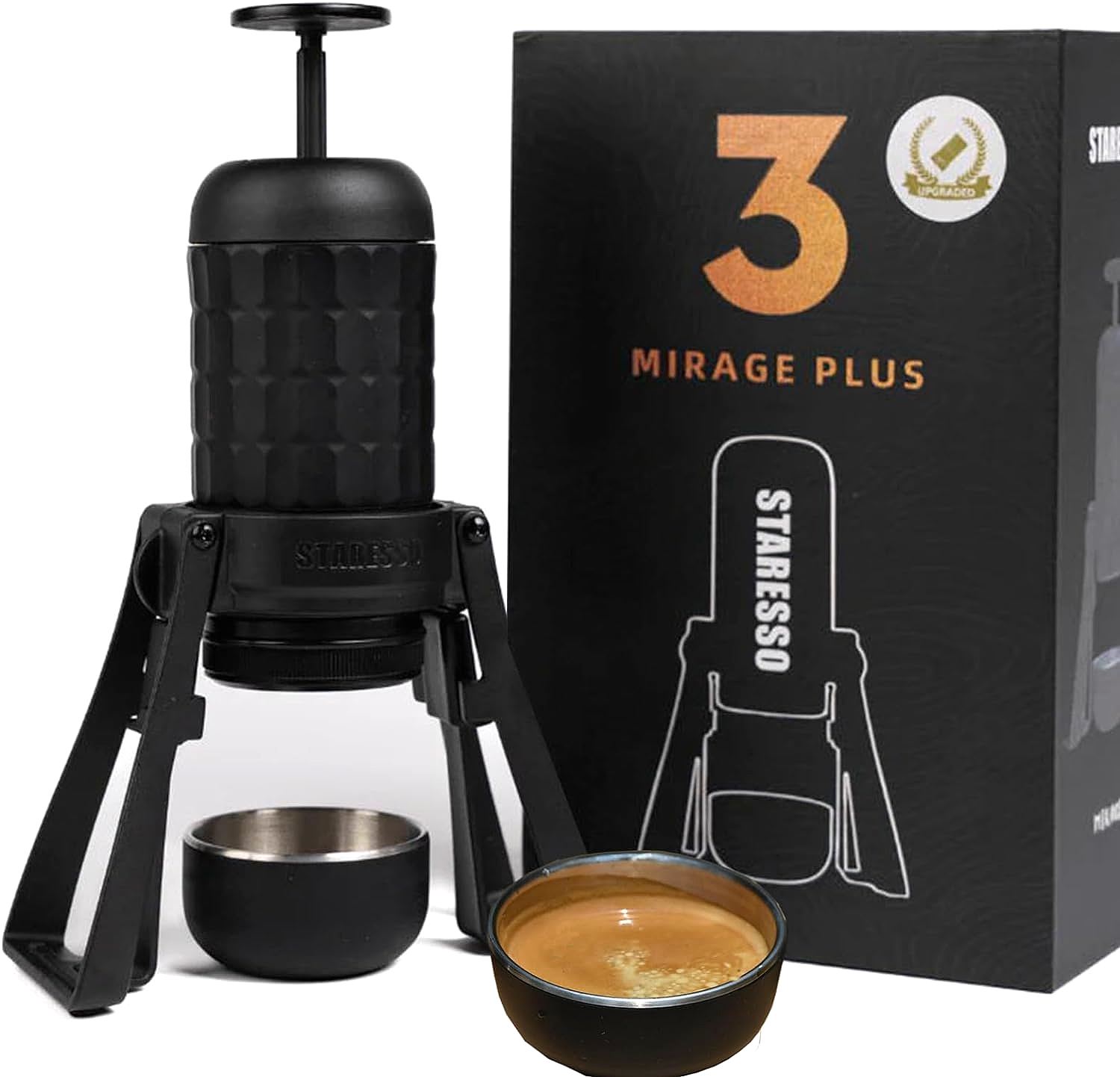
This comprehensive analysis deconstructs the mechanical architecture of hand-powered extraction devices. By utilizing the STARESSO SP-200 Mini portable espresso maker as a foundational reference point, we will examine the precise thermodynamics, fluid dynamics, and material limitations that govern the creation of high-fidelity coffee extraction in off-grid and extreme environments.
Why Does Hand-Pumped Pressure Rival Commercial Boilers?
A persistent point of skepticism surrounding unpowered coffee devices is the mathematical reality of generating immense pressure using only human hands. A commercial espresso machine utilizes a motorized rotary pump to generate 9 bars (approximately 130 Pounds per Square Inch, or PSI) of sustained force. It seems physically implausible that a lightweight, cylindrical device could match this output. Yet, devices engineered specifically for this purpose routinely achieve internal pressures between 15 and 20 bars.
The answer lies in the fundamental principles of fluid mechanics, specifically Pascal’s Principle and the mathematical relationship between force, pressure, and area. Pressure is defined as Force divided by Area ($P = F/A$). In a commercial machine, the pump must pressurize a relatively large volume of water simultaneously across a wide 58mm diameter coffee puck.
Manual devices circumvent this limitation by drastically reducing the surface area ($A$) of the driving piston.

In a device like the STARESSO SP-200, the internal pump mechanism features a very narrow shaft. Because the cross-sectional area of this piston is exceptionally small, a relatively modest amount of downward force ($F$) exerted by the user’s palm is mathematically multiplied into an enormous localized pressure ($P$) within the fluid chamber. When the user depresses the plunger, they are not pushing the entire volume of water at once; they are driving a micro-volume of water into a sealed, rigid chamber.
As the chamber fills, the water—which is an incompressible fluid—has nowhere to expand. The pressure rapidly spikes. It is specifically this narrow-diameter piston engineering that allows an average adult to effortlessly generate 200 to 290 PSI (15 to 20 bars) within the brewing matrix. The mechanical advantage is so significant that the primary engineering challenge is no longer generating the pressure, but rather ensuring the materials used to construct the housing can withstand the sudden, violent internal expansion without rupturing.
This intense pressure serves a critical chemical function. It is required to physically blast the insoluble lipids (coffee oils) out of the cellulose structure of the bean and shatter them into microscopic droplets. These droplets are then suspended in the aqueous solution, creating the dense, stable colloidal foam known as crema. Without this localized high-pressure zone, true emulsification cannot occur.
From Massive Brass Levers to Pocket-Sized Pneumatics
The lineage of pressurized coffee extraction is a fascinating study in mechanical miniaturization. To understand the geometry of modern portable devices, we must trace the engineering constraints that shaped their evolution over the past century.
The Industrial Era of Nine Bars
In the late 1940s, the physical effort required to generate high pressure was outsourced to massive steel springs. Achille Gaggia’s iconic lever machines required the barista to pull down a large lever, which manually compressed a heavy-duty spring. When released, the spring’s potential energy drove a piston downward, forcing water through the coffee bed at a declining pressure profile (starting near 9 bars and dropping to 0).
These machines were industrial marvels, but they were bound by their mass. The sheer size of the springs required heavy brass and steel chassis to anchor them, anchoring the entire process to the commercial cafe counter. The concept of taking this process on the road was mechanically impossible.
Miniaturization and the Modern Nomad
The shift occurred when engineers abandoned stored potential energy (springs) in favor of direct, localized kinetic energy transfer. The evolution of precision-molded polymers and high-tensile stainless steel allowed for the creation of miniature hydraulic cylinders that could handle extreme internal stress without requiring massive external bracing.
The modern iteration of the portable manual espresso machine represents the culmination of this miniaturization. By integrating the water reservoir, the pressure pump, and the filter basket into a single, vertically aligned column, engineers eliminated the need for external plumbing or heavy levers.
Furthermore, the evolution of these devices mirrors a broader trend toward consumable standardization. Early portable devices struggled with the messy reality of transporting finely ground coffee into the wilderness. The integration of dual-compatibility—the mechanical ability to process both loose grounds and hermetically sealed, pre-dosed nitrogen-flushed capsules—required a redesign of the puncture mechanism. In devices like the STARESSO SP-200, a specialized adapter sleeve is engineered with internal piercing nodes that precisely rupture the aluminum foil of a commercial capsule only when subjected to the hydraulic pressure of the pump, ensuring a sterile, highly standardized extraction regardless of the user’s geographical location.
The Thermal Engine in Your Backpack
If mechanical pressure is the physical driver of extraction, heat is the chemical catalyst. The fundamental weakness of almost all portable, unpowered coffee makers lies not in their ability to generate pressure, but in their capacity to manage thermodynamics.
The rate at which flavor compounds dissolve into water is dictated by the Arrhenius equation, which illustrates that chemical reaction rates increase exponentially with temperature. Optimal coffee extraction requires the water temperature interacting with the grounds to remain strictly between 90°C and 96°C (194°F to 205°F). In a commercial setting, massive brass boilers weighing several kilograms act as thermal batteries, ensuring that cold water entering the system does not crash the overall brewing temperature.
A pocket-sized device lacks this inherent thermal mass. When boiling water is poured into a room-temperature brewing chamber, the fundamental laws of thermodynamics dictate an immediate transfer of heat. The energy moves from the hot water into the cold walls of the device until thermal equilibrium is reached.

This is where material science dictates the success or failure of the beverage. Devices constructed entirely of thin, highly conductive plastics will bleed thermal energy rapidly into the ambient air. To counteract this, premium portable units heavily integrate specific metal alloys. The utilization of a 304 food-grade stainless steel inner chamber, as seen in the core of the STARESSO model, fundamentally alters the thermal dynamics.
Stainless steel possesses a specific heat capacity that allows it to retain thermal energy far better than standard thermoplastics. However, this dense material acts as a massive heat sink when cold. If a user simply pours hot water into a cold steel chamber and immediately attempts to brew, the steel will aggressively absorb the water’s heat, dropping the solvent temperature well below 80°C. At this depressed thermal state, the water lacks the kinetic energy to dissolve the complex, sweet Maillard compounds, resulting in a severely under-extracted, sharply sour liquid.
Therefore, operating this “thermal engine” requires a strict procedural protocol. The operator must perform a pre-heating flush. By filling the stainless steel reservoir with boiling water, allowing the metal to absorb the thermal energy and reach operational temperature, and then discarding that water, the chamber is transformed from a heat sink into a thermal insulator. When the actual brewing water is subsequently introduced, the pre-heated steel walls reflect the thermal energy back into the fluid, maintaining the critical 90°C+ threshold throughout the 30-second duration of the mechanical pumping phase.
Coarser Grinds Can Actually Increase Extraction Yields at Altitude
The application of portable espresso equipment frequently occurs in environments that actively hostility the laws of standard extraction chemistry. The most severe environmental variable a mountaineer or high-altitude camper will face is the depression of the boiling point of water due to reduced atmospheric pressure.
The Boiling Point Deficit
At sea level, water boils at 100°C (212°F). However, as elevation increases, the weight of the atmosphere pushing down on the surface of the liquid decreases. Consequently, the vapor pressure required for the water to boil is reached at a lower thermal energy state. At an elevation of 3,000 meters (roughly 10,000 feet), water will physically boil at approximately 90°C (194°F).
This presents a catastrophic deficit for chemical extraction. If the absolute maximum temperature of the water coming off a camp stove is 90°C, and it loses an additional 3°C to 4°C the moment it hits the brewing chamber, the extraction is taking place in the mid-80s. At this temperature, the heavier, sweeter flavor compounds remain locked deep within the cellulose matrix of the coffee bean.
Hydraulic Resistance in a Micro-Basket
The intuitive, standard response to a low-temperature extraction is to grind the coffee significantly finer. A finer grind exponentially increases the total surface area of the coffee exposed to the water, theoretically allowing the lower-temperature water more physical access to the soluble compounds.
However, in the context of a highly constrained manual pneumatic device, this standard logic causes a systemic failure. The filter baskets in these portable devices are microscopic compared to commercial portafilters, often holding a maximum capacity of merely 10 grams of coffee. Furthermore, they frequently utilize a secondary pressurized exit valve (a dual-wall basket mechanism) to artificially boost crema production.
If a user introduces a micro-fine powder into a 10-gram constrained basket and subjects it to 15 bars of localized manual pressure, the hydraulic resistance exceeds the flow limit. The water cannot permeate the densely packed, muddy matrix. The pump seizes, the operator strains, and the system chokes, yielding only a few bitter drops of over-extracted liquid.
To maximize extraction yield in a high-altitude, low-thermal environment using a manual device, the counter-intuitive approach is required. The operator must utilize a slightly coarser grind than they would at sea level.

By increasing the micron size of the particles, the operator dramatically increases the permeability of the coffee bed (governed by Darcy’s Law of fluid flow). A more permeable bed allows the operator to actuate the manual pump with rapid, aggressive velocity. This high-velocity fluid flow generates massive internal turbulence within the basket. While the water may lack the optimal thermal energy, the extreme kinetic turbulence physically aggressively strips the soluble compounds from the surface of the slightly coarser particles. This compensation tactic—trading thermal energy for intense kinetic velocity—is the only viable method for achieving a balanced total dissolved solids (TDS) yield on a frozen mountain peak.
When O-Rings Fail at 15 Bars of Atmospheric Stress
An engineering analysis of any pressurized system is incomplete without examining its critical failure modes. A portable device that generates the equivalent of 220 PSI via manual force places extraordinary structural stress on its internal seals.
The integrity of the entire brewing process relies on the science of tribology—the study of friction, wear, and lubrication interacting surfaces. In a manual pneumatic pump, a central metal or rigid plastic shaft must move repeatedly up and down within a cylindrical chamber. To prevent the high-pressure water from violently escaping back up the shaft toward the user’s hand, the piston is fitted with elastomeric seals, typically heavy-duty silicone or synthetic rubber O-rings.
When users report catastrophic failures—such as water violently spraying out of the top of the pump mechanism or the device entirely losing its ability to generate resistance—the root cause is almost exclusively the degradation of these elastomeric seals.
This failure is driven by two hostile variables. First is extreme thermal cycling. The O-rings are subjected to rapid expansion when hit with near-boiling water, followed by rapid contraction as the device cools in an outdoor environment. Over time, this thermal shock breaks down the polymer chains within the rubber, causing it to lose its elasticity and structural memory. It flattens out and can no longer press firmly against the cylinder walls.
The second variable is particulate abrasion. Coffee extraction is a dirty process. Microscopic, highly abrasive coffee fines inevitably migrate past the primary filter screens and find their way into the pump housing. When these abrasive fines become trapped between the sliding O-ring and the cylinder wall, every stroke of the pump acts like sandpaper, slowly grinding away the outer diameter of the seal.
Mitigating this failure mode requires strict operational maintenance that supersedes typical kitchen appliance care. Devices that operate under these extreme localized pressures cannot simply be rinsed. The pump shafts must be periodically disassembled, thoroughly cleansed of abrasive particulate matter, and the O-rings must be replenished with a food-safe boundary lubricant (such as pure mineral oil or specialized silicone grease). This lubrication layer prevents the dry, abrasive friction that ultimately compromises the hermetic seal, ensuring the device can safely contain the 15 bars of atmospheric stress generated by the operator.
Volumetric Constraints Versus Emulsion Stability
The final limitation of miniaturized extraction technology involves navigating the strict volumetric constraints of the hardware. The physical output of a portable device presents a unique fluid profile that requires the operator to recalibrate their understanding of brewing ratios.
The 10-Gram Barrier
In commercial, manual espresso preparation, the modern paradigm is built around a standard 18 to 22-gram dose of finely ground coffee yielding roughly 36 to 40 grams of liquid espresso (a 1:2 ratio). This large volume of coffee provides a massive payload of soluble lipids, proteins, and carbohydrates necessary to create a thick, heavy, syrup-like body in the final cup.
Portable devices, constrained by the necessity of fitting into a backpack or briefcase, feature significantly reduced volumetric capacities. The filter basket of the STARESSO SP-200, for example, is engineered to hold a maximum of 10 grams of ground coffee.
This 10-gram barrier dictates the mathematical limits of the extraction. If an operator attempts to push 50 or 60 milliliters of water through a 10-gram coffee puck in an attempt to pull a “large” shot, they will trigger severe over-extraction. Once the easily soluble sugars and organic acids are depleted in the first 20 milliliters, the remaining water will aggressively strip the heavy, highly bitter structural tannins from the exhausted grounds. The resulting fluid will not be a large espresso; it will be a structurally weak, astringent, and visually pale dilution.

Capsule Standardization vs. Fresh Ground Variables
To achieve an intensely viscous, highly emulsified shot with a heavy crema from a micro-basket, the operator must strictly limit the solvent volume. A 10-gram dose should yield no more than 20 to 25 grams of liquid. By restricting the output, the concentration of lipids and melanoidins remains exceptionally high, stabilizing the emulsion and producing the heavy mouthfeel characteristic of true espresso.
This volumetric constraint also highlights the inherent engineering advantage of the dual-compatibility system. While grinding fresh specialty coffee yields a vastly superior flavor spectrum, it introduces massive variables in density, moisture content, and particle distribution that can be difficult to manage in a tiny 10g basket.
Conversely, commercial Nespresso-style capsules contain a highly standardized 5 to 6 grams of coffee that has been precisely roller-ground, perfectly distributed, and hermetically sealed. When a portable machine utilizes its internal adapter to puncture and pressurize one of these capsules, it is interacting with a mathematically known quantity. The hydraulic resistance is perfectly uniform every single time.

While the total dose is even smaller than the fresh ground capacity, the absolute consistency of the capsule’s internal fluid dynamics allows the manual pump to perform flawlessly without the risk of choking or channeling. It represents a trade-off: sacrificing the absolute peak flavor potential of a freshly ground single-origin bean in exchange for indestructible mechanical reliability and guaranteed emulsion stability in environments where precision dial-in is impossible.
Understanding these physical tradeoffs—between thermal mass and portability, between extraction yield and altitude, and between dose size and fluid volume—is the ultimate key to mastering manual pneumatic extraction. It transforms the portable espresso maker from a mere travel gadget into a highly capable scientific instrument.