Shattering the Seed: The Hidden Fluid Dynamics of Particle Distribution
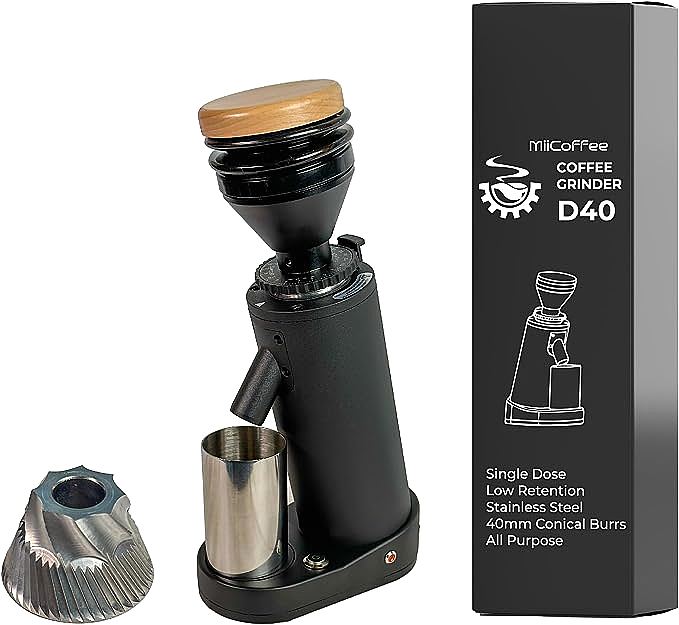
MiiCoffee D40+ Single Dose Coffee Grinder
The preparation of a botanical extract is an exercise in managing chaos. When water encounters roasted organic matter, the resulting chemical transfer is dictated almost entirely by geometry. Before the water boils, before the pump pressurizes, and before the liquid hits the cup, the fundamental parameters of the extraction are irrevocably set by a mechanical process: fracturing. Turning a dense, roasted seed into a soluble powder requires immense physical force, and the precision of that force determines whether the resulting liquid is a harmonious emulsion of oils and acids or an astringent, chaotic suspension of over-extracted tannins.
For decades, the standard approach in both commercial and domestic environments was continuous-feed grinding, where massive hoppers fed beans into grinding chambers without precise volumetric control. However, the modernization of extraction theory has driven a massive shift toward single-dosing methodologies. By isolating the exact mass of coffee required for a single fluid dynamic event, engineers have had to redesign the entire architecture of the grinding mechanism. Using contemporary platforms like the MiiCoffee D40+ Single Dose Coffee Grinder as a structural reference, we can deconstruct the intense physical forces, material limitations, and chemical preservation tactics that define modern particulate generation.
Why Does a Three-Second Delay Ruin Your Morning Routine?
The most pervasive adversary in the pursuit of high-fidelity flavor extraction is not poor water chemistry or fluctuating temperatures; it is ambient oxygen. To understand the urgency of single-dose preparation, one must examine the volatility of the roasted coffee matrix at a molecular level.
During the roasting process, thermal degradation creates a vast array of complex organic compounds. Among these are highly volatile aldehydes, pyrazines, and lipid-bound aromatics. While the bean remains whole, its dense cellulose structure acts as a natural vault, protecting these delicate compounds from the surrounding atmosphere. However, the moment a bean passes through a grinding chamber, its surface area expands exponentially—often by a factor of several thousand.
This sudden, massive exposure to atmospheric oxygen initiates a rapid chain reaction of oxidation. The volatile aromatics, which provide the floral, fruity, and sweet olfactory notes in a cup, begin to vaporize into the surrounding air almost instantly. Simultaneously, the exposed lipids begin to react with oxygen, initiating a pathway toward rancidity. Within a matter of minutes, the chemical potential of the ground powder drops precipitously.
This inescapable chemical reality renders traditional hopper-based systems fundamentally flawed for low-volume applications. When a hopper is filled with beans, the entire column is exposed to light and air for days. More critically, the mechanical design of hopper-fed grinders naturally creates a pressurized column of beans pushing down into the burrs. When the motor stops, a significant volume of partially ground and fully ground coffee remains trapped in the chute and the burr chamber. This is known as "exchange retention."
When the operator initiates the next grinding cycle, the first several grams of powder ejected from the chute are not fresh; they are the highly oxidized, stale remnants of the previous session. This stale powder mixes with the fresh grounds, irreparably muddying the flavor profile of the resulting extraction.
The engineering pivot to single-dose architecture directly addresses this chemical vulnerability. By completely eliminating the hopper and designing a straight-through feed path, the operator introduces only the exact mass of beans required for the immediate extraction (e.g., exactly 18.0 grams). There is no column of beans left to go stale. The design imperative shifts from continuous throughput to absolute physical evacuation. The machine must ensure that if 18.0 grams of organic material enters the top of the device, exactly 18.0 grams of powder exits the bottom, ensuring zero chemical contamination between distinct brewing events.

The Micro-Fracture Matrix Inside Your Kitchen
To achieve this precise evacuation, one must look at the geometry of the fracturing mechanism itself. A coffee bean is not sliced like a vegetable; it is shattered. The internal architecture of a grinder dictates how these stress fractures propagate through the cellulose structure.
The dominant paradigm for compact, precision extraction involves the use of conical burrs. Unlike flat burrs, which rely on centrifugal force to push particles outward through parallel cutting teeth, a conical system utilizes gravity and a helical feed path. A cone-shaped inner burr rotates within a stationary, ring-shaped outer burr. The distance between the inner cone and the outer ring narrows progressively from top to bottom.
As a bean falls into the upper, widest section of this gap, it enters the primary breaking zone. Here, large, aggressive flutes crack the bean into rough fragments. Gravity pulls these fragments deeper into the mechanism, where they enter the finishing zone. This lower section features a dense array of fine, razor-sharp teeth that shear the fragments down to their final dimensions.
The metallurgical composition of these burrs dictates their operational lifespan and their thermal efficiency. Devices employing 40mm stainless steel conical burrs leverage the extreme tensile strength and corrosion resistance of the alloy. Stainless steel can be machined to incredibly precise tolerances, ensuring that the gap between the inner and outer burrs remains mathematically consistent along its entire circumference.
This geometric consistency is paramount because the objective is not to create uniform dust. In reality, a perfect grinder produces a highly specific, bimodal particle size distribution.
If you were to pass the output of a high-quality conical burr set through a laser diffraction particle size analyzer, the resulting graph would not show a single, sharp spike at one micron size. Instead, it would reveal a dominant peak of particles at the target size (the "boulders") and a smaller, secondary peak of microscopic particles (the "fines").
This bimodal distribution is not a mechanical failure; it is a fluid dynamic requirement. The larger particles provide the structural matrix of the coffee bed, allowing water to flow through the portafilter without choking the system. The microscopic fines, however, provide massive surface area. They dissolve almost instantly, contributing the heavy, viscous body and the rapid extraction of solubles necessary for a concentrated beverage like espresso. The engineering challenge of a 40mm conical system is to carefully control the ratio of these fines to the boulders, minimizing erratic, oversized chunks that lead to localized under-extraction.
Dialing in the Resistance Curve
The practical application of this fractured powder involves placing it in the path of highly pressurized, near-boiling water. The behavior of this fluid is governed by Darcy's Law, which mathematically models the flow of a fluid through a porous medium.
In a commercial extraction scenario, water is driven by a rotary pump at roughly 9 bars of atmospheric pressure. The only thing preventing this water from violently blasting out of the portafilter in a fraction of a second is the hydraulic resistance provided by the compacted coffee powder. This resistance is dictated by the permeability of the bed, which is directly controlled by the mean particle size generated by the grinder.
If the operator miscalculates the particle size by even a few microns, the fluid dynamics of the extraction collapse. * If the powder is too coarse, the permeability is too high. The pressurized water encounters insufficient resistance and rushes through the bed in 10 to 15 seconds. The rapid flow rate means the water lacks the necessary contact time to dissolve the heavier, sweet Maillard compounds, yielding a thin, highly acidic, and structurally weak liquid. * If the powder is too fine, the permeability approaches zero. The bed acts as an impermeable clay plug. The pump strains, the pressure spikes, and the water is forced to find a microscopic structural weakness in the puck. It blasts a narrow channel through the grounds. The coffee immediately surrounding this channel is violently over-extracted, releasing harsh, bitter tannins, while the rest of the bed remains totally dry.
To master this fluid resistance curve, the operator requires absolute mechanical control over the distance between the inner and outer burrs. This is the function of the adjustment collar.
In a platform featuring a 95-step adjustment mechanism, the operator is granted highly granular control over the vertical displacement of the outer ring burr. Each "step" or "click" on the dial corresponds to a microscopic vertical movement, altering the exit gap of the finishing zone by fractions of a millimeter.
This massive range is necessary because different extraction methodologies require vastly different fluid dynamics. A gravity-fed percolation method (like a V60 pour-over) relies on a coarse grind with high permeability to allow a slow, steady drain over three minutes. A high-pressure extraction requires a micro-fine powder to establish intense hydraulic resistance. By providing 95 distinct, repeatable locking points, the mechanical design allows the operator to shift from the coarse parameters of immersion brewing down to the microscopic tolerances required to choke a 9-bar pump, empowering them to precisely tune the permeability variable in Darcy's equation.
When Static Electricity Hijacks Your Portafilter
Even if the mechanical fracture is perfect and the adjustment collar is precisely calibrated, the system can still fail due to an invisible physical phenomenon: triboelectrification.
As brittle coffee beans are aggressively sheared between rapidly spinning steel burrs, intense friction is generated. This mechanical friction strips electrons from the surface of the coffee particles, resulting in a severe static electrical charge. The dry, lightweight coffee dust becomes highly polarized.
This static charge triggers a cascade of fluid dynamic failures. Highly charged particles repel each other, causing the powder to fly erratically out of the exit chute and coat the surrounding kitchen surfaces. More insidiously, particles with opposite charges attract, causing the microscopic fines to agglomerate and bind to the larger boulders. This creates dense, irregular clumps of powder that drop into the dosing cup.
If a heavily clumped dose of coffee is compressed into a portafilter, the density of the resulting puck is highly uneven. The dense clumps represent areas of high hydraulic resistance, while the microscopic voids between the clumps represent areas of low resistance. When pressurized water hits this uneven matrix, it will inevitably channel through the voids, ruining the extraction.
Furthermore, static charge is the primary culprit behind mechanical retention. The charged coffee dust acts like a magnet, clinging tenaciously to the walls of the exit chute, the underside of the burr carrier, and any internal cavities. Over time, this static-bound dust oxidizes, turns rancid, and randomly dislodges into subsequent fresh doses.

To combat this triboelectric nightmare, single-dose architectures employ strict physical interventions. The most prominent is the integration of pneumatic purging systems, commonly referred to as "blow-out funnels" or bellows.
Situated directly above the grinding chamber, the bellow acts as a manual air pump. Once the motor has finished fracturing the beans, the operator depresses the flexible silicone bellow. This action forces a high-velocity jet of ambient air down through the burr gap and out the exit chute. The kinetic energy of this air burst is sufficient to overcome the static adhesion holding the coffee dust to the metal walls, forcefully ejecting the retained particles into the waiting receptacle.
Coupled with a forward-tilted chassis that utilizes gravity to assist the evacuation, this pneumatic purge is what allows a modern machine to claim "near-zero retention." Additionally, the integration of conductive metal catch cups (like a magnetic stainless steel dosing cup) provides a grounding surface, helping to dissipate the residual static charge of the powder before it is transferred to the brewing apparatus.
From Apothecary Mortars to Aluminum Housings
The evolution of particle reduction is a timeline defined by the management of kinetic energy and heat. In antiquity, grinding was achieved via the brutal, slow impact of stone mortars and pestles. As the demand for finer, more consistent powders grew, hand-cranked mills utilized cast iron burrs. However, the introduction of high-RPM electric motors in the 20th century fundamentally altered the thermal equation of grinding.
An electric motor drawing 150 watts of power generates a significant amount of heat simply through electrical resistance in its copper windings and friction in its bearings. This heat radiates outward from the motor casing. Simultaneously, the mechanical work being done by the burrs shattering dense, hard coffee beans generates immense localized frictional heat.
If this combined thermal energy is allowed to pool within the grinding chamber, it spells disaster for the coffee. As previously established, the volatile aromatic compounds that define specialty coffee evaporate at very low temperatures. If the burrs and the surrounding chassis become hot to the touch, they act as a conductive oven, baking the flavor out of the beans during the few seconds they spend in the fracture zone.
Early domestic grinders, often constructed with cheap, injection-molded plastic housings, suffered terribly from this thermal buildup. Plastics are excellent thermal insulators; they trap the heat generated by the motor and the burrs inside the machine.
The transition to advanced metallurgy in the chassis design is a direct response to this thermodynamic constraint. Utilizing an extruded or die-cast aluminum body serves a critical function beyond mere aesthetics or structural rigidity. Aluminum possesses a remarkably high coefficient of thermal conductivity.
In a device like the D40+, the entire metallic black aluminum chassis acts as a massive, passive heat sink. The thermal energy generated by the 150W motor and the shearing action of the stainless steel burrs is rapidly conducted away from the grinding chamber and dispersed across the large surface area of the exterior housing, where it is harmlessly radiated into the ambient air. By continuously pulling heat away from the fracture zone, the aluminum architecture ensures that the burrs remain cool, safeguarding the volatile chemical payload of the coffee powder.
Lighter Roasts Demand Heavier Torque
A common failure mode in domestic grinding setups occurs when operators attempt to process specialty, high-altitude light roasts. The physical density of a coffee bean is intrinsically linked to its roasting profile and its geographical origin.
When coffee is roasted to a dark, oily finish (often labeled as French or Espresso roast), the beans undergo extensive pyrolysis. The intense thermal energy breaks down the rigid cellulose structure of the seed, expanding it and making it highly brittle and porous. These dark beans require very little mechanical force to shatter; they crumble easily between the fingers.
Conversely, modern specialty coffee often favors very light roasts, designed to preserve the delicate floral and fruity organic acids inherent to the specific farm. Because these beans are subjected to far less heat during roasting, their dense, cellular matrix remains largely intact. Furthermore, beans grown at extreme altitudes (above 1,500 meters) mature slowly in colder, oxygen-thin environments, resulting in a much tighter, denser physical structure.
When an operator feeds a handful of dense, light-roasted Ethiopian beans into a grinder, the mechanical resistance encountered by the burrs is immense. If the device is equipped with a weak, low-torque motor, the rotational force of the inner burr may be insufficient to overcome the crushing resistance of the beans. The motor will stall, the burrs will jam, and the electrical circuitry may blow a thermal fuse to prevent catastrophic overheating.
This is why the wattage rating of the internal motor is a critical operational parameter. A 150-watt motor, geared appropriately to prioritize torque over sheer RPM, provides the necessary rotational force to relentlessly drive the inner conical burr through the densest, lightest roasts without stuttering.
However, this high-torque, single-dose environment introduces a unique mechanical anomaly known as "popcorning." In a traditional hopper filled with a pound of coffee, the sheer weight of the beans pushes the bottom layer firmly into the burrs, ensuring a steady, continuous feed rate. In a single-dose workflow, there is no weight above the beans.
As the final few grams of coffee enter the spinning fracture zone, the violent rotational forces often deflect the beans upward. They bounce erratically within the empty chamber, resembling popping corn. This phenomenon temporarily reduces the feed rate. Because the burrs are processing fewer beans simultaneously, the fragmenting dynamics change slightly, which can marginally alter the particle size distribution of the final gram of powder. While some highly specialized machines integrate weighted anti-popcorning disks to force the beans down, operators of standard single-dose conical systems must simply allow the motor to run for an additional two or three seconds to ensure these final, bouncing fragments are fully captured and sheared.
Hopper Convenience vs. Absolute Zero Retention
The architectural schism between traditional hopper-fed grinders and modern single-dose systems represents a fundamental trade-off in workflow philosophy. It is a choice between uninterrupted volumetric convenience and absolute chemical purity.
The hopper system is designed for high-volume, rapid-fire commercial environments. An operator can execute a programmed dose in four seconds with a single button press, entirely bypassing the need for an external scale. However, this speed demands that the internal fluid path remains permanently primed with coffee. The exchange retention is accepted as a necessary evil of high-throughput commerce. For a cafe pulling three hundred shots a day, the stale grounds are flushed out continuously, minimizing their impact on any single cup.
For the domestic operator pulling one or two beverages a morning, this retained coffee sits for 24 hours, heavily oxidizing. The first shot of the day is invariably compromised unless the user intentionally purges and wastes several grams of expensive coffee to clear the chute.
The single-dose architecture completely abandons this convenience. It demands a deliberate, multi-step ritual. The operator must use a precision scale to weigh the whole beans, transfer them to the chamber, actuate the motor, manually depress the pneumatic bellows to clear the static-bound dust, and finally transfer the grounds via a magnetic cup.
This workflow is inherently slower and requires active physical intervention. Yet, it entirely solves the problem of exchange retention. By ensuring that the grinding chamber is swept clean by high-velocity air after every cycle, the machine guarantees that tomorrow morning's extraction will be completely free of yesterday's oxidized lipids. It is a mechanical design that prioritizes the chemical integrity of the solvent above all other metrics, transforming the act of grinding from a passive convenience into an active, scientifically controlled variable.
MiiCoffee D40+ Single Dose Coffee Grinder
Related Essays
Fracturing the Bean: Precision Kinetics in Coffee Grinding
Shattering the Cellular Matrix: The Kinetics of Botanical Reduction
The Home Barista's Guide to the SHARDOR CG836: Mastering Your Grind for Any Brew
The Ultimate Guide to Your Conical Burr Coffee Grinder
CASABREWS 5700Pro Espresso Machine: Your At-Home Barista for Perfect Coffee
Cuisinart DGB-2W Grind and Brew Single-Serve Coffeemaker Review: Fresh Coffee Made Easy
Baratza Sette 270 Conical Burr Coffee Grinder: Unlock the Perfect Cup with Precision Grinding
The Soul of the Machine: Unlocking the Science and History of Your Espresso Shot

Eureka Mignon Specialita: The Science of Quiet, Consistent Espresso Grinding at Home
