Yabano Stovetop Espresso Maker: Brewing Authentic Italian Espresso at Home
Update on Sept. 17, 2025, 2:07 a.m.
The Alchemical Brew: How a Simple Stovetop Pot Unlocks Espresso’s Secrets
The morning ritual of coffee is a deeply personal one, a moment of stillness before the day begins. For many, this ritual is incomplete without the rich, concentrated flavor of espresso. Yet, the pursuit of this perfect brew often seems to lead down a path of expensive, complex machinery. What if the key to unlocking this rich world of flavor was not a machine with a dozen buttons, but a simple, elegant pot that fits in the palm of your hand? This is the enduring legacy of the moka pot, a timeless piece of kitchen engineering that turns everyday physics into a daily delight. And in this modern era, a product like the Yabano Stovetop Espresso Maker serves as a perfect example of how classic design and a bit of science can elevate the everyday cup.

A Masterpiece of Simplicity and Italian Ingenuity
The story of the moka pot begins in 1933 with Alfonso Bialetti, an Italian engineer who drew inspiration from an unlikely source: his wife’s early-model laundry machine. The machine used pressurized, soapy water to circulate through the clothes, and Bialetti saw the potential of this principle for brewing coffee. He envisioned a three-chambered device that would use the pressure of boiling water to force a stream through coffee grounds, producing a concentrated brew. His invention, with its distinctive octagonal shape, was nothing short of revolutionary. It was a tool that democratized espresso, moving it from the exclusive domain of cafes and into kitchens across Italy and, eventually, the world. It’s a testament to the power of a simple, well-executed idea.

The Physics of Pressure: A Moka Pot’s Secret Engine
Brewing with a moka pot is a fascinating lesson in thermodynamics and fluid dynamics. Unlike a drip coffee maker, which relies on gravity, the moka pot uses the power of steam pressure to extract coffee.
It begins in the lower chamber, which you fill with water. As the pot heats on the stove, the water begins to boil. As it boils, a portion of the water turns into steam, a gas that occupies a much larger volume than its liquid state. Because the chamber is sealed, this expansion creates pressure. According to the ideal gas law ($PV=nRT$), as the temperature ($T$) of the steam increases, the pressure ($P$) within the fixed volume ($V$) also increases.
This building pressure is the engine of the moka pot. Once the pressure in the lower chamber is sufficient—typically around 1.5 to 2 bars, a fraction of the pressure of a commercial espresso machine—it pushes the hot water up a narrow funnel. The water is forced through the basket containing the finely ground coffee, saturating it and dissolving the aromatic oils, acids, and sugars that give coffee its complex flavor. This rich coffee solution then continues its journey upward, finally bubbling and sputtering into the top chamber, ready to be enjoyed.
The result is a brew that is far more concentrated and full-bodied than standard drip coffee, though it differs from machine-made espresso. The presence of a small amount of “crema,” a reddish-brown foam on top, is a visual confirmation of a successful extraction, indicating that the coffee’s oils have been properly emulsified by the brewing process.

The Yabano: A Modern Link to a Classic Past
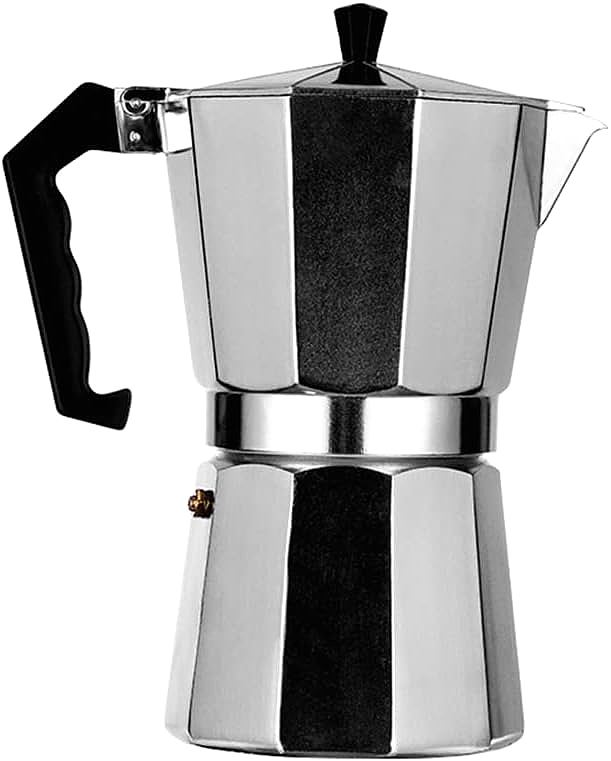
The Yabano Stovetop Espresso Maker, with a reported 4.3-star rating from over 2,000 customers, is a prime example of how this classic design continues to serve coffee lovers today. While it honors the original’s legacy, its features also highlight key engineering principles.
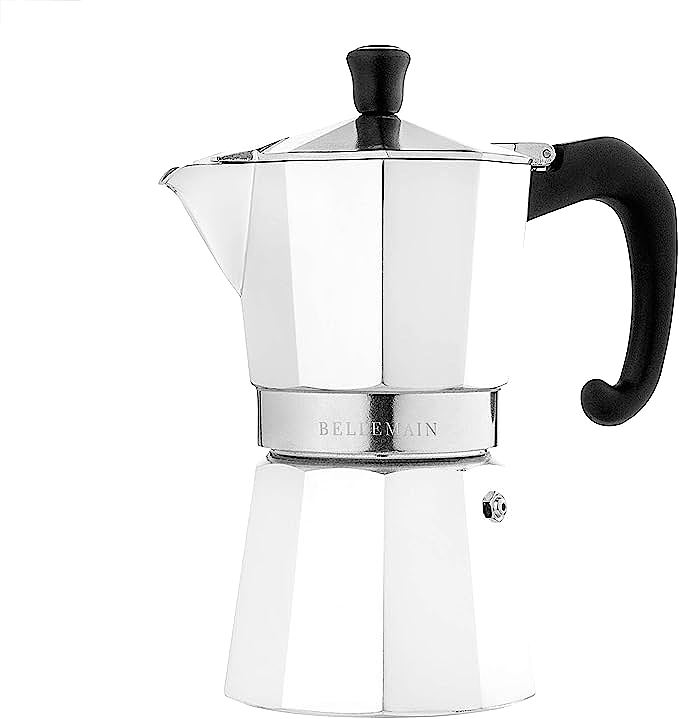
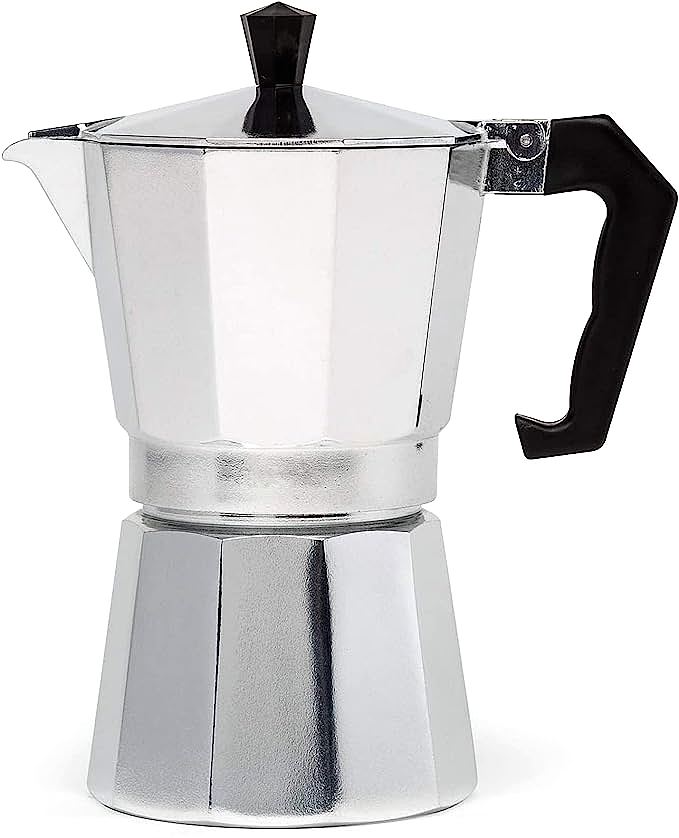
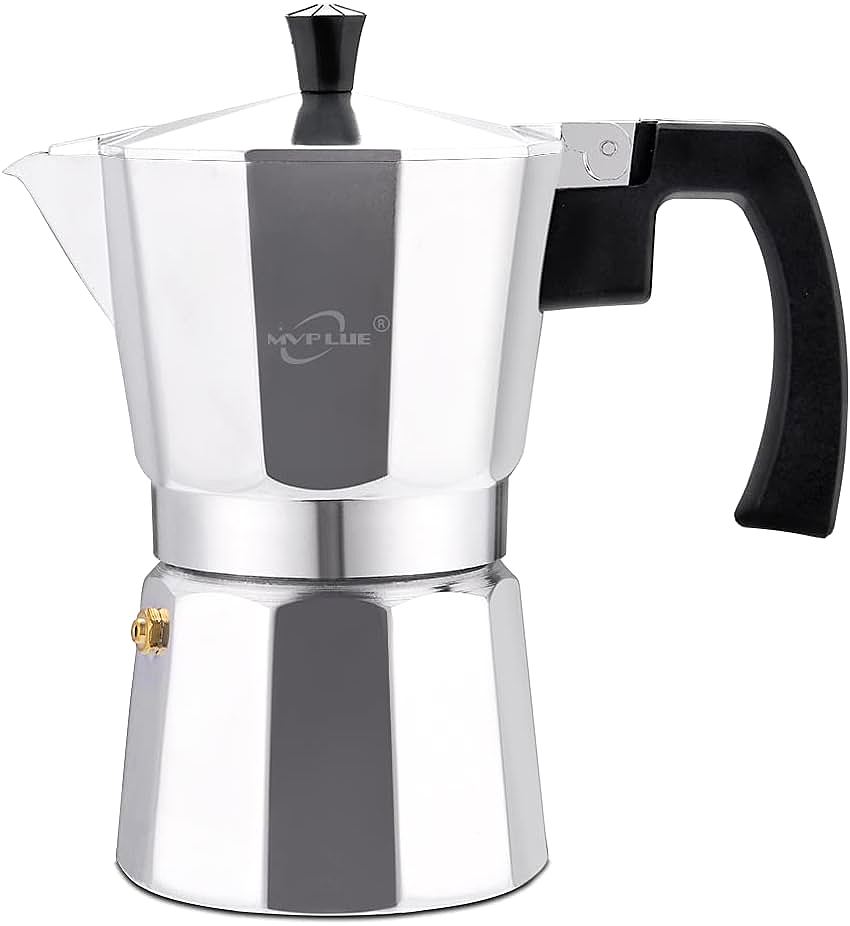
- Octagonal Shape: This isn’t just a stylistic choice. The eight-sided base maximizes the surface area in contact with the heat source. This design promotes a more even distribution of heat, which is critical for consistent boiling and a steady buildup of pressure. Even heating helps prevent localized scorching, which can lead to a bitter taste.
- Aluminum Construction: The pot’s body is made from high-quality cast aluminum. Aluminum is an excellent conductor of heat, meaning it heats up quickly and transfers that heat efficiently to the water. This rapid heating is essential for a timely and efficient extraction.
- Safety Valve: The built-in safety valve is a crucial piece of engineering. It’s a pressure release system that prevents dangerous pressure buildup in case the water’s path is blocked, for instance, by over-tamped coffee grounds. By releasing excess steam, the valve ensures the pot operates safely.
- Heat-Resistant Handle: A simple yet effective safety feature, the handle is made from a flame-retardant material that remains cool to the touch. This is a practical application of thermal insulation, ensuring a comfortable and safe pouring experience.

Mastering the Art: Simple Steps, Profound Flavor
While the moka pot is a marvel of engineering, its true beauty lies in its simplicity. To brew with the Yabano, you simply fill the base with cold water (up to the safety valve), add medium-fine coffee grounds to the filter basket without tamping them down, and screw the top chamber on tightly. Then, place it on the stove over medium-low heat. The low heat is key: a slow, steady increase in temperature prevents a bitter, over-extracted brew and allows for a gentler, more thorough extraction.
The sound of the coffee gurgling into the top chamber is the signal that your brew is ready. It is a subtle, satisfying moment that marks the end of the brewing process and the beginning of your coffee enjoyment.
The Yabano Stovetop Espresso Maker is more than just a kitchen appliance; it’s a bridge to a rich history and a testament to the elegant science of coffee. It’s a tool that reminds us that sometimes, the most sophisticated solutions are also the simplest. It invites us to slow down, appreciate the process, and savor a truly authentic and delicious cup of espresso—a taste of Italy, brewed with science, right on your stove.