Consolidating Fluid Dynamics: The Anatomy of a Multi-Format Brewer
Update on March 3, 2026, 7:06 p.m.
The contemporary domestic kitchen demands spatial efficiency without sacrificing functional versatility. This mandate has forced a radical shift in appliance engineering, requiring the consolidation of previously distinct thermodynamic and mechanical processes into single, unified chassis. The creation of a botanical infusion from a pre-packaged polymer pod requires a completely different fluid dynamic approach than extracting from a bed of loose, freshly ground particulate. Furthermore, introducing the mechanical shearing required for milk texturing adds a third layer of distinct physical requirements.
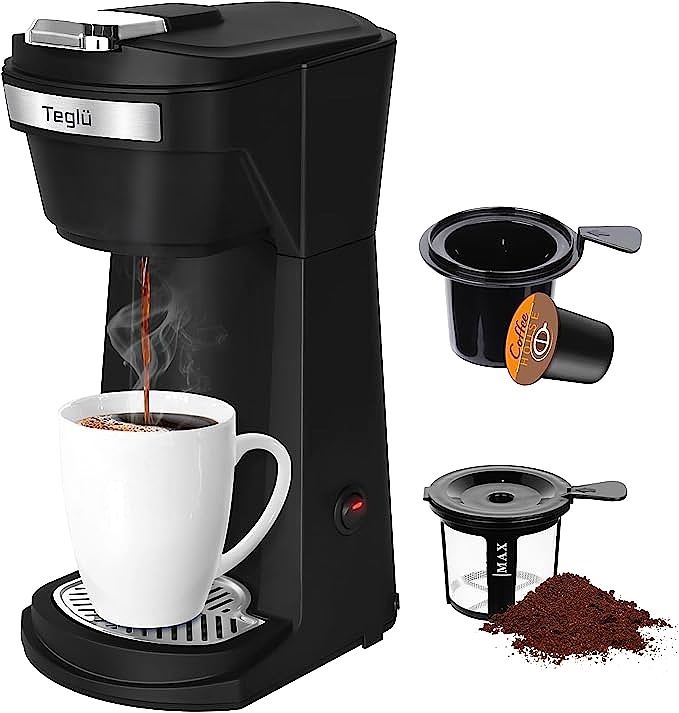
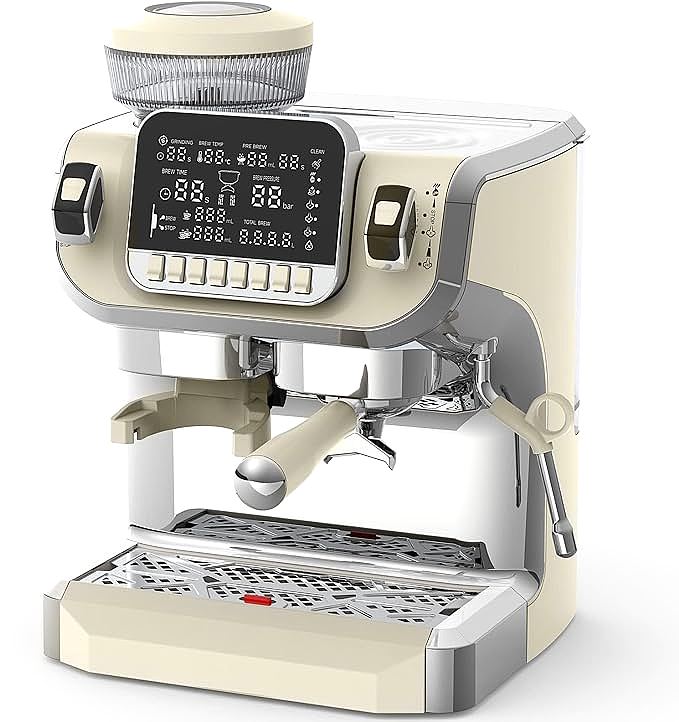
By deconstructing a multi-format apparatus—such as the NEWSETS 4-in-1 Single Serve Coffee Maker—we can analyze the mechanical compromises and physical laws that govern this consolidation. We move beyond simple utility to understand how a single 1400-watt power supply manages the conflicting demands of pressure, temperature, and kinetic energy.

The Physics of Forcing Water Through Polymer Pods
The integration of K-Cup compatibility dictates a specific, pressurized extraction architecture. Unlike gravity-fed drip systems that rely on slow, unassisted percolation, pod systems operate as sealed, low-to-moderate pressure environments.
When a K-Cup is inserted into the brewing chamber and the lever is engaged, top and bottom puncture needles breach the polymer and foil housing. The machine does not gently shower the water over the top; it injects the heated solvent directly into the sealed capsule. The capsule itself—containing a small internal paper filter and a specific dose of ground coffee—becomes the extraction chamber.
The structural geometry of the capsule dictates the hydraulic resistance. The internal pump must push the heated solvent through this resistance quickly enough to yield a cup in roughly two minutes. The primary failure mode in this sealed environment is thermal expansion. When the 180°F (82°C) solvent hits the coffee matrix, the trapped air and expanding coffee grounds create significant internal pressure.
To mitigate the risk of catastrophic blowout or severe channeling (where the water bores a single hole through the grounds, bypassing the majority of the coffee and resulting in a thin, highly acidic yield), advanced pod systems utilize specialized injection dynamics. The NEWSETS unit employs “Multistream Technology.” Instead of a single, central injection needle—which often creates a massive vertical channel—this mechanism utilizes a multi-point injection array. By fracturing the fluid entry into multiple streams, the system forces a more even, horizontal saturation of the particulate matrix enclosed within the pod, ensuring a balanced dissolution of soluble carbohydrates and fruit acids before the liquid escapes the bottom puncture.
Managing Permeability in the Loose Ground Matrix
The fluid dynamics shift significantly when the operator abandons the pre-packaged pod in favor of the loose ground coffee holder. Here, the user introduces a massive variable: manual grind size.
The rate of chemical extraction is inextricably linked to the surface-to-volume ratio of the coffee particles. The built-in grinder must therefore act as a precision calibration tool. If the operator grinds the coffee too finely (approaching an espresso consistency), the particulate matrix becomes overly dense.
When the pump attempts to force water through this fine matrix within the loose ground holder, the permeability drops to near zero. The hydraulic resistance exceeds the capacity of the pump, causing the water to stall and pool. The prolonged contact time between the stalled hot water and the fine grounds results in severe over-extraction, violently stripping heavy, bitter alkaloids and astringent plant tannins from the cellulose structure. Furthermore, the fine dust will likely bypass the reusable filter mesh, leaving a gritty sludge in the final cup.
Conversely, if the grind is too coarse, the water will blast through the matrix too rapidly, failing to dissolve the necessary complex sugars and yielding a sour, underdeveloped fluid. The engineering success of the loose ground function relies entirely on the operator utilizing the grinder to achieve a medium-coarse consistency, creating an optimal porous medium that allows for a steady flow rate and a balanced chemical extraction within the specific pressure parameters of the machine.

The 1400-Watt Thermal Bottleneck
Regardless of the extraction matrix (pod or loose ground), the chemical viability of the brew is dictated by the thermal energy of the solvent. The 1400-watt rating of the NEWSETS machine represents the maximum electrical power available to drive both the internal heating elements and the mechanical pump.
Compact, single-serve units typically utilize thermoblock technology rather than standing boilers. A thermoblock is a highly conductive metal block (usually aluminum) with an embedded heating element and a serpentine water channel. As the internal pump forces cold water from the 28oz reservoir through this channel, the fluid absorbs heat instantly.
This design allows for “Instant Brew Technology,” bringing the machine from cold to operational readiness in seconds. However, it requires meticulous calibration. The flow rate of the pump must be perfectly synchronized with the wattage of the heating element. If the water flows too quickly, it will not absorb enough heat, exiting below the necessary activation temperature to dissolve complex sugars. If it flows too slowly, the water will superheat and flash into steam, scalding the coffee grounds. The stated output temperature of 180°F indicates a deliberate calibration designed to extract desirable compounds without risking the severe bitterness associated with higher-temperature brewing.
Denaturing Proteins Through Mechanical Agitation
The integration of an independent milk frother introduces a completely separate physical process into the brewing ecosystem. While the coffee extraction relies on fluid flow and solvent dissolution, milk texturing relies on thermal energy and violent mechanical shearing to alter protein structures.
Bovine milk is a biological emulsion containing casein micelles, whey proteins, and lipid (fat) globules. In their natural, cold state, the whey proteins are tightly bundled in complex, three-dimensional structures. To create a stable, velvety microfoam suitable for a cappuccino or latte, these proteins must be fundamentally altered.
The independent frothing module utilizes a high-speed magnetic whisk. When activated, this whisk rotates rapidly, mechanically dragging atmospheric air down into the liquid and creating a vortex. This kinetic agitation shears the liquid, creating millions of microscopic air bubbles.
Simultaneously, the frother applies thermal energy. As the milk heats, the whey proteins denature—they physically uncoil and stretch into long molecular strands. These uncoiled strands possess distinct hydrophobic (water-repelling) and hydrophilic (water-attracting) regions. The hydrophobic ends aggressively seek out the newly formed microscopic air bubbles to escape the surrounding liquid, while the hydrophilic ends remain anchored in the water phase. This chemical reaction weaves an interlocking, protective mesh around every single air bubble, stabilizing the fluid into a dense, long-lasting foam.

The Inevitability of Calcium Carbonate Precipitation
The consolidation of a thermoblock, a pump, and complex internal valving within a compact chassis creates a highly vulnerable internal environment. The most persistent threat to any thermal fluid system is not electrical degradation, but geological accumulation.
The solvent utilized in domestic brewing—municipal tap water—carries a payload of dissolved minerals, primarily calcium and magnesium bicarbonates. When this fluid is subjected to the intense, localized heat of the internal thermoblock, a chemical precipitation reaction is forced. The soluble bicarbonates break down and precipitate out of the liquid as insoluble calcium carbonate ($CaCO_3$), manifesting as a hard, chalky crust known as limescale.
Limescale is a formidable thermal insulator. As it coats the interior walls of the heating element, it drastically reduces the coefficient of heat transfer. The 1400-watt system will continue to draw power, but the thermal energy cannot efficiently penetrate the scale barrier. Consequently, the water exiting the machine drops below the required extraction threshold, silently ruining the chemistry of the brew. Left unchecked, the scaling will eventually constrict internal tubing, artificially raising back-pressure until the pump stalls completely.
To prevent this catastrophic failure, the inclusion of a “Self-cleaning Function” is a mechanical necessity. The manufacturer’s instruction to utilize citric acid during this cycle is chemically precise. Citric acid is a weak organic acid that donates protons to the carbonate ions in the scale, converting the solid, insoluble calcium carbonate into highly soluble calcium citrate and carbon dioxide gas. By triggering this automated flush, the operator utilizes basic chemistry to clear the internal arteries of the machine, ensuring the fluid dynamics and thermodynamic efficiency remain uncompromised.
Mastering a multi-format extraction apparatus requires recognizing the distinct physical laws governing each function. By understanding the relationship between particulate surface area, thermoblock flow rates, and protein denaturation, the user transitions from a passive consumer pushing buttons to an active manager of a highly complex, consolidated chemical laboratory.