What Each Mode in a 3-in-1 Electric Milk Frother Actually Does

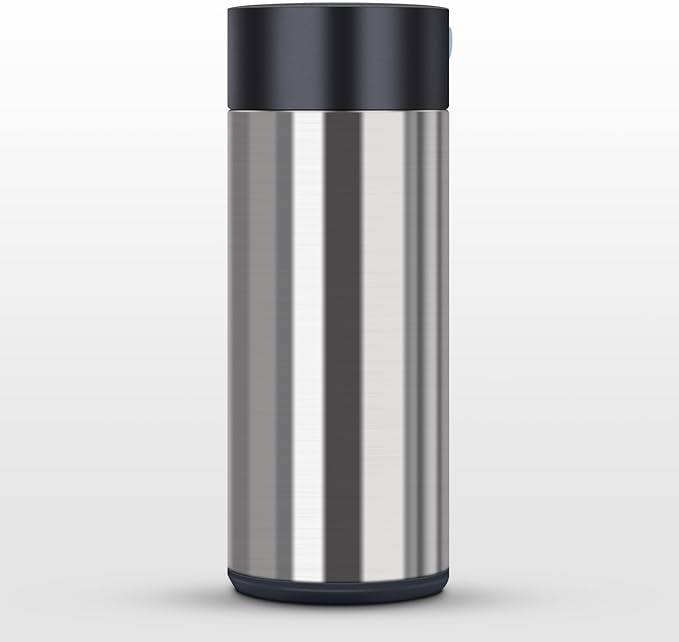
Secura Electric Milk Frother, Stainless Steel, 8.4oz/250ml
Why budget milk frothers usually disappoint
The gap between what a milk frother promises and what it delivers comes down to three engineering problems, none of which appear on the packaging. A twelve-dollar frother and a thirty-five-dollar one look identical in a product photo. Both are stainless steel cylinders with a button and a whisk. The difference surfaces only when you lift the lid.
Milk foam is a protein structure. When you heat milk and whip air into it simultaneously, casein and whey proteins unwind from their folded state and reorganize around air bubbles. This process — denaturation — begins around 60 degrees Celsius and peaks near 65. Below 60 degrees, the proteins stay coiled and foam collapses almost immediately. Budget frothers typically use bimetallic strip thermostats — two metals that bend and break a contact at an approximate temperature. One cycle might reach 55, the next 75, and neither is correct.
The second problem is whisk torque. A DC motor spinning a coil through milk must overcome the drag of a liquid that thickens as it aerates. When motor torque is insufficient, the whisk slows as foam density increases — meaning bubbles stop being subdivided at the moment they need it most. The result is foam composed of large, fragile bubbles rather than the velvety microfoam a cafe steam wand produces.
The third problem is the control circuit. A frother on a fixed timer treats cold milk from the fridge and room-temperature milk as identical inputs. Milk at 4 degrees Celsius needs roughly twice the energy to reach 65 degrees as milk at 20 degrees, so a timer-based system either underheats the cold batch or scorches the warm one. The solution — a thermistor reading actual milk temperature and modulating the heating element — costs money and is absent from the lowest price tiers.
These three failure modes explain what changes when the price moves from twelve dollars to thirty-five: not a cosmetic upgrade, but three distinct pieces of engineering.
What "3-in-1" actually means in a countertop electric frother
"3-in-1" appears on enough kitchen appliances that it has become background noise. In a milk frother, however, the three functions are mechanically distinct and require different hardware.
Warm foam is the mode most people picture. The heating element brings milk to roughly 65 degrees Celsius while the whisk spins at high speed, aerating throughout the thermal ramp. Both systems must run together because foam stability depends on proteins denaturing at temperature while air is incorporated. Stop the whisk early and the foam collapses. Stop the heat early and it cools rapidly.
Cold foam is warm foam with the heating element off. The whisk spins through cold milk, producing dense foam for iced drinks. This distinguishes a countertop unit from handheld whisks at a fraction of the price — those cannot heat milk, and they lack the motor torque for cold foam with staying power. Cold foam from a countertop unit holds its structure on an iced latte for minutes.
Milk heating without foam is the mode people rarely anticipate needing. Matcha, hot chocolate, and chai call for steamed milk with zero aeration. Foam on matcha prevents powder from dispersing. Foam on hot chocolate is redundant when whipped cream is already involved. The heating-only mode keeps the whisk stationary or spinning too slowly to incorporate air.
Making these three modes work requires two separate whisk attachments — a coil spring for frothing, a flat paddle for heating — plus a control board that engages or bypasses the heating element. A unit shipping with both attachments is mechanically equipped for all three functions. One with only a frothing coil claiming heating-only is a 2-function device with a marketing claim.
The budget countertop unit anchoring this segment, a stainless steel 250ml model in the mid-$30 range, includes both whisk attachments and labels its modes through a single-button interface: press once for warm foam, twice for heating-only, press and hold for cold foam. The hardware backs what the button claims.
The 90-second latte: one-touch operation walkthrough
The difference between a kitchen tool used every morning and one abandoned after two weeks reduces to one variable: how many steps stand between you and the finished result. A countertop electric frother compresses those steps into one gesture — press the button.
The sequence is short enough to describe in a paragraph. Pour cold milk to the marked fill line. Drop in the whisk attachment for the mode you want — coil spring for frothing, flat paddle for heating only. Close the lid. Press once for warm foam, twice for heating, or hold for cold foam. Walk away. Between 60 and 90 seconds later, the motor stops and the jug contains steamed milk ready to pour.
During those 90 seconds, a thermistor embedded in the base reads milk temperature through the stainless steel jug bottom in real time. The control board compares this reading against the cutoff threshold — typically 65 degrees Celsius — and tapers the heating element as the target approaches. This modulation prevents temperature overshoot, which is what causes scorched milk. At roughly 75 degrees, milk sugars caramelize, and at 80 degrees, proteins burn onto the heating surface and impart a sulfurous taste to subsequent batches.
The auto-shutoff mechanism is what transforms the frother from a monitored task into a background process. Without it, the frother demands attention for the full cycle. With it, the 90 seconds become reclaimed time — pull espresso, grind beans. The frother signals completion by falling silent.
The fill lines etched into the jug interior represent the boundary between a clean experience and wiping foam off the counter. The higher line marks the maximum heating volume. The lower line, roughly halfway down, marks the frothing limit. Pouring past the frothing line during a whisk cycle causes expanding foam to push through the lid seal. The line is headroom for physics, and ignoring it once is usually enough to ensure it sticks.
Capacity reality check: 250ml heat vs 125ml froth
The specification that confuses first-time buyers most is the dual capacity rating. A jug holding 250 milliliters for heating but only 125 for frothing looks like a compromise. Why not make them equal? The answer is that liquids expand dramatically when aerated — a 125-milliliter pour of cold milk becomes roughly 210 to 240 milliliters of frothed product by cycle end. Starting with 250 milliliters would overflow a typical jug before the whisk finished.
What this means for specific drinks is worth mapping. A standard latte contains roughly 200 to 250 milliliters of milk total, split between steamed liquid and foam. A single 125-milliliter froth cycle produces enough foam for the cap plus roughly 120 milliliters of warm milk underneath. For a small to medium latte, one cycle suffices. For a large 350-milliliter latte, a second cycle adds 90 seconds but delivers the additional volume.
Cappuccinos align naturally with the 125-milliliter froth limit. The traditional ratio calls for equal thirds of espresso, steamed milk, and foam in a 150-to-180-milliliter cup. A single froth cycle generates more foam than a cappuccino requires, with ample warm milk left for the steamed component.
The 250-milliliter heat-only capacity serves an entirely different purpose: two standard mugs of hot chocolate, two matcha lattes, or a single large chai — drinks needing volume and heat but zero aeration. The two capacities together map onto the two categories of milk-based drinks people make at home: those demanding foam and those actively harmed by it.
Cold foam in 3 seconds: a summer use-case you did not know you needed
Cold foam mode produces something that sounds physically contradictory: stable, dense foam from milk that never crosses room temperature. The whisk spins at full speed through cold milk with the heating element dormant. No thermal ramp means the cycle completes in under 30 seconds.
The practical value becomes visible when you map a year of coffee drinking against outdoor temperature. A heat-only frother is a cold-weather appliance — useful from October through March, idle from April through September while iced lattes and cold brew take over. A frother with cold foam bridges this seasonal divide. The device that makes a morning latte in February also produces the foam cap on an iced vanilla latte in July, earning countertop space twelve months a year instead of six.
The activation gesture — press and hold the single button for roughly three seconds — follows the same design logic as the warm functions. One physical button, differentiated by press pattern, with no mode dial or display to read.
Beyond coffee, cold foam extends the frother's utility further. A cap of cold frothed milk on iced matcha provides textural contrast without the heat that makes matcha taste bitter. On cold brew, it adds body and mouthfeel without sugar or syrup. On a blended smoothie or protein shake, a cold foam layer turns a utilitarian drink into something closer to a prepared beverage.
The seasonal argument is about habit formation. An appliance visible on the counter gets used. One tucked into a cabinet for half the year may not return when the weather shifts.
Cleaning without scratching: non-stick interior and the brush
The question that determines whether a milk frother becomes a daily driver or a cabinet orphan is not how well it froths but how quickly it cleans afterward. The best foam means nothing if producing it leaves you scrubbing for three minutes every morning.
The design that minimizes cleaning friction is a non-stick interior coating paired with an appropriately shaped brush. At 65 degrees Celsius, milk proteins are denaturing — becoming chemically reactive and prone to bonding with metal. A PTFE-based non-stick coating creates a surface with low affinity for these proteins. They slide off under warm water rather than gripping the jug wall.
The included brush is not a free accessory. It is the specified cleaning tool for the surface it cleans. The nylon bristles are stiff enough to dislodge residue but soft enough to avoid scratching the coating. The handle reaches the jug bottom without submerging a hand. Any tool more aggressive — scouring pad, metal scrubber, abrasive sponge — will damage the coating.
Once the coating is scratched, the cleaning dynamic inverts. Scratches expose underlying metal to direct contact with denaturing proteins. Each scratch becomes a nucleation site where residue bonds permanently. Within weeks, the non-stick advantage vanishes and cleaning escalates from a 30-second rinse to a multi-minute soak-and-scrub. Non-stick coatings cannot be reapplied at home; damage is permanent.
The maintenance protocol that preserves the coating is simple: rinse with warm water immediately after each cycle while the jug is still warm and residue is still liquid; pass the brush gently over remaining spots; dry or air dry. The routine takes roughly 30 seconds and eliminates any need for aggressive cleaning. The difference between a frother that looks new after three years and one stained brown after three months is not coating quality — it is whether the owner used the brush or reached for the sponge.
Decision boundaries: where a budget frother fits and where it does not
An entry-level countertop electric frother occupies a specific functional niche. The most useful information for a potential buyer is not whether the device is "good" or "bad" in the abstract, but whether daily coffee habits fall inside or outside that niche.
The niche covers home coffee drinkers who want steamed milk and foam without learning a steam wand, without an espresso machine, and without spending more than a modest dinner out. This includes the person heating milk in a saucepan and whisking by hand. The person using a battery-operated handheld whisk and watching foam disappear before the drink is half finished. The iced coffee drinker who assumed cold foam required commercial equipment. For these users, a 3-in-1 countertop unit addresses a recurring problem with one button and a 90-second cycle.
Where the niche ends is equally worth stating. It ends at latte art. The microfoam texture required to pour a rosetta — silky, paint-like, with single-digit-micron bubbles — is exclusively a steam wand product. A whisk-based frother aerates milk in open air. The bubble structure and mouthfeel are fundamentally different. This is not a quality distinction; it is a tool-category distinction. Expecting a whisk frother to produce latte art leads to frustration as reliably as expecting a skillet to deep-fry.
The niche also ends at high volume. Making four lattes every morning for a family requires either larger capacity or an integrated steam wand. Running three consecutive froth cycles through a 125-milliliter limit every morning is not a sustainable workflow. The device can do it physically, but the accumulated time erodes the one-button convenience that defines the category's value.
And the niche ends at design-driven purchasing. A stainless steel cylinder with a single button answers a functional question, not an aesthetic one. If the criteria include color matching, brand ecosystem alignment, or countertop visual presence, the entry-level segment is not where those options exist. Knowing what a tool is not designed to do is itself the most useful outcome of understanding the category.
Secura Electric Milk Frother, Stainless Steel, 8.4oz/250ml
Related Essays

The Physics of Fast Coffee Brewing: How 350 Watts Achieves Sub-90-Second Extr...
The Physics of Fast Coffee Brewing: How 350 Watts Achieves Sub-90-Second Extr...
Mcilpoog Milk Jar for ws-203 & ES317 | Convenient Coffee Milk Storage
