The AeroPress Go Portable Coffee Maker: Immersion Brewing That Travels

AeroPress Go (B0C6XGYJWQ)
A portable coffee maker that actually produces good coffee is harder to design than it sounds. Most kitchen coffee gear — burr grinders, gooseneck kettles, precision scales — does not travel well. Airplane carry-ons, hotel desks, and campsite picnic tables lack the space, outlets, and running water that kitchen counters provide. The engineering challenge is fitting a brewing system that respects the physics of extraction into a package you can toss in a bag.
The AeroPress Go addresses this by packing an entire immersion brewing system — chamber, plunger, filters, stirrer, and scoop — into its own 15-ounce Tritan drinking mug. It does not make espresso or brew a full pot. What it does is make a single cup that tastes like it came from a well-equipped kitchen, using nothing but hot water and ground coffee, in under two minutes, with cleanup faster than reading this paragraph.
Cleanup matters more than most product descriptions admit. A brewer that makes great coffee but leaves you scrubbing parts in a hotel bathroom sink at 6 AM has failed at the travel use case just as thoroughly as one that makes bad coffee.
Why Travel Coffee Is Almost Always Bad
The standard travel coffee experience is a series of compromises nobody would accept at home. Hotel single-serve pods contain coffee ground months ago and brewed at an approximate temperature. The result is thin, often bitter, with a faint plastic note. Office drip machines are worse: a glass carafe sitting on a hot plate for three hours turns whatever was fresh at 7:00 AM into something that tastes closer to burnt rubber by 10:00.
Instant coffee solves the equipment problem — just add hot water. But freeze-drying strips away most of the volatile aromatic compounds that give coffee its character. What remains is caffeine delivery with a flavor profile that peaks at "identifiably coffee-like." It is technically coffee in the same sense dehydrated camping meals are technically dinner.
Portable brewing gear falls into two categories: too fragile or too many pieces. A glass French press is a packing disaster. Even stainless steel travel versions leave sediment at the bottom of every cup. Some people do not mind the sludge, but it masks the clarity of lighter roasts and continues extracting as the cup sits. Pour-over setups have the opposite problem: a dripper, gooseneck kettle, paper filters, scale, and server — the list of items grows faster than the quality improvement justifies for a hotel room where the only flat surface is a laptop-sized desk.
Most portable brewers either compromise on the coffee (pods, instant) or compromise on the portability (French press bulk, pour-over component sprawl). A brewer that refuses to compromise on either dimension is a genuinely difficult engineering problem.
How the Brewing System Actually Works
The brewing method at work here is immersion plus gentle pressure — a combination that produces a cup distinct from both French press and drip coffee.
In a French press, grounds steep for about four minutes, then a metal mesh plunger pushes them to the bottom. The mesh lets through sediment and oils. The result is full-bodied but often muddy, and trapped fines continue extracting in the cup, producing bitterness that intensifies as the coffee cools. In drip or pour-over, water passes through a bed of grounds and a paper filter by gravity. The paper traps oils and fines, producing a clean cup, but percolation is sensitive to technique — pour rate, water distribution, and filter clogging all change the extraction.
Immersion with paper filtration combines the strengths of both. Grounds steep in full contact with water, so extraction is even regardless of pour technique. A piston pushes the brewed coffee through a paper micro-filter under gentle pressure — roughly 0.3 to 0.5 bar, the weight of an arm, not a pump. The paper filter removes fines and most oils, yielding a cup with the body of immersion and the clarity of filtered coffee.
This is not espresso. Espresso requires approximately 9 bar of pressure to force water through finely ground coffee in 25 to 30 seconds. The physics and resulting drink are fundamentally different. The brewer can make a strong concentrate that works well in milk drinks, but it is not espresso and should not be evaluated against espresso standards.
Total brew time is one to two minutes: roughly 30 seconds to bloom, a minute to steep, and 20 to 30 seconds to press. Cleanup is a single motion — eject the compressed puck and rinse the rubber seal.
The device was invented in 2005 by Alan Adler, a Stanford engineering lecturer who also designed the Aerobie flying ring. Adler wanted a single cup of coffee that did not taste bitter, and approached the problem as an engineering challenge. His key insight: reducing contact time between water and grounds — relative to a French press — would reduce extraction of bitter compounds, and paper filtration would remove fines responsible for ongoing extraction. The design has remained essentially unchanged for over two decades.

The Go Difference: Everything Fits in the Cup
The defining design decision was to make the 15-ounce Tritan drinking mug double as the travel case. Every component — chamber, plunger, filter cap, stirrer, scoop, and a filter holder loaded with 350 paper micro-filters — nests inside the mug. A silicone lid seals the top, and the entire kit becomes a compact cylinder measuring roughly 5.5 inches in diameter and height and weighing about 320 grams. It disappears into a carry-on or backpack corner without demanding its own dedicated compartment.
This nesting design is not just a packaging trick. It solves a real problem that owners of the original, non-travel version discovered through experience: the original brewer is small enough to travel with, but you need to bring a separate mug to brew into, and the loose components — stirrer, scoop, filters — rattle around in a bag unless packed deliberately. The travel version accepts that portability is the primary use case and designs for it from the ground up rather than treating it as an afterthought.
The brew chamber itself is identical to the original model in diameter and geometry — a deliberate engineering choice, not cost-cutting. Every recipe developed for the original brewer over nearly two decades works identically on this travel version. The only dimensional difference is a slightly shorter chamber on the Go, which reduces capacity from approximately 10 ounces to 8 ounces per press. For a single person making a morning cup, the difference is negligible. For brewing for two, it means an extra press cycle.
The material is Tritan, a BPA-free copolyester that is tougher than glass and does not absorb or impart flavors — relevant when the brewing vessel is also the drinking vessel and the travel case. Tritan will not shatter if dropped on a campsite rock or a hotel bathroom floor. It handles near-boiling water without warping, though the recommended brewing temperature of 175 to 185 degrees Fahrenheit sits well below the material's thermal limits.
Cleanup after brewing takes roughly the same amount of time as it does to describe it. Unscrew the filter cap over a trash bin, push the plunger through to eject the compressed puck of grounds, and rinse the rubber seal under running water. The paper filter peels off with the puck. There is no disassembly of multiple screens or gaskets. The entire process takes less than 30 seconds and works with a sink, a water bottle, or even just a wipe — a critical design requirement for travel, where cleaning infrastructure varies unpredictably.

How It Compares to Other Portable Brewers
The portable coffee maker category has more options than most people realize, and the differences between them are not minor. Walking through the tradeoffs honestly makes the choice clearer than reading spec sheets.
The original, non-travel version is the most direct comparison. At roughly $30 to $35, it is $5 to $15 less. The brew quality is identical — same chamber, same physics, same coffee. What you give up for the lower price is the nesting travel design. The original comes with a larger chamber, a funnel for transferring grounds, and a tote bag that is more a suggestion of organization than an actual case. If you never travel with your coffee gear, the original is the better value. The travel version exists precisely because so many people did travel with the original and wanted a cleaner, more integrated solution.
The Wacaco Nanopresso operates on an entirely different principle. It is a hand-pumped espresso maker that generates 15-plus bar of pressure — enough for genuine espresso with crema, which no immersion brewer can produce. It costs roughly $65 to $75. The tradeoff is complexity: the Nanopresso has more parts to clean, requires a very specific grind size, and demands significant hand strength. It is the right choice for someone who specifically wants espresso while traveling. For someone who wants good coffee without the extra steps, the added complexity may outweigh the crema.
The Bodum Travel French Press is a double-wall insulated mug with a built-in plunger and metal mesh filter. At $20 to $30, it is genuinely simple: add grounds, add water, wait, plunge, drink from the same vessel. The limitation is the metal mesh filter, which lets through suspended fines that continue extracting in the cup, producing the characteristic French press sediment and bitterness that increases as the cup cools.
The GSI Outdoors JavaPress targets the camping market with a larger capacity and an insulated body built for outdoor conditions. At $25 to $35, it uses a French press mechanism with the same sediment issues. It is a good camping French press but not a precision brewing tool.
The MiiR Pourigami is a folding stainless steel pour-over dripper that collapses to the size of a few credit cards. At $25 to $30, it is impressively compact. The limitation: it is a pour-over dripper, which means you also need a pouring kettle, a separate vessel, and counter space for a multi-minute pour. It solves a different problem from an all-in-one immersion brewer.
No single brewer dominates every dimension. This immersion system occupies a specific position: it makes coffee as good as what you brew at home, packs into its own mug, cleans up in 30 seconds, and will not break when dropped. It is the option with the fewest compromises for someone standing in a hotel room wanting a real cup of coffee.

The Recipe Ecosystem and the World Championship
A piece of hardware that has been on the market for two decades accumulates something more valuable than incremental feature improvements: a body of community knowledge about how to use it well.
The World AeroPress Championship began in 2008 as a joke. Three coffee professionals in Oslo decided to hold a small competition to see who could brew the best cup using the same device. They expected a handful of local baristas. What developed over the following years was an international phenomenon that now spans more than 60 countries with national qualifying competitions. Championship finals have been held in cities from Melbourne to London to Seattle, and winning recipes are published online and debated in coffee forums worldwide.
The practical value of this for someone brewing a morning cup is real. When you use a new brewer with no established community, you are on your own to figure out grind size, water temperature, steep time, and agitation technique through trial and error. With a device that has thousands of published recipes — including ones from world-class baristas who have optimized every variable under competition conditions — you can start close to optimal and adjust from there. The learning curve collapses from weeks of experimentation to a few mornings of dialing in.
The recipes reveal a surprising range of what the same hardware can produce. Some winning recipes use water as cool as 175 degrees Fahrenheit with a coarse grind and a short steep for a bright, tea-like cup. Others push water temperature closer to 200 degrees with a fine grind and extended steep time for a heavy-bodied concentrate. The chamber geometry does not prescribe a single method; it accommodates a spectrum of approaches that produce genuinely different cups from the same equipment.
This shared knowledge base is a competitive advantage that no other portable brewer matches. There is no World Nanopresso Championship. There is no traveling barista competition for the Bodum Travel Press. The recipe ecosystem exists because the brew chamber has been stable for two decades and produces results worth competing over at the highest level.
For the travel version specifically, the identical chamber geometry means every recipe in this global library transfers directly. The slightly reduced capacity is easy to account for by scaling ratios down. The coffee knowledge moves with the hardware.
The Morning Brew Ritual, Anywhere
A brew cycle on the road follows the same sequence as at home, just with different scenery. The process is short enough that the ritual aspect — the deliberate sequence of small actions that signals the start of the day — survives the travel context intact.
In a hotel room: open the mug, remove the nested components, and set them on the desk. The hotel kettle works fine for heating brewing water. Rinse a paper filter in the cap to remove any paper taste and preheat the chamber. One level scoop of medium-fine grounds goes into the chamber — roughly 15 to 18 grams. Pour water just off the boil, which will have cooled to about 185 degrees Fahrenheit by the time it hits the grounds. Stir for ten seconds to saturate all the grounds evenly, insert the plunger, and let it steep. After a minute, press steadily — about 20 to 30 seconds of consistent downward pressure until the plunger bottoms out and a hiss of air signals the end. The coffee is ready.
At a campsite, the same sequence plays out on a picnic table. A camp stove or jet boil provides hot water. The plastic construction means dropping it on dirt is a non-event — rinse it off and keep going. The used puck ejects cleanly into a trash bag.
In an office breakroom, the speed becomes the most noticeable feature. From walking in with the kit to walking out with a fresh cup takes under three minutes, including setup and cleanup.
The cleanup is what makes the ritual sustainable across different environments. There is no sink full of parts, no filter basket to scrub, no carafe to rinse repeatedly. The used filter and grounds come off in one piece. A quick rinse of the plunger seal and the chamber, and everything goes back into the mug. The whole sequence — brew, drink, clean, pack — fits into a morning routine without requiring a lifestyle adjustment.
Grind, Water, and the Variables That Actually Matter
The variables that affect an immersion brew are fewer than for espresso but still significant, and understanding them separates a good cup from a great one.
Grind size is the variable with the most leverage. The recommended range is fine to medium-fine — slightly finer than drip but coarser than espresso. Too coarse and extraction will be weak and sour. Too fine and the filter can clog, requiring excessive force, and the cup can turn bitter. A burr grinder is preferable to a blade grinder, but the immersion method tolerates inconsistency more readily than percolation — a practical advantage when traveling with a compact hand grinder.
Water temperature is the second critical variable. The recommended range is 175 to 185 degrees Fahrenheit (80 to 85 degrees Celsius), notably lower than the 195 to 205 degrees typical for pour-over. Immersion extracts more efficiently because water remains in full contact with all grounds simultaneously. Higher temperatures can pull bitter compounds that would remain underextracted in pour-over. If your coffee tastes harsh, drop the temperature five degrees. If flat, raise it.
Water chemistry matters. Mineral content — specifically calcium hardness and carbonate alkalinity — affects extraction efficiency. Very soft water produces a flat cup. Very hard water can produce a chalky, overextracted cup. Bottled spring water is a reliable baseline when traveling, but most municipal tap water in the 50 to 150 parts per million TDS range works acceptably. If tap water in a particular city produces a noticeably different cup, water chemistry is the likely explanation.
Steep time has less impact than grind size within the normal range of 45 seconds to 2 minutes. Most soluble material extracts in the first 60 seconds. Agitation speeds extraction by ensuring all grounds contact fresh water. The standard ten-second stir at the start of the steep is enough.
The paper versus metal filter decision is a tradeoff between clarity and body. Paper micro-filters trap oils and fine particles, producing a clean cup with defined flavor separation. A reusable metal mesh filter, available separately, lets oils through, producing a heavier body closer to French press at the cost of clarity. Neither is objectively better; the hardware leaves the choice open.
The coffee-to-water ratio typically falls between 1:15 and 1:17 by weight. A stronger ratio, around 1:12 to 1:14, produces a concentrate suitable for dilution with hot water or milk. Published recipes demonstrate approaches ranging from delicate tea-like extractions to syrup-thick concentrates.
None of these variables requires expensive equipment. A consistent scoop, a watch, and attention to taste are sufficient for a genuinely good morning cup. The brewer lowers the barrier for good enough without lowering the ceiling for how good the coffee can be.
AeroPress Go (B0C6XGYJWQ)
Related Essays
The AeroPress Go Portable Coffee Maker: Immersion Brewing That Travels
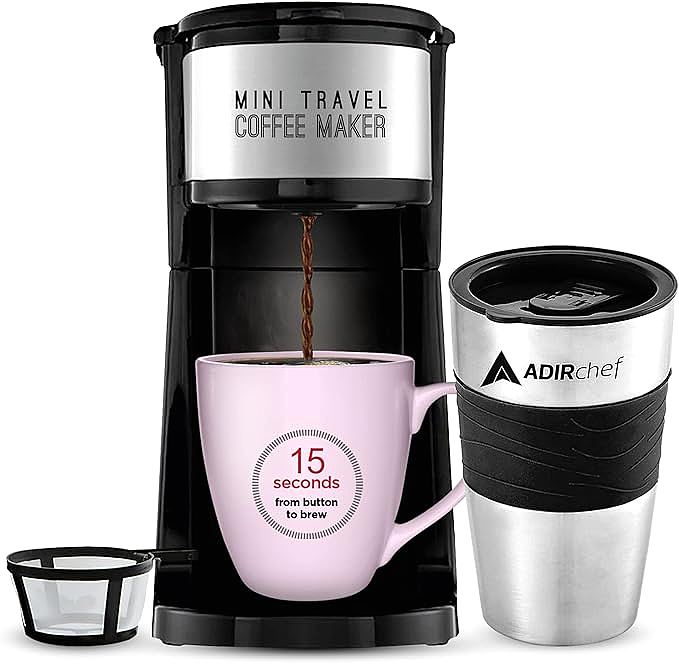
AdirChef Mini Travel Single Serve Coffee Maker: Brew Smart, Travel Light | Eco-Friendly Coffee Science
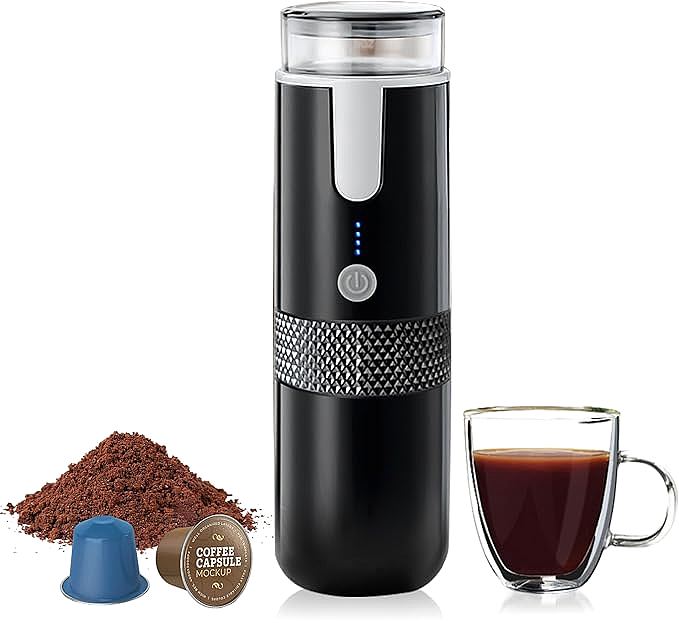
Coastacloud G309201 Portable Espresso Maker: Your On-the-Go Coffee Solution

Manual Pneumatic Extraction: Thermodynamics and Fluid Mechanics in Portable Espresso
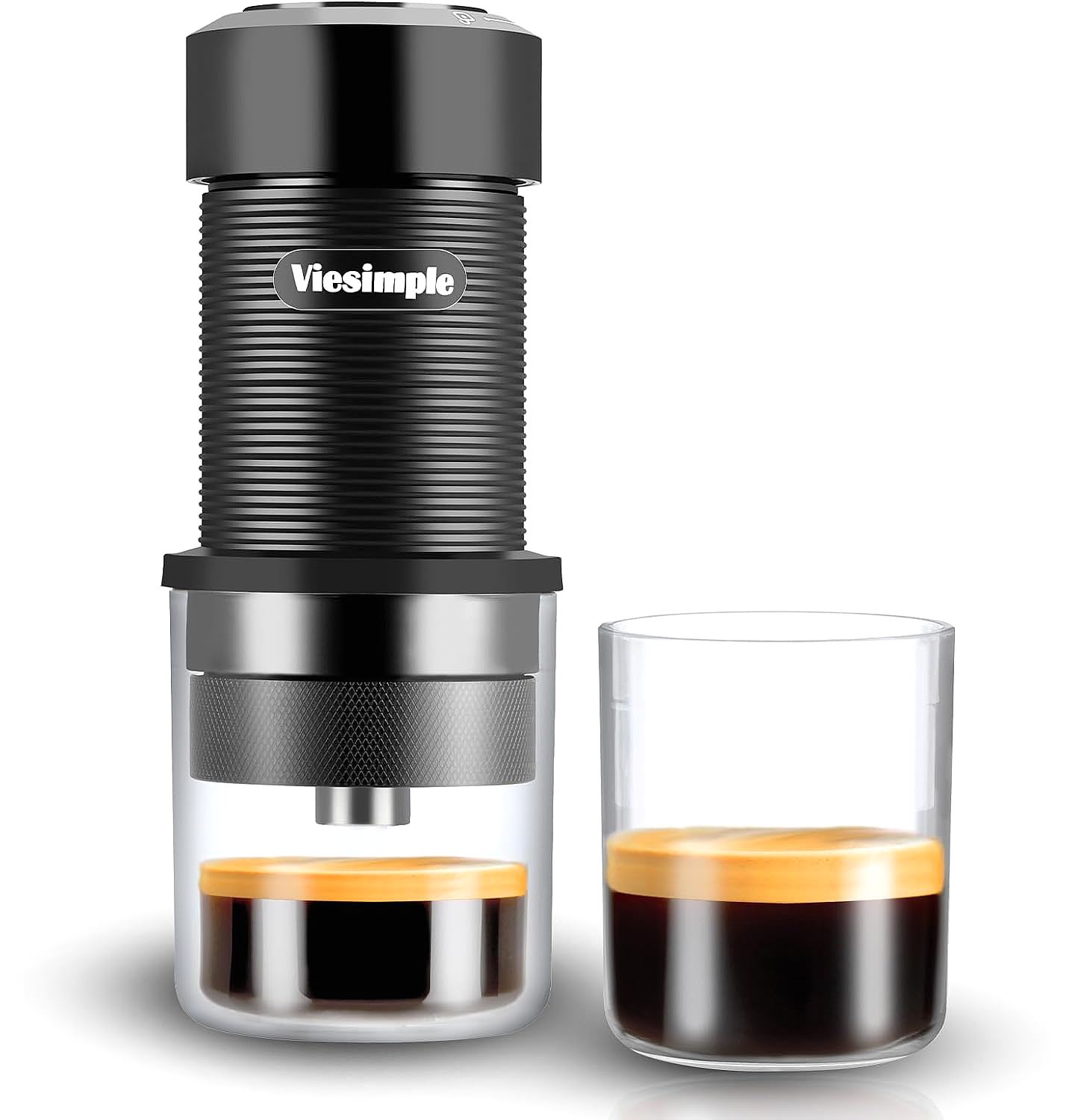
The Ultimate Field Guide to Manual Espresso: Mastering the Viesimple PCM01
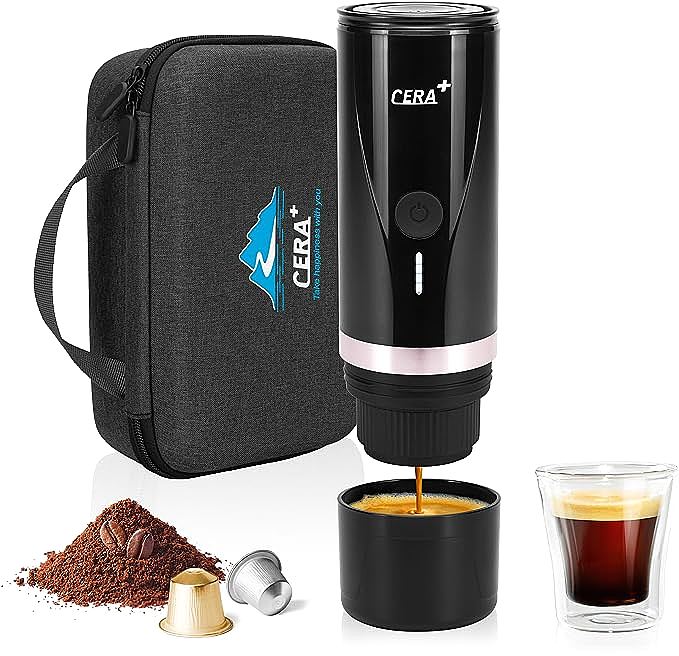
The Science of On-the-Go Espresso: How Portable Coffee Makers Work
MVPLUE-Mini Express Moka Pot: Your Pocket-Sized Espresso Maker

The Science of Great Coffee, Anywhere: A Deep Dive into the VANDROOP Collapsible Dripper
The Soul of the Simple Machine: Unearthing the Science and Story of the French Press
